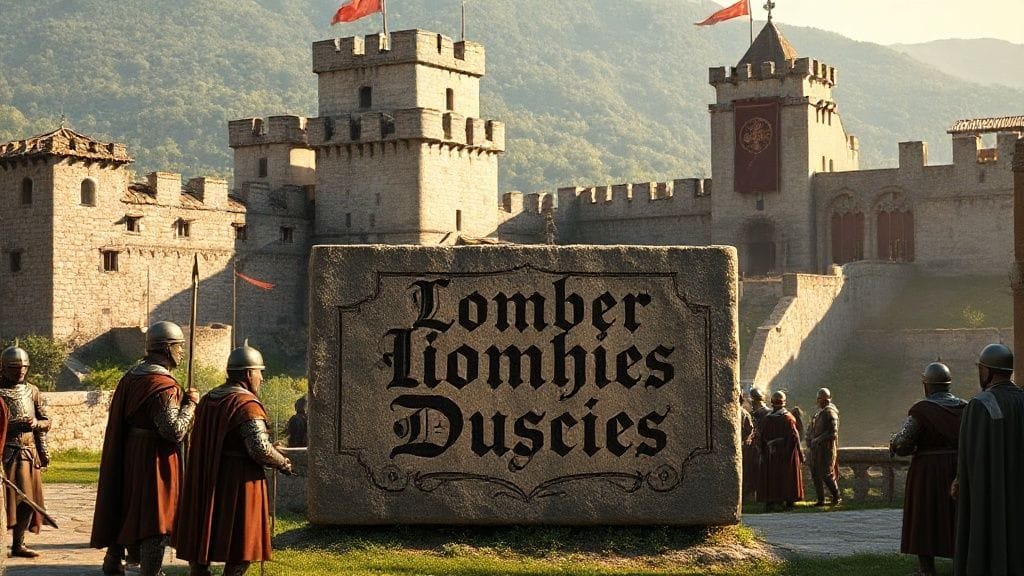
Table of Contents
- The Quiet Storm: The Lombard Duchies on the Brink of Submission
- Echoes from the Past: The Lombard Arrival and Establishment in Italy
- Dukes of Spoleto and Benevento: Guardians of Lombard Legacy
- Shifting Powers: The Role of the Frankish Kingdom and Byzantines
- The 8th Century: A Turning Point in Central and Southern Italy
- Political Intrigue and Diplomatic Maneuvers in the Lombard Courts
- Religious Influence: The Church's Role in Lombard Political Alignments
- The Trigger Moments: Internal Strife and External Pressures
- Submission as Strategy: Voluntary or Forced?
- The Moment of Surrender: Spoleto and Benevento Bowing to the Franks
- Reaction from Local Populations: Between Hope and Uncertainty
- The Impact on Lombard Identity and Autonomy
- Aftermath: Integration into Frankish Dominions
- The Legacy of Submission: Long-Term Political Consequences in Italy
- Cultural Transformations Following Lombard Surrender
- The Role of Charlemagne and Papal Alliances
- Comparison with Other Lombard Duchies’ Fates
- Narratives in Chronicles: How Medieval Historians Remembered the Submission
- Lessons from the Lombard Duchies’ Submission: Power, Identity, and Adaptation
- Conclusion: The End of an Era and the Dawn of a New Italy
- FAQs: Understanding the Lombard Duchies’ Submission
- External Resource
- Internal Link
The Quiet Storm: The Lombard Duchies on the Brink of Submission
The humid breeze rolled over the undulating hills of central Italy, whispering like a restless ghost through the olive groves and ruins that punctuated the landscape. Somewhere between the scattered villages surrounding Spoleto and the sun-baked lands of Benevento, the fate of two great Lombard duchies was about to pivot. The people, warriors, priests, and dukes themselves could scarcely anticipate the swelling tides of change that would soon sweep their lands, allegiances, and identities. The 8th century was a crucible, a time when empires thrived, waned, and fell, and the Lombard duchies of Spoleto and Benevento found themselves at the heart of a profound political and cultural crossroads—the moment of their periodic submission.
To understand this surrender is to step into a world of shifting alliances, religious transformations, and raw political ambition. It is a tale told not only in chronicles and charters but in the silences between clashing swords and whispered negotiations in shadowed halls.
Echoes from the Past: The Lombard Arrival and Establishment in Italy
The Lombards, a Germanic tribe with origins shrouded in legend and migration myths, had arrived in Italy in 568 CE under the leadership of King Alboin. Surging like a wave over the fractured Italian peninsula, they seized territories and established their rule, forming duchies that would become semi-autonomous power centers. Among these, the duchies of Spoleto and Benevento stood as sentinels along Italy's central and southern spines.
Spoleto, set amidst the Appenines, was both a military stronghold and a cultural nexus; Benevento, farther south, guarded the passage into the Italian Mezzogiorno and bore immense strategic significance. These duchies represented more than territorial entities; they were the heartbeat of Lombard resilience and ambition.
Dukes of Spoleto and Benevento: Guardians of Lombard Legacy
The Lombard dukes wielded power that sometimes rivaled that of the Lombard kings themselves. Figures such as Faroald and Thrasimund in Benevento or Transamund in Spoleto were not just military commanders—they were kings in miniature, balancing loyalty to the crown against local interests and the growing pressures of external forces.
Their authority was deeply tied to martial prowess and kinship ties, but also religious influence. The spread of Christianity, particularly the integration of Roman Catholicism, provided new tools of legitimacy and division alike. In their domains, the dukes negotiated with Byzantine remnants, the Papacy, and rising Frankish powers, playing a delicate game to uphold autonomy.
Shifting Powers: The Role of the Frankish Kingdom and Byzantines
In the 8th century, Italy was a complex chessboard of competing influences. The Byzantine Empire still held sway in parts of the peninsula, especially the Exarchate of Ravenna and Naples, but its hold was increasingly tenuous. Meanwhile, the Frankish Kingdom to the north, under the Carolingians, was consolidating power with ambitions that reached deep into Italy’s fractured lands.
The papacy, alarmed by Lombard threats and Byzantine decline, turned toward the Franks for protection, creating a diplomatic axis that would prove decisive. This alliance emboldened Frankish kings like Pepin the Short and later Charlemagne to intervene militarily and politically in the Italian peninsula.
The 8th Century: A Turning Point in Central and Southern Italy
The period between 700 and 800 CE is marked by upheaval for the Lombard duchies. While the Lombard Kingdom itself fell to Charlemagne in 774, the duchies of Spoleto and Benevento exhibited a unique trajectory. Both oscillated between resistance and submission, autonomy and submission—their rulers demonstrating pragmatism amid encroaching Frankish dominance.
The 8th century thus stands out as a pivotal phase where the balance between regional autonomy and the burgeoning emergent imperial order was negotiated on multiple fronts.
Political Intrigue and Diplomatic Maneuvers in the Lombard Courts
The duchies did not simply capitulate overnight. Behind the curtains of palatial chambers and at secret councils, Lombard dukes engaged in complex diplomacy. Alliances with the papacy, marriages, treaties, and even subterfuge defined their survival strategies.
For instance, Duke Arechis II of Benevento is often seen as a shrewd statesman who managed to maintain an uneasy peace with Charlemagne after the kingdom’s fall, indirectly acknowledging Frankish supremacy without complete submission.
Religious Influence: The Church's Role in Lombard Political Alignments
Religion was more than faith—it was a tool of power. As Lombard rulers converted from Arianism towards Catholicism, their ties to the Roman Church deepened. The papal agenda included curbing Lombard power while elevating its own influence.
The Church’s political role was palpable: at times protector, at times provocateur. Pope Stephen II’s decision to invite Pepin the Short to Italy effectively opened the gates for Frankish intervention, forcing Lombard duchies into reconsideration of their position.
The Trigger Moments: Internal Strife and External Pressures
Even as external pressure mounted, internal discord accelerated the Lombards’ shift. Succession disputes, rivalries among the nobility, economic strain, and threats from neighboring powers peeled away at the fabric of Lombard autonomy.
The Duchy of Spoleto, with its ambitions and precarious location, repeatedly saw its leaders negotiate or resist Frankish advances, sometimes pushing for outright rebellion and sometimes crawling towards alliance.
Submission as Strategy: Voluntary or Forced?
One of the enduring questions historians ask is if the submission of Spoleto and Benevento was truly forced or a calculated strategy by the dukes. Periodic submission suggests a nuanced relationship with power, where submission was a means of survival and advantage rather than slavery.
This delicate dance allowed the duchies to preserve some local authority while acknowledging the supremacy of more powerful rulers. It’s a testament to political pragmatism that shaped medieval Italy’s fragmented geography.
The Moment of Surrender: Spoleto and Benevento Bowing to the Franks
By the latter part of the 8th century, after Charlemagne’s conquest of the Lombard Kingdom, both Spoleto and Benevento recognized the new emperor’s authority to varying degrees. Formal acts of submission—oaths, tributes, and political acts—marked their inclusion in a broader imperial network.
Yet beneath these diplomatic gestures, layers of local autonomy and identity persisted, defying the notion of total conquest.
Reaction from Local Populations: Between Hope and Uncertainty
For common folk in villages and towns, the shift from Lombard to Frankish overlordship was felt unevenly. Relief from incessant warfare and raids sometimes accompanied the change, but uncertainty about new rulers and laws loomed large.
Archaeological evidence and contemporary chronicles hint at continuities in daily life intertwined with subtle transformations—new architectural styles, changes in land tenure, and evolving religious practices.
The Impact on Lombard Identity and Autonomy
Submission challenged Lombard identity. As rulers incorporated new symbols of power and submitted to foreign suzerainty, their self-perception evolved. Balancing regional pride with pragmatic allegiance became a hallmark of subsequent centuries.
This fusion is evident in art, language, and legal traditions, reflecting adaptation rather than extinction.
Aftermath: Integration into Frankish Dominions
The submission facilitated integration of the duchies into the Carolingian Empire’s administrative and military systems. Especially for Spoleto, which became an important frontier march, this brought infrastructural investments and new governance models.
Benevento's path was somewhat distinct, maintaining a semi-independent status longer, illustrating the variable nature of Lombard submission.
The Legacy of Submission: Long-Term Political Consequences in Italy
The periodic submission of Lombard duchies set precedents for medieval Italian politics: fragmented regional authorities negotiating sovereignty vis-à-vis over-arching powers. This pattern foreshadowed the mosaic of city-states, principalities, and papal territories that would characterize Italy for centuries.
Moreover, it laid groundwork for the eventual rise of the Holy Roman Empire as a central player.
Cultural Transformations Following Lombard Surrender
The blending of Lombard traditions with Frankish influences enriched the cultural tapestry of central and southern Italy. Manuscripts, liturgical practices, and artistic motifs demonstrate a syncretism that transcends political change.
The so-called "Lombard Renaissance" is often tied to this era of cultural flourishing under new political realities.
The Role of Charlemagne and Papal Alliances
Charlemagne’s role was pivotal. Through strategic military campaigns and savvy diplomacy with the papacy, he reshaped Italy’s political landscape.
His coronation as Emperor in 800 symbolized the fusion of Roman, Frankish, and Lombard legacies, cementing the importance of the submission and alliance of duchies like Spoleto and Benevento.
Comparison with Other Lombard Duchies’ Fates
An examination of other Lombard duchies such as Friuli and Tuscany reveals contrasting experiences. Some were directly absorbed, others maintained longer independence or rebelled, but all reflected the fractured yet dynamic nature of Lombard Italy.
Spoleto and Benevento’s submission stands out for its periodicity and strategic navigation of imperial ambitions.
Narratives in Chronicles: How Medieval Historians Remembered the Submission
Medieval chroniclers like Paul the Deacon offered accounts flavored by political and religious biases. Their narratives shaped later understandings—sometimes portraying submission as humility toward divine will, occasionally as betrayal or pragmatism.
These texts are windows into the medieval psyche and the complex legacies of power.
Lessons from the Lombard Duchies’ Submission: Power, Identity, and Adaptation
Ultimately, the story of Spoleto and Benevento’s periodic submission teaches us about resilience in the face of greater forces. It invites reflection on how identity adapts without disappearing, and how political survival often demands flexibility rather than rigid resistance.
The duchies’ saga is a mirror reflecting broader human struggles with change and sovereignty.
Conclusion
The submission of the Lombard duchies of Spoleto and Benevento in the 8th century was not merely a historical footnote of conquest and subjugation—it was a complex and deliberate process woven with diplomacy, cultural fusion, and political pragmatism. It marked the twilight of an era defined by fierce regional independence and the dawn of a new order, shaped by the interplay of empires and the church.
As the banners of Lombard dukes were folded beneath Frankish standards, the echoes of their legacy did not vanish. Instead, they metamorphosed, enriching the fabric of Italy’s medieval identity and charting a course for a civilization that would forever be a mosaic of power and culture.
In the quiet hills of Spoleto and Benevento, the past whispers lessons of resilience and adaptation—the enduring human quest to balance submission and sovereignty in an ever-changing world.
FAQs
Q1: What triggered the periodic submission of the Lombard duchies of Spoleto and Benevento?
A1: The submission was prompted by various factors including external military pressure from the expanding Frankish Empire, diplomatic realignments especially involving the papacy, and internal political struggles within the duchies themselves. It was often a pragmatic strategy to preserve a degree of local autonomy while acknowledging stronger powers.
Q2: How did the Frankish Kingdom influence the fate of these duchies?
A2: The Frankish Kingdom, particularly under rulers like Pepin the Short and Charlemagne, exerted growing influence through military conquest, political alliances with the papacy, and diplomatic pressure. Their expansion into Italy effectively ended the Lombard Kingdom but allowed duchies like Spoleto and Benevento to negotiate survival through submission.
Q3: What was the role of the papacy in this process?
A3: The papacy acted as a key political player by seeking protection from the Franks against Lombard aggression and Byzantine decline. By inviting Frankish intervention, it catalyzed the process of submission and helped reconfigure power balances in Italy.
Q4: Did the duchies lose all autonomy after submission?
A4: Not entirely. The submission was often periodic and strategic, allowing the duchies to retain some local governance and identity under the suzerainty of Frankish rule, especially in Benevento’s case, which maintained semi-independence for a time.
Q5: How did these events shape Italian medieval history?
A5: The periodic submission of these duchies set patterns of fragmented authority, negotiations of sovereignty, and the interplay between local and imperial powers that defined the political landscape of medieval Italy for centuries.
Q6: What cultural impacts followed the submission?
A6: The fusion of Lombard and Frankish traditions influenced art, law, and religion, leading to a rich cultural synthesis sometimes called the "Lombard Renaissance," which contributed to the evolving identity of medieval Italy.
Q7: Are there contemporary sources that document these events?
A7: Yes, chronicles such as those by Paul the Deacon and papal letters provide insights, although often colored by political or religious perspectives, offering a layered understanding of the submission and its context.
Q8: Why is the submission described as ‘periodic’?
A8: Because the duchies did not submit once and forever. Their relationship with suzerains fluctuated, with moments of rebellion, negotiated submission, and strategic alliance reflecting the complex and dynamic political realities of the time.

