Table of Contents
- The Dawn of a New Era: Italy on the Brink
- Who Were the Lombards? Origins and Identity
- The Fractured Italian Peninsula Before the Invasion
- The Gothic Legacy and Byzantine Struggles
- Alboin: The Warrior King and Architect of the Invasion
- The Great Migration Begins: 568 AD
- Crossing the Alps: Perils and Triumphs
- The First Battles and Entry into Friuli
- The Fall of Milan: A City Transformed
- Lombard Strategies: War, Settlement, and Assimilation
- The Collapse of Byzantine Authority in Northern Italy
- The Transformation of Friuli: From Borderland to Stronghold
- Cultural and Social Impact of the Lombard Arrival
- Lombards, Romans, and Byzantines: A Complex Coexistence
- The Foundation of the Lombard Kingdom in Italy
- The Church and Lombard Relations: From Conflict to Collaboration
- The Legacy of the 568 Invasion on Medieval Italy
- How the Lombard Invasion Paved the Way for the Medieval Italian Identity
- Echoes of Lombard Rule in Modern Italy
- Conclusion: The Invasion That Reshaped Italy’s Future
- FAQs: Unraveling the Lombard Invasion
- External Resource
- Internal Link
The Dawn of a New Era: Italy on the Brink
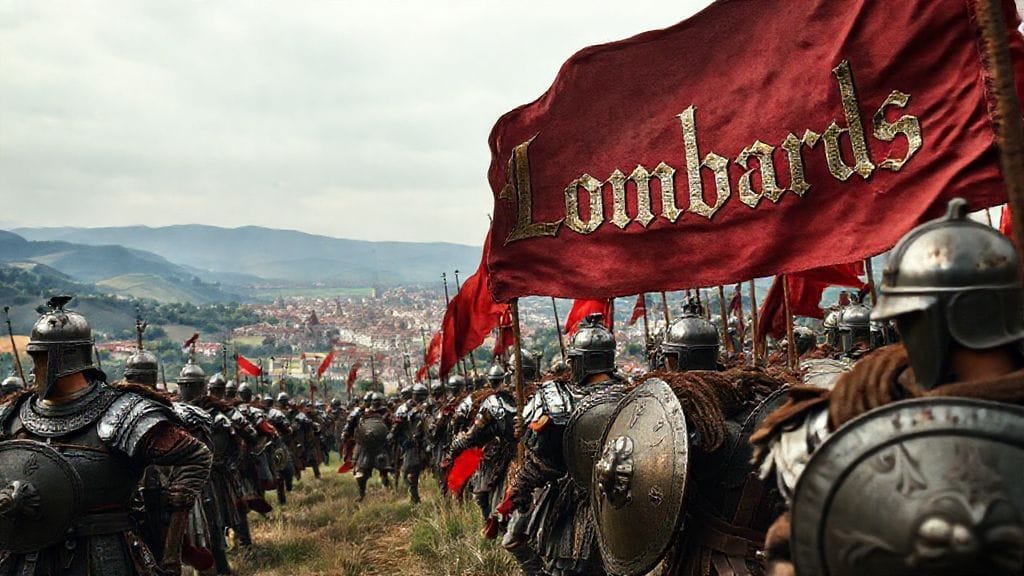
The year was 568 AD, and the Italian peninsula stood at the edge of sweeping change. The once-mighty Roman Empire had long faded, fracturing into a complex mosaic of competing powers. The Byzantine Exarchate of Ravenna, protector of the former imperial holdings, struggled to maintain control over a land wearied by decades of war, famine, and political instability. Against this fragile backdrop, a new force emerged from the shadows of the Alpine foothills: the Lombards. Their arrival was not a mere barbarian raid—it was the beginning of a conquest that would reshape Italy’s cultural, political, and social landscape for centuries.
Imagine the scene: snow-capped mountains watching silently as thousands of warriors began their descent, their banners fluttering like harbingers of a new order. It was a moment heavy with anticipation, uncertainty, and the rumbling echoes of an empire’s fractured legacy. This invasion would mark the end of one chapter in Italian history, and the uncertain birth of another.
Who Were the Lombards? Origins and Identity
To understand the 568 invasion, one must first meet the Lombards themselves. Originating from the regions of northern Europe, particularly the area around modern-day Scandinavia and the Elbe River basin, the Lombards had traversed the great migrations that characterized the early Medieval period. Their name, possibly derived from "Longobards" meaning "long beards," encapsulated their distinctive identity—a fierce warrior society with a complex social structure and rich traditions.
Unlike some of the transient barbarian groups of the era, the Lombards were determined to find a lasting home. By the mid-6th century, after decades of wandering through Pannonia (roughly modern Hungary and surrounding regions), they had forged a strong kingdom. Their rapid and decisive incursion into Italy would not be an ephemeral conquest, but the assertion of sovereign rule.
The Fractured Italian Peninsula Before the Invasion
Italy of the mid-6th century was far from the unified land of Rome's apex. Instead, it was a patchwork quilt of Byzantine holdings, Gothic warlords, and lingering Roman cultural influences still breathing through urban centers. The Gothic War (535-554), fought between the Ostrogoths and Byzantines, had devastated much of the territory, leaving cities in ruin and populations decimated.
The Exarchate of Ravenna, a Byzantine administrative and military center, struggled desperately to control northern Italy and the strategic corridors leading south. Meanwhile, rural areas, including the rugged and scarcely governed Friuli region, lay vulnerable to external threats. The stage was set for a powerful new player to act decisively—an opportunity the Lombards would seize with vigor.
The Gothic Legacy and Byzantine Struggles
The once formidable Ostrogothic Kingdom had collapsed under the might of Justinian’s generals during the Gothic War, but the victory for the Eastern Roman Empire proved pyrrhic. Byzantine control was tenuous at best, strained by overstretched military resources and constant pressure from both internal dissent and external enemies like the Franks and the Avars.
The Italians themselves were worn out—cities like Milan and Ravenna looked less like imperial capitals and more like beleaguered outposts awaiting their fate. Byzantine governors and generals had to navigate a labyrinth of loyalty shifts, local power struggles, and a lack of manpower, which would soon strain to breaking under the Lombard thunderclap.
Alboin: The Warrior King and Architect of the Invasion
Central to this epochal event was Alboin, the charismatic and ruthless king of the Lombards. A warrior of great repute, Alboin had led his people through the Pannonian wilds and Alps with a single purpose: to find a kingdom worthy of their strength and ambition. His vision was bold—to carve a new realm within the rich lands of Italy.
Stories about Alboin swirl between fact and legend. Some describe his fearless nature, others recall his brutal tactics—such as the infamous episode after the conquest of Pavia, where he was said to have forced skilled warriors to drink from a cup crafted from the skull of his defeated enemy. Whether myth or reality, Alboin embodied the fierce spirit that propelled the Lombard invasion forward.
The Great Migration Begins: 568 AD
In the spring of 568, under Alboin’s leadership, the Lombard mass movement into Italy began in earnest. Tens of thousands of warriors, women, children, and followers descended from the mountains with their livestock, carts, and battle gear.
The expedition was both a military campaign and a large-scale migration, the kind that reshaped Europe during the Migration Period. It was no haphazard raid but a calculated, well-organized invasion designed to establish long-term control over northern Italy.
Crossing the Alps: Perils and Triumphs
Crossing the Alps was no minor challenge. The treacherous passes, narrow valleys, and sudden weather shifts posed natural obstacles that claimed many lives before the Lombards even confronted the Byzantine defenses. Yet the Lombards, skilled horsemen and foot soldiers hardened by years of roaming the rugged frontiers, overcame these hardships with remarkable resilience.
Their entry into the Italian peninsula was like a force of nature—unstoppable and transformative, cascading down from the Alps into the fertile plains below, ready to confront and claim what was waiting for them.
The First Battles and Entry into Friuli
Friuli, on Italy’s northeastern frontier, was the first significant region to feel the weight of the invading Lombards. The area's strategic importance was immense, acting as a gateway to the rest of the peninsula.
The Byzantine defenses here were scattered and weary. The Lombards swiftly captured key fortresses with a mixture of military prowess and local collaboration—some Italian communities, exhausted by Byzantine taxation and war, preferred the Lombards as liberators.
But the battles were far from one-sided—there was fierce resistance, local skirmishes, and the constant threat of rebellion. It was a brutal, chaotic beginning, paved with hard-won victories and harsh costs.
The Fall of Milan: A City Transformed
Milan, one of the most important cities in northern Italy, fell to the Lombards shortly after their arrival. This was not merely a military conquest but a symbolic blow to Byzantine authority. Milan had long been a provincial capital with deep-rooted Roman and Christian traditions.
The city’s fall shocked the Byzantine administration and sent ripples throughout Italy. Milan would become one of the Lombard Kingdom’s key centers, changing its character from a Roman city to a Lombard stronghold. Yet, rather than being devastated, Milan gradually adapted to its new rulers, blending old and new cultures.
Lombard Strategies: War, Settlement, and Assimilation
The Lombard invasion was unlike fleeting barbarian raids—Alboin’s people intended to stay. Their strategy was a complex mix of military conquest and settlement. They seized fertile lands, built fortified villages, and imposed their own laws, while also adopting elements of Roman administration and culture.
They were pragmatic in many ways—embracing Christianity (albeit initially Arian rather than Catholic), merging local customs with their own, and establishing dukedoms to maintain control across vast territories.
The Collapse of Byzantine Authority in Northern Italy
The Lombard success hastened the decline of Byzantine power in Italy. The Exarchate of Ravenna became increasingly isolated; its resources dwindled as it struggled to fend off Lombard advances.
By the late 6th century, much of northern Italy had slipped from Byzantine control, fragmenting the empire’s hold and symbolizing a transfer of power from East to local European rulers. This shift set the stage for medieval Italy’s political complexity, marked by fragmented city-states and regional powers.
The Transformation of Friuli: From Borderland to Stronghold
Friuli swiftly transformed from a peripheral outpost of the Byzantines into a Lincolnard heartland. Its strategic location made it a launching pad for further Lombard expansion into central Italy.
Administratively and militarily, Duke’s seats were established here, anchoring the Lombard presence and defending against incursions. The fertile lands saw demographic changes and integration of Lombard settlers with the native populations.
Cultural and Social Impact of the Lombard Arrival
The arrival of the Lombards was not just a military or political event—it altered Italy’s cultural and social makeup. The fusion of Germanic and Roman traditions birthed a new hybrid culture. Language, laws, art, and social hierarchy all evolved.
The Lombard legal code, the Edictum Rothari, later codified, reflected this synthesis. Social structures integrated warrior nobility with Roman landed elites, while Christianity provided a shared spiritual framework.
Lombards, Romans, and Byzantines: A Complex Coexistence
Despite conquest, the Lombards coexisted with remnants of Roman and Byzantine populations. Many Italian towns remained predominantly Roman in character, leading to a regional patchwork of linguistic and cultural identities.
Tensions existed, but so did cooperation. Trade continued, intermarriage occurred, and religious institutions formed bridges between communities. This complex interaction shaped Italy’s regional diversity for centuries.
The Foundation of the Lombard Kingdom in Italy
By 572, the Lombard kingdom was more than an invading force—it had become a new political entity. Milan, Pavia (which soon became the capital), and other key cities were under Lombard rule.
This marked the first Germanic kingdom firmly established on the Italian peninsula after the fall of the Western Roman Empire. It laid foundations for political entities that would dominate Italian affairs until the Frankish conquest under Charlemagne in the late 8th century.
The Church and Lombard Relations: From Conflict to Collaboration
The Lombards’ relationship with the Catholic Church was nuanced and evolved significantly. Initially adherents of Arian Christianity, tensions with the Catholic clergy and Rome were frequent.
However, over time, the Lombards converted to Catholicism, motivated by political and social realities. The Church became a key partner in governance and cultural life, helping legitimize Lombard rule and aiding the fusion of different populations.
The Legacy of the 568 Invasion on Medieval Italy
The Lombard conquest redefined Italy’s medieval trajectory. It mitigated Byzantine influence, seeded Germanic cultural elements, and contributed to the region’s fragmentation that characterized much of Italy’s political life.
Their presence shaped Italy’s feudal system, the role of dukes and nobles, and even influenced the Crusades via subsequent rulers. The Lombards, though eventually supplanted, left enduring marks visible in Italy’s legal traditions, place names, and architectural remnants.
How the Lombard Invasion Paved the Way for the Medieval Italian Identity
One can trace the roots of the multifaceted medieval Italian identity to the Lombard invasion. This event fractured the peninsula into smaller political units, nurturing local allegiances, dialects, and customs that would blossom in the centuries to come.
By integrating Germanic elements with Roman and Byzantine legacies, the Lombards helped shape the cultural pluralism and political patchwork that define Italian history. The echoes of their kingdom reverberate in everything from law codes to linguistic diversity across northern Italy.
Echoes of Lombard Rule in Modern Italy
Though the Lombard Kingdom dissolved by the late 8th century under Charlemagne, its imprint remains. Place names like Lombardy (Lombardia) bear their name as a linguistic tribute. Architectural sites, legal principles, and historical memory preserve their legacy.
Modern Italy’s rich regional diversities in culture, dialect, and tradition owe much to this foundational chapter. The Lombard invasion was not a mere footnote—it was a crucible forging the identity of a nation still vibrant today.
Conclusion: The Invasion That Reshaped Italy’s Future
The Lombard invasion of 568 was far more than a barbarian migration; it was a transformative episode that shifted Italy from the ruins of empire to the dawn of medieval polities. It was a tale of conquest, adaptation, resilience, and cultural fusion.
This event showcases the complexities of history—not as a tale of simple conquest and defeat, but of human societies reacting, adapting, and weaving together traditions to create new futures. Italy was forever altered by the Lombards, their swords carving a path not just of destruction, but of rebirth.
FAQs: Unraveling the Lombard Invasion
Q1: Why did the Lombards invade Italy in 568?
A1: Pressured by conflicts with the Avars in Pannonia, and drawn by Italy's wealth and relatively weak Byzantine defenses after the Gothic War, the Lombards sought to establish a lasting kingdom on Italian soil.
Q2: What was the state of Italy before the Lombard invasion?
A2: Italy was fragmented, ravaged by the Gothic War, with Byzantine control limited mainly to urban centers, while rural areas were vulnerable and politically unstable.
Q3: Who was Alboin, and what role did he play?
A3: Alboin was the Lombard king who led the invasion into Italy. A fierce warrior, he orchestrated the strategic conquest and settlement of northern Italy.
Q4: How did the Lombard invasion affect the Byzantine Empire’s control of Italy?
A4: The invasion led to the rapid loss of most northern Italian territories by the Byzantines, weakening imperial authority and diminishing their ability to project power in the West.
Q5: What cultural changes did the Lombards bring to Italy?
A5: They introduced Germanic customs, laws such as the Edictum Rothari, and their initially Arian Christian faith, though they later converted to Catholicism, blending cultures to create a new societal framework.
Q6: How did the Lombards interact with the native Roman populations?
A6: A complex relationship evolved involving conflict, cooperation, and assimilation, leading to cultural fusion without complete displacement of Roman traditions.
Q7: What was the significance of cities like Milan and Friuli during the invasion?
A7: Milan was a symbolic and strategic city whose fall signaled Byzantine decline; Friuli became a key Lombard stronghold and frontier region for further expansion.
Q8: How does the Lombard invasion influence Italy today?
A8: The Lombards’ influence remains in place names, legal traditions, cultural diversity, and historical memory, forming part of Italy’s rich regional identities.
External Resource
https://en.wikipedia.org/wiki/Lombards
Internal Link
🏠 Visit History Sphere → https://historysphere.com/

