Table of Contents
- The Calm Before the Tremor: Luzon in the Summer of 1990
- Geological Roots: The Tectonic Puzzle Beneath Luzon
- The Early Hours of July 16: A Sudden Jolt Awakens a Nation
- The Earth Speaks: Richter Scale and Intensity of the 1990 Luzon Earthquake
- Ground Shattered: The Physical Devastation Across Luzon’s Heartland
- Human Voices Amidst Rubble: Eyewitness Accounts of Terror and Survival
- Infrastructure in Ruins: The Collapse of Baguio and Its Aftermath
- The Cost of Nature’s Fury: Casualties, Displacements, and Societal Trauma
- Government Response: Mobilizing Rescue and Relief in a Nation’s Hour of Need
- The Role of International Aid: A Global Community Rises to Help the Philippines
- Scientific Insights: How the Luzon Earthquake Changed Seismology in the Region
- Economic Shockwaves: The Earthquake’s Ripple Effects on the Philippine Economy
- Communities Reclaiming Their Lives: Recovery, Rebuilding, and Resilience
- Cultural Reflections: Remembering the 1990 Luzon Earthquake in Philippine Arts and Memory
- Lessons Learned: Enhancing Disaster Preparedness and Mitigation Post-1990
- The Legacy of Luzon 1990: A Catalyst for Change in Earthquake Awareness
- Conclusion: The Earthquake That Shook More Than the Ground
- FAQs: Understanding the Luzon Earthquake and Its Continuing Impact
- External Resource
- Internal Link
The Calm Before the Tremor: Luzon in the Summer of 1990
It was a bright and sticky July morning in 1990. The bustling city of Baguio, perched high in the mountain ranges of northern Luzon, was alive with the hum of everyday life. Street vendors were setting up their stalls, children were heading to school in crisp uniforms, and the air carried the scent of pine mingling with the chatter of hopeful families. People walked the streets like they had a thousand plans, unaware that the ground beneath their feet was about to betray them in the most violent and unexpected fashion.
That tranquility would shatter in seconds.
Geological Roots: The Tectonic Puzzle Beneath Luzon
Luzon, the largest island of the Philippines archipelago, sits atop an extraordinarily complex tectonic intersection. It’s a place where the Philippine Sea Plate, the Eurasian Plate, and several minor microplates converge, generating a restless friction beneath the earth’s surface. This region is a hotspot for seismic activity, owing to multiple fault lines crisscrossing beneath it, the most notorious being the infamous Philippine Fault Zone—a sprawling rupture extending nearly 1,200 kilometers through the island’s spine.
On July 16, 1990, these geological tensions culminated along a segment of the Philippine Fault in the Cordillera Mountains. Decades of accumulated stress finally gave way, releasing energy with a strength that sent shockwaves throughout Luzon and beyond.
The Early Hours of July 16: A Sudden Jolt Awakens a Nation
At approximately 4:26 AM, in the early morning darkness, a sudden violent tremor disrupted the pre-dawn stillness. For many, the first signs were the subtle rolling vibrations that rapidly escalated into a fierce shaking. Windows rattled and cracked. The ground lurched wildly beneath houses, apartments, and tall buildings. People jolted awake, some believing it was some kind of explosion or attack.
The earthquake’s force was so intense that it was felt as far south as Manila and as far north as the Batanes Islands. Residents spoke later of rooftops swaying and landslides roaring down hillsides like avalanches of destruction. The sense of terror was immediate: nature had awakened not in a gentle mood, but as a tempest against humanity.
The Earth Speaks: Richter Scale and Intensity of the 1990 Luzon Earthquake
Measured at a momentous magnitude of 7.7 on the Richter scale, the Luzon earthquake of 1990 was among the strongest seismic events in the country’s recorded history. Its epicenter was traced near Rizal, Nueva Ecija—about 80 kilometers south of Baguio—yet the depth was shallow enough to amplify its destructive character.
The earthquake’s intensity registered up to IX (Violent) on the Modified Mercalli Intensity Scale across northern Luzon. Ground shaking was so extreme it caused rare and catastrophic ruptures in several fault segments. For many communities, it was the defining moment when the earth demonstrated its immense power without mercy.
Ground Shattered: The Physical Devastation Across Luzon’s Heartland
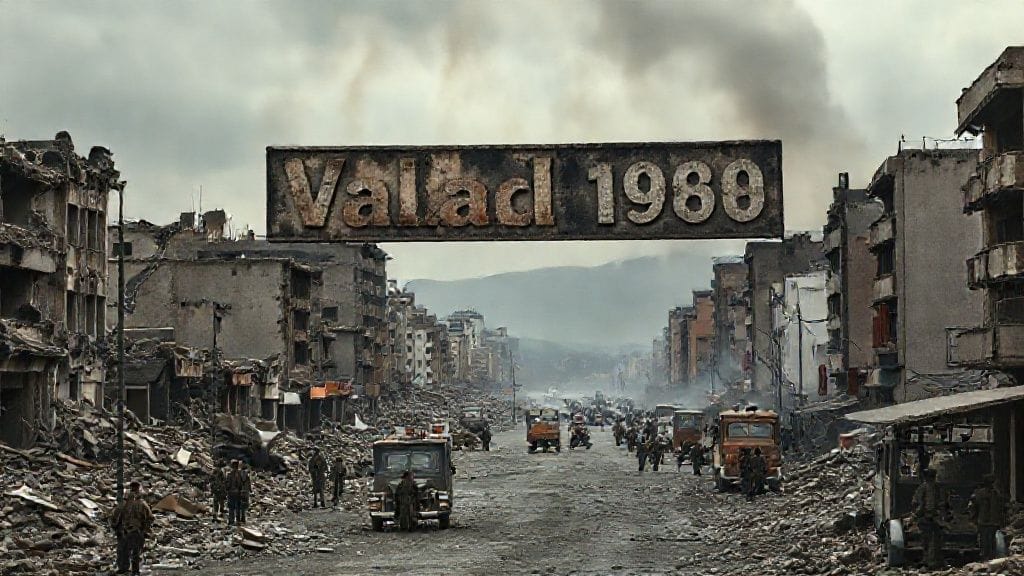
The earthquake did not discriminate, wrecking urban centers and rural villages alike. Roads buckled and cracked open like broken eggshells. Bridges spanning valleys and rivers crumbled to ruin, severing communication and isolating many towns. In the mountainous Cordillera Administrative Region, landslides engulfed vast areas, burying homes, and cutting off rescue routes.
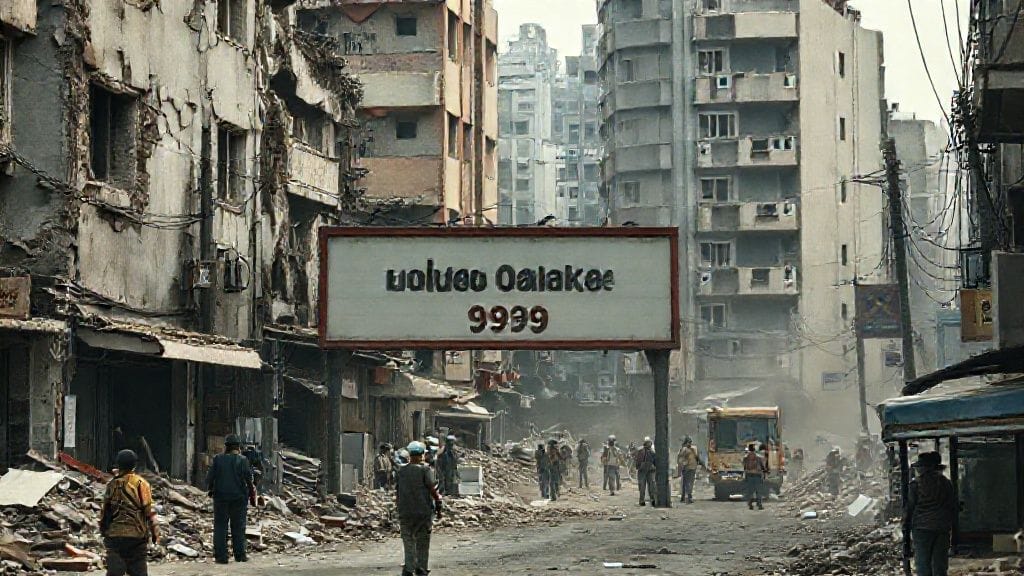
The city of Baguio, then a thriving hub of culture and commerce, was the worst hit. Buildings on its famed sloping streets pancaked one after another, reduced to twisted steel and rubble in mere moments. Historic landmarks and municipal structures vanished beneath the shifting earth, instantly transforming the cityscape and leaving residents stunned.
Human Voices Amidst Rubble: Eyewitness Accounts of Terror and Survival
Individual stories of that day reveal the human dimension behind the statistics. Medical resident Dr. Maria Santos recounted later: “The hospital was shaking for what felt like eternity. Patients screamed; doctors tried to hold ceilings from falling. When it finally stopped, we rushed out into a world that looked unrecognizable.”
In Baguio’s Session Road market, vendor Ramon Diaz clutched his wife as stalls collapsed around them. “I thought we were going to die together,” he said. “But somehow, we found our way to safety — just in time before the aftershocks hit.”
Many survivors described a surreal silence following the initial tremor, a grave moment when the world seemed to hold its breath. Yet, the trauma was far from over. Aftershocks continued to rattle the region for weeks, prolonging fear and uncertainty.
Infrastructure in Ruins: The Collapse of Baguio and Its Aftermath
Baguio’s downfall was emblematic of the earthquake’s architectural carnage. Nearly 1,000 structures collapsed or suffered severe damage, including schools, hospitals, government offices, and countless homes. Traffic infrastructure nearly ceased functioning, paralyzing emergency services.
Beyond Baguio, the earthquake toppled key sections of the MacArthur Highway, vital for connecting northern provinces. The destruction wrought to bridges along the Cagayan River basin illustrated a broader fragility in the nation’s infrastructure systems. This spectacle left no doubt: modernization and growth had not kept pace with the island’s geophysical realities.
The Cost of Nature’s Fury: Casualties, Displacements, and Societal Trauma
Official estimates counted over 1,600 people dead and nearly 3,000 injured, though the toll may have been higher in isolated mountain communities difficult to reach. Entire families were torn apart. Thousands were rendered homeless, forced to live in precarious makeshift shelters or crowded evacuation centers.
The psychological scarring was marked. Chronic anxiety and post-traumatic stress disorders emerged among survivors, amplified by repeated aftershocks. Schools and workplaces shut down, and thousands were plunged into economic hardship. The collective trauma cast a long, often unspoken shadow over northern Luzon.
Government Response: Mobilizing Rescue and Relief in a Nation’s Hour of Need
In the days following the disaster, the Philippine government faced immense challenges. Roads’ destruction and communication breakdown delayed initial rescue operations. Yet, President Corazon Aquino’s administration swiftly declared a state of emergency and mobilized military, medical, and civil defense units.
The National Disaster Coordinating Council (NDCC) worked tirelessly to coordinate efforts. Emergency medical teams were dispatched to the hardest-hit areas, makeshift clinics were set up, and temporary shelters organized. But the scale of destruction tested logistics and resources to their limits.
The Role of International Aid: A Global Community Rises to Help the Philippines
The international community did not stand idle. Countries such as the United States, Japan, Australia, and Canada extended assistance through financial aid, rescue teams, and supplies. The Red Cross, United Nations agencies, and NGOs played vital roles in delivering food, water, medical care, and psychological support.
Japanese seismic experts sent technical teams to analyze the disaster, sharing knowledge to help prevent future catastrophes. Donations arrived not only from governments but from ordinary citizens worldwide, underscoring a profound solidarity in times of crisis.
Scientific Insights: How the Luzon Earthquake Changed Seismology in the Region
The 1990 earthquake was a turning point for Philippine seismology and earthquake engineering. Its raw data offered unprecedented insights into the behavior of the Philippine Fault Zone. Scientists uncovered complex rupture patterns, fault segment interactions, and aftershock sequences that challenged existing models.
The National Institute of Geological Sciences at the University of the Philippines expanded its monitoring networks. New building codes were introduced, emphasizing seismic resilience. This disaster underscored for officials and engineers alike the urgent need to integrate scientific understanding into urban planning.
Economic Shockwaves: The Earthquake’s Ripple Effects on the Philippine Economy
Beyond immediate destruction, the earthquake inflicted profound economic consequences. Destruction of infrastructure and business centers in Luzon temporarily stalled commerce and tourism. Agriculture, a staple of local livelihoods, suffered as irrigation systems and roads were obliterated.
Estimates put the cost of damage at over $600 million (USD), a significant burden for a developing nation grappling with other socio-economic challenges. Reconstruction efforts strained limited government resources, diverting funds from other development projects. Yet, rebuilding also sparked employment and innovation in construction sectors.
Communities Reclaiming Their Lives: Recovery, Rebuilding, and Resilience
Despite overwhelming adversity, the spirit of communities in northern Luzon shone brightly. Neighborhood groups, religious institutions, and local governments organized grassroots efforts to clear rubble, provide aid, and rebuild homes from the ruins.
The Philippine government initiated “Build Back Safer” campaigns, promoting houses and public buildings constructed with materials and designs resistant to seismic forces. Schools reopened within months, becoming symbolically charged spaces for healing a traumatized young generation.
Cultural Reflections: Remembering the 1990 Luzon Earthquake in Philippine Arts and Memory
The earthquake left an imprint far beyond the physical realm. Poets, novelists, and artists responded with works capturing both loss and resilience. Murals sprang to life on walls of devastated towns, commemorating the lives lost and the heroes who emerged.
Annual memorial services in Baguio and other affected locales became occasions to reflect on vulnerability, community, and the unbreakable will to endure. In oral histories, survivors emphasize how the disaster reshaped their worldview—instilling humility before nature’s might, but also a fervent desire for preparedness.
Lessons Learned: Enhancing Disaster Preparedness and Mitigation Post-1990
The Luzon earthquake exposed glaring gaps in preparedness but also catalyzed reforms. The government strengthened its disaster response architecture. Early warning systems were improved. Education campaigns on earthquake safety became widespread in schools and workplaces.
Urban planners began incorporating hazard maps into development plans, steering critical infrastructure away from high-risk zones. Emergency drills became regular practice, embedding resilience into the social fabric. These efforts reflected a hard-learned truth: in a land of active faults, survival depends on respect, knowledge, and readiness.
The Legacy of Luzon 1990: A Catalyst for Change in Earthquake Awareness
Three decades later, the Luzon earthquake continues to resonate in the Philippines’ collective memory. It stands as a stark reminder of the island’s geophysical realities and the fragility of human constructions in the face of earth’s raw forces.
Yet, it also symbolizes hope—a testament to the strength of communities, the generosity of global neighbors, and the evolution of science and policy born from catastrophe. Programs inspired by this tragedy have, over time, saved countless lives in a nation continually braced for future quakes.
Conclusion: The Earthquake That Shook More Than the Ground
On that fateful summer morning of July 16, 1990, the earth beneath Luzon roared with a power that ripped apart the land and lives. But beyond destruction, it revealed the indomitable resilience of humanity amidst disaster.
From the fractured mountain roads to the battered city streets of Baguio, survivors emerged with stories of despair and courage—little threads weaving into the complex tapestry of collective memory. The Luzon earthquake was not just a natural calamity; it was a poignant chapter in the ongoing dialogue between man and the earth beneath him.
Today, as new tremors hint at future challenges, the legacy of 1990 offers a guiding beacon—one that urges vigilance, unity, science, and above all, hope.
FAQs
Q1: What caused the 1990 Luzon earthquake?
The earthquake was caused by the sudden rupture along a segment of the Philippine Fault Zone, resulting from accumulated tectonic stress between converging plates beneath Luzon.
Q2: How strong was the earthquake?
It measured 7.7 on the Richter scale, with intensity reaching IX (Violent) on the Modified Mercalli Intensity Scale in affected areas.
Q3: Which areas were most affected?
Northern Luzon, especially Baguio City and surrounding provinces such as Nueva Ecija and Pangasinan, suffered the most severe damage.
Q4: What was the human toll of the earthquake?
Over 1,600 deaths were recorded, with thousands more injured and displaced.
Q5: How did the Philippine government respond?
The government declared a state of emergency, mobilized military and civil defense personnel, and coordinated nationwide relief and rehabilitation efforts.
Q6: What international aid was provided?
Multiple countries and organizations contributed financial aid, rescue personnel, and medical supplies. Japan and the United States were especially prominent in aid and scientific cooperation.
Q7: How did the earthquake impact scientific understanding?
It provided crucial data on fault behavior in the Philippines, leading to improved seismic monitoring and updated building codes.
Q8: How is the 1990 Luzon earthquake remembered today?
Through cultural memorials, annual commemorations, educational programs, and urban planning policies that emphasize earthquake preparedness.