Table of Contents
- A Dawn Shattered: The Morning of March 26, 1812
- The Earthquake Unfolds: Tremors and Devastation in Mérida
- The Andes and Venezuela: A Volatile Geophysical Intersection
- Venezuela on the Brink: Political and Social Turmoil in 1812
- The Colonial Backdrop: Struggles for Independence and Loyalties
- First Shock, Then Chaos: The Immediate Human Cost
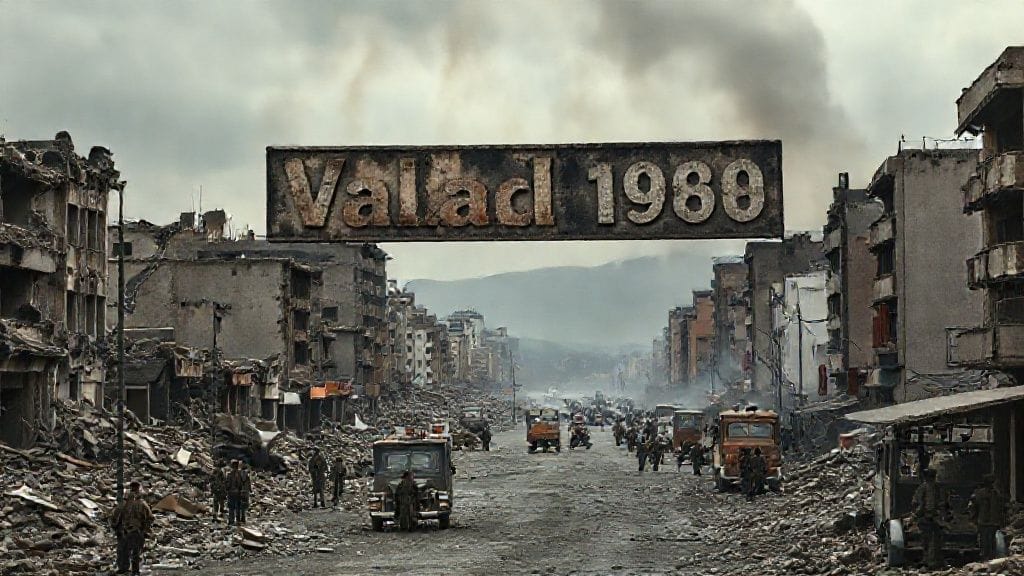
- Mérida’s Ruins: Portrait of Destruction in a Mountain City
- The Deadliest Earthquake in Venezuelan History up to Then
- Eyewitness Accounts: Voices from the Rubble
- The Role of Religion and Interpretation of the Disaster
- Earthquake and Revolution: How Nature Lied with Politics
- Disaster Relief in a Fragmented Society: Challenges and Responses
- Comparative Perspectives: Earthquakes in Latin America in the Early 19th Century
- Geological Insights: Understanding the Tectonic Setting of the Andes
- The March Earthquake’s Impact on Venezuelan Independence Movements
- The Memory of the 1812 Earthquake: Monuments, Literature, and Oral Traditions
- Scientific Advancements Prompted by Catastrophe
- Global Awareness: How News of the Disaster Reached the World
- Long-Term Economic Consequences for Mérida and Surrounding Regions
- Lessons Learned: Disaster Preparedness in Early Venezuela
- The 1812 Earthquake in Historical Narratives and Textbooks
- From Rubble to Renewal: Rebuilding Efforts in Post-Earthquake Mérida
- Cultural Shifts: How the Earthquake Influenced Art and Thought
- Conclusion: The Earthquake’s Enduring Legacy in Venezuelan History
- FAQs: Answering Common Questions about the 1812 Mérida Earthquake
- External Resource
- Internal Link
A Dawn Shattered: The Morning of March 26, 1812
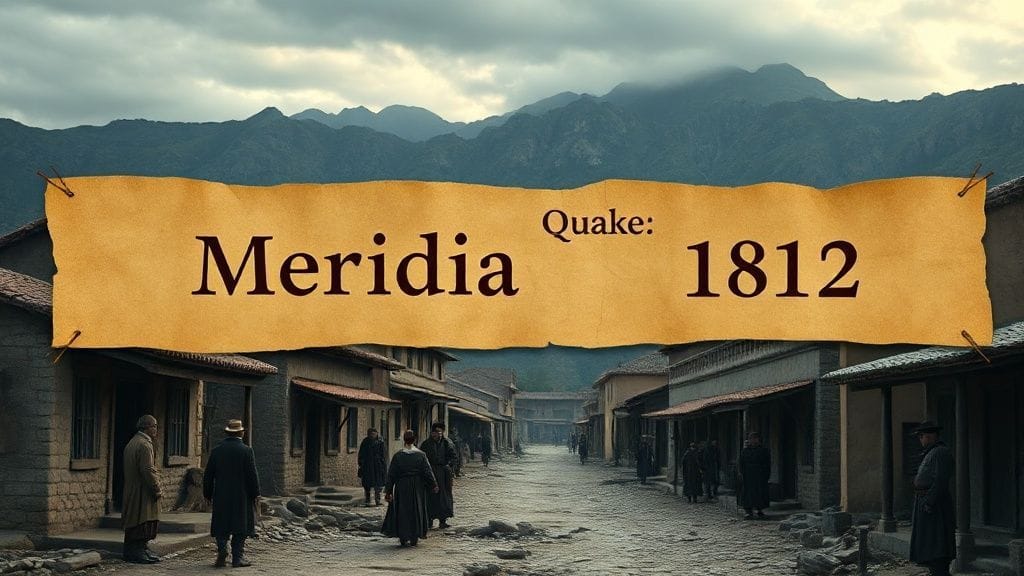
The Andes had been peaceful on the dawn of March 26, 1812. Beneath the quiet morning sun, the city of Mérida—nestled high in the Venezuelan mountains—stirred to life as merchants prepared their stalls and families went about their daily routines. But just as the sun cleared the peaks, a sudden and brutal force rent the earth beneath them. Buildings trembled violently; houses collapsed as the mountain awakened in an unexplainable fury. The roar of the land, deafening and primal, swept through valleys and towns, turning a serene morning into a tableau of horror. It was a moment that would mark the city — and the young nation — forever.
The Earthquake Unfolds: Tremors and Devastation in Mérida
At approximately 4 p.m. local time, the most devastating earthquake Venezuela had ever experienced shook the Andes. The shockwaves radiated through the rugged mountain terrain, leveling vast swathes of Mérida and beyond. Walls cracked, cathedrals crumbled, and the very ground seemed to twist beneath terrified feet. This was no mere natural occurrence; it was a catastrophe that tore through the fabric of society, a cruel reminder of nature’s unpredictability amid human upheaval.
This seismic event lasted moments but its impact was eternal. The city of Mérida, perched precariously among the peaks, suffered massive destruction — entire neighborhoods lay in ruins, and thousands perished. The Andes, so often awe-inspiring, now seemed merciless.
The Andes and Venezuela: A Volatile Geophysical Intersection
The Andes Mountains, stretching along the western edge of South America, are among the most tectonically active regions on the planet. Formed by the ongoing subduction of the Nazca Plate beneath the South American Plate, the mountain chain is prone to violent earthquakes. Venezuela, sitting on the northern edge of this complex plate boundary, experienced tremors that, while common, seldom matched the ferocity of the 1812 quake.
Geologically, the event was linked to the intense strain accumulated from these shifting plates. The release of energy in 1812 reshaped parts of the mountainous landscape — triggering landslides and fissures visible even decades later. The earth’s restless forces met with human vulnerability on this tragic day.
Venezuela on the Brink: Political and Social Turmoil in 1812
Yet, the earthquake struck more than just land and stone. The year 1812 was already a time when Venezuela was engulfed in political chaos. Just one year after declaring independence from Spanish rule, the young republic was fragile, riven with internal divisions and under threat from royalist forces determined to restore colonial control.
The earthquake’s devastation thus reverberated far beyond physical destruction. It came at a moment when morale was a precious resource and the fragile new nation risked fracturing under its burdens. For many, the disaster was read as a sign — divine, political, or both — of Venezuela’s precarious place in history.
The Colonial Backdrop: Struggles for Independence and Loyalties
The early 19th century was a cauldron of revolutionary fervor spilling across Latin America. Venezuela’s battle for liberty was intense, marked both by heroic declarations and brutal suppressions. The colonial government, headquartered in Caracas but with influence across the region, faced the revolutionary Junta led by figures like Francisco de Miranda.
Ideologies clashed — colonial loyalty facing the ideas of democracy and self-rule imported by Enlightenment thinkers. The earthquake added an unforeseen twist, complicating military campaigns, displacing civilians, and shaking faith in the fledgling republic’s future.
First Shock, Then Chaos: The Immediate Human Cost
When the earth stopped trembling, the true toll became horrific. Estimates vary, but it is believed that between 15,000 and 20,000 people perished in Mérida and surrounding towns. Entire families were buried beneath rubble; countless more were injured and left homeless.
The chaos bred fear and desperation. Survivors wandered amidst the ruins, mourning lost loved ones and searching for shelter. Food and clean water quickly became scarce. The region’s geography complicated rescue efforts — remote mountain villages were cut off as roads collapsed or rivers swelled from landslides.
Mérida’s Ruins: Portrait of Destruction in a Mountain City
Mérida had long been a center of colonial administration, culture, and religion in the Venezuelan Andes. Its Spanish colonial architecture — plazas, churches, and civic buildings — bore the ornate mark of centuries of history. After the quake, these proud symbols of endurance were twisted into shards and stones.
The Cathedral of Mérida, an imposing symbol of faith, suffered critical damage. Many other churches and monasteries — vital social centers — were lost or heavily impaired. The destruction marked not only a loss of buildings but a fracture in community life and tradition.
The Deadliest Earthquake in Venezuelan History up to Then
The 1812 earthquake remains recorded as the deadliest seismic event in Venezuelan history up to that time. Its scale was unprecedented in colonial memory, spreading destruction from Mérida into other Andean towns and even parts of Caracas.
The sheer human devastation transformed the way both colonists and creoles viewed natural disasters and their vulnerability. Where once the mountains had been a source of protection and isolation, they had become a terrifying force that humbled all.
Eyewitness Accounts: Voices from the Rubble
Contemporary letters and diaries offer haunting windows into the disaster. One survivor recalled, “The earth groaned… the houses shook like reeds in a storm… and the mountains echoed our cries.” Another wrote of the cries of children and the unbearable silence of fallen homes.
These testimonials give weight to a tragedy often reduced to numbers, reminding us that behind every ruined wall lay stories of hope, loss, resilience, and despair.
The Role of Religion and Interpretation of the Disaster
In a deeply Catholic society, the earthquake was initially interpreted as a divine punishment. Clergy and laypeople alike saw the disaster as a moral reckoning, a celestial warning for the sins of the people or the political upheaval shaking the land.
Some royalist factions even claimed the earthquake revealed God’s disapproval of the independence movement, an argument used to rally support against revolutionaries. This fusion of faith and politics shaped popular reactions and complicated recovery efforts.
Earthquake and Revolution: How Nature Lied with Politics
The earthquake did more than destroy cities; it intertwined itself with the political narrative of the era. The fragile revolutionary government was weakened not only physically but in perception — their capacity to protect citizens was questioned, and opposition forces gained momentum.
Military campaigns faltered as infrastructure collapsed, communication slowed, and fear spread. The natural disaster became a turning point, hastening internal divisions and the royalist reconquest of parts of Venezuela.
Disaster Relief in a Fragmented Society: Challenges and Responses
Relief efforts were chaotic and uneven. The young republic lacked the resources and organizational capacity to mount an effective response. Local elites and church leaders undertook much of the rescue and aid distribution, while Spanish colonial authorities sought to assert influence through assistance.
Communities used traditional methods to rebuild — often relying on cooperative labor and shared faith. Yet the trauma lingered, and social inequalities were laid bare as the poor suffered disproportionately.
Comparative Perspectives: Earthquakes in Latin America in the Early 19th Century
The 1812 Mérida earthquake can be compared to other catastrophes shaking Latin America during the era. In Chile, Peru, and Mexico, seismic activity coincided with independence movements, revealing a pattern of nature challenging nascent political orders.
Understanding these events in a broader context enriches our appreciation for how vulnerable societies faced both internal and environmental upheavals simultaneously.
Geological Insights: Understanding the Tectonic Setting of the Andes
Modern geology sheds light on why the Andes are prone to such violent seismic events. The ongoing subduction zone, volcanic activity, and deep fault lines make this region a hotbed of tectonic energy.
Research into the 1812 earthquake’s epicenter, intensity, and aftershocks informs contemporary risk assessments and highlights the importance of seismic preparedness in this vulnerable geography.
The March Earthquake’s Impact on Venezuelan Independence Movements
The earthquake’s timing dealt a blow to the movement of independence leaders. Resources were redirected from resistance to survival; military leadership fragmented, and morale suffered.
Nonetheless, the event also inspired narratives of endurance and divine favor, later used by revolutionaries to galvanize support. It was a complex crucible that shaped Venezuela’s path toward sovereignty.
The Memory of the 1812 Earthquake: Monuments, Literature, and Oral Traditions
Though centuries have passed, the earthquake remains etched in Venezuelan collective memory. Monuments and commemorations tell of the tragedy; literature and poetry capture its impact on the human spirit.
Oral histories passed among mountain families keep alive the stories of survival and loss, connecting past and present generations in a shared memorial.
Scientific Advancements Prompted by Catastrophe
In the aftermath, scholars and naturalists began efforts to understand the causes and mechanisms of earthquakes. The tragedy catalyzed the early scientific study of seismic activity in Venezuela and Latin America — an embryonic step toward the field of seismology.
Global Awareness: How News of the Disaster Reached the World
News of the Venezuelan earthquake traveled beyond local borders. Reports reached Europe through colonial channels, stirring empathy and curiosity about the young republic and its trials.
International observers noted the disaster within the context of global upheavals — the Napoleonic Wars and shifting empires — weaving Venezuela’s story into a broader world history.
Long-Term Economic Consequences for Mérida and Surrounding Regions
The destruction wrought by the earthquake severely impacted local economies. Agrarian communities lost infrastructure; trade routes were disrupted; artisanal industries suffered.
Recovery was slow and uneven, leaving some areas diminished for decades and highlighting the economic vulnerability of mountainous settlements.
Lessons Learned: Disaster Preparedness in Early Venezuela
The 1812 event became a case study in the need for disaster awareness and preparation. Though formal structures would only develop later, it underscored the importance of resilient architecture and community coordination in seismic zones.
The 1812 Earthquake in Historical Narratives and Textbooks
How historians and educators have presented the earthquake reflects changing attitudes. Initially a footnote to independence, it now stands recognized as a pivotal event shaping Venezuelan history, emphasizing human vulnerability amid nation-building.
From Rubble to Renewal: Rebuilding Efforts in Post-Earthquake Mérida
Reconstruction challenged citizens to not only rebuild structures but to restore community bonds fractured by disaster. Indigenous knowledge merged with colonial techniques to create new forms of architecture better suited to seismic threats.
This era of rebuilding laid foundations for modern Mérida.
Cultural Shifts: How the Earthquake Influenced Art and Thought
Artists and thinkers used the earthquake as a motif to explore themes of suffering, resilience, and destiny. Religious iconography evolved; secular literature interrogated humanity’s place in an uncertain world.
The earthquake sparked a cultural response that enriched Venezuelan identity.
Conclusion
The Mérida Earthquake of March 26, 1812 was far more than a natural disaster—it was a crucible where geology and history collided with devastating force. Its tremors shook buildings and shattered lives, yes; but more profoundly, it rattled the early Venezuelan republic’s fragile grip on independence and identity. In the shadows of collapsed cathedrals and among the shattered stones of mountain homes, a young nation confronted mortality, fate, and the daunting task of renewal.
This tragedy illuminated the raw vulnerability of human endeavors when faced with nature’s sublime power. Yet, it also revealed resilience—the determination of communities to rebuild, to reinterpret disaster through faith and reason, and to forge a path forward amid ruins.
The echoes of that fateful day still resonate—not only in Venezuelan memory but in the wider story of Latin America’s turbulent birth. Today, as seismic knowledge and disaster preparedness advance, the 1812 Mérida earthquake remains a solemn reminder and a source of inspiration: that from destruction can arise not only loss, but the enduring hope of rebirth.
FAQs
1. What caused the Mérida earthquake of 1812?
The earthquake was caused by tectonic movements along the boundary where the Nazca Plate subducts beneath the South American Plate. The intense geological forces in the Andes make Venezuela susceptible to such seismic events.
2. How many people died in the 1812 earthquake?
It is estimated that between 15,000 and 20,000 people lost their lives, making it the deadliest earthquake recorded in Venezuelan history until then.
3. How did the earthquake affect the Venezuelan independence movement?
The disaster severely disrupted military and administrative operations, undermined the morale of revolutionary forces, and was used by royalists as a sign of divine disapproval, complicating the fight for independence.
4. What kind of buildings were destroyed in Mérida?
Colonial architecture, including churches, civic buildings, and homes built primarily of adobe and stone, were extensively damaged or destroyed.
5. How did the survivors interpret the earthquake?
Most saw it as a divine punishment or a moral warning, reflecting the deeply religious fabric of society at the time.
6. Were there any scientific studies conducted after the earthquake?
Yes. The event spurred early interest in understanding seismic activity in the region, contributing to the nascent field of seismology in Latin America.
7. How did the earthquake influence Venezuelan culture?
The catastrophe inspired religious and secular art, literature, and oral traditions, contributing to a deeper cultural reflection on human fragility and resilience.
8. Is the 1812 earthquake remembered in modern Venezuela?
Yes, through monuments, education, literature, and oral histories, the disaster remains an integral part of Venezuela’s historical memory.