Table of Contents
- The Twilight of a Legend: December 12, 1204, Fustat
- The World in Flux: Political and Religious Currents of 12th-Century Egypt
- A Life of Genius: The Journey of Mūsā ibn Maymūn
- The Last Night: Recollections from Fustat’s Darkening Streets
- The Final Breath: Maimonides’ Death and Immediate Reverberations
- Mourning in Fustat: Family, Followers, and the Jewish Community
- Legacy in Motion: The Transmission of Maimonides’ Thought
- Beyond Borders: The Expanding Reach of His Philosophy and Halakha
- From Fustat to the World: Burial and Commemoration
- The Intersection of Faith and Reason: Maimonides’ Enduring Questions
- Political Realities in 1204 Egypt: Fatimid Decline and Ayyubid Ascendance
- Intellectual Crossroads: Interplay of Jewish, Islamic, and Christian Ideas
- The Silence After the Storm: How Maimonides Changed Jewish Life
- A Cultural Reverberation: Maimonides in Medieval and Modern Scholarship
- Quotations and Anecdotes: Voices Remembering the Rambam
- The Emotional Gravity: Humanity in the Shadow of Death
- Historical Debates: The Date and Facts of Maimonides’ Death
- The Philosophical Horizon: How His Death Marked a Transition
- Remembering Maimonides Today: Memory and Myth in Egypt and Worldwide
- Conclusion: The End of an Era, the Birth of an Eternal Legacy
- FAQs: The Man, His Death, and His Undying Influence
- External Resource: Wikipedia on Maimonides
- Internal Link: Visit History Sphere
On a chilly winter night in Fustat, the ancient heart of what would become modern Cairo, a man of profound wisdom breathed his last. The lanterns flickered softly against the mudbrick walls as the air held a quiet gravity. It was December 12, 1204—a date etched in history as the day Moses ben Maimon, known to many as Maimonides or Rambam, passed from the world, leaving behind an intellectual legacy that would ripple through centuries and civilizations.
This wasn’t simply the death of a scholar—it was the closing of a luminous chapter in Jewish thought and the wider intellectual traditions of the Mediterranean. Fustat, a city humming with trade, faith, and culture, stilled in reverence for a man who had been both a beacon and a bridge during turbulent times.
The evening air was heavy with the scent of frankincense and the murmurs of prayers echoing through narrow alleys, where scholars and merchants alike paused to reflect on the enormity of the loss. To those who knew him or knew of him, Maimonides was not merely a physician or rabbi, but a philosopher whose rigorous mind had sought to harmonize reason and tradition, faith and philosophy, law and life.
But this death was more than a personal farewell: it marked a turning point—within the Jewish community, the shifting sands of Middle Eastern politics, and the enduring dialogue between cultures. That night, the world did not just lose a man; it bid farewell to an era, while unknowingly setting the stage for a legacy that would flourish beyond walls and centuries.
From the waning days of the Fatimid Caliphate to the rise of Saladin’s Ayyubid dynasty, 12th-century Egypt was a crucible of cultural intersections and political upheaval. In the midst of this complexity lived Mūsā ibn Maymūn, a towering figure whose life story mirrors the vulnerabilities and aspirations of his era.
Born in Córdoba in 1135, Maimonides was a child of the Andalusian Golden Age, imbued with its rich tapestry of Jewish, Muslim, and Christian intellectual currents. Forced to flee Spain’s rising religious intolerance, his family’s odyssey took them through Morocco and ultimately to Egypt, where the Rambam would find fertile ground for his groundbreaking works. Yet, the city of Fustat, a thriving center under the Ayyubids, was no tranquil refuge. It was a city of bustling markets, religious fervor, and the looming shadows of political realignments.
Maimonides’ death in this city encapsulated a moment when the medieval world stood on the cusp of transformation. His passing was more than personal loss; it was emblematic of shifting paradigms—between medieval scholasticism and emerging modes of inquiry, between Jewish diaspora identities and the politics of the Islamic world.
To understand the gravity of this moment, one must delve deeper into the intricate threads that wove Maimonides’ life and times together. His death was an event anchored in a vast narrative of exile, faith, intellectual daring, and historical flux.
The streets of Fustat on that December evening bore witness to a rare stillness. The city, never silent, seemed momentarily hushed, as if itself mourning the impending loss. Close companions and disciples gathered at Maimonides’ modest home, their faces drawn with grief. Within, the air was thick with the heavy fragrance of myrrh and the flicker of candlelight against ancient manuscripts.
Accounts suggest that Maimonides, despite his failing strength, remained lucid to the end. His final words reportedly touched on unity and perseverance—themes that had defined his life’s work.
But the episode was not solely private sorrow. In the broader community, news of his decline spread quickly, drawing waves of admirers, scholars, and common folk eager to pay respects to the man who had touched their spiritual and intellectual lives. Yet even in this moment of reverence, the world outside churned: political intrigues, religious debates, and cultural tensions that his work had sought to engage, but could no longer direct.
As the sun set over the Nile, an era quietly folded—a master scholar, a healer, a philosopher, had moved beyond the mortal coil.
The gravity of Maimonides’ death transcended personal grief; it reshaped communities. For the Jews of Fustat, an already minority presence in Islamic Egypt, the event was both a spiritual and political crucible. Maimonides had served as a legal authority, a guide on Jewish law (Halakha), and an emblem of resilience.
The funeral, described in few contemporary sources but richly in later tradition, blended Jewish mourning rites with local customs. The procession moved through the evening streets, sons and students carrying the weight of their teacher’s legacy.
Family members faced the challenge of safeguarding manuscripts and teachings, a task that became urgent as the Rambam’s influence grew beyond Egypt’s borders. His son, Abraham Maimonides, would continue this mission, safeguarding not only texts but the intellectual spirit his father had nurtured.
For the Jewish population, Maimonides’ death was a moment of reflection—how to continue thriving in the diaspora while honoring an identity forged in history and faith, even in a land where they were outsiders.
Yet death did not silence Maimonides; rather, it catalyzed the dissemination of his writings and thought throughout the Jewish world and beyond. Within decades, works such as The Guide for the Perplexed and Mishneh Torah crossed cultural and linguistic boundaries, engaging philosophers, theologians, and jurists across continents.
His synthesis of Aristotelian philosophy and Jewish theology opened pathways for rational discourse within faith traditions, influencing not only Jewish scholars but Islamic thinkers and later Christian Europeans.
This transmission of ideas was not merely academic—it became a tool for communities grappling with modernity, identity, and faith. In the centuries following his death, Maimonides would be revered not only as a scholar but as a symbol of intellectual courage and spiritual clarity.
The political realities of Maimonides’ final years framed his death within a world in change. The Fatimid dynasty, once the sovereign rulers of Egypt, had waned, giving way to the Sunni Ayyubids under Saladin. This transition brought new legal and social orders within which Maimonides had to navigate.
His role as physician to Saladin's court positioned him at the heart of power, yet he remained, at its core, a servant to ideas bridging faiths. The complexities of a Jewish leader living in a Muslim-dominated society during volatile political shifts reveal layers of diplomacy and cultural negotiation.
His death coincided with the consolidation of Ayyubid power, symbolically signaling the passing of an era of cross-cultural coexistence into one of new political orthodoxies and challenges.
Maimonides’ death also invites reflection on the interplay between faith and reason that he so passionately championed. His commitment to rational thought within religious life questioned, inspired, and sometimes provoked.
This dialogue set the stage for intellectual movements that continued well beyond medieval times, serving as a foundation for modern philosophy, theology, and textual criticism. His assertion that wisdom and truth could serve faith remains a touchstone for scholars navigating the complex waters of belief and reason.
The weight of this legacy still resonates, reminding us that his death was not an end but a profound beginning.
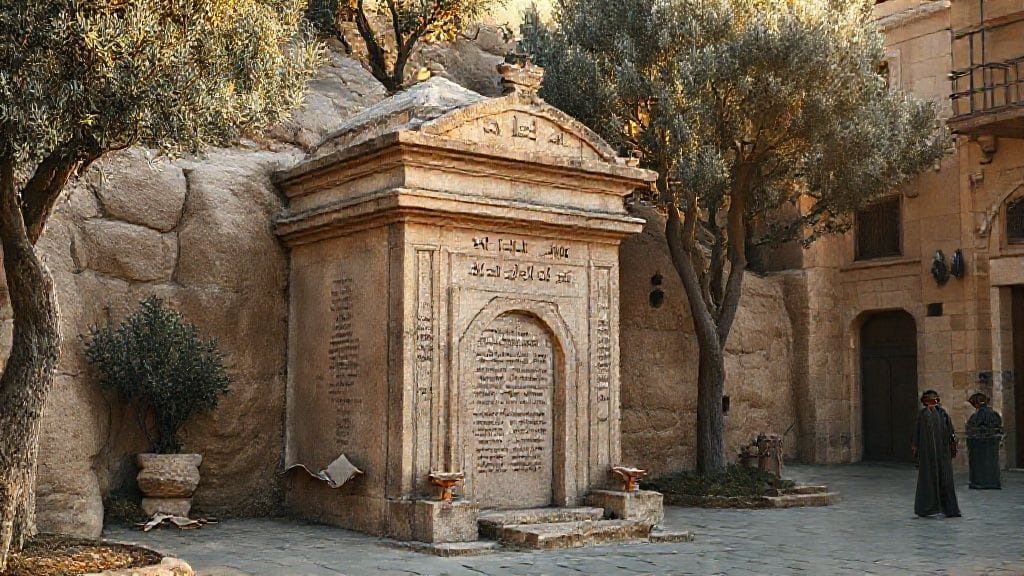
Remembering Maimonides today in Egypt requires peeling back layers of myth, history, and memory. His tomb, traditionally venerated in Tiberias, Israel, draws pilgrims worldwide, while his life story in Fustat (now part of Cairo) lies embedded in historical narratives seldom explored.
Yet cultural commemorations, scholarly conferences, and educational endeavors endeavor to revive this chapter—reclaiming Maimonides not only as a Jewish giant but as a universal figure symbolizing the quest for knowledge amid adversity.
In a world still grappling with conflict, identity, and coexistence, his story offers lessons in humility, dialogue, and perseverance.
Conclusion
The death of Maimonides in Fustat on December 12, 1204, was far more than the passing of a man; it was the departure of a luminous intellect at a pivotal historical moment. His final breath marked the closing of a chapter that blended exile, faith, and reason in a medieval world fraught with complex identities and shifting powers.
Yet, paradoxically, it was also the birth of an enduring legacy. From the narrow alleys of Fustat to the grand libraries of Europe, from the yeshivas of the diaspora to centers of philosophical inquiry, Maimonides’ life and death continue to inspire and challenge.
His story reminds us of the fragile beauty of knowledge, the human quest for meaning, and the power of one individual’s vision to transcend time and place. As night fell over Fustat that long-ago December day, a torch passed silently from the old world to the new—carried forward by countless hearts and minds, illuminated forever by the light of the Rambam.
FAQs
Q1: Who was Maimonides and why is he significant?
A1: Maimonides, or Moses ben Maimon, was a 12th-century Jewish philosopher, physician, and legal authority whose works bridged religious law and philosophy. His writings remain foundational in Jewish thought and influential across religions.
Q2: What were the circumstances of Maimonides’ death in Fustat?
A2: He died on December 12, 1204, in Fustat, Egypt, then a major cultural and political hub. His death was marked by communal mourning amidst a politically volatile backdrop.
Q3: How did the political environment of Egypt impact Maimonides’ life and death?
A3: Living through the decline of the Fatimids and rise of the Ayyubids under Saladin, Maimonides navigated complex religious and political dynamics, which shaped his roles as physician, scholar, and community leader.
Q4: What immediate impacts did his death have on the Jewish community in Egypt?
A4: His passing was a profound loss, prompting efforts to preserve and transmit his teachings. It also emphasized the tenuous status of Jews within Islamic Egypt.
Q5: How did Maimonides’ works spread after his death?
A5: His writings were translated and disseminated across Jewish communities in Europe, the Middle East, and North Africa, influencing theology and philosophy broadly.
Q6: Where is Maimonides buried?
A6: Although he died in Fustat, traditional accounts place his tomb in Tiberias (modern Israel), a pilgrimage site today.
Q7: How is Maimonides remembered in modern times?
A7: He is celebrated as a symbol of intellectual rigor and spiritual depth, commemorated in scholarship, religious study, and cultural heritage worldwide.
Q8: What was Maimonides’ contribution to philosophy and religion?
A8: He reconciled Aristotelian philosophy with Jewish theology, advocating for reasoned faith, and wrote extensively on Jewish law, ethics, and medicine.
External Resource
For a comprehensive overview:
Internal Link
🏠 Visit History Sphere → https://historysphere.com/