Table of Contents
- The Morning the Earth Shook: Manjil–Rudbar’s Tragic Dawn
- An Unseen Threat Beneath the Mountains
- The Geology of Devastation: Why This Region Was Vulnerable
- Early Warning Signs and a Landscape of Risk
- The Seconds That Changed Iran Forever
- Immediate Aftermath: Chaos and Despair in Manjil and Rudbar
- Rescue Efforts: Stories of Heroism Amid Ruins
- The Human Toll: Lives Lost and Communities Shattered
- Government Response: Relief, Reconstruction, and Challenges
- International Aid and Solidarity: A World Responds
- The Earthquake's Impact on Iran’s Infrastructure and Economy
- Cultural Memory and the Stories Surviving the Rubble
- Scientific Advances Spurred by the Disaster
- Comparing Manjil–Rudbar to Other Great Earthquakes of the 20th Century
- Living with the Threat: Seismic Awareness in Modern Iran
- Retrospective Analysis: What Could Have Been Prevented?
- Legacies of the Manjil–Rudbar Earthquake on Iranian Society
- When the Earth Speaks: Voices of Survivors
- Natural Disaster and Political Dynamics: The Earthquake’s Wider Context
- Lessons Learned: Building Resilience for the Future
The Morning the Earth Shook: Manjil–Rudbar’s Tragic Dawn
At 00:34 local time on June 21, 1990, a violent shudder radiated through the rugged landscapes of northern Iran. The earth convulsed with a force so immense that the night air, heavy with the scent of pine and mountain soil, was shattered by sudden screams and the grinding crash of falling stone and timber. For those nestled in Manjil and Rudbar, the quake was not just a natural event but a cataclysmic rupture in the very fabric of their lives — a moment when mountains seemed to split and homes crumbled into ruins. In the darkness, thousands were wrenched from sleep, thrust into chaos, and forever marked by the earth’s unforgiving wrath.
This was no ordinary tremor. Measuring a staggering 7.4 on the Richter scale, the Manjil–Rudbar earthquake was one of the deadliest seismic disasters in Iran's modern history. It left behind a trail of devastation so profound that the landscape itself seemed altered, towns razed to debris piles, and countless lives extinguished in the blink of an eye.
An Unseen Threat Beneath the Mountains
The region of Manjil and Rudbar, nestled near the southern base of the Alborz mountain range, had long been a picturesque area—notorious, however, for its seismic volatility. Iran, resting atop the complex collision zone of the Arabian and Eurasian tectonic plates, had a well-documented history of earthquakes. Yet, the sheer scale and ferocity of the 1990 event caught communities off-guard, exposing vulnerabilities embedded deep within the nation’s seismic fabric.
In these mountainous provinces, many villages and towns continued to grow in areas known for fault activity. The landscape, beautiful but treacherous, held invisible fault lines like silent predators beneath soil and rock. The Manjil fault, part of the wider North Tabriz fault system, had been silently accumulating decades of strain—energy that would one day inevitably be unleashed.
The Geology of Devastation: Why This Region Was Vulnerable
Understanding the Manjil–Rudbar earthquake requires peering into the region’s geological anatomy. Iran’s tectonics boil down to the ongoing northward collision of the Arabian Plate into the Eurasian Plate, a cataclysmic squeeze that has molded the Zagros and Alborz mountain ranges. The specific fault responsible—the Shahrud fault zone—locked beneath the surface for decades, storing elastic energy until it fractured violently in June 1990.
This regional seismic hazard was exacerbated by several factors: steep mountainous topography prone to landslides, soil liquefaction potential in valley basins, and a preexisting fragile infrastructure that bore poorly against shaking. When the rupture began, the earth ripped open along a 100-kilometer stretch, sending aftershocks pulsing like relentless echoes in the days that followed.
Early Warning Signs and a Landscape of Risk
In the weeks preceding the earthquake, subtle tremors had stirred unease. Locals recalled mild tremblings, unexplained rockfalls, and restless livestock. Geologists at Tehran University noted increased microseismic activity and hinted at a looming major event—yet the nation’s preparedness infrastructure remained rudimentary at best.
Traditional buildings, often made of adobe or unreinforced masonry, dominated the rural landscape. These materials, while economical and culturally typical, offered scant protection against seismic waves. Urban centers saw more modern constructions, but even these were generally not up to the highest earthquake-resistant standards.
The Seconds That Changed Iran Forever
At 12:34 AM, a vicious rupture began approximately 20 kilometers below the surface. The initial jolt was felt as a violent shaking that lasted nearly 15 seconds—an eternity for those trapped in collapsing homes. The earthquake's hypocenter was near Manjil, but the rupture propagated southwards, inflicting the greatest destruction in Rudbar.
The ground cracked open in multiple locations. Roads were rent apart, disrupting transportation and communications. Electric and water supplies vanished overnight, plunging survivors into darkness and thirst. The mountainous terrain turned treacherous with landslides burying entire valleys and isolating communities.
But amidst the chaos, harrowing tales emerged: families awakened by the shaking scrambled out to huddle in the cold night air; strangers risked life and limb to rescue neighbors trapped beneath timber and stone.
Immediate Aftermath: Chaos and Despair in Manjil and Rudbar
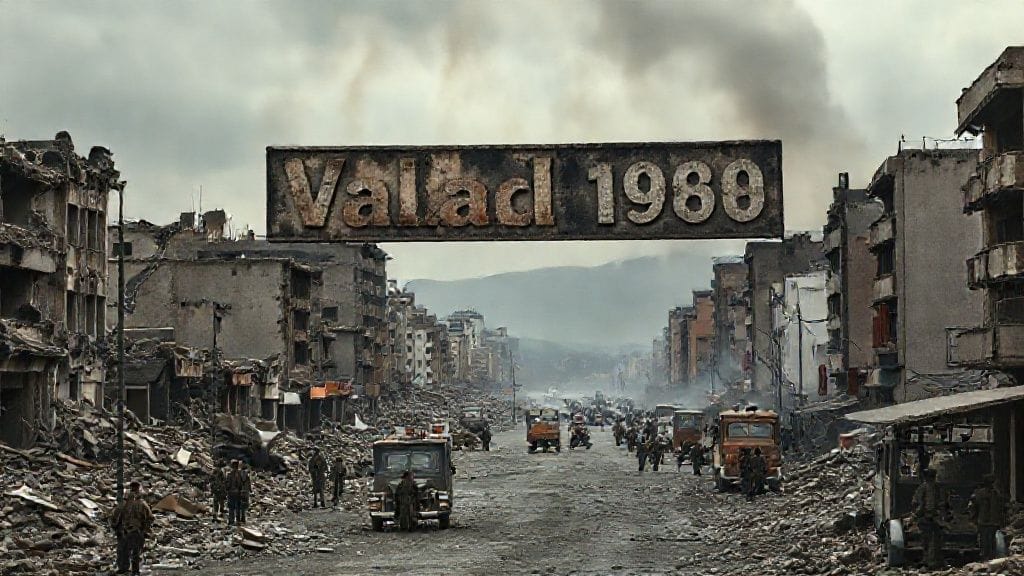
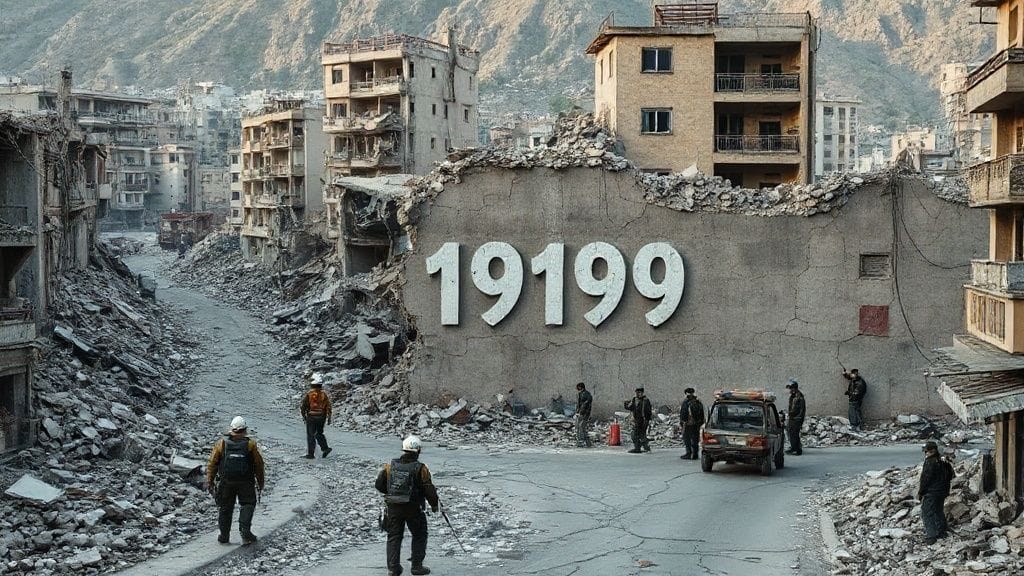
By dawn, the scale of catastrophe became horrifyingly evident. Entire villages had disappeared under rubble. The official death toll soon approached 40,000, with tens of thousands more injured or displaced. Manjil, once a bustling hub, lay in ruins; Rudbar faced similar annihilation.
Hospitals and emergency services were overwhelmed. Makeshift relief shelters sprang up amid dusty ruins, but resources were scarce. Survivors wandered stunned, in shock or grief, clutching memories of loved ones lost. In towns still standing, panic mingled with disbelief, as news spread and family members searched desperately for survivors.
Rescue Efforts: Stories of Heroism Amid Ruins
Amid the devastation, stories of courage shone. Local volunteers, joined by Iranian Red Crescent teams, army units, and civilian rescuers, worked tirelessly to extricate victims from collapsed buildings. There were accounts of dogs trained to find survivors, of lone individuals digging with bare hands, and of communities banding together despite the trauma.
These acts of bravery underscored the humanity shining through disaster. Yet, challenges abounded: inaccessible roads hampered aid delivery, and aftershocks kept shattering fragile buildings, putting rescuers’ lives at risk. One poignant moment recorded by journalists was the rescue of a child trapped for nearly 72 hours, reminding the world of hope amid despair.
The Human Toll: Lives Lost and Communities Shattered
Beyond numbers, the earthquake tore at the social fabric. Entire families vanished, others fragmented by injury or displacement. The survivors wrestled with not just physical wounds, but the psychological scars of trauma and loss.
Rudbar’s population, many of whom relied on agriculture and handicrafts, suddenly faced bleak futures. Schools were destroyed, cutting education, while the elderly and disabled were often hardest hit in the chaos. Thousands were left homeless in midsummer heat, facing exposure and inadequate shelter.
Government Response: Relief, Reconstruction, and Challenges
The Iranian government swiftly declared a state of emergency. Military and emergency agencies mobilized to distribute food, water, and medical aid. Temporary camps were established, and engineers assessed structural damage.
Nonetheless, the scale of destruction strained resources. Reconstruction faced hurdles: remote mountain villages were difficult to access, materials were scarce, and rebuilding to safer seismic codes was costly. This disaster exposed weaknesses in urban planning and disaster preparedness that Iran had yet to fully address.
International Aid and Solidarity: A World Responds
Iran’s tragedy resonated globally. Despite political tensions, nations and humanitarian organizations offered assistance. Medical teams, equipment, and financial aid arrived from around the world. The United Nations and Red Cross coordinated efforts, highlighting how natural disasters temporarily bridge political divides.
Yet, these efforts were sometimes slowed by logistical complications and the scale of devastation. Still, foreign aid played a crucial role in supplementing Iran’s overwhelmed response and underscored the interconnectedness of our global community in the face of calamity.
The Earthquake's Impact on Iran’s Infrastructure and Economy
The economic blow was staggering. Roads, bridges, and railways suffered crippling damage, isolating the region for weeks. Agricultural lands were scarred by landslides and disrupted irrigation. Industries faced shutdowns, and vital supply routes faltered.
Estimates placed damages at hundreds of millions of dollars, a heavy burden for a recovering Iranian economy. Reconstruction efforts required years and considerable investment. Yet, the disaster also sparked initiatives to improve building codes and infrastructure resilience nationwide.
Cultural Memory and the Stories Surviving the Rubble
Beyond physical reconstruction, the earthquake imprinted itself on Iran’s cultural memory. Poets, writers, and artists grappled with the sorrow and resilience of their communities. Memorials were erected, and annual commemorations began to honor the lost.
Eyewitness accounts and oral histories collected form a vital record, preserving the voices of survivors. They speak of heartbreak, but also the unyielding human spirit to rebuild and remember.
Scientific Advances Spurred by the Disaster
Scientifically, the Manjil–Rudbar earthquake became a case study that enriched understanding of Iran’s seismic risks. Seismologists deployed advanced monitoring equipment in the aftermath, mapping fault lines with greater precision.
Studies of ground motion and structural failure from this quake influenced national policies on earthquake-resistant construction. The disaster became a tragic but crucial turning point in Iran’s approach to seismic safety and urban planning.
Comparing Manjil–Rudbar to Other Great Earthquakes of the 20th Century
While the 1990 quake was devastating, it is often compared to the 2003 Bam earthquake or the 1999 İzmit quake in Turkey. Each shaped regional awareness of seismic hazards uniquely. Where Bam struck further south and İzmit impacted Turkey’s industrial heartland, Manjil–Rudbar reminded Iran of the persistent earthquake risks posed even in remote mountainous areas.
These comparisons provide a lens to understand evolving disaster responses and the importance of preparedness.
Living with the Threat: Seismic Awareness in Modern Iran
Three decades after the event, Iran remains one of the world’s most earthquake-prone countries. However, public awareness and governmental emphasis on seismic education have grown. Drills in schools, stricter building regulations, and technological improvements aim to reduce loss should another earthquake strike.
The Manjil–Rudbar earthquake remains a stark warning—nature’s reminder of the price paid when vulnerability meets power.
Retrospective Analysis: What Could Have Been Prevented?
Hindsight reveals that many lives might have been saved with better building standards and emergency preparedness. Retrofitting older constructions and improved early warning systems were glaring needs exposed.
The disaster has since become a case study taught in engineering and geology courses in Iran, encapsulating not only tragedy but lessons in prevention—so future generations might endure less.
Legacies of the Manjil–Rudbar Earthquake on Iranian Society
Socially, the earthquake catalyzed a surge in community solidarity and reshaped notions of disaster aid. It also generated political discourse on infrastructure investment and national priorities.
For many Iranians, the memory is both personal and national — a somber chapter that forged resilience, challenged governance, and advanced scientific knowledge alike.
When the Earth Speaks: Voices of Survivors
Survivors’ testimonies form an emotional core to this tragedy. From elders describing the thunderous roar beneath the earth to children recounting the terror of sudden darkness and collapse, these voices translate abstract statistics into human experience.
Their stories inspire remembrance and recovery, ensuring the Manjil–Rudbar earthquake is never forgotten.
Natural Disaster and Political Dynamics: The Earthquake’s Wider Context
In the broader geopolitical context, the earthquake struck during a fragile period for Iran—still grappling with the aftermath of the Iran-Iraq war and its own internal shifts. The disaster tested the government’s ability to provide security and recovery, affecting public trust.
Additionally, it opened channels for international cooperation, displaying how calamities can both challenge and bridge political divides.
Lessons Learned: Building Resilience for the Future
Today, the earthquake’s legacy fuels continuous efforts to mitigate impact from future quakes. Iran invests in seismic monitoring, embraces global best practices, and promotes public education.
Manjil–Rudbar is a stark reminder that while the earth’s forces are uncontrollable, human vulnerability is not inevitable. Through knowledge, preparation, and unity, resilience can be built to face the next seismic challenge.
Conclusion
The Manjil–Rudbar earthquake of June 1990 remains one of the most poignant reminders of nature’s volatile power and humanity’s enduring fragility. It tore apart mountains and lives in mere seconds, but it also unveiled deep reservoirs of courage, community, and resilience. The tragedy exposed vulnerabilities—both physical and societal—that Iran has strived to address since. More than three decades later, the memory of that dark night is distilled into lessons etched into policy, science, culture, and the hearts of survivors.
This disaster stands as a testament: when the earth roars, it demands more than fear—it demands foresight, solidarity, and humanity’s unyielding will to rise from rubble and rebuild stronger than before.
FAQs
Q1: What caused the Manjil–Rudbar earthquake in 1990?
A: The earthquake occurred due to the sudden release of strain along the Shahrud fault zone, part of the tectonic collision between the Arabian and Eurasian plates beneath northern Iran. The buildup of elastic energy in this fault culminated in a powerful rupture.
Q2: How many people were affected by the earthquake?
A: Approximately 40,000 people lost their lives, tens of thousands were injured, and many more were displaced in the aftermath. Entire villages were destroyed, deeply impacting communities in Manjil, Rudbar, and surrounding areas.
Q3: What were the main challenges faced during rescue operations?
A: Rescue efforts were hindered by aftershocks, difficult mountainous terrain, damaged infrastructure like roads and bridges, and limited resources. Despite this, local volunteers and emergency teams performed heroic acts to save lives.
Q4: How did the Iranian government respond to the disaster?
A: The government declared a state of emergency, mobilized military and relief agencies, established temporary shelters, and initiated reconstruction efforts. However, the scale of destruction presented significant logistical and financial challenges.
Q5: What scientific lessons were learned from this earthquake?
A: The earthquake spurred advances in seismology, especially in fault mapping and ground motion analysis in Iran. It also prompted improvements in building codes and urban planning to enhance earthquake resilience nationwide.
Q6: How has the earthquake influenced Iran’s disaster preparedness today?
A: The catastrophe highlighted the need for better earthquake education, stricter enforcement of building codes, and enhanced monitoring systems. Iran today conducts seismic drills and invests in infrastructure that can better withstand future tremors.
Q7: Are there memorials or cultural commemorations related to the earthquake?
A: Yes, memorials exist in affected regions, and survivors’ stories are preserved through oral histories, literature, and art. Annual commemorations honor the victims and serve as reminders to remain vigilant against seismic risks.
Q8: How does the Manjil–Rudbar earthquake compare to other regional seismic disasters?
A: It ranks among the deadliest in Iranian history, comparable to the 2003 Bam earthquake and 1999 İzmit earthquake in neighboring Turkey, each highlighting regional vulnerability and shaping disaster response policies differently.