Table of Contents
- A Frontier in Flames: Setting the Stage in Northern Italy
- Rome at High Tide: The Empire Before the Storm
- Peoples Beyond the Danube: Who Were the Marcomanni and Quadi?
- Aquileia, Jewel of the Northeast: A City Worth Invading
- From Uneasy Peace to Open War: Tensions on the Danube Frontier
- The Winter That Broke the Barrier: Invasions Across a Frozen Danube
- Panic in the Provinces: The March Toward Aquileia
- Marcomanni and Quadi Sack Aquileia: The Day the Gates Fell
- Blood in the Forum: Inside the Sack of Aquileia
- Rome Trembles: Political Shockwaves in the Capital
- Marcus Aurelius at War: Philosophy Under the Northern Sky
- Survivors, Captives, and Colonists: Human Stories of Displacement
- Restructuring the Frontier: Forts, Legions, and New Strategies
- From Local Disaster to Imperial Turning Point
- Memory, Myth, and Misreading: How Later Generations Saw the Sack
- Archaeological Echoes: Traces of Fire in the Soil of Aquileia
- Conclusion
- FAQs
- External Resource
- Internal Link
Article Summary: In 170 CE, the Roman Empire faced a shock it had not known for generations: Germanic warbands surged over the Danube and struck deep into Italy, and the marcomanni and quadi sack aquileia became a symbol of that terrifying incursion. This article unfolds the story of Aquileia’s fall by painting the world that produced it—Rome at its apparent height, yet riddled with hidden fractures. We explore who the Marcomanni and Quadi were, what drove them from their homelands, and why Aquileia, a rich mercantile city, became their fateful target. Through narrative reconstruction and historical analysis, we revisit the moment when the marcomanni and quadi sack aquileia shattered the illusion of eternal Roman security. We then follow the imperial response under Marcus Aurelius, the philosopher-emperor forced into a grim northern war that would shape the rest of his reign. Alongside politics and strategy, we trace the human consequences: refugees, captives, burned houses, and broken trade networks reaching across the Mediterranean. Finally, the article considers how the memory of the marcomanni and quadi sack aquileia influenced later views of Rome’s decline, and what archaeology can still reveal about that terrible year. In doing so, it presents the sack not as an isolated episode, but as a turning point in the long, uneven unraveling of Rome’s frontiers.
A Frontier in Flames: Setting the Stage in Northern Italy
The year 170 CE opened like any other along Rome’s northeastern frontier, with winter winds sweeping down from the Alps and stalls in Aquileia’s forum piled high with wool, wine amphorae, and Baltic amber. Yet beneath this ordinary rhythm of commerce, a sense of unease had begun to coil through the borderlands. Rumors, carried by traders and scouts, spoke of restless tribes beyond the Danube, of failed harvests, of restless warriors sharpening spears and dreaming of Roman grain and Roman gold. When we speak of the moment the marcomanni and quadi sack aquileia, we are not merely describing a sudden disaster, but the climax of years of quiet strain. Northern Italy in the late second century stood at the intersection of worlds—a prosperous hinterland of the Empire and a magnet for the ambitions of those who lived just outside Rome’s hardened frontiers.
Aquileia itself, planted near the head of the Adriatic Sea, was a node where several stories converged: the empire’s spreading military machine, its voracious economic appetite, its cultural prestige, and its growing dependence on imported manpower from the very peoples who would soon strike at it. Beyond the Julian Alps, the Danube flowed like a cold, shifting boundary, lauded in triumphal inscriptions as a secure limes, a line that kept “civilization” and “barbarism” apart. Yet frontiers are never clean. Men from Marcomannic and Quadian communities served as Roman auxiliaries, traded along Roman roads, adopted Roman ornaments, and listened in awe—or in envy—to merchants’ tales of marble cities and bustling ports. The frontier was a membrane, not a wall, and by 170 that membrane was fraying.
In the Senate House in Rome, few suspected that the next blow to the empire’s prestige would fall so close to the heartland. External threats were supposed to be contained at the periphery: uprisings in distant provinces, raids in the Syrian desert, skirmishes in Britain’s rain-swept north. Northern Italy felt safe. After all, no hostile army had crossed its fields in living memory. Yet this sense of invulnerability was itself a historical construct, born from the long security following Augustus’s conquests and the careful management of frontier diplomacy. Once conditions shifted—climate, population pressure, imperial attention—the stage was set for a crisis that would seem, to contemporaries, like an impossible breach of the natural order.
To grasp the horror bound up in the phrase marcomanni and quadi sack aquileia, we must first reconstruct what that “natural order” meant. Farmers in the Po Valley sowed wheat in the certainty that their harvests would move safely by river and road to feed distant cities. Merchants invested in caravans and ships assuming that imperial law, garrisons, and watchtowers would keep bandits and raiders at bay. Municipal elites in Aquileia built theaters and temples, commissioned statues, and competed for prestige in the expectation that the empire’s protective umbrella would last forever. The idea that armed strangers from the far side of the Danube could burn their streets and drag away their families belonged, they thought, to a half-remembered, pre-Roman past. But that past was about to return, in flames.
Rome at High Tide: The Empire Before the Storm
In 170 CE, the Roman Empire stretched from the misty moors of northern Britain to the sun-drenched Nile, and from the Atlantic shores of Hispania to the arid plateau of Armenia. On maps, it appears like a solid block of imperial red, a unified space of roads, legions, and Latin inscriptions. Politically, this was the era of the so‑called “Five Good Emperors,” an age later romanticized by historians such as Edward Gibbon as Rome’s golden summit. Marcus Aurelius, the reigning emperor, was known as a philosopher, a student of Stoic thought who scribbled private reflections to himself in Greek. At first glance, nothing could have seemed more distant from the raw violence suggested by the phrase marcomanni and quadi sack aquileia than the meditative quiet of the imperial study.
But beneath the polished marble of Rome’s public image, stress lines were growing. The reign of Marcus Aurelius had already been scarred by the Antonine Plague, a devastating epidemic—often associated with smallpox—that had swept across the empire since the late 160s. Population losses are difficult to measure, but modern historians estimate that as much as a quarter of the population may have been affected in some regions. Legionary camps, frontier colonies, and urban centers alike felt its sting. Recruitment became harder. Tax revenues wavered. The army, that enormous and hungry instrument of Roman power, began to strain to cover the empire’s vast frontiers.
Meanwhile, on the far side of those frontiers, societies were changing too. The Germanic world was never a static tableau of “barbarians” awaiting Roman contact. It was a mosaic of tribes, alliances, and petty kings whose relationships with Rome oscillated between hostility and dependence. Increased contact with the empire had brought prestige goods—Roman weapons, coins, glassware—that could strengthen local chiefs’ authority. Yet it also fostered new inequalities and new tensions. Closer to the Danube, some peoples had become semi‑dependent foederati, their young men serving in Roman auxiliary units in exchange for subsidies and favorable trade.
By the time the marcomanni and quadi sack aquileia, these underlying processes had been in motion for decades. What makes 170 CE pivotal is the way multiple crises converged. The epidemic weakened Roman manpower just as pressures across the Danube intensified. The attention of the imperial court had been divided by ongoing conflicts with the Parthian Empire in the East. And within the senatorial aristocracy, some voices balked at the escalating expenses needed to reinforce frontier troops. Rome was still powerful, but its power was not infinite. The idea that the imperial heartland was untouchable depended on a careful balancing of resources, diplomacy, and intimidation. It was precisely this balance that would fail in the years leading to Aquileia’s fall.
To contemporaries, the shock of barbarian warbands in the plains of northern Italy felt like the shattering of a long illusion. To us, looking back with a historian’s hindsight, it appears less like a lightning bolt out of a clear sky and more like the inevitable thunder after a long, distant rumble. The story of the marcomanni and quadi sack aquileia is thus as much about Rome’s internal vulnerabilities as it is about external aggression.
Peoples Beyond the Danube: Who Were the Marcomanni and Quadi?
Long before their names were etched into Roman memory as invaders, the Marcomanni and Quadi were simply two of many Germanic peoples living in the forested heartlands of Central Europe. Their homelands lay roughly in what is now the Czech Republic and western Slovakia, centered around the upper Elbe and upper Danube basins. Roman authors such as Tacitus described the Marcomanni as once having lived closer to the Rhine before they migrated eastward, driven at least in part by pressure from other tribes and by the allure of lands less dominated by Roman military presence.
The Marcomanni—whose name may mean “men of the border” or “marchmen”—were not a single monolithic state but a confederation of clans, forged under strong leaders at particular moments. In the early first century CE, King Maroboduus had tried to build a more centralized kingdom that could stand as a serious rival to Rome, but internal rivalries and Roman diplomacy undercut his power. The Quadi, neighbors and sometimes allies, occupied territories further east, and Roman writers often mention the two together, as if they formed a stable pair. But in reality, alliances shifted, and loyalty followed charismatic leaders, plunder, and survival needs.
Life beyond the Danube was organized around kinship networks, warrior status, and seasonal agriculture. Settlements were small, often little more than clusters of wooden houses and store pits. Social prestige depended heavily on the ability to distribute wealth acquired in raids or from Roman gifts. Spears, shields, ornate fibulae, and imported Roman metalwork marked out elites from commoners. Religion centered on local cults and sacred groves, with no temples to rival Rome’s, but with rituals equally powerful in shaping identity and courage before battle. When the marcomanni and quadi sack aquileia, they did so not as faceless invaders, but as communities with their own deep histories, myths, and fears.
Contacts with Rome had left their imprint. By 170 CE, young Marcomanni and Quadi might have worn Roman-style belts, used Roman coins as jewelry, or boasted of kinsmen who had served in auxiliary cohorts stationed in Pannonia. At the same time, they knew the stories of punitive Roman raids across the Danube, of forests burned and hostages taken. To many tribal leaders, Rome was both a source of riches and a looming threat that had to be managed carefully. In good years, diplomatic relations meant grain subsidies, prestige gifts, and occasional marriage ties. In bad years, a single misjudged embassy or a harsh Roman governor could tip the balance toward war.
In the decades before the marcomanni and quadi sack aquileia, demographic and climatic shifts may have driven more mouths to feed onto the same land. Archaeological evidence suggests increasing settlement density in some regions, which, when combined with possible harvest failures, could make the promise of Roman grain stores immensely enticing. When traders returned from Aquileia and other Roman cities describing warehouses bursting with wine, oil, and wheat, the contrast with subsistence-level life beyond the frontier must have been stark. Ambitious leaders, seeking to bind warriors to them and to answer the demands of kin and clients, found in raiding and migration both a solution and a dangerous gamble. The invasions of 170 were not a sudden decision, but the culmination of long-standing structural pressures and opportunities.
Aquileia, Jewel of the Northeast: A City Worth Invading
Aquileia was not some obscure frontier outpost, but one of the most important cities in northern Italy. Founded in 181 BCE as a Latin colony, it had begun its life as a military bulwark against Celtic tribes in the region. Over the centuries, it evolved into something more: a bustling commercial hub, a crossroads where the traffic of the empire’s northeastern corner converged. By the second century CE, travelers arriving at Aquileia would have seen monumental gates, paved streets flanked by porticoes, and the silhouettes of temples and warehouses lining the horizon.
The city’s strategic position at the head of the Adriatic meant that goods from the Balkans, the Danubian provinces, and even further north could be funneled through its markets. Wines from Campania, olive oil from Hispania, glassware from the eastern Mediterranean, and furs and amber from the north all met here, were taxed, resold, and dispatched along well-maintained roads toward the interior. Legions bound for the Danube front often assembled in or near Aquileia; its docks saw the movement of troops, horses, and supplies. When we say that the marcomanni and quadi sack aquileia, we are not describing the fall of a mere town, but a serious blow to Rome’s logistical and economic infrastructure.
Socially, Aquileia boasted a layered urban society typical of Roman provincial centers. Local aristocrats, many of whom held Roman citizenship, invested their wealth in monumental building projects—theaters, baths, colonnades—that proclaimed their status and piety. Freedmen and merchants formed active collegia, guild-like associations that regulated trade and provided social support. At the bottom of the hierarchy were slaves, dockworkers, and rural laborers who streamed into the city on market days. Inscriptions from Aquileia mention men and women from far-flung regions, testifying to its cosmopolitan character. Latin was dominant, but Greek and various provincial tongues could be heard in its streets.
The city’s defenses, inherited from its early military role, had been modified over time, but like many inland Italian centers, Aquileia’s walls were not designed with the expectation of withstanding a full‑scale siege by determined foreign enemies. Security was assumed to rest on distance and on the legions stationed along the Danube line. When the marcomanni and quadi sack aquileia, they were exploiting a blind spot in Roman strategic thinking: that the homeland was so distant from the frontier that no organized enemy could reach it before being intercepted. The idea that hostile warbands could stand before Aquileia’s gates, unchallenged by imperial forces, seemed unthinkable—until it happened.
Within Aquileia’s temples, statues of emperors, gods, and personified virtues looked down on worshippers who prayed for prosperity and protection. Devotees lit incense to Jupiter Optimus Maximus, to Mars the protector, to the genius of the city and the genius of the emperor. They believed, as most Romans did, that the favor of the gods aligned with Rome’s power. If the empire thrived, it was because the gods approved of its order. Imagine, then, the psychological impact when, despite the prayers and processions, the marcomanni and quadi sack aquileia and the smoke of burning roofs curls darkly past those same statues. The sack struck not just at material wealth, but at entrenched assumptions about divine favor and historical destiny.
From Uneasy Peace to Open War: Tensions on the Danube Frontier
Even before 170 CE, the Danube frontier was simmering. Small raids, diplomatic quarrels, and shifts in client-king loyalties punctuated what Roman inscriptions liked to label as “peace.” The very phrase pax Romana glosses over how contingent and negotiated that peace really was. In the decades leading up to the crisis, imperial agents pursued a complex strategy: subsidizing some tribes, punishing others, playing one group against another, and periodically launching intimidating punitive expeditions. The goal was to keep potential threats fragmented and dependent on Roman goodwill.
Yet several developments undermined this strategy. First, the Antonine Plague weakened garrisons. Frontier troops sickened and died, and replacements were slower to arrive. Second, successes in the East had drawn imperial attention and resources away from the Danube. Victories over Parthia brought prestige and plunder, but they also fostered complacency elsewhere. Frontier commands along the northern line sometimes fell to men of lesser talent or to those more interested in personal enrichment than long-term stability. Finally, in the lands of the Marcomanni and Quadi themselves, we can infer from scattered evidence that pressures—population, food shortages, or encroachment by other tribes—were building toward a breaking point.
Diplomatic embassies in this era often dealt with tribal requests for land within imperial territory or for more substantial grain subsidies. Roman governors were reluctant to grant such demands easily, fearing that generosity would be seen as weakness and attract more supplicants. At some point, negotiations failed, and an embittered chieftain might decide that what would not be given by treaty could be taken by force. The marcomanni and quadi sack aquileia marks the catastrophic outcome of one such chain of miscalculations and hardened positions.
Our literary sources, especially the later work known as the Historia Augusta and the narrative of Cassius Dio, sketch the Marcomannic conflicts but are colored by hindsight and Roman bias. They speak of vast numbers of invaders, of treacherous embassies, and of heroic imperial counterattacks. Yet even filtered through this partisan lens, certain patterns emerge: initial crossings of the Danube, local Roman defeats, the overrunning of frontier forts, and the progressive deepening of the incursion into imperial territory. What began as a frontier war soon became something else—a migratory movement of peoples, with non‑combatants in tow, seeking not just plunder but perhaps new lands within the empire’s safer, richer interior.
The idea that barbarian groups might seek settlement, not just loot, alarmed Roman officials. Allowing large numbers of foreigners to settle en masse in imperial provinces threatened to dilute Roman control and challenge landholding patterns. But trying to force these groups back across the river, once they had crossed with families and flocks, required swift and decisive action that the empire in the 160s and 170s struggled to provide. Every delay along the Danube opened space for warbands to push further south, probing for weaknesses. Aquileia, with its warehouses full of goods and its central role in army logistics, loomed like a beacon ahead.
The Winter That Broke the Barrier: Invasions Across a Frozen Danube
One image has lingered in the historical imagination: warriors crossing a frozen river, boots crunching on ice where water normally flowed as a defensive line. Ancient sources suggest that one turning point in the invasion came during an especially harsh winter, when the Danube froze sufficiently to allow the passage of large numbers of people and animals. Whether every detail is accurate or embellished, the symbolism is striking. Nature itself, it seemed, had opened a gate in Rome’s boundary. The river that separated “us” from “them” became, overnight, a road.
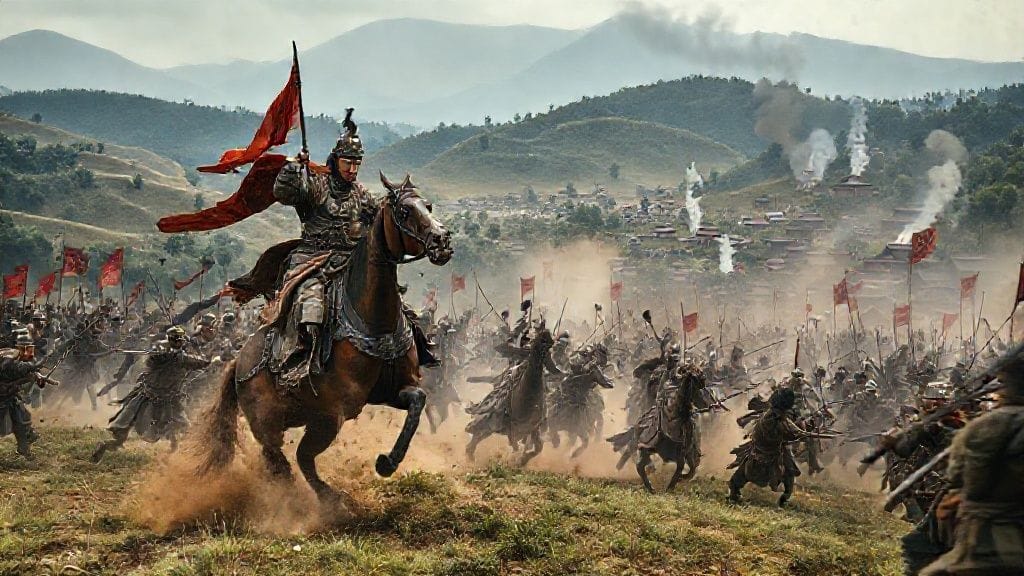
Across this icy path came not just armed warriors, but carts, women, children, elders, and livestock. For the Marcomanni and Quadi, this was no mere raid; it was a movement of communities. Some bands surely aimed for quick plunder and a return home laden with spoils. Others, perhaps pushed from behind by rival tribes or by hunger, saw the empire’s territory as a possible new homeland. As these groups fanned out through the provinces of Pannonia and Noricum, frontier villages burned, villas were looted, and watchtowers were left as charred posts against the snow.
Local Roman commanders scrambled to respond. Troops were pulled from scattered garrisons, emergency levies were raised, and hastily organized defense lines formed along key roads and river crossings. But coordination faltered. Messages to Rome took time. The empire’s vastness, normally a source of pride, now worked against it. By the time accurate news reached the Senate and the emperor, the situation had already moved beyond routine frontier trouble. The marcomanni and quadi sack aquileia lay still in the future, but the path toward it had been cleared by these early failures.
For rural inhabitants in the invaded provinces, the invaders must have appeared suddenly and terrifyingly close. Smoke on the horizon, distant shouts, the glint of unfamiliar shields—these were the first warnings. Some fled toward walled towns; others hid valuables in wells or storage pits, hoping to return after the storm had passed. Not all encounters were simple massacres. In some places, deals were struck, food traded, and lives spared in exchange for livestock or information. But the larger direction of events was unmistakable: the empire’s defensive shell had cracked, and war was now moving steadily toward Italy itself.
Behind the immediate images of frozen rivers and burning farmsteads lay deeper questions of causality. Why now? Why had similar pressures not resulted in such deep incursions earlier? The historian’s answer must return to a convergence of factors: a weakened Roman army, distracted imperial leadership, mounting demographic and climatic stress beyond the Danube, and perhaps the emergence of particularly ambitious or desperate chieftains able to weld disparate warbands into a common enterprise. When we reach the moment that the marcomanni and quadi sack aquileia, it will seem as if a single dramatic blow has fallen. But in truth, that blow was the endpoint of many frost‑bound marches and many unheeded warnings.
Panic in the Provinces: The March Toward Aquileia
As the invading groups pushed southwest, alarm spread along the roads and rivers of the northern provinces. Inns, markets, and temples became places of rumor. Each new traveler seemed to bring darker tales: a fort overrun here, a village sacked there, an entire valley emptied of its inhabitants. Roman officials sent out proclamations urging calm, but their actions betrayed their fear. Records suggest that in some regions, local elites began sending their families further south, away from potential invasion routes. Portable wealth—silverware, jewelry, coins—disappeared from houses and was buried or sent to safer cities.
Aquileia, with its warehouses and arsenals, now transformed from a prosperous city into a potential fortress. Town councils likely convened emergency meetings. Should they call in the rural population and strengthen the walls? Could they rely on nearby military detachments to hold the invaders at bay before they even reached the Julian Alps? The answers to these questions were not clear. The Roman Empire had long assumed that the bulk of serious fighting would occur outside Italy’s borders, and so the infrastructure for rapid interior defense was thinner than one might expect for such a vast state.
As reports grew more dire—this time describing warbands actually crossing into northern Italy—the mood shifted from distant anxiety to immediate panic. For the first time in generations, Italians living north of the Po began to imagine that battles might be fought in their own fields, that enemies might camp in their vineyards and orchards. The news that invasions had breached the Alpine corridors seemed almost unreal, a nightmare reversing centuries of Roman expansion. The idea that the marcomanni and quadi sack aquileia was not yet fully formed in people’s minds, but the possibility that some city would fall, that some emblematic disaster would mark this crisis, hung in the air like a thundercloud.
Trade began to stall. Merchants hesitated to send caravans toward Aquileia or beyond, fearful of ambush. Prices for essential goods in threatened areas rose. The empire’s intricate economic web, delicately balanced on the assumption of secure routes, sagged under the weight of fear. What we now condense into a single phrase—barbarian invasions—was, on the ground, a series of countless disrupted plans, abandoned fields, and hastily shuttered shops. For ordinary people, history did not present itself as grand narrative but as a series of terrifying choices: stay or flee, fight or hide, trust the authorities or take matters into one’s own hands.
Roman propaganda, accustomed to depicting barbarians as easily repulsed, struggled to contain the psychological impact of these news. Statues in city squares still showed emperors trampling bound captives, but the stories carried by refugees suggested a different picture: Roman units defeated, officers killed, and foreign warbands moving with apparent confidence through imperial territory. Faith in the empire’s inevitability began to waver, even before the culminating blow at Aquileia.
Marcomanni and Quadi Sack Aquileia: The Day the Gates Fell
At last, the story reaches its dark center: the moment when the marcomanni and quadi sack aquileia. The exact sequence of events is imperfectly preserved, filtered through Roman authors who often preferred to emphasize imperial eventual triumph rather than initial defeat. Yet by piecing together literary references and the city’s later archaeological scars, we can sketch a plausible narrative of how that day—or days—unfolded.
As the warbands approached, Aquileia’s defenders would have prepared as best they could. The city’s walls, though not designed for full‑scale war, still offered some protection. Civic authorities may have called for all able-bodied men to arm themselves, distributed whatever weapons were available from arsenals, and designated positions along the ramparts. The rural population likely streamed inside, swelling the city’s numbers and burdening its food stores. Priests perhaps led processions to the main temples, sacrificing to Mars and Jupiter, imploring the gods to turn back the storm.
Outside the walls, the Marcomanni and Quadi, along with associated groups, made their camp. Fires were lit, scouts sent out, and leaders convened councils of war. For many of these warriors, this was the closest they had ever come to a major Roman city—its stone walls, tiled roofs, and columned buildings a stark contrast to the wooden halls of their homelands. The promise of plunder and fame must have crackled in the cold air. If they could seize Aquileia, the wealth would be immense, and their names would be sung in war songs for generations.
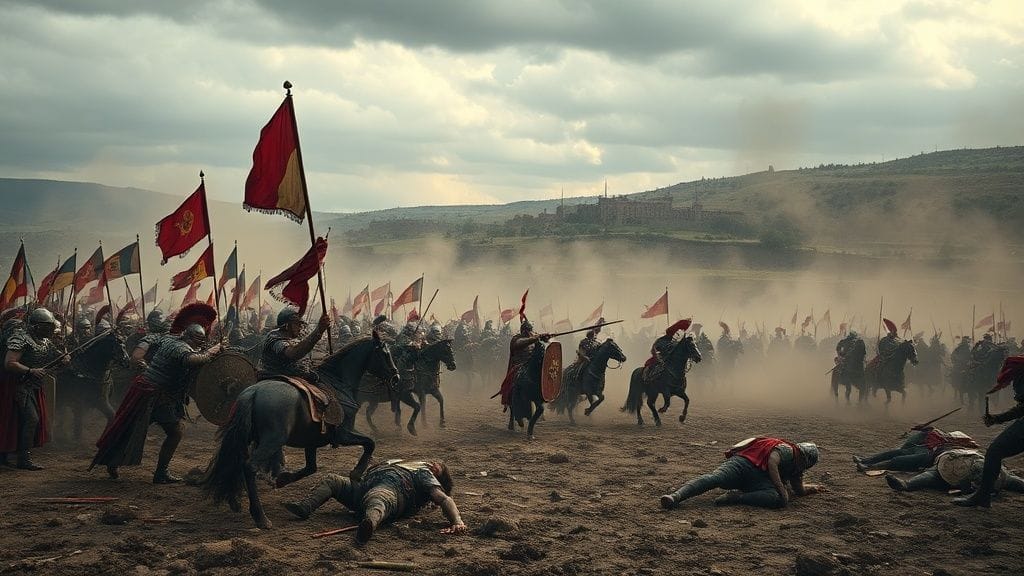
The assault might have begun with probing attacks, testing the weak points of the defenses. Archers and slingers would have loosed stones and arrows at defenders on the walls. Ladders, hastily built from local timber, were raised against the masonry. The defenders responded with their own missiles, with boiling liquids, with shouted curses in Latin and local dialects. The first day—or days—could well have ended in stalemate, with bodies lying in the ditch and tension mounting on both sides. Yet the numerical advantage lay with the attackers, and the defenders had little hope of reinforcement. The longer the siege dragged on, the more likely morale inside the city would erode.
How, then, did the walls finally fail? Some later traditions speak vaguely of treachery or of a gate opened by frightened or dissatisfied inhabitants. Others suggest that the attackers eventually battered their way through weakened sections or exploited a neglected part of the circuit. However it happened, the moment when a gate was forced, a wall topped, or a postern breached would have sent ripples of panic through Aquileia’s streets. Once a crack in the defense appeared, it quickly widened. Organized resistance melted into chaotic flight. The marcomanni and quadi sack aquileia not as a clean, surgical event, but as a brutal cascade of violence unleashed once control snapped.
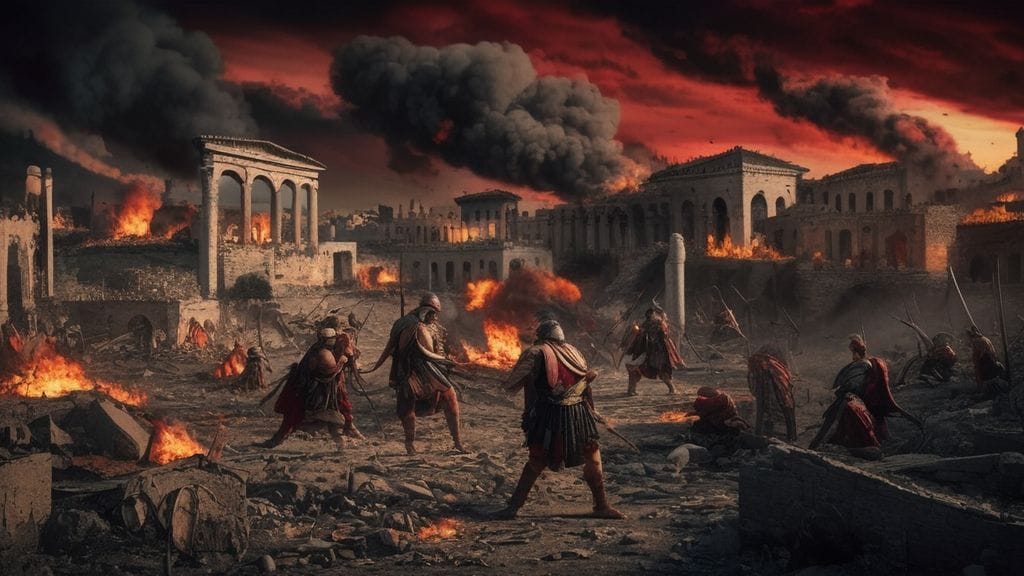
Warriors poured into the city, their war cries echoing through stone alleys. Some headed straight for the forum, where the symbols of Roman civic pride—statues, inscriptions, public buildings—stood clustered. Others turned toward warehouses, tempted by the promise of grain, oil, and wine. Homes were forced open, their occupants dragged out or cut down. Temples were stripped of valuables. Fires, set deliberately or sparked by the chaos, began to climb from roof to roof. For the inhabitants, the sack was experienced in intense, fragmentary moments: a door splintering, a child hidden behind a storage jar, a hurried prayer whispered in the shadow of a marble column.
Later Roman writers, eager to reframe the narrative, would emphasize eventual imperial revenge and restoration. Yet in that moment, on those streets, all such future vindications were irrelevant. The order that had seemed so solid—Roman law, Roman walls, Roman gods—collapsed in a single, horrifying convergence of fear and force. The phrase marcomanni and quadi sack aquileia, repeated in records and histories, condenses that terror into six words, but beneath them lies a city’s worth of shattered lives.
Blood in the Forum: Inside the Sack of Aquileia
What did it mean, in human terms, when the marcomanni and quadi sack aquileia? Ancient authors seldom linger on the personal, preferring to speak of numbers killed or valuables seized. But archaeology and comparative studies of other ancient sacks allow us to reconstruct, with some confidence, the likely scenes inside the doomed city. Picture the forum, once a place of civic debate and market bustle, turned into a killing ground. Fallen statues lie toppled, not by careful removal but by ropes and brute force, their marble limbs broken. Blood pools in the grooves between paving stones. The smell of smoke and fear hangs over everything.
Some inhabitants were killed resisting, arms still in hand. Others, unarmed, died trying to flee or protect their families. Yet slaughter was not the only outcome. In many ancient sacks, a substantial proportion of the population was taken alive as captives, destined for slavery or ransom. Women and children, in particular, would have been rounded up, driven together under guard. For the attackers, they represented movable wealth as valuable as any amphora of wine. Scenes of separation—parents torn from children, husbands from wives—must have been agonizingly common. Later integration of such captives into Marcomannic and Quadian communities would leave faint traces in burial customs and genetic lineages long after the Roman texts fall silent.
Temples, rich in votive offerings and liturgical items of gold and silver, drew special attention. Altars were stripped, sacred vessels seized. To the conquerors, these were valuable trophies; to the defeated, they were sacred objects ripped from the care of their gods. The violation of sanctuaries deepened the spiritual trauma of the sack. If even the gods’ houses could be plundered, what hope remained? Some priests may have tried to hide cult statues or ritual objects before the final breach. Others perhaps died defending them, believing that to abandon the divine images was a betrayal worse than death.
Economic infrastructure suffered as well. Warehouses burned, their contents destroyed or looted. Records—contracts, accounts, legal documents—went up in smoke. The loss of such written memory amplified the material damage. Merchant families who survived the sack found themselves not only impoverished but unable to prove claims, debts, or ownership once stability returned. The invisible threads of credit and obligation that tied Aquileia into the broader imperial economy snapped in an instant. When historians note that the marcomanni and quadi sack aquileia disrupted trade, the phrase hides how deeply that disruption cut into livelihoods and futures.
And yet, even amid the horror, human adaptability persisted. Some inhabitants bargained for their lives or for the safety of loved ones. Others found hiding places in cellars, sewers, or the upper stories of buildings less attractive to looters. There were, undoubtedly, individual moments of mercy: a warrior sparing a child who reminded him of his own, a captive allowed to keep a small keepsake. These fragments of compassion do not negate the brutality of the sack, but they remind us that the actors were not abstractions but people making choices under extreme conditions.
In the aftermath, as fires burned themselves out and the attackers moved on with their plunder and prisoners, those who had hidden or been overlooked emerged to a city they could scarcely recognize. Charred beams jutted from blackened walls. The familiar sounds of commerce and conversation were replaced by the crackle of collapsing roofs and the occasional wail of someone finding a loved one’s body. For them, the phrase marcomanni and quadi sack aquileia was not a line in a chronicle; it was a wound they carried, physically and psychologically, for the rest of their lives.
Rome Trembles: Political Shockwaves in the Capital
News of Aquileia’s fall did not arrive in Rome as a calm dispatch. It came fractured through a series of reports, rumors, and panicked accounts, each more dire than the last. Senators, who had long debated matters of distant provinces with an air of detached superiority, now heard that one of Italy’s own great cities had been overrun. The marcomanni and quadi sack aquileia transformed what had been an alarming frontier war into a direct insult to Roman prestige and a visible crack in the empire’s aura of invincibility.
In the Forum Romanum, among the marble monuments celebrating centuries of conquest, the psychological impact must have been acute. How could the empire that had subdued Gaul, crushed Carthage, and held firm against Parthia fail to protect a city within sight, historically speaking, of the Alps? Some senators undoubtedly called for drastic action: mass levies, new taxes, the recall of experienced commanders. Others, perhaps, muttered about divine displeasure or the moral decay of the age. The sack became fodder for political positioning, each faction eager to interpret it in ways that supported their preferred policies.
Marcus Aurelius, by all accounts a sober and conscientious ruler, could not ignore the crisis. Already grappling with the aftermath of the Antonine Plague and other military challenges, he now faced a threat that struck closer to home than any emperor had seen for generations. The decision to personally lead campaigns in the north, spending long periods on or near the Danube, flowed in part from the shock of Aquileia. According to Cassius Dio, the emperor recognized that only sustained, focused effort could restore security and honor to the empire’s battered frontiers (Dio, Roman History, Book 71).
Domestically, the sack provided justification for extraordinary measures. New taxes were levied to fund enlarged armies; conscription efforts intensified, drawing more deeply on Italy’s own population. Some of these policies were unpopular, but the shadow of Aquileia loomed over any opposition. Few were willing to appear indifferent to the fate of a sacked Italian city. The crisis also accelerated the empire’s gradual shift toward a more militarized political culture, in which the emperor’s role as supreme war leader overshadowed his other functions. The philosopher-emperor would now be remembered as much for his Marcomannic Wars as for his meditations.
Internationally, the sack sent a message to Rome’s allies and enemies alike. If the Marcomanni and Quadi could reach and ravage Aquileia, what else might be possible? Subject kings on the fringes of Roman control may have reevaluated their strategies. Some perhaps saw an opportunity to press long‑standing grievances, emboldened by Rome’s momentary weakness. Others concluded that only renewed displays of loyalty could ensure continued protection in an age when the empire’s shield seemed to be thinning. In this way, a single city’s fall rippled outward into myriad recalculations across the Mediterranean world.
Marcus Aurelius at War: Philosophy Under the Northern Sky
Marcus Aurelius is often remembered as the introspective emperor, his Meditations a rare glimpse into the private struggles of a man burdened with absolute power. It is striking that many of those reflections were composed while he was on campaign in the north, living in military camps or rough quarters near the contested frontiers. The marcomanni and quadi sack aquileia thus forms part of the lived context of his philosophy, not merely an event he heard about from afar but a crisis that shaped the conditions under which he wrote, thought, and acted.
After the sack, Marcus undertook a series of determined campaigns along the Danube. These operations, collectively known as the Marcomannic Wars, spanned much of his later reign. Their aim was not merely to punish the invaders but to restructure the northern frontier, breaking large tribal confederations, securing more favorable treaties, and, where possible, resettling some groups under tighter Roman control. The emperor spent winters in military quarters, sharing hardships with his troops to a degree that Roman panegyrists would later emphasize as proof of his virtue.
In his philosophical notes, Marcus often muses on the transience of human glory and the insignificance of fame compared with inner virtue. Knowing that he wrote these lines while leading brutal campaigns adds a poignant tension to them. He was conducting wars that required harsh decisions—executions, forced relocations, the razing of villages—yet constantly reminding himself to act justly, to see enemies as fellow humans, and to accept the workings of fate. The contrast between the stoic calm of his words and the chaos unleashed when the marcomanni and quadi sack aquileia is stark, but it is precisely that tension that makes his reign so historically compelling.
Strategically, Marcus Aurelius proved tenacious. He reorganized legions, recruited more barbarian auxiliaries even as he fought their kin, and sought to establish new provinces north of the Danube, though these plans ultimately faltered. According to one modern historian, the emperor’s campaigns represented “Rome’s last serious attempt to impose a durable, expansionist solution” to the Germanic problem, before later centuries shifted toward more defensive and ad hoc measures. The point is debatable, but there is no doubt that Marcus viewed the crisis triggered by events like the marcomanni and quadi sack aquileia as demanding not just a temporary patch but a thorough reordering of the frontier world.
On the human level, his long absences from Rome, the deaths of family members (including his co‑emperor Lucius Verus), and the continuing pressure of war must have weighed heavily on him. In the end, whatever tactical and strategic gains his campaigns achieved would prove difficult to maintain after his death. But during his lifetime, Marcus Aurelius transformed the empire’s response to northern threats, and the image of the emperor‑philosopher under cold Danubian skies remains one of the most evocative in Roman history.
Survivors, Captives, and Colonists: Human Stories of Displacement
After armies move on and chronicles fall silent, people remain. The marcomanni and quadi sack aquileia left thousands of lives dislocated, reconfigured, and scarred. Survivors who managed to escape the city’s burning confines fled south, swelling the populations of other towns. In these host communities, refugees brought both burdens and opportunities. They required shelter, food, and work, straining local resources. Yet they also carried skills, networks, and stories that would slowly weave into the social fabric of their new homes.
Orphans and widows, stripped of their previous social status, might find themselves reliant on charity from temples or collegia. Some would be absorbed into new households as dependents or informal adoptees. Others, less fortunate, slid toward servitude. The psychological aftershocks of sudden loss and violence—what we might today label trauma—would have shaped their behavior, their beliefs, and the stories they told their children. Decades later, an old woman in a distant Italian town might still recount, in a mixture of grief and pride, how she survived “when the marcomanni and quadi sack aquileia and the sky turned black with smoke.”
On the other side of the frontier, captives taken from Aquileia and its environs began new, involuntary lives. Some were sold into slave markets further north or east; others were kept as household servants, laborers, or even, in rare cases, spouses within Marcomannic or Quadian communities. Over time, their identities blurred. Children born of such unions would grow up speaking their fathers’ tongue, yet perhaps carrying faint memories of Latin phrases or Roman customs transmitted by their mothers. For these descendants, Rome was not an abstract empire but a lost, half‑remembered homeland.
Roman policy, too, involved large‑scale displacement. As part of the response to the crisis, imperial authorities sometimes resettled defeated or allied barbarian groups within the empire as colonists. Given land in underpopulated regions, these communities were expected to farm, pay taxes, and provide recruits, while also serving as buffers against further incursions. The line between enemy and subject blurred. Men who a few years earlier had stood among the marcomanni and quadi sacking Aquileia might later find themselves tilling Roman soil under Roman law, their children enrolled in auxiliary cohorts.
This complex movement of peoples created hybrid zones of culture and identity along the empire’s edges. Archaeological evidence from the late second and early third centuries shows Germanic-style brooches and pottery appearing within imperial provinces, while Roman objects continue to flow beyond the frontier. The marcomanni and quadi sack aquileia, viewed in this broader context, appears not as a neat clash between two separate worlds, but as a violent episode within an ongoing, tangled process of contact, exchange, and incorporation.
Restructuring the Frontier: Forts, Legions, and New Strategies
In the aftermath of the crisis, Rome did what it always did when confronted with a serious threat: it tried to rebuild its defenses stronger than before. Along the Danube, old forts were repaired, new ones founded, and watchtowers raised at closer intervals. Roads were improved to allow faster troop movements between vulnerable sectors. Legions were reinforced or reconstituted, sometimes by recruiting more heavily from provinces that had been less hit by the plague. The memory of the marcomanni and quadi sack aquileia spurred a new seriousness about the northern frontier’s security.
Strategically, there was debate—explicit or implicit—about whether the empire should try to push the frontier forward, establishing provinces beyond the Danube, or accept a more defensive stance. Marcus Aurelius’s aspirations toward new provinces like Marcomannia and Sarmatia suggest that he favored forward defense: securing hostile territories by incorporating them more fully. Yet logistical challenges, continued unrest, and his own death meant that these ambitions ultimately failed. His successors would lean more heavily toward fortifying existing lines, creating a militarized belt of forts, walls, and garrison towns that characterized the high imperial limes system.
Within this reorganized frontier, the role of “barbarian” auxiliaries actually increased. The empire’s manpower needs, exacerbated by the plague and continuous warfare, made it ever more reliant on recruits from outside traditional Italian and provincial citizen populations. Young men from Marcomannic, Quadian, and other communities were enrolled in Roman units, trained in Roman tactics, and deployed across the empire. The very peoples who had once sacked Aquileia now helped defend distant frontiers, from Britain to Syria. This paradox—enemies turned indispensable defenders—was not lost on contemporary observers.
Fortified towns and legionary bases along the Danube became more than just military installations; they were cultural interfaces, places where Roman and non‑Roman worlds intermingled. Markets sprang up around camp perimeters, serving soldiers and local villagers alike. Intermarriage, legal or informal, blurred ethnic lines. Latin inscriptions appeared next to locally flavored shrines. The frontier became less a rigid dividing line and more a densely inhabited, complex zone of contact. Yet the memory that the marcomanni and quadi sack aquileia had shown how deeply things could go wrong lingered, making commanders and emperors alike wary of complacency.
In practical terms, the restructuring bought the empire time. For several decades after Marcus Aurelius, Rome managed to maintain a semblance of control over the Danube region. But the cost was high: in money, in lives, and in the gradual militarization of both policy and society. The empire was adapting, but in ways that foreshadowed the more crisis‑ridden centuries to come.
From Local Disaster to Imperial Turning Point
When modern historians look back at the second century, the Marcomannic conflicts stand as one of those hinge moments where an era’s character begins imperceptibly to change. The marcomanni and quadi sack aquileia is often highlighted within this larger story as the most visible symbol of that shift: the moment when Italy itself learned that it was no longer immune to the kinds of devastation that had long plagued the provinces.
In strictly material terms, Aquileia would recover. Rebuilt under later emperors, it would go on to play a major role in late Roman politics and, eventually, in Christian history. The city’s long archaeological record reveals phases of reconstruction, new public buildings, and continued economic vitality. Measured by long‑term urban continuity, the sack was a brutal interruption, not an ending. And yet, symbolically, its fall stuck. Roman chroniclers returned to it when they wanted to illustrate the seriousness of the northern threat or the burdens borne by emperors like Marcus Aurelius.
More broadly, the episode exposed the limits of Rome’s imperial model. An empire that had thrived on expansion and the steady extraction of resources from conquered lands now faced large, mobile groups pressing against its borders in new ways. War was no longer solely about punishing recalcitrant client kings or suppressing internal revolts. It began to take the form of managing large‑scale population movements, negotiating with coalitions of tribes, and sometimes making compromises that earlier generations would have seen as unthinkably generous. The marcomanni and quadi sack aquileia dramatized this transition in a way that could not be ignored.
Some scholars see in these events the first clear tremors of what, centuries later, would culminate in the great migrations and the political fragmentation of the western empire. That might be stretching the line of causality too far; history is less a neat chain and more a tangled web. Yet there is little doubt that the experiences of the 160s and 170s left an imprint on Roman strategic thinking. Future emperors, confronting Goths, Vandals, and others, drew—consciously or not—on the memory of what had happened when the marcomanni and quadi sack aquileia and the Danube frontier failed.
For those living through it, the sack was not an abstract turning point but an all‑too‑real calamity. But for us, with the benefit of hindsight, it marks a subtle but important reorientation in Rome’s story: from effortless dominance toward anxious defense, from confidence in eternal security toward an uneasy awareness of vulnerability. It is one of those rare moments where a single city’s fate aligns with a broader shift in historical currents.
Memory, Myth, and Misreading: How Later Generations Saw the Sack
Over time, memories of the marcomanni and quadi sack aquileia passed from direct testimony into written history, from lived experience into literary motif. Roman authors who wrote in the third and fourth centuries, living amid fresh crises of their own, often looked back at the events of 170 with a mixture of horror and nostalgia. Horror, because they recognized in that earlier incursion the seeds of their own troubles; nostalgia, because Marcus Aurelius’s eventual restoration of order seemed, from their vantage point, like a lost age of competent leadership.
Christian writers, emerging in the later empire, sometimes used such disasters as moral exempla, arguing that pagan Rome had suffered because of its idolatry or moral failings. In their narratives, events like the sack of Aquileia took on didactic overtones: warnings about divine judgment as much as historical episodes. Pagan authors, in contrast, might interpret the same events as signs of fate’s caprice or of the cyclical nature of fortune. The city’s fall thus became a canvas onto which differing worldviews projected their meanings.
In the early modern period, when scholars like Gibbon revisited the Roman past, the Marcomannic Wars and the sack of Aquileia were sometimes folded into grand narratives of decline. The marcomanni and quadi sack aquileia became, in such tellings, an early symptom of the “barbarian menace” that would ultimately topple the Western Empire. Modern scholarship, more cautious about simple declension narratives, tends to situate the event within a complex interplay of resilience and vulnerability. Rome did not begin to fall in 170; but neither was the sack a mere footnote in an otherwise untroubled golden age.
Popular imagination, too, has played its part. In novels, films, and video games, scenes of barbarian warriors storming Roman cities often blend elements from multiple centuries, compressing the sack of Aquileia with later events like the Gothic sack of Rome in 410 or the Vandal sack of 455. This muddling reflects both the enduring fascination with Rome’s confrontations with the “barbarian other” and the difficulty of keeping the nuances of individual episodes distinct. For storytellers, the image is what matters: flames rising against classical columns, armor‑clad warriors charging through marble forums.
Historians today strive to disentangle myth from reality, drawing on archaeology, epigraphy, and critical readings of texts. Yet they are also aware that every retelling, including their own, frames the past in particular ways. To emphasize the marcomanni and quadi sack aquileia as a turning point is already to make an interpretive choice. Another scholar might stress, instead, continuity and recovery. The task is not to arrive at a single, final “true” meaning, but to recognize the layers of interpretation that have accumulated over nearly two millennia.
Archaeological Echoes: Traces of Fire in the Soil of Aquileia
While texts provide the broad strokes of the story, the ground beneath modern Aquileia holds its own, quieter testimony. Excavations in and around the ancient city have uncovered destruction layers—burnt debris, collapsed walls, and hurriedly abandoned objects—that speak of episodes of violence and rapid change. Dating these layers precisely to 170 CE is challenging, given the limitations of archaeological dating and the possibility of multiple destructive events over the centuries. Yet many scholars argue that at least some of the traces correspond to the period of the Marcomannic conflicts.
In certain insulae, or residential blocks, archaeologists have found evidence of intense fire: roof tiles fused by heat, carbonized beams, and household items left in place as if owners had no time to pack. These layers are sandwiched between earlier, orderly occupation levels and later rebuilding phases. In forums and public buildings, broken statuary, scattered coins, and signs of structural repair hint at episodes of deliberate damage followed by restoration. While earthquakes and accidental fires are always possible explanations, the pattern in Aquileia, combined with textual references to its sack, strongly suggests a military cause.
One particularly poignant category of finds consists of personal items—jewelry, tools, toys—preserved in contexts that suggest hurried concealment. A small hoard of coins hidden under a threshold, a necklace buried in a pot, an iron tool left beside a doorway: these are the shadows of human decisions made under duress. Their owners may have intended to retrieve them once danger passed; history, evidently, had other plans. For archaeologists, such objects are invaluable precisely because they capture the intersection of large‑scale events and individual lives.
At the same time, the city’s later prosperity complicates the picture. Aquileia continued to flourish in the third and fourth centuries, becoming a major Christian center with impressive basilicas. Layers of later construction sometimes obscure or disturb earlier traces, making it difficult to reconstruct a continuous sequence. Nonetheless, careful stratigraphic work and comparative analysis with other sites affected by the Marcomannic Wars add weight to the traditional narrative that the marcomanni and quadi sack aquileia left physical scars on the cityscape.
In a sense, the archaeology of Aquileia mirrors the broader historical story. There is destruction, but also rebuilding; trauma, but also resilience. Charred remains lie beneath later mosaics; broken walls underlie new foundations. The soil holds both the memory of the sack and the record of recovery. Standing today among the ruins and later basilicas, it is possible to feel that layered time: to imagine, beneath the quiet of a modern afternoon, the distant echo of war cries and the crackle of flames from that long‑ago year when the marcomanni and quadi sack aquileia shocked an empire.
Conclusion
The story of the Marcomanni and Quadi in 170 CE is not just the tale of a single city’s fall. It is a prism through which we can see an entire world under strain. When the marcomanni and quadi sack aquileia, they do more than burn houses and seize captives; they expose vulnerabilities that had been slowly widening within the Roman system for decades. The sack reveals the fragility beneath the empire’s confident facade: its dependence on a finely balanced frontier policy, its susceptibility to disease and demographic shifts, its difficulty in managing large‑scale population movements at its borders.
At the same time, the aftermath demonstrates Rome’s remarkable capacity for adaptation. Marcus Aurelius’s campaigns, the restructuring of the Danube frontier, and the eventual rebuilding of Aquileia all testify to an imperial machine that could still muster resources and will. The empire did not collapse in 170; it endured, and for many people life returned, if not to normal, then to a new equilibrium. Yet something intangible changed. Italy had learned that it was not untouchable, and the empire had glimpsed a future in which managing “barbarian” neighbors would require new strategies, compromises, and, at times, painful concessions.
For the people who lived through the sack—citizens of Aquileia, warriors from Marcomannic and Quadian bands, soldiers on the Danube, senators in Rome—the events of that year were experienced as immediate shocks: fear, loss, hard decisions. For us, they offer a vantage point from which to reflect on deeper patterns: how great powers handle frontier pressures, how societies respond to sudden trauma, and how narratives of security can crumble in a moment. The charred remains in Aquileia’s soil, the terse lines in Cassius Dio’s history, and the stoic reflections of Marcus Aurelius all converge on a simple, sobering reminder: no order, however mighty, is beyond challenge, and no boundary, however formidable, is forever.
FAQs
- Who were the Marcomanni and Quadi?
The Marcomanni and Quadi were Germanic peoples living north of the Danube, roughly in the regions of modern Czech Republic and western Slovakia. Organized in tribal confederations rather than centralized states, they had long interacted with Rome through trade, warfare, and diplomacy before their incursions in the late second century. - Where was Aquileia and why was it important?
Aquileia was a major Roman city in northern Italy, located near the head of the Adriatic Sea. Founded as a military colony, it evolved into a key commercial and logistical hub, serving as a gateway between Italy and the Danubian provinces and playing an important role in supplying frontier armies. - What happened when the marcomanni and quadi sack aquileia?
During the crisis of 170 CE, Marcomannic and Quadian warbands penetrated deep into imperial territory and besieged Aquileia. After a period of resistance, the city’s defenses failed, leading to widespread looting, destruction of buildings, significant loss of life, and the capture of many inhabitants as slaves or hostages. - How did Rome respond to the sack of Aquileia?
The sack shocked Roman elites and spurred a forceful response. Emperor Marcus Aurelius led prolonged campaigns along the Danube, reorganized military defenses, raised new troops and taxes, and sought to break up or contain hostile tribal confederations. Over time, Rome reasserted control, and Aquileia was rebuilt. - Did the sack of Aquileia mark the beginning of Rome’s decline?
The event did not directly cause Rome’s eventual fall, but it is an early and vivid sign of growing pressures on the empire’s frontiers. It highlighted vulnerabilities in manpower, strategy, and frontier management that would continue to challenge Rome in the centuries that followed. - What sources describe these events?
Key ancient sources include the historian Cassius Dio, who provides a narrative of the Marcomannic Wars, and the problematic but informative Historia Augusta. Archaeological evidence from Aquileia, such as destruction layers and subsequent rebuilding, also contributes to our understanding of the sack and its impact. - How did the sack affect ordinary people?
For Aquileia’s inhabitants, the sack meant death, enslavement, displacement, and the loss of homes and livelihoods. Survivors fled to other cities as refugees, while captives were taken beyond the frontier or sold into slavery. These individual experiences of trauma and adaptation underlie the broader political and military story. - Did Aquileia recover after 170 CE?
Yes. Despite the devastation, Aquileia was rebuilt and went on to flourish again, especially in the later Roman Empire, when it became an important administrative and Christian center. Archaeological remains show phases of reconstruction and continued urban development after the Marcomannic Wars.
External Resource
Internal Link
Other Resources
- Encyclopaedia Britannica – general search for the exact subject
- Google Scholar – academic search for the exact subject
- Internet Archive – digital library search for the exact subject