Table of Contents
- The Twilight of a Queen: August 25, 1482, The Death of Margaret of Anjou
- Origins of a Controversial Queen: From Anjou to the English Throne
- The Rise of Margaret: Marriage to Henry VI and the Seeds of War
- England on the Brink: The Wars of the Roses Begin
- The Lioness of Lancaster: Political Ambitions and Military Leadership
- Blood and Betrayal: Margaret’s Role in the Lancastrian Struggles
- The Fall of the House of Lancaster: Defeats and Political Exile
- Exile in France: The Last Years in Anjou and Saumur
- The Death of Margaret of Anjou: A Quiet End for a Turbulent Life
- A Widow’s Legacy: How History Remembered Margaret of Anjou
- The Wars of the Roses Aftermath: England’s Path to the Tudors
- The Cultural Memory of Margaret: From Villain to Heroine
- The Political Landscape of 15th Century France: Anjou and Beyond
- Female Power in a Man’s World: Queenship and Resistance
- The Crossroads of Dynasties: England, France, and European Politics
- Reflections on Power, Gender, and Memory in Late Medieval Europe
- Conclusion: Margaret of Anjou’s Enduring Place in History
- FAQs on Margaret of Anjou and Her Era
- External Resource
- Internal Link
1. The Twilight of a Queen: August 25, 1482, The Death of Margaret of Anjou
The summer sun set quietly over the verdant banks of the Loire, casting a muted golden glow across the ancient town of Saumur. It was August 25, 1482, a day marked not by the tumult of battle or the clamor of court intrigue, but by the fading breath of a once formidable queen—Margaret of Anjou. In the quiet chambers of her exile, far from the thrones and armies that once shaped her destiny, Margaret’s life ebbed away. The iron will that had steered a kingdom through civil war softened at last. Here in Anjou, away from the English crown and the bloody Wars of the Roses, an era came to a close.
Margaret of Anjou’s death did not make the annals in loud proclamations or grand funeral processions. Instead, it was a subtle coda to a life that had roared with passion, fury, and resilience. Her story stretches beyond the final moments in Saumur, touching the core of 15th century European royalty, gender, and power politics.
2. Origins of a Controversial Queen: From Anjou to the English Throne
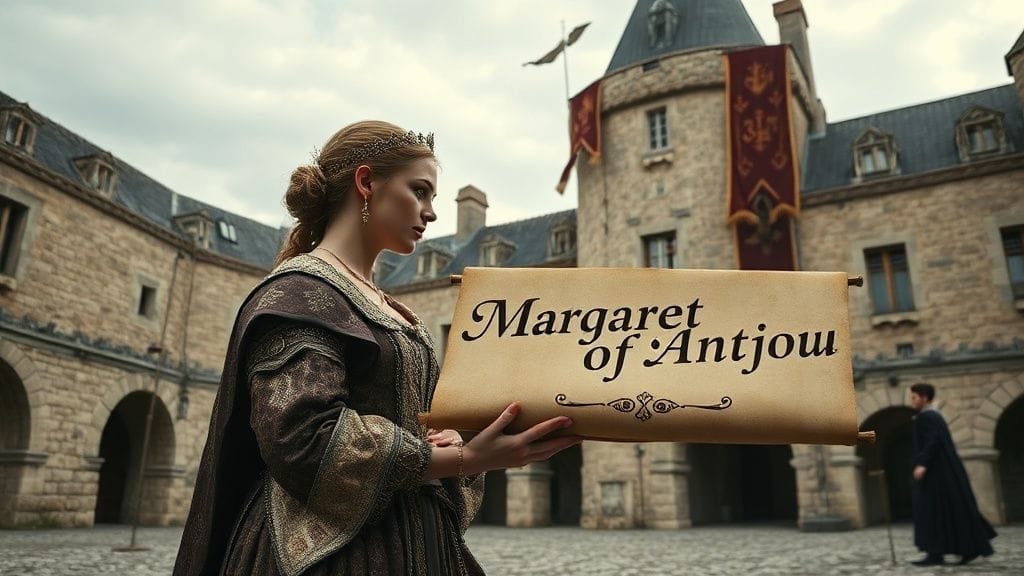
Born in 1430 at the Château de Pont-à-Mousson in the Duchy of Lorraine, Margaret was the daughter of René I, Duke of Anjou, a man who carried claims not just in France, but to the Kingdom of Naples and the Kingdom of Jerusalem. Her lineage alone marked her as a pawn and player in the complex dynastic chessboard of medieval Europe.
Margaret’s childhood was shaped in the courts of Anjou and Provence, steeped in the rich cultural heritage of the French aristocracy. But her destiny was tied to England through war and politics. At barely fifteen, Margaret was married to Henry VI, King of England and Duke of Aquitaine, a union designed to solidify peace between two rival kingdoms emerging from the chaos of the Hundred Years’ War.
However, the marriage was less a peaceful bond than a spark to a powder keg. Margaret's assertiveness and political ambition, unusual for a queen consort at a time when women’s roles were largely domestic, made her a figure of suspicion and scorn in England, especially during the mental breakdowns of her husband, Henry VI.
3. The Rise of Margaret: Marriage to Henry VI and the Seeds of War
Their marriage in 1445 was celebrated with grandeur, but Henry VI’s weak and pious nature was no match for the turmoil engulfing his reign. Margaret emerged as the driving force behind the Lancastrian cause, rallying supporters and taking an unusually active role in government and war.
The couple’s failure to produce a male heir for many years added pressure, with the English nobility growing restless. When their son Edward of Westminster was born in 1453, Margaret’s status was precariously improved, but the damage was done. The fragile English monarchy was fracturing under the weight of competing noble factions—the Yorkists and the Lancastrians.
The seeds of the Wars of the Roses were sown, and Margaret, fiery and determined, took the field as a leader and symbol of Lancastrian resistance. King Henry VI’s incapacity forced her to shoulder the burden of governance and warfare.
4. England on the Brink: The Wars of the Roses Begin
The 1450s to 1460s were decades of brutal internal conflict in England. The Wars of the Roses were not just a battle for the crown but a violent clash of dynastic claims, with framing narratives feeding into longstanding rivalries between noble houses.
Margaret of Anjou’s fierce defense of her son’s inheritance defined this period. She led armies, strategized battles, and negotiated loyalties. From the Battle of Wakefield (1460) to the catastrophic Battle of Tewkesbury (1471), Margaret’s agency was exceptional. Few queens before her had held such command or faced such brutal challenges head-on.
Yet, despite her efforts, the Yorkists gained the upper hand. Edward IV’s coronation forced Margaret and her family into exile, an ignominious retreat that contrasted starkly with her earlier ambition.
5. The Lioness of Lancaster: Political Ambitions and Military Leadership
Margaret earned her fiercest epithets during the Wars of the Roses—“The Lioness of Lancaster” was not just a poetic compliment but an acknowledgment of her unyielding grit. Her military prowess and political cunning proved disruptive to Yorkist consolidation.
Tales circulated of her presence on battlefields, directing troops, and rallying Lancastrian morale. Chroniclers sometimes depicted her as a saint and sometimes as a witch, revealing the ambivalence toward female power in this era.
Her leadership was also marked by ruthless decisions, including the execution orders against Yorkist prisoners—a pragmatic but brutal tactic that deepened enmity and stained her medieval reputation. The female ruler, fighting like a man, often transcended contemporary gender roles, provoking both admiration and fear.
6. Blood and Betrayal: Margaret’s Role in the Lancastrian Struggles
The intricate web of alliances and betrayals shaped Margaret’s world. Her marriage alliance brought foreign politics into English civil strife, while factional nobles shifted loyalties with deadly consequences. Margaret’s decision to ally with Scottish and French forces underlines her broad political vision, attempting to leverage international support to reclaim her crown.
Yet these alliances often faltered. The shifting tides of military fortune repeatedly forced Margaret into desperate gambits. The ultimate betrayal came from within English nobility, including the death of her son Edward at Tewkesbury, extinguishing the direct Lancastrian line.
7. The Fall of the House of Lancaster: Defeats and Political Exile
The unconditional victory of Edward IV and later Richard III marked the fall not only of the Lancastrian crown but of Margaret’s personal power. Captured and held prisoner for a time, Margaret was eventually released and allowed to return to France.
Her life thereafter was a stark decline from queenly splendor to dispossession and quiet obscurity—a fate not uncommon to medieval dynastic losers. The fall of the House of Lancaster was both political and personal, erasing the hopes she had fought so fiercely to uphold.
8. Exile in France: The Last Years in Anjou and Saumur
Back in the lands that birthed her, Margaret found a faint echo of former grandeur. While her family still held power in the French regions of Anjou and Provence, the queen in exile was politically diminished.
In Saumur, a town perched prettily on the Loire River, Margaret spent the final decade of her life. Though the surroundings were beautiful and serene, they contrasted sharply with the violent, noisy, courtly life she once commanded.
Here, she lived quietly under the shadow of her past—her letters and records reveal a woman bitter but resigned, wounded by loss yet defiant in spirit.
9. The Death of Margaret of Anjou: A Quiet End for a Turbulent Life
On August 25, 1482, Margaret passed away with little fuss outside the annals of history. No grand procession marked her passing, no soldiers lined the streets in mourning. Instead, a once indomitable queen died in relative obscurity, far from the thrones she had once sought to protect.
The silence surrounding her death is striking, given her life's intensity. Yet, it reflects how political fortunes rise and fall, and how history often fades the most complex figures into shadow.
10. A Widow’s Legacy: How History Remembered Margaret of Anjou
For centuries, Margaret’s reputation swung wildly—from a power-hungry villain in Tudor narratives to a proto-feminist heroine in modern reinterpretations. Shakespeare’s portrayal in “Henry VI” as a scheming character colored popular views for generations.
Recent historians have sought to understand Margaret’s ambitions in the context of her gender and era’s brutal politics, recognizing her as a survivor and strategist who challenged patriarchal constraints.
11. The Wars of the Roses Aftermath: England’s Path to the Tudors
The Lancastrian defeat did not end the dynastic conflicts in England but paved the way for the Tudor dynasty. Henry VII, who married Margaret’s niece Elizabeth of York, united the feuding houses in 1485.
Margaret’s death thus foreshadowed a changed political landscape, where her struggle became a prelude to England’s transition into early modern monarchy and the Renaissance.
12. The Cultural Memory of Margaret: From Villain to Heroine
Margaret’s cultural image parallels the shifts in society’s views on female rulers. Where once she was a cautionary tale against female ambition, later centuries found a heroine who wielded power wisely in impossible times.
From historical fiction to scholarly assessments, Margaret embodies the complexity of queenship in a violent world.
13. The Political Landscape of 15th Century France: Anjou and Beyond
Margaret’s final years were framed by the politics of the French provinces. Anjou, a duchy with fluctuating loyalties between French crown and noble autonomy, represented a microcosm of late medieval European power struggles.
Her connection to French nobility highlights the cross-channel entanglements that shaped 15th century politics, especially amid the Hundred Years’ War’s lingering effects.
14. Female Power in a Man’s World: Queenship and Resistance
Margaret’s life challenges common assumptions about medieval queenship. Far from passive consorts, queens like Margaret actively shaped political outcomes, wielded military power, and negotiated court intrigues.
Her story illuminates how women negotiated authority in patriarchal societies, often at great personal risk.
15. The Crossroads of Dynasties: England, France, and European Politics
Margaret’s existence was at the dynastic crossroads where England’s civil war met France’s territorial ambitions and royal dynasties. Her alliances and exile underscore how royal women served as pawns and players in these continental chess games.
Her life and death underscore the intricate entanglements of late medieval European politics shaped by marriage, war, and claims to crowns.
16. Reflections on Power, Gender, and Memory in Late Medieval Europe
Margaret of Anjou’s story resonates today as an exploration of power, gender, and memory. Her life exposes the volatility of medieval politics, the constraints on women’s agency, and the ways historical narratives shape our understanding of leadership.
Her legacy invites reflection on the human costs of dynastic ambition and the courage it takes to defy convention.
Conclusion
Margaret of Anjou’s death on a quiet August day in 1482 marked the end of a chapter filled with war, heartbreak, courage, and audacity. She was a queen who fought not only for a crown but for her son's right to rule, standing bravely in an era that barely allowed room for women’s power. Her last breath in Saumur serves as a poignant reminder that history is made not only in palaces and battlefields but also in the shadows where forgotten figures fade. Yet, through time, Margaret’s story reclaims its rightful place—a testament to the resilience of those who dared to challenge their fate.
FAQs
Q1: Who was Margaret of Anjou?
Margaret was queen consort of England as the wife of Henry VI and a central figure in the Wars of the Roses, noted for her political and military leadership.
Q2: Why was her marriage important?
Her marriage symbolized a political alliance between England and France to secure peace after the Hundred Years’ War but instead became a spark for renewed conflict.
Q3: What role did she play in the Wars of the Roses?
Margaret actively led Lancastrian forces, served as a regent during Henry VI’s mental illness, and fiercely defended her son’s claim to the throne.
Q4: How did her life end?
Margaret died in exile in Anjou, France, in 1482, far from the English throne she once sought to preserve.
Q5: How has her reputation evolved?
From vilified villainess in Tudor propaganda to modern recognition as a strong female leader, perspectives on Margaret have shifted dramatically.
Q6: What was her legacy in English history?
Margaret’s struggles influenced the dynastic outcomes that led to the rise of the Tudor dynasty and the transformation of English monarchy.
Q7: Did she have any impact on French politics?
While Margaret was mainly engaged in English affairs, her family ties and exile kept her connected to French noble politics in Anjou.
Q8: How does she reflect the challenges faced by medieval queens?
Margaret’s life illustrates the delicate balance medieval queens had to maintain between power, gender expectations, and survival.