Table of Contents
- Introduction
- Childhood and Early Life in Katowice
- Academic Beginnings in Göttingen
- Struggles as a Woman in Physics
- Move to the United States
- Marriage and Collaboration with Joseph Mayer
- Teaching without Pay: The Invisible Scientist
- World War II and Classified Research
- The Path to the Nuclear Shell Model
- Scientific Recognition and Nobel Prize
- Barriers Faced by Women in Science
- Personality and Teaching Style
- Influence on Future Generations of Scientists
- Anecdotes and Human Side of Maria Goeppert Mayer
- Comparison with Other Women Physicists
- Later Years and Health Struggles
- Death and Legacy
- Cultural Memory and Honors
- Contributions to Physics beyond the Shell Model
- External Resource
- Internal Link
Introduction
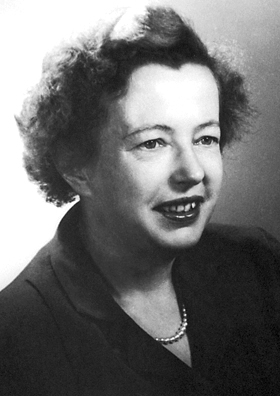
Maria Goeppert Mayer biography is not just about science—it is about resilience, brilliance, and the determination to break barriers. Born in Katowice, Poland, on 28 June 1906, she grew up in a world where women were rarely encouraged to pursue higher education, let alone careers in theoretical physics. Yet she would eventually change how we understand the very heart of the atom. Her greatest achievement, the nuclear shell model, earned her the Nobel Prize in Physics in 1963, making her only the second woman in history after Marie Curie to receive this honor. Isn’t it astonishing that someone who spent much of her life teaching without pay ended up reshaping modern physics?
Childhood and Early Life in Katowice
Maria was born into an academically inclined family. Her father, Friedrich Goeppert, was a professor of pediatrics, and he instilled in her a love for learning from an early age. Growing up in Katowice, which was then part of the German Empire, Maria was surrounded by books, intellectual discussions, and a household that valued curiosity. This environment gave her the courage to dream beyond traditional expectations for girls.
Academic Beginnings in Göttingen
In 1924, Maria entered the University of Göttingen, one of the leading centers of physics at the time. Imagine the atmosphere: the walls echoing with the footsteps of great physicists like Max Born, Werner Heisenberg, and James Franck. Maria immersed herself in mathematics and physics, absorbing the revolutionary quantum theories being developed. Her doctoral thesis, completed in 1930, dealt with the two-photon absorption process, an effect that was so ahead of its time that it could only be experimentally confirmed three decades later with lasers. Quite visionary, don’t you think?
Struggles as a Woman in Physics
Despite her brilliance, Maria faced systemic barriers. Universities simply did not hire women for professorships. Positions were scarce even for men during the economic depression, and for women, nearly impossible. She often had to rely on unpaid or unofficial teaching roles, a frustrating reality for someone of her intellectual caliber. One might say she was invisible in her own field, yet she persisted.
Move to the United States
Maria’s life changed direction when she married American chemist Joseph Mayer in 1930. The couple moved to the United States, where Maria tried to find a place in academia. She followed Joseph’s career postings, which meant adapting constantly to new environments. Despite her credentials, most universities refused to hire her—being a woman and the spouse of a faculty member was a double disadvantage.
Marriage and Collaboration with Joseph Mayer
Maria and Joseph formed a remarkable intellectual partnership. While Joseph focused on chemistry, Maria leaned into physics, but their worlds often intersected. They collaborated on several publications, blending chemistry and physics in innovative ways. Their marriage was not just personal—it was also a professional alliance built on mutual respect for each other’s minds.
Teaching without Pay: The Invisible Scientist
For years, Maria taught courses and conducted research without receiving a salary. At Johns Hopkins University and later at Columbia, she was considered an “assistant” rather than a full professor. Imagine contributing to groundbreaking science yet having no official recognition or financial compensation. It’s disheartening, but it also highlights her passion: she pursued physics not for money but for the love of discovery.
World War II and Classified Research
During World War II, Maria contributed to classified projects, including research at Columbia University related to uranium enrichment and nuclear fission. This work, although less visible than her later achievements, placed her in the midst of the scientific efforts that shaped the nuclear age.
The Path to the Nuclear Shell Model
Maria’s most groundbreaking contribution came in the late 1940s and early 1950s. While studying isotopes and nuclear stability, she proposed that nuclei have a shell structure, much like electrons around an atom. This idea explained why certain numbers of nucleons (protons and neutrons) created particularly stable configurations—the so-called “magic numbers.” Her theory revolutionized nuclear physics, giving scientists a framework to understand nuclear reactions and stability.
Scientific Recognition and Nobel Prize
In 1963, Maria Goeppert Mayer received the Nobel Prize in Physics, sharing it with J. Hans D. Jensen and Eugene Wigner. The Nobel Committee praised her work on the nuclear shell model, recognizing its profound impact. For Maria, who had spent much of her career in the shadows, this was the ultimate validation. She became the second woman in history to win the Nobel Prize in Physics, following in the footsteps of Marie Curie. Isn’t that poetic? From Katowice to Stockholm, a journey marked by perseverance.
Barriers Faced by Women in Science
Maria’s story is also a reminder of how much talent has been overlooked due to gender bias. While her male colleagues secured professorships, she often had to accept honorary or unpaid roles. Her Nobel Prize was not just a recognition of her scientific genius but also a symbolic victory for women in science.
Personality and Teaching Style
Colleagues and students described Maria as warm, modest, and approachable. Despite her towering intellect, she had no arrogance. She explained complex concepts with clarity and patience, making her classes engaging. Her personality contrasted with the stereotype of the aloof scientist—she brought humanity into physics.
Influence on Future Generations of Scientists
Maria Goeppert Mayer inspired countless young women to pursue science. Her life story is often cited in discussions of gender equality in academia. Even today, awards and fellowships bear her name, encouraging women to break barriers in physics, chemistry, and beyond.
Anecdotes and Human Side of Maria Goeppert Mayer
One charming anecdote recalls how Maria once joked about her unpaid roles, saying she was “the most highly qualified volunteer in the United States.” Another story tells of her habit of knitting during seminars—a reminder that even while solving nuclear mysteries, she remained grounded and approachable.
Comparison with Other Women Physicists
Maria’s journey is often compared to Marie Curie’s, but while Curie’s brilliance brought her early fame, Maria’s recognition came much later in life. The two women shared resilience and love of science, but Maria’s struggle against institutional barriers was more prolonged, making her Nobel Prize victory all the more powerful.
Later Years and Health Struggles
Maria’s later years were marked by illness. She suffered from a debilitating disease that affected her nervous system, limiting her mobility and speech. Yet she continued to work as much as she could, driven by the same passion that had defined her youth.
Death and Legacy
Maria Goeppert Mayer passed away in 1972 in San Diego, California. She left behind not only scientific achievements but also a legacy of perseverance. Her name lives on in awards, institutions, and the hearts of those who believe in equal opportunities for women in science.
Cultural Memory and Honors
Today, she is remembered not just as a physicist but as a symbol of determination. Universities celebrate her with lectures and scholarships. The Maria Goeppert Mayer Award, given by the American Physical Society, continues to honor young female physicists who follow in her footsteps.
Contributions to Physics beyond the Shell Model
Though best known for the nuclear shell model, Maria also contributed to topics such as molecular physics and quantum theory. Her early work on two-photon absorption laid the foundation for advances in laser technology, showing how her vision extended beyond nuclear physics.
External Resource
🌐 Wikipedia – Maria Goeppert Mayer