Table of Contents
- Introduction
- Birth and Dynastic Context
- A Woman in a Man’s Empire
- War of the Austrian Succession
- Diplomatic Shifts and the Seven Years’ War
- Reforms and Enlightenment Policies
- Family and Personal Life
- Legacy in Education and Governance
- Maria Theresa’s Death and Succession
- Historical Perception
- Lesser-Known Facts
- External Resource
- Internal Link
Introduction
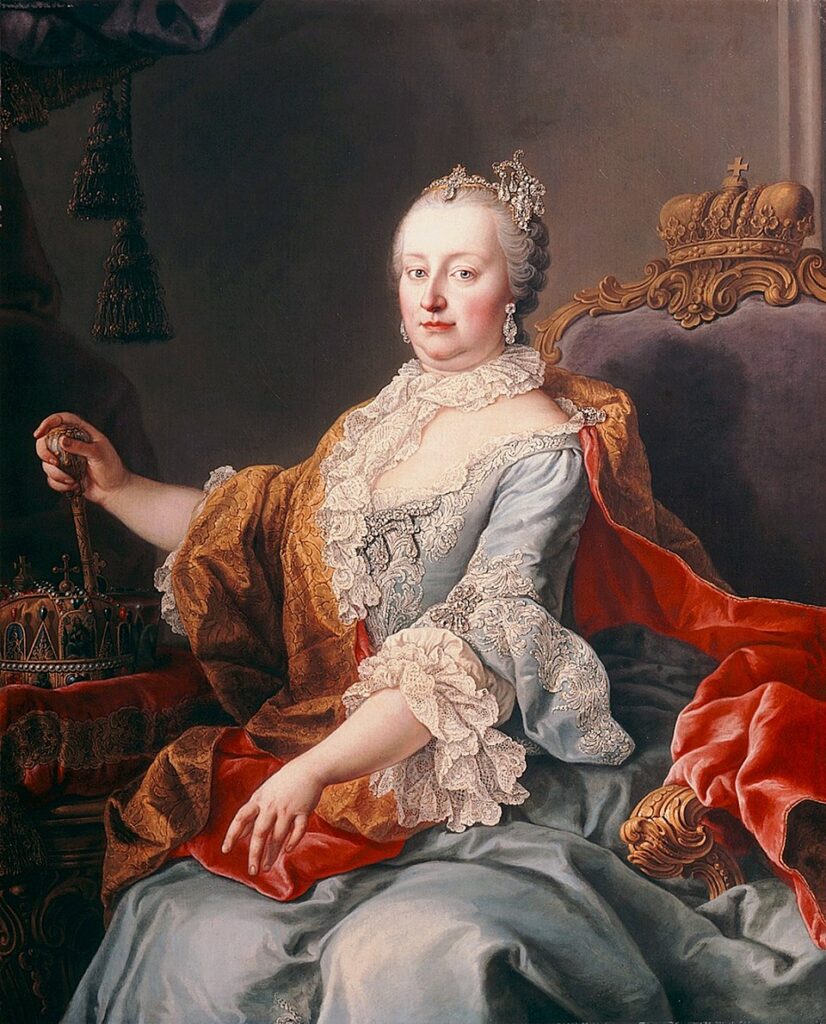
In an age when thrones were reserved for men and power was inherited through sons, Maria Theresa stood defiantly at the heart of Europe. Born in Vienna on May 13, 1717, she inherited the vast Habsburg empire as a young woman—amid skepticism, threats, and outright war. But what followed was one of the most transformative reigns in European history, not just because she survived, but because she reigned, mothering both children and reforms that would shape the continent.
Birth and Dynastic Context
Maria Theresa Walburga Amalia Christina was born into one of the most powerful dynasties in Europe: the House of Habsburg. Her father, Emperor Charles VI, was desperate for a male heir, but never had one. To secure his daughter’s succession, he issued the Pragmatic Sanction—a legal document that allowed a daughter to inherit his lands.
This agreement was accepted begrudgingly by other European powers—until Charles died in 1740. Then, the wolves descended.
A Woman in a Man’s Empire
At just 23 years old, Maria Theresa became Archduchess of Austria, Queen of Hungary and Bohemia, and later Holy Roman Empress through marriage. But her ascension was met with disdain. Most European leaders believed a woman could not lead a military or rule a realm alone.
Maria Theresa had no formal training in governance. Yet, with resolve, she assumed command and surrounded herself with loyal, pragmatic advisors. Her early reign was defined by fire: the War of the Austrian Succession.
War of the Austrian Succession
Her claim to the throne triggered an international crisis. Frederick II of Prussia invaded the Habsburg province of Silesia, kicking off an 8-year conflict involving France, Britain, Spain, and many German states.
Though she lost Silesia, Maria Theresa astonished Europe by holding her empire together. She gained recognition of her rule, won allies, and stabilized internal administration. Her courage—pregnant and nursing during wartime—became legendary.
Diplomatic Shifts and the Seven Years’ War
Maria Theresa never forgave Prussia’s betrayal. She dedicated much of her reign to reclaiming Silesia. In an unexpected twist of diplomacy, she reversed Austria’s traditional alliances: partnering with France, Austria’s historical enemy, while Britain aligned with Prussia.
This set the stage for the Seven Years’ War (1756–1763), a truly global conflict. Though Austria again failed to regain Silesia, Maria Theresa emerged respected as a resilient, strategic sovereign who adapted to a brutal world.
Reforms and Enlightenment Policies
Beyond war, Maria Theresa’s reign was marked by progressive reforms. Influenced by the Enlightenment, she modernized Austria in ways few monarchs had:
- Education: She made elementary education mandatory for both boys and girls, founding hundreds of schools.
- Legal Reform: She restructured the legal system and introduced a uniform civil code.
- Healthcare: She launched smallpox inoculation campaigns and improved hospitals.
- Taxation: She rationalized tax collection to reduce aristocratic privilege.
- Military: She created a professional standing army and centralized command.
While she remained deeply Catholic and did not embrace full religious tolerance, her reforms laid the groundwork for Austria’s modernization.
Family and Personal Life
Maria Theresa married Francis Stephen of Lorraine, who became Holy Roman Emperor. Their partnership was affectionate and politically useful, though he wielded less power than her.
Together, they had 16 children, many of whom were married into major royal families across Europe. The most famous was Marie Antoinette, future queen of France.
Maria Theresa considered motherhood a state duty. Her letters to her children are filled with advice on morality, governance, and diplomacy.
Legacy in Education and Governance
Maria Theresa is often seen as one of the first enlightened absolutists. Her reign combined traditional authority with rational, bureaucratic reforms. She balanced fierce piety with modern policies. She ruled with both heart and iron.
Her sons Joseph II and Leopold II inherited her throne and continued her reforms—though not always with her tact.
Maria Theresa’s Death and Succession
Maria Theresa died on November 29, 1780, at the age of 63, after 40 years of rule. Her death marked the end of the Habsburg proper line, succeeded by the House of Habsburg-Lorraine through her son.
She was buried in the Imperial Crypt of the Capuchin Church in Vienna, beside her beloved Francis.
Historical Perception
Historians have long debated Maria Theresa’s conservatism versus her progressivism. While she upheld many traditional values—particularly regarding religion and censorship—she also broke ground as a powerful woman who restructured her empire with intelligence and willpower.
Her story is one of survival, strategy, and maternal leadership at the helm of a fractured Europe.
Lesser-Known Facts
- She never held the title “Empress” in her own right; her husband did. She ruled as queen and archduchess.
- Maria Theresa personally read petitions from subjects weekly.
- She had a deep fear of being poisoned and used food tasters.
- Despite her many children, she was a strict moralist, banning corsets, dancing during Lent, and brothels.
- Her education policies later inspired Joseph II’s radical reforms in Austria and beyond.