Table of Contents
- A City on the Brink: Memphis in April 1968
- The Final Day of a Dreamer: April 4, 1968
- Martin Luther King Jr.: The Voice of a Generation
- The Long March to Memphis: Context and Causes
- The Sanitation Workers’ Strike: A Fight for Dignity
- King’s Call to Action: Solidarity and Strategy
- The Last Words: Inside the Lorraine Motel
- The Assassination: A Bullet that Shattered America
- The Immediate Aftermath: Shockwaves Across the Nation
- Riots and Mourning: America Explodes in Grief and Fury
- The Hunt for the Assassin: James Earl Ray and the Manhunt
- The Trial and Controversies: Seeking Justice or Cover-up?
- Legacy of the Martyr: Civil Rights and Social Change
- The Dream’s Persistence: How King’s Vision Shaped America
- The Global Reaction: King’s Death Beyond US Borders
- Memory and Memorial: The Lorraine Motel and Beyond
- The Debate Continues: Conspiracies, Questions, and Historiography
- Lessons from the Tragedy: Nonviolence and Resistance Today
- Conclusion: The End of a Chapter, The Birth of a Movement
- FAQs: Unraveling the Mysteries and Meanings of April 4, 1968
- External Resource: Wikipedia Link
- Internal Link: Visit History Sphere
A City on the Brink: Memphis in April 1968
Memphis in 1968 was a city caught in the unforgiving grasp of social tension and historical reckoning. The humid spring air hung heavy with a mixture of hope and despair, as workers marched in the streets demanding basic human rights, and the echoes of injustice rattled the very soul of the South. It was in this charged atmosphere—amid chants, picket lines, and mounting unrest—that Dr. Martin Luther King Jr., the charismatic leader of America’s civil rights struggle, arrived on April 3rd, 1968.
The sun dipped low over the Tennessee skyline, casting long shadows over the Lorraine Motel, a modest haven perched just a block away from the heart of the city’s turmoil. Inside its walls, King was preparing what would become his final speech, a clarion call to a nation on the edge. What happened the very next day, April 4th, would trigger one of the most profound upheavals in American history—an assassination that would reverberate far beyond Memphis, shaking the ideals of freedom, justice, and equality.
The Final Day of a Dreamer: April 4, 1968
The morning began with an eerie calm, at odds with the storm that had been quietly gathering. On the balcony of room 306 at the Lorraine Motel, Dr. King stepped out briefly, exchanging words with friends and aides. Smiling and determined, he seemed unaware of the bullet that would end his life just moments later.
At 6:01 p.m., a single rifle shot rang out, slicing through the fragile tranquility. King collapsed, clutching his face, his lifelong fight on the brink of a cruel finale. As emergency crews rushed him away, the city—and the nation—held its breath. When he was pronounced dead an hour later at St. Joseph’s Hospital, the collective heart of a movement shattered.
Martin Luther King Jr.: The Voice of a Generation
Martin Luther King Jr. had long been a beacon in the tumultuous fight for civil rights. Born in Atlanta, Georgia, in 1929, his rise from a preacher’s son to a global symbol of nonviolent resistance was nothing less than extraordinary. King’s philosophy blended Christian ethics with Gandhi-inspired activism, preaching love and justice in a society chained by segregation and racial hatred.
His towering presence—both literal and symbolic—spoke to millions yearning for equality. “I have a dream,” he famously proclaimed in 1963 at the Lincoln Memorial, etching those words into the conscience of a nation. But by 1968, King’s vision had expanded beyond racial justice, encompassing economic fairness and opposition to the Vietnam War—stances that alienated some allies and placed him in increasing danger.
The Long March to Memphis: Context and Causes
The road to Memphis was paved with uncompromising demands for dignity. That year, a strike by over a thousand black sanitation workers seeking better wages and safer working conditions had captured national attention. These laborers, critical to the city’s functioning, faced deplorable conditions: meager pay, no union recognition, and horrific safety risks—two workers had even been crushed by malfunctioning equipment weeks before King’s arrival.
King saw the strike as a crucial front in the broader battle against racial and economic injustice. Memphis had become emblematic not only of southern segregation but also of the poverty and neglect that crippled black communities nationwide. His decision to support the sanitation workers was a deliberate act of solidarity—a stand that put even more heat on his already burning crusade.
The Sanitation Workers’ Strike: A Fight for Dignity
The strike began on February 12, 1968, when 1,300 African American sanitation workers walked off their jobs. Their rallying cry was simple yet profound: “I am a man.” This demand to be recognized as human beings—entitled to fair pay, respectful treatment, and safe work—resonated deeply across the civil rights movement.
Despite months of protests, negotiations stalled, and the city remained indifferent. Police clashed with demonstrators; arrests piled up—the strike epitomized the grinding conflict between entrenched power structures and grassroots advocacy. King’s involvement would propel the strike from the local to the national stage, highlighting the intersection of race and class.
King’s Call to Action: Solidarity and Strategy
Upon arriving in Memphis, King famously told the crowds, “We’ve got to give ourselves to this struggle until the end.” On April 3, in what would become known as the “Mountaintop Speech,” he spoke prophetically of the dangers ahead but reaffirmed his commitment to nonviolence and justice.
In the shadow of violence and threats against his life, King’s words carried a mixture of courage and somber foreboding: “Like anybody, I would like to live a long life… But I’m not concerned about that now. I just want to do God’s will.” The speech was a masterpiece of emotional resonance, blending spiritual fortitude with political urgency.
The Last Words: Inside the Lorraine Motel
That evening, King retired to his room at the Lorraine Motel, a temporary refuge amid escalating threats. Cozy yet humble, the motel was a crossroads for civil rights activists and a silent witness to history.
Friends recall King chatting softly before heading to dinner, cracking jokes despite the tension. The atmosphere was bittersweet: a sense of accomplishment mixed with an unshakable apprehension. Yet none anticipated that the bullet which would strike that night would abruptly end a life devoted so fully to peace.
The Assassination: A Bullet that Shattered America
Just after 6 p.m., as King stood on the motel’s balcony, the fatal shot was fired from a nearby rooming house. The bullet entered his jaw and lodged in his neck, severing his spinal cord. Witnesses were stunned—chaos erupted as the news spread like wildfire.
The assassin, James Earl Ray, a fugitive with a criminal past, disappeared into the night, sparking a massive manhunt. The nation grappled with disbelief—how could such a peaceful messenger be silenced with violence?
The Immediate Aftermath: Shockwaves Across the Nation
News of King’s death hit the United States like a thunderclap. Television brought the tragedy into every living room; newspapers splashed headlines in bold type. Spontaneous vigils and memorials sprang up, but so did rage and despair.
Leaders from all political spectrums expressed sorrow, yet the pain spilled beyond words. For millions of African Americans, King’s assassination wasn’t just an attack on one man, but on hope itself. The fragile progress towards equality seemed suddenly precarious.
Riots and Mourning: America Explodes in Grief and Fury
In the days that followed, more than 100 cities erupted in violence. Looting, arson, clashes with police claimed dozens of lives and left countless injured. Washington, D.C., Chicago, Baltimore, and other urban centers witnessed burning buildings and tense curfews.
Yet amid the destruction, mourning intertwined with calls for unity. The duality captured the nation’s fractured soul—the pain of loss fueling both despair and determination to carry on King’s mission.
The Hunt for the Assassin: James Earl Ray and the Manhunt
James Earl Ray became the subject of one of the largest manhunts in U.S. history. Captured weeks later at London’s Heathrow Airport, he initially pled guilty to avoid the death penalty, later attempting to withdraw his confession.
His motives and possible accomplices remain subjects of intense speculation. Ray’s trial and imprisonment, while judicially conclusive, failed to quell doubts or conspiracy theories that questioned the official narrative.
The Trial and Controversies: Seeking Justice or Cover-up?
The official verdict—Ray as the lone assassin—was accepted by the courts but met skepticism among some historians, civil rights leaders, and King’s own family. Over the decades, theories about government involvement, complicity of local authorities, or other plots have flourished.
In 1999, a civil trial awarded damages to King’s family, citing a conspiracy involving government agencies. Regardless, the complexities surrounding the assassination remind us how history can be tangled in shadow and doubt.
Legacy of the Martyr: Civil Rights and Social Change
Martin Luther King Jr.’s death galvanized the civil rights movement, transforming sorrow into renewed vigor. The Civil Rights Act of 1968, including the Fair Housing Act, was passed swiftly following his funeral, a legislative tribute to his work.
King’s martyrdom underscored the costs of justice but also the power of sacrifice. His principles of nonviolence continue to inspire activists fighting racial inequality and injustice worldwide.
The Dream’s Persistence: How King’s Vision Shaped America
Despite the tragedy, King’s vision did not die with him. The ongoing struggle for racial justice, voting rights, and economic equality owes much to his leadership.
In education, policy, art, and culture, his message echoes—reminding successive generations that the “arc of the moral universe” bends toward justice, if one dares to embrace courage and compassion.
The Global Reaction: King’s Death Beyond US Borders
King’s assassination shocked the world. International leaders, from Nelson Mandela to Pope Paul VI, expressed sorrow and solidarity. His struggle became emblematic of universal human rights.
Anti-apartheid movements, student protests, and liberation struggles abroad found inspiration in King’s teachings, marking his death as a global loss but also a catalyst for movements worldwide.
Memory and Memorial: The Lorraine Motel and Beyond
Today, the Lorraine Motel stands as the National Civil Rights Museum, preserving King’s legacy and the story of America’s struggle for justice. Visitors walk the halls where history unfolded, immersed in exhibitions that bridge past and present.
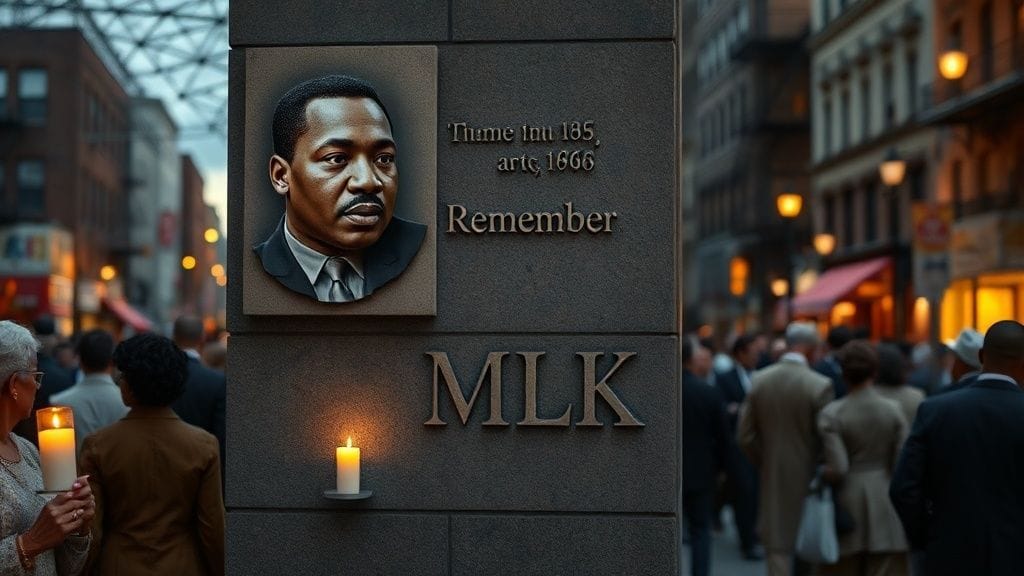
Annual commemorations, statues, and schools named in his honor keep King’s memory alive, a testament to the enduring power of one man’s dream.
The Debate Continues: Conspiracies, Questions, and Historiography
Decades later, historians and researchers continue to probe the nuances of April 4, 1968. Was James Earl Ray truly alone? What role did the FBI’s COINTELPRO program play?
While some mysteries remain, the conversation itself highlights the importance of vigilance in safeguarding democracy and truth.
Lessons from the Tragedy: Nonviolence and Resistance Today
King’s life and death offer timeless lessons. In a world where violence still breeds hatred, his commitment to peaceful protest remains a beacon.
Movements such as Black Lives Matter draw clear lineage from King’s ethos, proving that the struggle for justice is ongoing, evolving, and essential.
Conclusion: The End of a Chapter, The Birth of a Movement
Martin Luther King Jr.’s assassination was a profound rupture in the fabric of American history, a moment when hope was tested and humanity confronted its darkest impulses. Yet, from that dark day arose a renewed commitment to justice, equality, and peace.
His legacy is not merely preserved in history books or memorials but lived in the continuing efforts to realize the dream he so passionately championed. It is a reminder that even when silence falls, the call for dignity and compassion continues to resonate in every heartbeat striving for a better world.
FAQs
1. Why was Martin Luther King Jr. in Memphis in April 1968?
King was supporting a strike by African American sanitation workers demanding fair wages and safer working conditions. He saw the strike as part of the broader fight for economic and racial justice.
2. Who assassinated Martin Luther King Jr.?
James Earl Ray, a convicted felon and fugitive, was arrested and pled guilty to the assassination. However, questions remain about possible conspiracies.
3. What was the immediate reaction to King’s assassination?
The nation experienced widespread shock, mourning, and riots across more than 100 cities, reflecting deep racial tensions and frustration.
4. How did King’s death impact the civil rights movement?
While a tragic loss, King’s death galvanized activists and led to important legislative achievements like the Fair Housing Act, strengthening the pursuit of civil rights.
5. Are there conspiracy theories about King’s assassination?
Yes, several theories question the official account, suggesting involvement by government agencies or others. These remain debated among scholars and the public.
6. What is the legacy of Martin Luther King Jr. today?
King’s nonviolent philosophy and vision for racial and economic justice continue to inspire movements worldwide, emphasizing human dignity and equality.
7. How is Martin Luther King Jr. commemorated?
Through the National Civil Rights Museum at the Lorraine Motel, annual holidays, monuments, and numerous institutions bearing his name, his memory is carefully preserved.
8. Did King anticipate the danger he faced?
In his “Mountaintop” speech the day before his death, King hinted at the possibility of his own mortality but expressed unwavering commitment to his cause.