Table of Contents
- A Winter Morning on the Frozen Danube
- A Captive Prince and a Broken Kingdom
- The Hunyadi Legacy and the Shadow of the Raven
- From Scholar-Boy to Political Pawn
- The Long Interregnum: Factions, Fear, and Foreign Kings
- January 1458: Nobles, Soldiers, and Citizens Converge
- Matthias Corvinus Elected King on the Frozen River
- The Deal Behind the Acclamation: Queen Elizabeth and the Magnates
- Prisoner-King: From Bohemian Captivity to Royal Coronation
- Forging Power: Reforming the Court and Taming the Nobility
- Steel and Strategy: The Black Army and the Ottoman Threat
- A Renaissance Court in a Frontier Kingdom
- Conflict with the Habsburgs and the Dream of a Central European Empire
- Society Under Matthias: Towns, Peasants, and the Weight of War
- The Human Face of Power: Love, Loss, and Heirless Glory
- Memory of a Raven King: Legends, Myths, and Political Uses
- Why a Frozen January Day Still Matters
- Conclusion
- FAQs
- External Resource
- Internal Link
Article Summary: On a bitterly cold day in January 1458, Hungarian nobles and commoners alike gathered on the frozen Danube to shout a boy’s name into history: Matthias Corvinus elected king. This article traces the dramatic path that led to that moment, from the fall of his father, the great general John Hunyadi, to the political chaos following King Ladislaus V’s death. It follows Matthias from his youth as a humanist-educated hostage to his transformation into one of Europe’s most formidable Renaissance rulers. Through vivid narrative and careful analysis, it explores the power struggles, foreign invasions, and shifting social landscape that shaped his reign. It also examines how Matthias built a pioneering standing army, cultivated a glittering court of scholars and artists, and tried to forge a Central European empire in the shadow of the Ottomans and the Habsburgs. Along the way, the article asks what it meant for a kingdom on Europe’s frontier to embrace a new kind of kingship born not from ancient dynasty but from merit and military prowess. It considers the human cost of his ambitions, the contradictions of his rule, and the profound impact of the moment when Matthias Corvinus elected king changed Hungary’s destiny. Finally, it shows how his life became legend, and why that frozen January morning still whispers through European memory.
A Winter Morning on the Frozen Danube
The river had turned to stone. In late January 1458, as a pale sun hovered over Buda and Pest, the broad Danube lay frozen solid, its shifting blue-gray surface now an immense, glittering stage. On it, tens of thousands of people—nobles in fur-lined cloaks, armored soldiers, barefoot townsmen, country peasants gawking in rough wool—pressed together in a living mass. The stinging air smelled of woodsmoke from nearby hearths, of horses and sweat, of fear. At the heart of that crowd, in an age where crowns were usually inherited or dictated by foreign powers, a different kind of drama was unfolding. On that ice, in a moment that would astonish foreign observers and echo down the centuries, the nobles of Hungary and the clamoring people of Buda together hailed a seventeen-year-old captive as their sovereign. This was the day Matthias Corvinus elected king—one of the strangest and most theatrical royal elections in late medieval Europe.
It is astonishing, isn’t it? The image seems almost mythic: a kingdom battered by enemy invasions and internal feuds, its throne empty, its elites divided, its people exhausted. Yet here they stood, on a natural stage carved by winter, not in a cathedral or a royal hall but on a frozen river that tied their land to the heart of Europe. There was no crown that day—no ceremonial anointing. Instead there were voices: hoarse, insistent, rising and falling across the ice. The chronicler Antonio Bonfini would later write of the “general shouting, clashing, and clamor” as the nobility, reluctantly yet decisively, followed what seemed like a popular wave. Under the open sky, they chose not a royal-born Habsburg or a Polish prince, but the son of a soldier—Matthias, scion of the upstart Hunyadi family.
But this was only the beginning. To understand why Matthias Corvinus elected king on that January day mattered so deeply, we must move backward into a Hungary on the brink: a land that had spent decades as Christendom’s shield against the Ottoman Empire, a kingdom that had seen its greatest general die accused of treason, and whose politics had turned into something close to civil war. The story that ends with the frozen Danube begins in prison cells and battlefields, in letters carried across snowbound passes, in whispered conspiracies at court. It is a story of opportunism and courage, of fate bending under human will—of how a world-weary medieval kingdom gave birth to a Renaissance monarch.
A Captive Prince and a Broken Kingdom
When news of King Ladislaus V’s death spread in late 1457, Hungary did not rejoice. The teenage king—often called “the Posthumous”—had never been a popular or strong ruler. In truth, he had been less a sovereign than a pawn, shuttled between guardians, manipulated by powerful lords, and paralyzed by fear. Yet his sudden death in Prague, at just seventeen, left more than an empty throne. It left a kingdom fractured along every seam, bereft of clear rules regarding succession, and haunted by fresh wounds inflicted by the Habsburg court and Hungary’s own magnates.
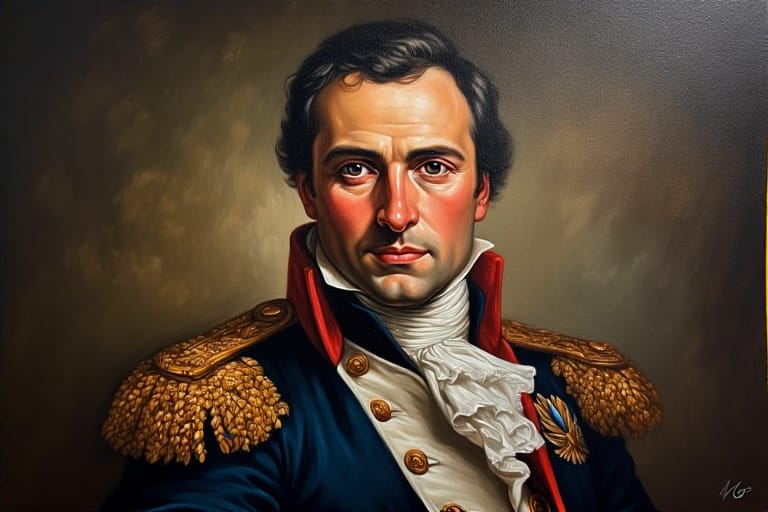
At the center of this crisis was a boy in chains. Matthias Hunyadi—later known as Matthias Corvinus—was also seventeen that winter, almost the same age as the dead king. He was the younger son of John Hunyadi, the famed general who had led Hungary’s defense against the Ottomans and orchestrated the legendary relief of Belgrade. Yet by 1457, the Hunyadi name, once synonymous with hope, had become dangerous. The older Hunyadi son, Ladislaus, had been falsely accused of plotting to assassinate George of Poděbrady, the powerful Czech leader and virtual ruler of Bohemia. The resulting storm of intrigue ended in tragedy: Ladislaus Hunyadi was executed in Buda on the orders of King Ladislaus V. Matthias, the younger brother, fell into Bohemian hands and was held prisoner, a convenient bargaining chip.
Hungary, meanwhile, was leaderless and deeply divided. The great aristocratic houses—the Garai, the Cillei, the Újlaki—had long resented the meteoric rise of the “upstart” Hunyadi clan, who were of comparatively recent noble stock. Many had aligned themselves with the Habsburgs, preferring a foreign-born but dynastically “legitimate” ruler to a domestic war hero’s son. Others, wary of Habsburg influence and alarmed by Ottoman expansion, believed only a strong national king could save the realm. In every castle and market square, the same question echoed: who would rule Hungary now, and on what terms?
The law offered no simple answers. Medieval Hungary was an elective monarchy, but in practice, royal succession usually followed dynastic lines. The extinction of the direct Angevin and then Luxembourg lines had left the field open to claimants without deep roots in the land. The Habsburgs pointed to treaties and marriage contracts; the Polish and Bohemian rulers advanced their own pretensions. But there was also another, more radical possibility: that the Hungarian nobility would take fate into their own hands and choose a king who was neither a great foreign prince nor the heir of an ancient house, but instead the product of the kingdom’s own turbulent border wars.
It was in this context of captivity and fracture that the path opened for Matthias Corvinus elected king. The boy himself, sitting in uneasy confinement in Prague, could not yet know that the fate of his homeland was turning in his direction. Letters bearing his name traveled across mountains and rivers, carried by emissaries who weighed his chances in inn parlors and frost-hardened camps. Hungary looked both east to the Ottoman frontier and west to Vienna and Prague, searching for some anchor in a storm that did not end with Ladislaus V’s death, but merely entered a new and more dangerous phase.
The Hunyadi Legacy and the Shadow of the Raven
To understand why so many Hungarian nobles, even some who had once opposed the family, could stomach seeing Matthias Corvinus elected king, we have to grasp the legacy of his father, John Hunyadi. In the first half of the fifteenth century, John was not born to kingship, nor to the expectation of great office. Thought to be of modest Wallachian or lesser noble origin, he climbed through the ranks on the strength of his sword and his tactical brilliance. In an age where noble birth usually defined one’s ceiling, Hunyadi smashed that ceiling, becoming Voivode of Transylvania, the kingdom’s leading military commander, and eventually regent.
From the 1440s onward, he became the embodiment of Hungary’s role as the “bulwark of Christendom.” His campaigns against the Ottomans were not always successful—his crushing defeat at Varna in 1444 haunted him—but they were relentless. In 1456, at the siege of Belgrade, Hunyadi and his forces, alongside the fiery preacher John of Capistrano and a mass of crusaders, delivered one of the great blows to Ottoman expansion. The victory was so significant that Pope Callixtus III ordered church bells across Europe to ring at noon in commemoration—a practice that, in many places, still continues. For Hungarians, Hunyadi was more than a general; he was the shield between their fields and Ottoman cavalry, between their churches and the sultan’s banners.
Yet fame bred enemies. The great baronial clans perceived the Hunyadi influence as a threat to the old order. Resentment simmered in council chambers and hunting lodges, in the dark wood-paneled halls where intrigues are born. The death of John Hunyadi from plague shortly after Belgrade removed the pillar that had held up both frontier and court. Into the vacuum stepped his enemies: they struck at his heirs, leading to the arrest and execution of Ladislaus Hunyadi and the seizure of family holdings.
Matthias grew up under this immense, intangible inheritance. The Hunyadi coat of arms, with its raven clutching a golden ring, would later feed legends—that a real raven had once stolen a ring from him and been shot down, or that the raven symbolized his keen mind and dark fate. Whatever the truth of those stories, the raven came to stand for a new sort of “royal” emblem: not the lily of France or the double-headed eagle of the Empire, but the mark of a self-made warrior house. If Matthias were ever to sit on a throne, it would be on the shoulders of that legacy: the admiration ordinary soldiers and townspeople felt for his father, the fear that the Ottomans would return unchecked if a weak king were chosen, and a dawning belief that perhaps merit could justify a crown as well as bloodline.
This legacy was double-edged. For some, it made the idea of Matthias Corvinus elected king seem like natural justice. For others, especially among conservative magnates, it conjured nightmares of a royal house born from a regent’s family, overturning centuries of aristocratic hierarchy. Hungary in the 1450s was not simply a land choosing between individuals, but between two visions of what a kingdom could be.
From Scholar-Boy to Political Pawn
Matthias Hunyadi’s childhood, though shadowed by war, was not one of crude militarism or provincial ignorance. Like many sons of ambitious nobles in the fifteenth century, he was raised with tutors steeped in the new humanist learning pouring out of Italian cities. He learned Latin, the language of diplomacy and scholarship, and was introduced to the works of classical authors—Livy, Cicero, perhaps even Plato in translation. Later chroniclers emphasized his love of books and his sharp intellect, presenting him as a prince of the mind as well as the sword. While we cannot always separate legend from fact, the arc of his later life suggests that these early seeds of curiosity were real.
Yet behind the scholarly exercises, the boy’s life was entangled with politics from the first. His father’s position as regent and general ensured that every marriage proposal, every alliance, every step in Matthias’s education carried political meaning. As a younger son, he could not expect to inherit all the family’s titles; but he could be used to cement ties with powerful houses. When the winds turned against the Hunyadi clan after John’s death, Matthias became less a cherished heir and more a valuable hostage in the grand chessboard of central European politics.
In 1457, after Ladislaus Hunyadi’s execution, Matthias fell into the custody of George of Poděbrady, the de facto ruler of Bohemia. Officially, he was a “guest”; in reality, he was collateral. The Bohemian leader, navigating between the Holy Roman Emperor, the Habsburgs, and the turbulent Hussite factions at home, understood the bargaining power of a Hunyadi son. So Matthias, who had grown up between battle reports and humanist treatises, now found himself moving between guarded rooms and negotiation tables, his signature affixed to documents he scarcely had power to refuse.
We know from scattered correspondence and the testimony of later writers that he bore this captivity with a mixture of impatience and calculation. This was a young man who had seen his brother executed, his family disgraced, his father’s work cast into doubt. Yet he was no reckless avenger. In this liminal period, as 1457 turned toward the decisive winter of 1458, Matthias’s mind sharpened like a blade. If fate ever opened a door, he meant to walk through it. What he could not yet know was that the door would be thrown open not in a quiet council chamber, but in a roar of voices on a frozen river, as the improbable scene of Matthias Corvinus elected king unfolded miles away from his prison.
The Long Interregnum: Factions, Fear, and Foreign Kings
Back in Hungary, the months following King Ladislaus V’s death were like living atop a fault line. Everyone understood that the ground could shift at any moment. Without a crowned monarch, the great lords, bishops, and royal towns vied to shape the future. Into this vacuum stepped powerful factions, each with its own candidate and vision.
One camp favored the Habsburg claim. The late king had been of that house; treaties existed promising the crown to his kinsman, the future Emperor Frederick III, should he die without heirs. For the pro-Habsburg nobles—many of whom had grown fat on royal grants and Habsburg favor—such continuity offered security. They could expect their privileges to be kept, their estates confirmed, their influence at court unchecked by the will of a strong native monarch. Yet this option came with heavy baggage: Frederick was distant, preoccupied with his own imperial troubles, and hardly a figure to lead the desperate fight on Hungary’s southern frontier.
Another camp looked north and east, imagining a union with Poland or Bohemia through a foreign prince. A shared ruler, they argued, might bring broader alliances, more men, more money. But the risk of yet another absentee king, drawn into the labyrinthine politics of Kraków or Prague, loomed large. In taverns and village churches, simple people did not speak of treaties and dynastic webs; they spoke of raiding parties and burned fields, of needing a king who would actually be there.
Then there was the Hunyadi party, which coalesced around the memory of John and the hope embodied by Matthias. It drew support from mid-level nobles who had served under Hunyadi in the south, from churchmen who had seen his donations and piety, and from towns that had benefited from his protection. Crucially, it also found a champion in Elizabeth of Cillei, the dowager queen and aunt of the deceased Ladislaus V. Her own relationship with the Hunyadi family had been strained, but she was no fool. She recognized that Hungary needed a resolute, resident king capable of uniting factions and facing the Ottomans.
Throughout the last weeks of 1457 and the opening of 1458, emissaries shuttled between castles and cities. Feasts and secret meetings blurred together; alliances were forged in candlelit chambers and sealed in chapels and hallways. Rumors flew faster than any messenger: that Frederick was marching with an imperial army, that the Ottomans were preparing another thrust into Serbia, that Bohemia would refuse to release Matthias under any circumstance. Everyone sensed that a moment of decision had come. The question was no longer whether there would be a king, but who, and at what price.
January 1458: Nobles, Soldiers, and Citizens Converge
The choice of January as the month of decision was not merely symbolic. Winter was, paradoxically, a more favorable time for large gatherings in medieval Europe. The harvest was long stored; military campaigning was difficult; roads, though bitterly cold, were passable in the crisp air, their ruts frozen solid rather than churned to mud. Word went out for the diet—the assembly of the realm—to meet near Buda and Pest and settle the crown’s fate.
From the plains and the hills, from the border castles and the market towns, the nobility rode in. They came with retinues of armed men—steel against the wind, horses stamping steam into the air. The sight was both impressive and dangerous: so many armed factions in one place could easily turn an election into a battle. As the nobles gathered in halls and tents to argue and scheme, the ordinary people of Buda and neighboring Pest watched, listened, and gradually took on a role no one had anticipated.
Chroniclers note that the mood in the twin towns was tense, angry, and hopeful all at once. Many citizens had witnessed the execution of Ladislaus Hunyadi only months before. They had seen the widow and the mother weep; some had shouted curses against the king and his advisors. John Hunyadi’s victory at Belgrade was still fresh in their memories, not as an abstract event but as a lived salvation—without it, Ottoman cavalry might already be grazing on the banks of the Danube. The idea that his younger son, Matthias, might become king was not a far-fetched constitutional gambit to them; it felt like justice and prudence bound together.
The magnates, for their part, attempted to control the process, as they always had. In private sessions of the diet, they debated Matthias’s youth, his captivity, the dangers of empowering a family that had already tasted near-regency. Habsburg partisans whispered about treaties broken and oaths violated. Yet outside those halls, in the narrow streets and along the riverbank, another sort of deliberation was taking place: one made not with charters and seals, but with rumor, persuasion, and the raw moral authority of public emotion.
When the cold sharpened in the latter days of January and the Danube’s ice grew thick enough to bear multitudes, a kind of collective instinct took hold. The frozen river, stretching between Buda and Pest, was not just a natural marvel. It was a bridge between the traditional centers of royal power on the hilly Buda side and the burgeoning commercial vitality of Pest. On that expanse of glassy white, the people and the nobles would meet as almost equals, at least for one unstable, unrepeatable moment.
Matthias Corvinus Elected King on the Frozen River
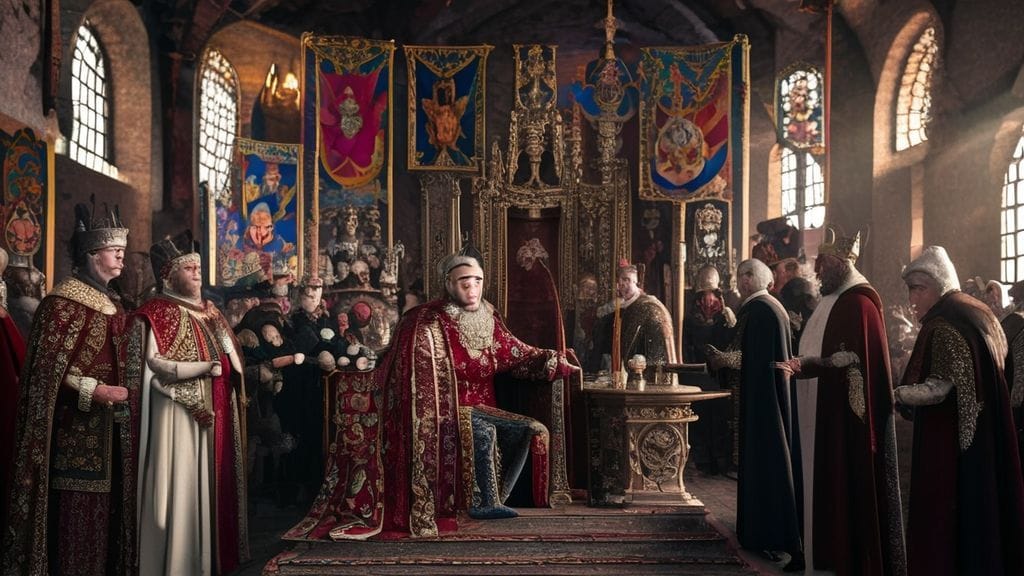
And so the day came. Contemporary sources disagree on the exact sequence of events, but the essentials are clear enough to reconstruct. Under a low, wintry sky, the nobles processed toward the frozen Danube, their cloaks flapping, banners stiff in the wind. Soldiers lined up, their weapons gleaming dullly. Townspeople surged alongside them from the alleys and gates, boots scraping and crunching on the ice as they spilled onto the solid river. The scene must have been startling for any foreign observer: a royal election not enclosed by walls but opened to the elements, framed by water turned to stone.
In this unusual forum, the dynamics of power subtly shifted. The great lords could not so easily shut the doors and deliberate in privacy; their every move was watched by a sea of faces, their hesitations met with murmurs and shouts. According to later accounts, the cry went up from the crowd first: “Matthias! Matthias Hunyadi!” It rolled across the ice, multiplied and echoed between the hill of Buda and the flat expanse of Pest. Some historians debate how spontaneous this acclamation really was—whether it had been carefully orchestrated by Hunyadi partisans or by the dowager queen herself—but whatever its origin, its effect was electric.
Gradually, the nobles yielded to the momentum—or deftly positioned themselves to ride it. Elizabeth of Cillei, wielding her prestige as royal widow and a key broker of compromise, endorsed Matthias’s election. Deals were struck in the clangor: promises that Matthias, once freed, would marry into the royal line, that he would respect certain privileges, that the balance between crown and magnates would be maintained. Yet it is undeniable that the image of nobles “forced” or “encouraged” by the will of the assembled multitude to proclaim a Hunyadi king left its mark on memory. The phrase “Matthias Corvinus elected king” thus describes not merely a technical choice by the diet, but a communal act etched into the ice of the Danube.
When the lords at last formally recognized the acclamation, the frozen river erupted in shouts and cheers. The ritual of enthronement would come later; the sacred oil and the Crown of Saint Stephen were not present that day. What existed was something more fragile yet in some ways more powerful: a consensus, born of fear and hope, that a new monarch, a boy marked by tragedy and promise, should be entrusted with the kingdom’s salvation.
In that moment, Matthias was still a captive in Prague, but in the minds of his future subjects, he had already become Matthias Corvinus. The old Hunyadi raven seemed to spread its wings over the ice, claiming not just a coat of arms but a destiny. The significance of this scene has not been lost on historians. One modern scholar has called it “perhaps the most dramatic royal election in the late medieval kingdom,” a strange and vivid bending of custom to necessity. The ice of the Danube would thaw with the coming spring, but the decision it bore that day would shape Hungary for a generation.
The Deal Behind the Acclamation: Queen Elizabeth and the Magnates
Public enthusiasm alone does not make a king. The roar of the crowd on the frozen river needed to be translated into the language of law and diplomacy if Matthias’s election was to withstand foreign challenge. This is where Elizabeth of Cillei and a cluster of pragmatic magnates played their quiet, essential part. They understood that while it was stirring to see Matthias Corvinus elected king in such a dramatic fashion, stability hinged on negotiated compromise.
Elizabeth, once suspicious of the Hunyadi power, now recast herself as the guardian of the realm’s future. She reached out to George of Poděbrady in Bohemia, who held Matthias, and to other regional powers, arguing that the election had been legitimate, that resistance would lead only to further chaos and perhaps civil war. Simultaneously, she and leading nobles such as Michael Szilágyi—Matthias’s uncle—hammered out internal agreements. Szilágyi would serve as regent until Matthias’s return; the great barons would have their estates and rights confirmed; the royal chancery would remain sensitive to their interests.
There was another element as well: marriage. To bind Matthias more firmly into the web of dynastic legitimacy, arrangements were made for him to marry into a recognized royal house. This would later lead to his union with Catherine of Poděbrady, daughter of the Bohemian ruler, a move that both sealed the political bargain for his release and symbolically linked him to another royal line. Later still, his marriage to Beatrice of Naples would give his court an even stronger Renaissance flavor. But in 1458, the urgent priority was simply to get him home and onto the throne.
The magnates extracted what guarantees they could, but some must have suspected that once seated firmly as king, Matthias—young, ambitious, bearing the memory of his father’s clashes with the aristocracy—would eventually seek to limit their power. For the moment, though, interests aligned. No one wanted a renewed Habsburg intervention under the pretext of disputed succession; no one wanted to see the Ottomans advance while Hungary tore itself apart. The ice-bound spectacle was thus backed by ink and seal, by promises and quiet threats. Behind the romance of Matthias Corvinus elected king stood the hard work of political bargaining.
Prisoner-King: From Bohemian Captivity to Royal Coronation
News travels slowly on winter roads, but power travels faster in men’s minds. When word reached Prague that the Hungarian diet and people on the frozen Danube had chosen Matthias as their king, surprise mixed with opportunity. George of Poděbrady suddenly found that his youthful prisoner had become a valuable future ally—or a dangerous enemy if mishandled. The negotiations over Matthias’s release intensified.
What emerged was a compromise typical of the tangled politics of Central Europe. Matthias would affirm certain Bohemian interests; he would, as agreed, marry George’s daughter Catherine, binding the two houses together. Ransoms and sureties were discussed; ambassadors came and went. Through it all, the boy at the center of the bargaining kept his composure. He understood that he was both subject and object in these discussions: a would-be king whose freedom and authority depended on how well he navigated a landscape dominated by older, more seasoned figures.
In early 1458, the doors of Matthias’s captivity finally opened. The journey from Prague back toward Hungary must have been freighted with emotion. Behind him lay the humiliation of being a hostage; ahead lay the equally daunting burden of kingship. As he crossed mountain passes and frozen rivers, an anointed monarch only in name, he could not yet wear the Crown of Saint Stephen. That sacred object, preserved and revered as a symbol of Hungarian statehood, awaited him alongside the rituals of coronation.
When he finally entered Buda, the city that had witnessed his brother’s execution, he did so not as a condemned noble but as the acclaimed king. The coronation ceremonies, held later that year, wrapped the unusual origins of his election in the familiar garments of tradition. Anointing with holy oil, oaths before the estates, the solemn bestowal of regalia—all sought to transform the boy chosen on a river of ice into the sacral figure of a medieval sovereign. Yet beneath the liturgy, something new still pulsed: the memory of how this kingship had begun, in a mingling of popular acclamation and political bargaining. It was a reminder that while the Church consecrated kings, it did not always decide who wore the crown.
Forging Power: Reforming the Court and Taming the Nobility
Once crowned, Matthias faced a daunting dual task: to defend his realm against external enemies and to assert royal authority over a fractious aristocracy. Many kings have failed at just one of those challenges; Matthias, remarkably, managed both, though at considerable cost. The boy elected on the Danube soon showed that he was no puppet. The very nobles who had helped make Matthias Corvinus elected king discovered that they had raised a ruler who intended to rule.
One of his first priorities was to reshape the royal council and administrative apparatus. He selectively elevated capable men of lesser or medium rank—often trained in the new humanist culture—over some of the great barons. This both improved the efficiency of government and checked oligarchic power. Matthias also worked to centralize royal finances, tightening control over tax collection and seeking new sources of revenue. His fiscal reforms were not always popular, but they were driven by a clear objective: to create a dependable financial base for a stronger monarchy.
At the same time, he did not simply wage war on the nobility. Matthias remained enough of a realist to know that he needed their support. He confirmed many preexisting privileges, granted titles and lands to loyalists, and used patronage strategically. His reign can be seen as a prolonged negotiation between crown and aristocracy, with moments of sharp conflict but also periods of alignment, especially when foreign threats loomed large.
What distinguished him from many of his contemporaries was his administrative energy and attention to detail. He personally reviewed petitions, issued detailed orders, and followed up on the performance of his officials. One Italian observer marveled at this “king who writes like a chancellor and thinks like a general,” capturing the hybrid nature of Matthias’s rule—a blend of bureaucratic rationality, humanist curiosity, and martial decisiveness. The teenager who returned from captivity evolved quickly into a monarch who understood that paperwork and policy could be as powerful as swords.
Steel and Strategy: The Black Army and the Ottoman Threat
No aspect of Matthias’s kingship was more innovative—or more infamous—than his creation of a standing, professional army, known to history as the Black Army. In a region where feudal levies and ad-hoc crusader forces had long been the norm, this was a radical step. It reflected both his personal experience—shaped by frontier warfare and his father’s campaigns—and the harsh reality that the Ottoman Empire was not a seasonal raiding power but a permanent, disciplined military machine.
The Black Army was composed of mercenaries from across Europe: Czechs, Poles, Germans, Serbs, and others, as well as Hungarians. They were paid in cash, armed with up-to-date weaponry, and drilled into a coherent fighting force. Contemporary accounts describe them as tough, often brutal, and deeply loyal to the king as long as their wages were met. In contrast to feudal levies that served for limited periods and often resented foreign campaigns, this force gave Matthias a flexible instrument of war. He could strike quickly, respond to crises, and even take the offensive beyond Hungary’s borders.
Against the Ottomans, the Black Army helped stabilize the southern frontier. While Matthias could not expel the sultan from the Balkans, he managed, for much of his reign, to prevent major Ottoman breakthroughs into the Hungarian heartland. Fortresses were strengthened; border lords were supervised; campaigns into Bosnia and Serbia were launched to keep pressure on the enemy. This constant vigilance earned him renown as a defender of Christendom, reinforcing the belief among his subjects that the decision back in 1458 to see Matthias Corvinus elected king had indeed been a choice for survival.
Yet the Black Army was a double-edged sword. Its maintenance required enormous sums, contributing to the tax burden that weighed on peasants and towns. When funds ran short, these hardened soldiers could become unruly, extorting resources from the very people they were supposed to protect. After Matthias’s death, when his successors could not keep them paid, the same force that had been the backbone of his power became a source of instability. Still, in the broader arc of European history, his experiment in maintaining a permanent, professional army foreshadowed the military monarchies of the early modern age.
A Renaissance Court in a Frontier Kingdom
If Matthias had only been a capable war leader and ruthless administrator, his story would be impressive but perhaps not unique. What truly distinguishes his reign—as many historians have emphasized—is the flowering of Renaissance culture at his court in Buda and later Visegrád. The boy who had been tutored in humanist studies grew into a king who loved books, patronized scholars, and consciously crafted an image as a learned, enlightened ruler.
Under his patronage, Italian humanists and artists flocked to Hungary. Figures like the scholar Galeotto Marzio later wrote admiringly, and at times critically, of the king’s tastes and habits. Matthias built and expanded residences that blended Gothic and Renaissance styles, filled with frescoes, sculptures, and tapestries. He collected manuscripts voraciously, assembling the famed Bibliotheca Corviniana—one of the largest libraries in Europe, rivaling those of the Medici in Florence and the papal court in Rome. Many of these volumes, adorned with exquisite miniatures and bindings, bore his emblem, the corvus or raven.
This cultural efflorescence was not mere vanity. It served political ends as well. By presenting himself as a Renaissance prince, conversant with classical wisdom and surrounded by learned men, Matthias sought to elevate Hungary’s status among European powers. Diplomats and envoys who visited his court brought home tales of “King Matthias, the great patron of letters,” adding a new layer to the reputation of the kingdom once known mainly for war and frontier fortresses. One Italian humanist, quoted by a later scholar, remarked that “in the court of Matthias, Mars and Minerva sit side by side,” neatly capturing the fusion of martial and intellectual glory.
For his subjects, the benefits of this cultural transformation varied. The urban elite and churchmen often gained most, enjoying access to new knowledge and artistic patronage. But even in the countryside, the ripple effects could be felt: in improved legal records, in more educated clergy, in the gradual spread of more refined artistic styles. The court’s magnificence did not erase the hardships of war and taxation, yet it gave the kingdom a sense of pride and identity that transcended mere survival. The boy who had once sat in captivity reading Latin texts now presided over a realm that, in its better moments, felt like a northern outpost of the Italian Renaissance.
Conflict with the Habsburgs and the Dream of a Central European Empire
From the moment of his election, Matthias’s relationship with the Habsburgs had been fraught. Frederick III never fully accepted the legitimacy of the January 1458 decision. Treaties and prior claims, he argued, made the Habsburg house the rightful ruler of Hungary. The frozen Danube episode, for him, was at best an irregular improvisation and at worst an insult. For decades, this tension simmered, flaring into open conflict as Matthias’s ambitions grew.
Once he had stabilized his position at home and secured the southern frontier, Matthias turned his gaze west and north. He began to intervene in the affairs of Moravia, Silesia, and eventually Austria itself. The Black Army, initially assembled to resist the Ottomans, now marched against Christian neighbors. In the 1480s, in a dramatic turn of events, Matthias captured Vienna and took up residence in the city that had long been the Habsburg power center. For a time, this “upstart” king from the Hungarian marches ruled from both Buda and Vienna, casting himself as a Central European monarch of almost imperial breadth.
These campaigns were not universally admired. Some contemporaries, especially in the West, questioned why a king so celebrated as a defender against the Turks was expending blood and treasure fighting fellow Christians. Matthias’s defenders countered that control of these regions strengthened the overall bulwark against the Ottomans and checked the ambitions of an often inert Habsburg leadership. In his own mind, Matthias may have seen himself as reordering Central Europe, creating a more dynamic and responsive power structure.
Whatever his motives, these wars added to the strain on his kingdom. The costs of occupying Vienna and other territories were heavy; the political complexities multiplied. Yet they also demonstrated, in stark terms, how far the decision in 1458 had carried him. The boy whose election had been doubted abroad now dictated terms in the Habsburgs’ own lands. In the annals of both Hungarian and Austrian history, this period stands out as a rare reversal of the usual pattern, a moment when the raven of Hunyadi overshadowed the double-headed eagle of the Empire.
Society Under Matthias: Towns, Peasants, and the Weight of War
From the perspective of a peasant tilling his strip of land near the Tisza River, or a craftsman in the bustling markets of Buda, the grand narratives of Matthias’s wars and alliances often condensed into a simpler reality: taxes, conscription, and the persistent threat of violence. The strengthening of the crown and the creation of the Black Army came at a price largely borne by those outside the noble estates. To maintain his military machine and patronage networks, Matthias increased royal revenues through more systematic taxation.
This did not mean unmitigated oppression. In some respects, Matthias’s reforms brought greater predictability and, in certain urban contexts, opportunity. He granted privileges to towns, encouraged trade, and sought to integrate the multi-ethnic tapestry of his kingdom—Hungarians, Germans, Slavs, Romanians, and others—into a functioning economic whole. Cities like Buda, Kolozsvár (Cluj), and Pressburg (Pozsony/Bratislava) grew in importance as administrative and commercial centers.
Yet the rural majority remained vulnerable. Raids—Ottoman, bandit, or from unpaid mercenaries—could undo a season’s labor overnight. Legal protections existed on parchment, but enforcement depended on local power dynamics. The weight of war-making, even under a capable ruler, fell heaviest on those with the least voice in the diet or the royal council. The same people who may have cheered to see Matthias Corvinus elected king in 1458 sometimes grumbled, years later, about levies and requisitions.
Still, in comparative terms, Matthias’s reign brought a measure of stability and relative prosperity to many parts of the kingdom. The southern frontier was not entirely pacified, but catastrophe was averted. Infrastructure—bridges, roads, fortifications—saw maintenance and, at times, expansion. The presence of a strong, resident king deterred some of the worst excesses of local magnates. In this sense, the social consequences of his ascension were mixed but, on balance, more positive than those Hungary had experienced in the chaotic years preceding that frozen January day.
The Human Face of Power: Love, Loss, and Heirless Glory
Behind the armor and decrees, Matthias remained a man of flesh and blood, subject to the same joys and devastations as his subjects. His marital life reflects both the political realities of his position and a more personal story of hope and frustration. His first major dynastic union, with Catherine of Poděbrady, solidified the alliance that had helped secure his release and throne. Yet the marriage was short-lived; Catherine died young, and no surviving children came from their union.
Later, Matthias married Beatrice of Naples, a princess steeped in the sophisticated culture of the Italian South. Her arrival brought an even more pronounced Renaissance flavor to the Hungarian court. The couple presided over festivals, patronized artists, and reinforced the image of Buda as a northern Florence. Nonetheless, their marriage was also marked by tension, particularly over the issue of succession. Beatrice did not bear Matthias a legitimate heir. The king had an acknowledged illegitimate son, John Corvinus, whom he tried to position as his successor, but resistance from the nobility and from Beatrice herself complicated these efforts.
As Matthias aged, the problem of the heir became ever more pressing. Here, the bold self-made nature of his ascent turned against him: because his legitimacy rested less on dynastic continuity and more on personal achievement, it was harder to pass that legitimacy on. The memory of how the diet and people had once, in a moment of desperation and possibility, chosen Matthias Corvinus elected king could not simply be transferred to his son. New elections, new bargains loomed on the horizon as Matthias’s health faltered.
When he died in 1490, reportedly after suffering a stroke in Vienna, the kingdom mourned—but also braced itself. The mighty Black Army soon disintegrated amid unpaid wages and political wrangling. John Corvinus was sidelined. The Habsburgs, patiently waiting on the margins of Hungarian politics for decades, moved swiftly to reassert their claims. In a cruel twist, the very brilliance of Matthias’s personal rule—its concentration of power and prestige in one extraordinary figure—made the transition after his death more precarious. The raven king left no secure fledgling to inherit his skies.
Memory of a Raven King: Legends, Myths, and Political Uses
Long after the ice of January 1458 had melted and the actors of that frozen drama had turned to dust, the memory of Matthias persisted—transformed, elaborated, sometimes distorted. In Hungarian folklore, he became “Mátyás király,” King Matthias, the just ruler who wandered the countryside in disguise to test his subjects’ honesty and to correct injustices. Tales tell of him rewarding wise peasants, outwitting greedy innkeepers, or humbling arrogant nobles. These stories, of course, are not literal history, but they reveal how ordinary people wished to remember him: as a firm yet fair monarch, close to the people despite his grandeur.
Renaissance scholars, for their part, celebrated his learning and patronage. The loss of the Corvinian Library after his death—its manuscripts scattered by the calamities of the early modern period—became a symbol of a golden age brutally interrupted. Modern historians have traced surviving “Corvina” manuscripts to collections across Europe, piecing together the scope of his bibliophilic ambition. Each rediscovered volume serves as a quiet testament to the intellectual world Matthias sought to build on the edge of Christendom.
Politically, his image proved malleable. In later centuries, nationalists looked back to him as a model of strong, independent Hungarian kingship, contrasting his assertiveness with the compromises and dependencies of the Habsburg era. Nineteenth-century romantic historiography, especially during the struggles for autonomy within the Austro-Hungarian Empire, held up Matthias as a symbol of what Hungary could be if allowed to stand on its own. The phrase “since the time of King Matthias” became shorthand in popular speech for an idealized past when justice and strength supposedly prevailed.
Even outside Hungary, his legend left traces. Austrian memory preserved a more ambivalent view—both respect for his military prowess and resentment at his occupation of Vienna. In broader European historiography, he appears as a figure at the crossroads: the last great medieval warrior-king of the region, yet also a quintessential Renaissance prince. And at the heart of all these overlapping images lies that formative moment: Matthias Corvinus elected king, a teenager lifted from captivity to a throne by the will of a kingdom teetering between catastrophe and renewal.
Why a Frozen January Day Still Matters
What does it mean, nearly six centuries later, to revisit the scene on the frozen Danube where Matthias Corvinus elected king became more than a line in a chronicle? For one thing, it forces us to reconsider how power was negotiated in late medieval Europe. Hungary in 1458 was not a simple autocracy; it was a complex political community in which nobles, townspeople, and foreign actors all played roles. The election on the ice dramatized that complexity, revealing how popular sentiment, elite calculation, and geopolitical necessity could intersect in a single, unforgettable moment.
It also highlights the contingency of history. Had the winter been milder, had the river not frozen so solidly, would events have unfolded in the same way? Without that vast natural stage, perhaps the nobles could have contained the process within palaces and diets, muting the voice of the people. Had King Ladislaus V lived longer, had Ladislaus Hunyadi not been executed, had George of Poděbrady chosen to keep Matthias as a permanent hostage—the entire arc of Central European history might look very different. The defense against the Ottomans, the balance of power with the Habsburgs, the spread of Renaissance culture north of the Alps—all were shaped by choices made in this crucible of crisis.
Moreover, the story invites reflection on the nature of legitimacy. Matthias’s claim to the throne rested not on centuries of inherited right, but on a mixture of merit, memory, and consent. His father’s victories, his own capabilities, and the acclamation of both nobles and townspeople combined to create a new kind of kingship in Hungary. This does not mean his rule was democratic in any modern sense; it was firmly monarchical and often authoritarian. Yet the roots of his authority remind us that even in hierarchical societies, rulers depended on a web of social recognition and compromise.
Finally, the episode underscores the enduring human desire to find in history both cautionary tales and sources of inspiration. Matthias’s reign, for all its flaws and ultimate failure to secure a stable succession, shows what determined leadership and cultural openness can achieve, even under threat. The boy murdered in Buda and the boy elected on the Danube—Ladislaus Hunyadi and Matthias Corvinus—stand as stark symbols of two possible futures that confronted Hungary in the mid-fifteenth century: one of despair and disintegration, the other of resurgence, however fragile.
Conclusion
On 24 January 1458, when nobles and commoners stood together on the frozen Danube and acclaimed Matthias Corvinus elected king, they could not know all that would follow. They acted out of fear of foreign domination, out of desperation for a strong hand against the Ottomans, out of respect or nostalgia for the memory of John Hunyadi. Yet their choice—improvised, emotional, and bound by subsequent bargains—set in motion a reign that would transform Hungary’s place in Europe.
Matthias’s story arcs from the vulnerability of a captive youth to the authority of a Renaissance monarch who commanded armies, shaped laws, and gathered scholars around one of Europe’s great libraries. Under his rule, Hungary became both a bulwark against the Ottoman tide and a beacon of humanist culture on the continent’s periphery. His reforms strengthened the crown but strained society; his military innovations brought security yet sowed seeds of future turmoil; his lack of a secure heir ensured that much of what he built would prove fragile. Still, the impact of his kingship cannot be measured solely in what survived his death. It resides also in the example he set, the myths he inspired, and the memories he etched into national consciousness.
Today, historians approach his reign with a critical eye, aware of its contradictions. They note the burdens placed on peasants, the harsh treatment of opponents, the ambiguities of his wars against fellow Christians. Yet many also acknowledge, as one modern scholar has written in a sober assessment, that “few rulers of his age combined military, administrative, and cultural achievements on such a scale.” From the standpoint of a kingdom that had teetered on collapse in the 1450s, the decades of relative strength that followed justify, at least in part, the gamble taken that winter morning.
In the end, the frozen Danube becomes a powerful metaphor for the moment when hardened circumstance briefly allowed new paths. The ice held—long enough for a people to gather, to shout a name, to bend tradition just enough to let an unexpected king through. When it melted, the river resumed its flow, carrying trade, ideas, and armies as before. But the course of Hungarian history had shifted. The raven had taken flight, and its shadow would fall across Central Europe for generations.
FAQs
- Who was Matthias Corvinus?
Matthias Corvinus was King of Hungary from 1458 to 1490, a ruler famed for his military campaigns, administrative reforms, and patronage of Renaissance culture. Born Matthias Hunyadi, the younger son of the general John Hunyadi, he rose from political captivity to become one of the most powerful monarchs in Central Europe. - How was Matthias Corvinus elected king in 1458?
He was chosen in an extraordinary royal election held on the frozen Danube at Buda and Pest, where the Hungarian nobility, under intense pressure from public opinion and political necessity, acclaimed him king. This event, remembered as the moment when Matthias Corvinus elected king, combined popular enthusiasm with elite bargaining to legitimize his rule. - Why did the Hungarian nobles choose Matthias instead of a Habsburg or another foreign prince?
Many nobles feared renewed Habsburg domination and doubted that a distant foreign ruler could effectively defend Hungary against the Ottomans. Matthias, as the son of the revered general John Hunyadi, symbolized military strength and national leadership, making him an attractive compromise candidate despite his youth and controversial family background. - What was the Black Army and why was it important?
The Black Army was Matthias Corvinus’s standing, professional mercenary force, one of the first of its kind in Central Europe. It allowed him to respond quickly to threats, defend the southern frontier against the Ottomans, and conduct campaigns in neighboring regions like Austria and Bohemia, greatly enhancing both his power and Hungary’s regional influence. - How did Matthias promote Renaissance culture in Hungary?
Matthias invited Italian humanists and artists to his court, expanded and beautified royal residences, and founded the famous Corvinian Library filled with richly illuminated manuscripts. His court in Buda became a major center of humanist learning, giving Hungary a prominent role in the spread of Renaissance culture north of the Alps. - What were the main challenges and contradictions of his reign?
While strengthening royal authority and defending the realm, Matthias imposed heavy financial burdens through taxation to support his army and court. His wars against fellow Christian powers, especially the Habsburgs, drew criticism, and his failure to secure a widely accepted heir left the kingdom politically vulnerable after his death. - What happened to Hungary after Matthias Corvinus died?
After his death in 1490, his illegitimate son John Corvinus failed to secure the throne, the Black Army disintegrated, and power struggles ensued. The Habsburgs gradually reasserted their influence, and in the following decades Hungary faced renewed Ottoman pressure, culminating in the disastrous Battle of Mohács in 1526 and the partition of the kingdom. - How is Matthias Corvinus remembered today?
In Hungary, he is remembered both as a just, almost folkloric ruler in popular tales and as a major historical figure who combined military prowess with cultural patronage. Statues, place names, and ongoing scholarship about his library and court reflect a lasting fascination with his reign and the dramatic circumstances of his election.
External Resource
Internal Link
Other Resources
- Encyclopaedia Britannica – general search for the exact subject
- Google Scholar – academic search for the exact subject
- Internet Archive – digital library search for the exact subject