Table of Contents
- The Earthquake’s Roar: Morning of February 27, 2010
- A Nation Shaken: The Maw of the Maule Tsunami
- Historical Context: Chile’s Geological Restlessness
- The Tectonic Titans: Nazca and South American Plates
- The Moment of Rupture: Detailing the 8.8 Magnitude Earthquake
- Visual and Sensory Shock: Witness Accounts and Initial Damage
- The Generation’s Worst Nightmare: The Tsunami Warning and Panic
- Wall of Water: The Tsunami’s Devastating Arrival on the Chilean Coast
- Coastal Destruction: Cities and Villages in the Tsunami’s Path
- Emergency Response: Chaos, Coordination, and Heroism
- International Alert: The Tsunami’s Pacific-Wide Reach
- Chilean Resilience: Community-led Recovery Initiatives
- Political Reverberations: Government’s Response Under Scrutiny
- Economic Impact: Infrastructure, Industry, and Insurance Wipeouts
- Cultural Trauma: Memory, Mourning and National Identity
- Disaster Science: Lessons Learned and Advances in Prediction
- The Human Toll: Stories of Loss, Survival, and Solidarity
- Rebuilding a Nation: Reconstruction Plans and Challenges
- The Role of Social Media and Citizen Journalism
- Reflections Five Years Later: Resilience and Remaining Vulnerabilities
- Scientific Perspectives: How the Maule Tsunami Changed Seismology
- Regional Cooperation: Tsunami Preparedness in the Pacific Basin
- Ethical Questions: Aid Distribution and Marginalized Communities
- Preserving Memory: Museums, Memorials, and Education
- The Maule Tsunami in Global Context: A Natural Event’s Lasting Lessons
1. The Earthquake’s Roar: Morning of February 27, 2010
It was just after 3:30 in the early morning when the earth beneath southern Chile convulsed with a fury so intense it felt as if the planet itself were tearing apart. The sky remained cloaked in inky darkness, but the ground betrayed the dormant power stored beneath it, shaking violently and without mercy. A deafening roar, unlike any thunder, echoed in pockets through homes and streets as the Maule region awakened to a nightmare — the most powerful earthquake Chile had experienced in over half a century.
Citizens awakened trembling, some gripping family members desperately; others grasped walls, furniture, anything to steady themselves against the relentless shaking. For minutes—long, agonizing minutes—the earth refused to stop its tantrum. And beneath the waterline of the Pacific Ocean, a colossal rupture had begun, destined to unleash a giant wall of water: a tsunami that would bruise and flood a rugged coastline renowned for its beauty and life.
2. A Nation Shaken: The Maw of the Maule Tsunami
Chile’s long and narrow strip of land is no stranger to seismic activity. But the events of that night were exceptional — not just in magnitude, but in their cascading consequences. When the earthquake finally calmed, it left behind a landscape scarred by collapsed buildings, fractured infrastructure, and most fearsome of all, the looming threat of a tsunami. As warnings spread, coastal communities scrambled to higher ground, navigating darkness, panic, and the rapidly swelling Pacific to survive the next assault.
The Maule tsunami would test the country’s preparedness, unity, and endurance amid unforeseen devastation. It was a natural disaster with the precision of a surgeon’s blade, cutting through history and psychology alike.
3. Historical Context: Chile’s Geological Restlessness
Chile is defined by its restless geophysical heritage. Sitting along the famed Ring of Fire, a horseshoe of active volcanoes and fault lines encircling the Pacific, the nation constantly wrestles with the destructive and creative forces of nature. Earthquakes here are frequent, but the damage varies widely. The 1960 Valdivia earthquake, still the most powerful ever recorded worldwide (magnitude 9.5), left an indelible historical imprint that shaped decades of disaster preparedness and public consciousness.
Yet despite experience, every major quake carves fresh wounds. The Maule tsunami was both a reminder and a revelation—showing how history places demands on the present to adapt, learn, and react.
4. The Tectonic Titans: Nazca and South American Plates
Beneath Chile, the earth’s crust cracks at the boundary where the Nazca Plate dives beneath the South American Plate, plunging into the mantle in a process called subduction. This colossal tectonic interaction is the furnace forging the Andes and the crucible of Chile’s frequent earthquakes.
The 2010 event was born at this interface. A sudden slip of the locked plates released enormous energy. Scientists estimate the movement shifted the earth’s surface by up to 10 meters vertically in some places. The earthquake’s epicenter was roughly 115 kilometers northwest of Concepción, near the Maule Region—a hotbed of seismic tension that had been simmering for decades.
5. The Moment of Rupture: Detailing the 8.8 Magnitude Earthquake
At 03:34:14 local time, the rupture ruptured—literally and figuratively. Lasting a staggering three minutes, the earthquake shook a 600 km stretch from the capital Santiago to southern Chile with ferocity. The magnitude 8.8 quake sent shockwaves felt thousands of kilometers away.
The intense thrust fault slip not only moved the earth but elevated and depressed coastal sections, displacing ocean water. This displacement became the source of the deadly tsunami. Imagine that a breakage at the earth’s depth triggered a monstrous wave, traveling faster than a commercial jet and destined to redefine the coastal geographies anew.
Structurally, some buildings crumbled; modern engineering fought valiantly but met limits. Bridges shook. Electricity flickered. In a country where millions live within earthquake zones, this was a brutal reminder of nature’s unpredictability.
6. Visual and Sensory Shock: Witness Accounts and Initial Damage
Survivors later described surreal sensations: homes swaying like fragile boats, streets fracturing open, and thunderous booms shaking the ground like artillery fire. One Concepción resident recounted, “It was like the earth had become a living beast—it groaned and cracked beneath us.” Others told of lamps crashing, water faucets bursting, and the terrifying sight of walls peeling away.
Initial reports indicated dozens of towns damaged or destroyed. Critical infrastructure—roads, hospitals, bridges—fell under the seismic assault. The historic downtown areas in places like Talca, Concepción, and Curicó saw buildings collapse or sustain heavy damage. Communication lines faltered, complicating coordination. That first dawn revealed a scene both surreal and apocalyptic.
7. The Generation’s Worst Nightmare: The Tsunami Warning and Panic
Amidst the ruins and chaos, sirens wailed—broadcasting a tsunami alert. The Chilean Navy, closely monitoring seismic activity, immediately warned coastal communities that massive waves were impending.
For many, the tsunami was the nightmare they had rehearsed for but dreaded would never come—until now. Families fled in the dead of night towards hills and elevated ground, often guided by flickering flashlights and nervous neighbors. The panic in seaside towns was palpable, a race against time and tide.
But the alarm was not uniform; misinformation, confusion, and technical failures stoked fear and delayed evacuations in some areas. Tragically, those closest to the shore who hesitated faced the cruel arrival of killer waves within the hour.
8. Wall of Water: The Tsunami’s Devastating Arrival on the Chilean Coast
In the early morning hours, the Pacific Ocean betrayed its usual calm with the approach of a massive tsunami. The leading wave first struck the city of Talcahuano, where the waters surged with a destructive force unlike anything witnessed in recent memory. Waves towering up to 10 meters roared inland, swallowing homes, factories, and ships alike.
The salty deluge tore through fishing ports, smashing boats and engulfing the seawall. Entire neighborhoods disappeared beneath the churning waters, leaving behind scenes of utter desolation.
For hours, the tsunami’s multiple waves battered towns along the coast, inland flooding complicating rescue efforts. For those caught in the path, it was a terrifying surrender to nature’s violent pulse.
9. Coastal Destruction: Cities and Villages in the Tsunami’s Path
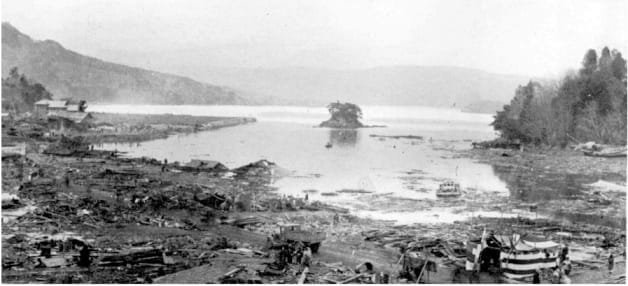
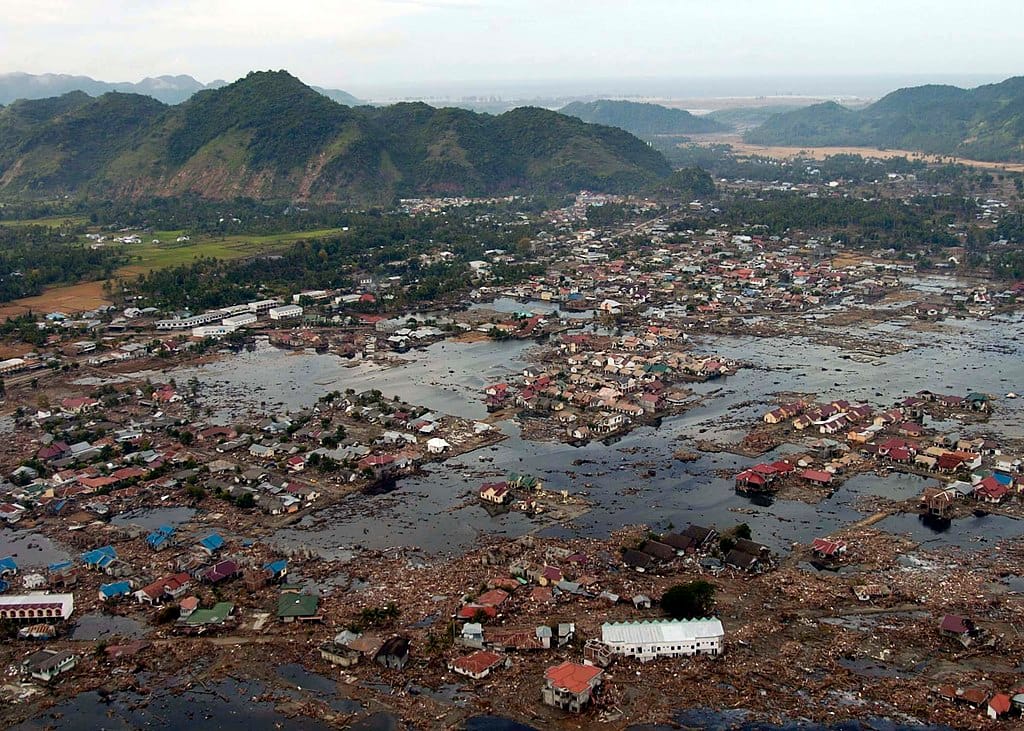
Talcahuano, Dichato, Constitucion—these were some of the hardest-hit communities. Local fishermen, whose livelihoods depended on the sea, found their boats smashed, their homes submerged, their families torn apart. Ships were thrown onto land like children’s toys, and debris clogged once-bustling docks and marketplaces.
In Dichato, entire families were displaced, many lost. In Constitución, the tsunami destroyed 40% of the urban area, forcing massive evacuations. Infrastructure shattered, power lines fell, and water systems collapsed, leaving tens of thousands without basic needs.
The rugged coastline transformed from a place of life and commerce into a haunting tableau of ruin and loss.
10. Emergency Response: Chaos, Coordination, and Heroism
In the immediate aftermath, chaos reigned. Communications were patchy, roads destroyed, and rescue teams often hampered by the scale of destruction. Yet amidst this turmoil, stories of spontaneous heroism emerged everywhere.
Local firefighters, military personnel, neighbors, and volunteers mobilized to find survivors, distribute vital food and water, and establish temporary shelters. The Chilean government declared a state of emergency, deploying troops to maintain order and assist civilians.
Humanitarian groups and international aid shortly began pouring in, their work complicated by damaged infrastructure but vital nonetheless. This response phase revealed not only the challenges but the astonishing capacity of people to come together in crisis.
11. International Alert: The Tsunami’s Pacific-Wide Reach
The Maule tsunami was not just a national catastrophe; it sent ripples around the Pacific Ocean basin—a chilling reminder of natural forces crossing borders. Countries like Hawaii, Japan, and even as far as New Zealand activated warnings and prepared for potential impacts.
In Hawaii, fears prompted evacuation of low-lying areas, though damage was minimal. In Japan, where the memory of previous tsunamis is seared deep, scientists observed the wave’s speed and trajectory with intense attention, a somber prelude to events that would unfold a year later.
The 2010 Chile tsunami marked a crucial case study in global tsunami preparedness and communication systems.
12. Chilean Resilience: Community-led Recovery Initiatives
Despite suffering staggering losses, communities along Chile’s coast demonstrated resilience fuelled by cultural solidarity and tenacious spirit. Neighborhoods rebuilt themselves even before official aid grew. Grassroots organizations emerged, coordinating debris removal, temporary housing, and psychological support.
Fishermen pooled resources to repair boats; local artisans provided tools and blankets. Schools reopened in temporary settings, keeping the hope for future generations alive.
This human resolve is a vital thread in Chile’s story, emphasizing recovery not as a top-down process but a shared journey of renewal.
13. Political Reverberations: Government’s Response Under Scrutiny
President Michelle Bachelet’s administration faced intense scrutiny over its handling of the disaster. While praised for rapid declarations of emergency and deployment of forces, critics pointed to delays in tsunami warnings and communication breakdowns that contributed to higher casualties.
The anguish and frustration of citizens sparked debates about preparedness, infrastructure investment, and civil defense systems. For a country so shaped by seismic shifts, the government’s performance invited reflection on balancing political management with scientific urgency.
Yet, Chile’s democratic framework also ensured that these questions fed into ongoing reforms, improving transparency and accountability in disaster governance.
14. Economic Impact: Infrastructure, Industry, and Insurance Wipeouts
The Maule tsunami delivered a blow not only to human lives but to Chile’s economic backbone. The fishing industry, vital to coastal economies, saw thousands of boats and facilities destroyed. Ports suffered lasting damage, interrupting trade flows reliant on maritime transport.
Insurance companies faced unprecedented claims, and the government allocated billions of dollars for emergency relief and reconstruction. Roads, bridges, rail lines—all the arteries of commerce—were fractured, delaying recovery and compounding losses.
Yet Chile’s economy showed adaptability, balancing immediate costs with long-term investment in more resilient infrastructure and diversification strategies.
15. Cultural Trauma: Memory, Mourning and National Identity
Natural disasters deliver wounds beyond the physical—they etch psychological and cultural scars. In Chile, the Maule tsunami revived collective memories of past ruptures and losses while forging new narratives of shared suffering and strength.
Memorial ceremonies and artistic expressions emerged, giving voice to grief and hope. Literature, music, and photography documented the event, preserving it in the national consciousness.
This cultural layer is crucial, for it shapes how a society interprets, remembers, and learns from catastrophe—turning tragedy into a testimony.
16. Disaster Science: Lessons Learned and Advances in Prediction
The Maule tsunami intensified scientific inquiry into earthquake and tsunami dynamics. Researchers analyzed the quake’s peculiarities—such as its rupture zone, the slip distribution, and aftershock patterns—to refine models predicting future events.
The disaster highlighted gaps in early warning systems, prompting improvements in seismic monitoring and communication infrastructure nationwide. Chile’s geographic uniqueness made it a natural laboratory for innovation in disaster science.
These lessons ripple outward, contributing to global knowledge and management of seismic hazards.
17. The Human Toll: Stories of Loss, Survival, and Solidarity
Statistics alone cannot encapsulate the human dimension of the Maule tsunami. Over 500 lives were lost; tens of thousands displaced. Yet amidst sorrow, stories shine of survival against the odds—a child pulled from the debris, a stranger risking life to save neighbors, communities refusing despair.
One survivor declared, “We lost much, but we did not lose each other.” The bonds forged during the crisis endured beyond.
These poignant human tales remind us that history is first and foremost a story of people.
18. Rebuilding a Nation: Reconstruction Plans and Challenges
Reconstruction was a colossal endeavor pushing government, private sector, and civil society to unprecedented coordination. New housing designs incorporated earthquake and tsunami-resistant features. Coastal defenses were reinforced and reimagined.
Nonetheless, challenges persisted: some displaced families waited for permanent homes for years; economic disparities shaped varied recovery speeds. Balancing urgency with sustainability became a core tension.
Chile’s rebuilding journey represents a microcosm of global post-disaster challenges.
19. The Role of Social Media and Citizen Journalism
The 2010 Maule tsunami marked one of Chile’s first major disasters in the social media age. Platforms like Twitter and Facebook proved vital to rapid information sharing, rescue coordination, and keeping separated families connected.
Citizen journalists uploaded video footage and photos recounting real-time damage, humanizing the event and amplifying voices not reached by mainstream media.
This digital shift added layers of immediacy and democratization to crisis narratives, although it also demanded new approaches to verifying and managing information.
20. Reflections Five Years Later: Resilience and Remaining Vulnerabilities
Half a decade after the disaster, Chile reflected on progress and fragilities. While much had been rebuilt, signs of vulnerability lingered—some communities remained underprepared, infrastructure gaps persisted, and the risk of future disasters loomed.
Nationwide education campaigns sought to embed disaster readiness into everyday life, while scientific advances permitted better forecasting.
Chile had not only survived but matured, embracing resilience as a collective imperative.
21. Scientific Perspectives: How the Maule Tsunami Changed Seismology
Globally, seismologists revisited theories thanks to vast data from this quake. It challenged assumptions about earthquake rupture behavior, aftershock probability, and tsunami generation.
New techniques for rapid seismic assessment, including the use of GPS and satellite imagery, developed and spread internationally.
The Maule event remains a benchmark case in understanding megathrust earthquakes.
22. Regional Cooperation: Tsunami Preparedness in the Pacific Basin
Chile’s experience energized regional collaboration under mechanisms like the Pacific Tsunami Warning Center. Countries shared data and protocols, enhancing early warning effectiveness across borders.
Joint drills, information exchange, and public education became cornerstones of cooperative preparedness, reflecting a shared vulnerability to the ocean’s fury.
Chile emerged as both a learner and teacher in this transnational endeavor.
23. Ethical Questions: Aid Distribution and Marginalized Communities
Disaster response inevitably raises difficult ethical issues. Who receives aid first? How to ensure marginalized groups are not left behind? How to rebuild equitably?
In Chile, indigenous communities and remote villages sometimes faced delays, raising concerns about systemic inequities. Civil society organizations advocated for inclusive approaches, pressuring authorities to address structural disparities exposed by the crisis.
These debates echo in disaster zones worldwide, reminding us that risk and recovery are also social questions.
24. Preserving Memory: Museums, Memorials, and Education
To honor victims and teach future generations, Chile established memorials and integrated tsunami history into school curricula. Museums in affected zones host exhibits on the disaster’s human and scientific facets.
These memorial spaces are more than reminders—they are sites of healing and dialogue, emphasizing that memory shapes identity and resilience.
Preserving these narratives ensures that loss births wisdom.
25. The Maule Tsunami in Global Context: A Natural Event’s Lasting Lessons
Over a decade later, the 2010 Maule tsunami remains a crucial chapter in understanding the interface of human societies and natural catastrophes. It exemplifies both nature’s destructive might and humanity’s response—including fragility and fortitude.
Its lessons influence disaster risk reduction worldwide, proving that while we cannot prevent the earth from rupturing, we can strive to temper its worst consequences.
Chile’s experience is an enduring testament to survival, adaptation, and hope beneath shifting skies and trembling earth.
Conclusion
The Maule tsunami of February 27, 2010, was more than a disaster; it was a profound upheaval that shook Chile not only physically but psychologically and culturally. In the roaring convergence of tectonic plates and the furious surge of the Pacific waves, Chile confronted nature’s rawest forces—and emerged wounded yet unbowed.
This event laid bare vulnerabilities but also kindled resilience, forging new paths in science, governance, community action, and memory. The stories of loss, courage, and rebuilding intertwine to remind us that history is lived in moments of crisis and in the long, patient work of recovery.
Chile’s journey through and beyond that dark February dawn offers universal truths about humanity—our capacity to endure, to learn, and ultimately, to hope anew.
FAQs
Q1: What caused the Maule tsunami in Chile on February 27, 2010?
A1: The tsunami was triggered by a massive magnitude 8.8 earthquake resulting from the sudden slippage along the subduction zone where the Nazca Plate dives beneath the South American Plate. The vertical displacement of the seafloor displaced large volumes of water, causing the tsunami.
Q2: How many people were affected or killed by the Maule earthquake and tsunami?
A2: Approximately 500 people lost their lives due to the earthquake and tsunami combined, with tens of thousands displaced and widespread injury and trauma.
Q3: What were some of the main challenges in Chile’s emergency response?
A3: Communication breakdowns, delays in tsunami warnings, damaged infrastructure, and confusion in evacuation procedures complicated rescue efforts and contributed to casualties.
Q4: How did the Maule tsunami impact Chile’s economy?
A4: It devastated the fishing industry, damaged ports, bridges, roads, and caused billions in recovery costs, straining insurance systems and economic activity especially in coastal regions.
Q5: In what ways did the disaster influence scientific research and policy?
A5: It spurred advances in earthquake and tsunami modeling, encouraged improvements in early warning systems, and inspired disaster preparedness reforms both in Chile and internationally.
Q6: How has Chile commemorated the Maule tsunami and earthquake?
A6: Through memorial sites, museum exhibits, public ceremonies, and integrating the events into educational curricula to preserve memory and foster resilience.
Q7: Did the tsunami affect other countries?
A7: Yes, the tsunami generated Pacific-wide alerts and minor effects in places like Hawaii and Japan, underscoring the transnational reach of such natural disasters.
Q8: What lessons does the Maule tsunami hold for future disaster preparedness?
A8: It highlights the critical need for robust communication systems, community education, regional cooperation, equitable aid distribution, and infrastructure resilience in mitigating tsunami impacts worldwide.