Table of Contents
- Dawn of Fire: The Quiet Before Mauna Loa’s Awakening
- Geological Giants: Understanding Mauna Loa’s Place in Hawaiʻi
- Traces of Past Fury: Mauna Loa’s Eruption History
- Tensions Beneath the Surface: The Build-Up to 1984
- The First Signs: Early Tremors and Unsettled Skies
- March 1984: When Mauna Loa Roared Back to Life
- A River of Molten Rock: The Lava’s Relentless Advance
- The Battle of Lāhaina: Communities on the Edge
- Scientists on the Frontline: Monitoring the Volcano in Real Time
- The Human Element: Stories from the People of Hawaiʻi
- Nature’s Fury Meets Human Resilience
- The Eruption’s Climax: When the Flow Stopped
- After the Flames: Immediate Aftermath and Emergency Response
- Economic Tremors: Impact on Hawaiʻi’s Economy and Tourism
- Environmental Changes: How Mauna Loa Reshaped the Landscape
- Cultural Reflections: Mauna Loa in the Hawaiian Psyche
- Lessons Learned: Advances in Volcanology Post-1984
- Comparing Giants: Mauna Loa’s 1984 Event with Later Eruptions
- The Volcano Today: Mauna Loa’s Current State and Monitoring
- Legacy of the 1984 Eruption: A Story of Nature, Science, and Culture
Dawn of Fire: The Quiet Before Mauna Loa’s Awakening
On a seemingly ordinary day in early March 1984, the people of Hawaiʻi awoke to the restless murmurs of a titan stirring beneath their feet. Mauna Loa, the colossal shield volcano dominating the Big Island's skyline, was about to remind the world why it commands both awe and fear. The air, thick with tropical humidity, carried an uneasy silence, broken only by subtle earth tremors and a faint sense of anticipation in the island community. The sky gleamed a sharp Hawaiian blue, belying the fiery transformation that was brewing kilometers below the surface. Few could have imagined then that within weeks, molten rivers would course down its slopes, reshaping terrain, threatening towns, and captivating the global scientific community.
Geological Giants: Understanding Mauna Loa’s Place in Hawaiʻi
Mauna Loa stands as one of the largest and most massive volcanoes on Earth—so immense it covers half of the Big Island. Rising approximately 13,681 feet above sea level but extending nearly 33,500 feet from ocean floor to summit, it embodies the restless might of the Pacific’s volcanic activity. The island of Hawaiʻi itself is a newborn in geological terms, crafted by successive eruptions over the last 700,000 years. Mauna Loa’s slow, steady growth has not just sculpted the island's geography but also its ecosystems and human settlements.
Volcanism in Hawaiʻi stems from a volcanic hotspot beneath the Pacific Plate. Unlike the familiar tectonic boundary volcanoes that line plate edges, this hotspot generates magma plumes that pierce through the oceanic crust, creating the island chain as the plate slowly shifts northwestward. Mauna Loa’s eruptions are typically effusive, characterized by slow-moving lava flows that expand the land but seldom create explosive hazards. Yet, the sheer scale of its lava output and lifespan render it one of the most significant natural phenomena in the Pacific.
Traces of Past Fury: Mauna Loa’s Eruption History
Before 1984, Mauna Loa had erupted more than 30 times since the first documented eruption in 1843. These events were closely watched by both locals and scientists, as Mauna Loa’s behavior often shaped island life. Notable eruptions such as the significant 1926 and 1950 events had already left indelible marks on the island's north and east flanks.
Mauna Loa’s periodic activity is both predictable and mysterious—a cyclical dance of magma movement separated by dormancy that could last years or decades. Each eruption tells a story: carving new lava fields, altering the volcanic cone, and occasionally threatening communities. Yet the 1984 eruption would become one of the most closely observed and dramatic in recent history, ushering in an era of volcanic vigilance and scientific advancement.
Tensions Beneath the Surface: The Build-Up to 1984
By the early 1980s, seismometers placed strategically around Mauna Loa began detecting unusual tremors.” The island’s well-established network of observatories tracked subtle inflation in the volcano’s upper slopes—a sign that magma was once again accumulating. The underground reservoirs began swelling, like the breath before a scream. For seven years, Mauna Loa had slumbered quietly, lulling the island into a sense of security.
As 1983 slipped into 1984, tension mounted. Small earthquakes increased in magnitude and frequency, the ground subtly bulged, and fumaroles—holes venting volcanic gases—showed changes in temperature and chemical composition. Imagery captured from helicopters and spacecraft revealed alarming ground deformation. The stage was set for an eruption, yet no one could predict its precise timing or impact.
The First Signs: Early Tremors and Unsettled Skies
In February 1984, volcanic tremors intensified. Locals reported an eerie low rumble, like a distant thunder that never fully arrived. Scientists at the Hawaiian Volcano Observatory (HVO) noted a growing seismic swarm beneath the volcano’s summit and upper rift zones—linear fissures that often channel magma outward. The volcano was restless, its ancient heart beating faster.
Simultaneously, small steam plumes began to rise from the summit area, signaling that magma was nearing the surface and heating groundwater. This fumarolic activity was a time-honored harbinger of eruption, but timing remained elusive. The HVO issued warnings, yet many residents maintained daily routines, hopeful or resigned to the island’s volcanic rhythms.
March 1984: When Mauna Loa Roared Back to Life
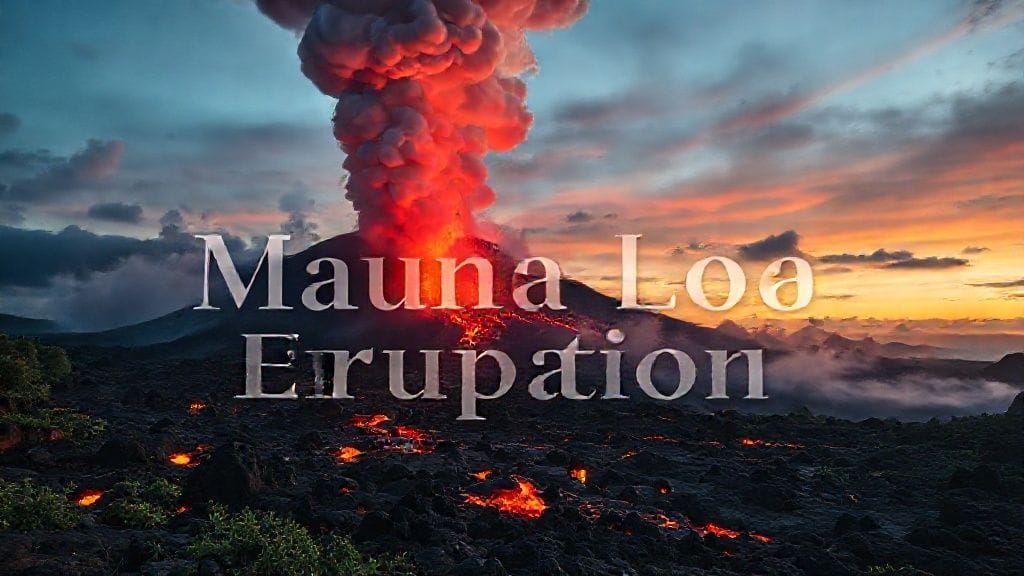
Then, on March 25, 1984, the mantle cracked open. At approximately 3:45 a.m., a fissure tore the darkened landscape along the northeast flank, spewing incandescent lava and a towering plume of gas and ash. The eruption had begun. It was dramatic but characteristically Hawaiian—free-flowing lava, not catastrophic explosions. This initial fissure extended rapidly for nearly four miles, releasing a spectacular curtain of fire that lit the night.
The lava rivers surged down valleys with merciless momentum. Ash cloud shadows flew over the land, accompanied by sharp sulfurous smells. Mauna Loa was speaking in a harsh dialect of stone and fire, and both scientists and residents leaned in, listening with a mix of fascination and fear.
A River of Molten Rock: The Lava’s Relentless Advance
What followed was a breathtaking and terrifying cascade of lava flowing east and northeast in two main lobes. The molten rivers, some moving over 100 feet per hour in places, began consuming everything in their path. Thick, ropy pāhoehoe lava—and at times jagged ʻaʻā—wrested its claim over the old forests, roads, and cultural sites.
Communities, especially the small town of Hilo to the east and Pāhoa farther down the lava flow path, imposed a watchful close eye on the advancing threat. Emergency evacuation plans were drafted. For days, the fiery flows crept ever nearer to sensitive infrastructure and residential areas, forcing the island into a tense state of preparedness.
The Battle of Lāhaina: Communities on the Edge
Although the main affected areas lay more on Mauna Loa’s northeastern flanks, the entire island’s consciousness was gripped by the lava’s advance. Schools, local governments, and families engaged in a collective struggle against natural forces that felt indifferent to human concerns.
One of the most compelling tales emerged from communities that lived in close communion with the land—those who, for generations, had both respected and feared Mauna Loa’s power. Elderly Hawaiians shared stories passed down of similar eruptions, invoking spiritual permanence amid physical destruction. Firefighters and volunteers undertook dangerous work to create lava diversion barriers, build roads, and maintain communication.
Scientists on the Frontline: Monitoring the Volcano in Real Time
The 1984 eruption marked a turning point in volcanology. Equipped with seismic, GPS, and satellite monitoring, scientists at the HVO were able to track the eruption’s progress more accurately than ever before. Real-time data allowed coordination between emergency management and researchers, helping mitigate the damage.
This eruption spurred key innovations in volcanic hazard mapping and early warning systems. Geologists described the event in meticulous detail: from the shifting patterns of seismicity to the chemical changes in emitted gases. For the scientific community, Mauna Loa 1984 was a living laboratory, revealing the inner workings of shield volcanoes in unprecedented clarity.
The Human Element: Stories from the People of Hawaiʻi
Beyond the scientific data and geological processes were the poignant personal stories of loss, resilience, and community solidarity. Families watched their ancestral lands vanish beneath molten flows; farmers faced ruined fields; children learned at school what it meant to live in the shadow of a sleeping giant.
Some locals spoke of how the eruption renewed their cultural connection to Pele, the Hawaiian goddess of volcanoes. The lava was not merely destruction but a manifestation of creation and transformation, part of the island’s eternal cycle. This profound relationship between people and nature helped many endure the physical and emotional toll.
Nature’s Fury Meets Human Resilience
In the face of overwhelming natural forces, the people of Hawaiʻi demonstrated an adaptability born of intimate knowledge and respect. Emergency shelters sprang up, aid poured in from across the islands and the mainland, and islanders banded together.
Modern infrastructure, while vulnerable, was also fortified by emergency protocols developed after decades of volcanic activity. Roads were cleared, power lines protected, and evacuation routes established. The eruption tested not only Mauna Loa’s power but also human courage and ingenuity.
The Eruption’s Climax: When the Flow Stopped
After nearly three weeks of sustained activity and thousands of acres of new lava fields, Mauna Loa’s rage began to wane. By April 15, 1984, the eruption ceased—its fires dying down like the last embers of a campfire. For many, it was a moment of relief mixed with sorrow: the land was irreversibly changed, but disaster was averted.
Geologists estimate the eruption expelled approximately 220 million cubic meters of lava, ranking it among the substantial 20th-century Hawaiian eruptions. The pause in volcanic activity allowed residents to assess the damage and start the long process of healing and rebuilding.
After the Flames: Immediate Aftermath and Emergency Response
In the weeks following the eruption, recovery efforts involved clearing roads, restoring utilities, and providing aid for displaced residents. The state government, supported by federal agencies, launched assessments to understand the eruption’s full impact on infrastructure, environment, and public health.
Psychological support became critical, as trauma lingered among many who had narrowly escaped destruction. The eruption served as a somber reminder of Hawaiʻi’s living landscape—dynamic, beautiful, and unpredictable.
Economic Tremors: Impact on Hawaiʻi’s Economy and Tourism
While the ecological and social consequences were profound, economic ripples extended across sectors. The eruption temporarily disrupted agriculture, notably coffee and tropical fruit farms. Infrastructure damage, though limited, imposed hefty repair costs.
Tourism faced both setbacks and gains: the immediate danger deterred visits, yet the image of flowing lava and volcanic power captivated a global audience when the danger subsided. Visitors flocked to witness the volcano’s aftermath and experience Hawaiʻi’s rich volcanic heritage firsthand.
Environmental Changes: How Mauna Loa Reshaped the Landscape
The 1984 lava flows irrevocably altered the northeastern slopes of Mauna Loa, creating new landforms and reshaping valleys. Forests were buried under thick lava, but over time, ecological succession began to revive the area.
Scientists studied the post-eruption environment to learn how flora and fauna repopulated the basaltic substrates. This natural renewal reinforced the understanding that volcanic activity, while destructive, is also a key engine of island evolution.
Cultural Reflections: Mauna Loa in the Hawaiian Psyche
In Hawaiian tradition, Mauna Loa holds profound spiritual meaning as both a life-giver and a formidable force. The 1984 eruption rekindled cultural ceremonies and oral histories surrounding Pele, deepening the collective memory and reinforcing connections with the land.
For many, the eruption was both a literal and symbolic reminder of respect for nature’s power and the cyclical nature of destruction and creation deeply embedded in Hawaiian cosmology.
Lessons Learned: Advances in Volcanology Post-1984
The 1984 eruption prompted advancements in volcanic risk assessment, hazard mapping, and communication between scientists and the public. New technologies and methodologies emerged from scrutinizing Mauna Loa’s moods.
This event helped frame volcanic preparedness as a multidisciplinary endeavor combining geology, emergency management, and community engagement—a legacy that informs volcanic risk mitigation worldwide today.
Comparing Giants: Mauna Loa’s 1984 Event with Later Eruptions
In the decades following 1984, Mauna Loa has erupted several times, notably in 2002 and 2022. Comparing these events reveals evolving eruption patterns and responses. The 1984 eruption remains a benchmark for understanding eruption dynamics, lava flow behavior, and the social impact of volcanism on Hawaiʻi’s communities.
The Volcano Today: Mauna Loa’s Current State and Monitoring
Today, Mauna Loa is continuously monitored by a sophisticated network deploying seismographs, GPS stations, gas analyzers, and satellite imaging. Scientists watch carefully for signs of future unrest, maintaining a vigilant eye over this sleeping giant that shapes lives daily on Hawaiʻi.
Legacy of the 1984 Eruption: A Story of Nature, Science, and Culture
The 1984 Mauna Loa eruption stands as a monumental chapter in the intertwined story of Hawaiʻi’s land and people. It exemplifies nature’s extraordinary power, the perseverance of human communities, and the relentless pursuit of scientific understanding. It reminds us that beneath the volcano’s quiet surface lies both creation and destruction—a catalyst for change etched in stone and memory.
Conclusion
The 1984 eruptive awakening of Mauna Loa was far more than a geological event; it was a profound human narrative shaped by fire, resilience, and reverence. From the trembling earth that signaled its approach to the fiery rivers that reshaped the landscape, the eruption unveiled a timeless dialogue between islanders and the colossal mountain they call home.
It was a reminder of the Earth’s raw power but equally of humanity's capacity to face unpredictability with knowledge and courage. In the story of Mauna Loa’s 1984 eruption, we glimpse the eternal dance between destruction and renewal—a dance that continues to shape Hawaiʻi’s identity and spirit. The echoes of 1984 challenge us to honor the planet’s forces and nurture the fragile harmony of life that endures in their shadow.
FAQs
Q1: What caused the 1984 eruption of Mauna Loa?
The eruption was triggered by magma accumulation in Mauna Loa’s shallow magma chamber, which caused ground swelling and seismic activity that eventually ruptured the surface along northeast rift zones in March 1984.
Q2: How long did the 1984 Mauna Loa eruption last?
The eruption lasted nearly three weeks, beginning on March 25 and concluding on April 15, 1984.
Q3: Were there any casualties during the eruption?
Remarkably, no fatalities were reported during the 1984 eruption, thanks to effective monitoring, early warning systems, and successful evacuations.
Q4: How did the eruption affect local communities?
Several communities near Mauna Loa faced evacuations and property loss. The eruption disrupted agriculture and infrastructure but also reinforced community solidarity and cultural connections to the volcano.
Q5: What scientific advances resulted from studying the 1984 eruption?
The event spurred improvements in real-time monitoring techniques, hazard mapping, and volcanic risk communication, influencing both Hawaiian and global volcanic preparedness strategies.
Q6: How does Mauna Loa’s 1984 eruption compare with later eruptions?
While later eruptions have varied in duration and intensity, the 1984 event remains a key reference for understanding lava flow rates, eruption dynamics, and mitigating risk to local populations.
Q7: What is the cultural significance of Mauna Loa to Native Hawaiians?
Mauna Loa is revered as a sacred home to Pele, the goddess of volcanoes, symbolizing both destructive and creative forces essential to Hawaiian identity and worldview.
Q8: Is Mauna Loa still active today?
Yes, Mauna Loa remains an active volcano, continuously monitored for signs of unrest. Its most recent eruptions occurred in 2002 and 2022.

