Table of Contents
- A Quiet Passing in a Tumultuous Time
- The Final Day: October 4, 1947
- Max Planck’s Last Years in Post-War Germany
- The Legacy of a Scientific Titan in Göttingen
- From the Quantum Revolution to the End of an Era
- Early Afternoon Shadows: The Atmosphere in Göttingen, 1947
- Personal Struggles and Public Triumphs: Planck’s Life After the War
- Scientific Pursuits Amidst Political Upheaval
- Conversations and Reflections on the Day Before the End
- The Family Around Him: Support and Loss
- Into History: How Planck’s Death Marked a Passage for German Science
- The World Reacts: Mourning Across Borders
- Göttingen as a Cradle of Science and Memory
- Planck’s Influence on Post-War Physics and Philosophy
- Remembering Max Planck: Monuments, Memorials, and Memory
- Planck Institute and the Eternal Flame of Discovery
- The Quantum Legacy Carried On
- Conclusion: The Silence That Followed a Voice of Genius
- FAQs About Max Planck’s Death and Legacy
- External Resource
- Internal Link
A Quiet Passing in a Tumultuous Time
A frail figure breathed his last in the early hours of October 4, 1947, in a modest house nestled in the quiet university town of Göttingen, Germany. Max Planck — the father of quantum theory, a mind that reshaped the laws of the physical universe — had passed away. The world he left behind was one scarred and sliced by war, yet the very realms of science he illuminated hinted at a new dawn. His death was not just the end of a life, but the silent closing of a chapter written through upheaval, tragedy, and relentless intellectual pursuit.
Planck’s final moments were humble. No grand ceremony marked the occasion, only the gentle care of his family and the faint hum of a world beginning to heal from its deepest wounds. And yet, within this quiet passing echoed the legacy of a man who had dared to challenge centuries of classical physics and ignite the quantum revolution — a legacy that continues to resonate in every particle we observe, every photon counted, and every equation solved.
This article embarks on a detailed journey through the final years of Planck’s life, his death in 1947 in Göttingen, and the profound implications it bore on both science and the collective memory of post-war Germany. It is a story of loss and renewal, personal endurance, scientific achievements, and the enduring mark of a visionary intellect.
The Final Day: October 4, 1947
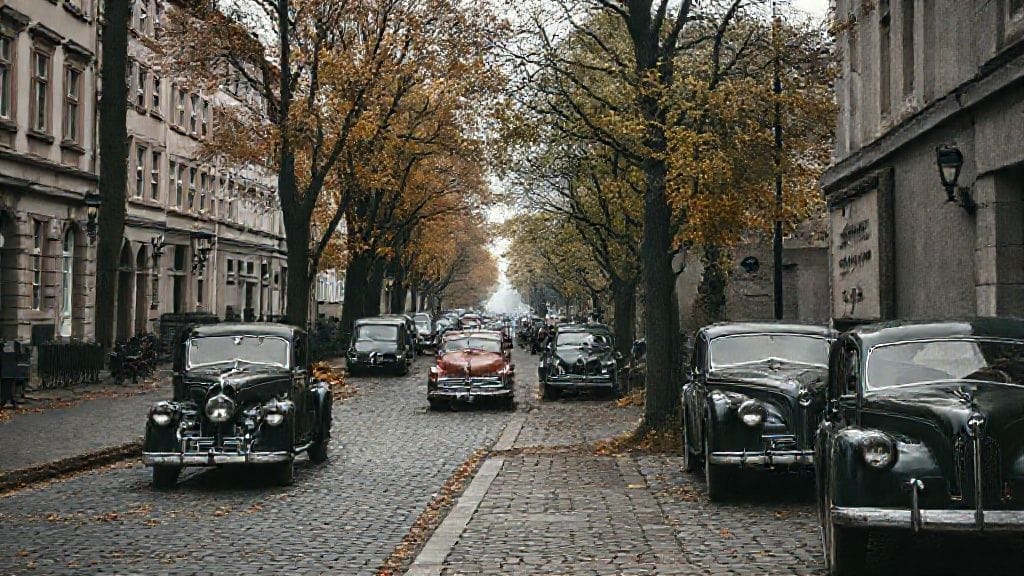
The morning of October 4 was crisp, typical of the German autumn, bringing with it a subtle melancholy that seemed to mirror the state of the world. Göttingen, with its narrow streets and towering university buildings, was still a city trying to gather itself after the devastation wrought by war. Blackened rooftops and the persistent ration lines bore testimony to the recent past, yet within its academic halls, a fragile hope fluttered.
Max Planck was 89 years old, a venerable figure known not for flamboyance but for a quiet dignity that had defined him even in his final days. He was suffering from age-related ailments, frailty sharpened by the grief of losing loved ones and the burden of witnessing his homeland fracture and rebuild. His mind, however, remained as sharp as ever — still preoccupied with the mysteries of the universe, still reflecting on the vastness that his theories had begun to reveal.
Though his medical condition slowly deteriorated over months, the exact moment of his death was unheralded, a natural conclusion to a long, impactful life. Family members, including his grandson Erwin Schrödinger’s collaborator, were at his bedside. There was no press frenzy, no political figure marking the moment with speeches. Instead, there was profound sorrow mingled with gratitude — gratitude for a life dedicated to the quest for truth.
Max Planck’s Last Years in Post-War Germany
The end of World War II left Germany fractured and occupied, struggling to reclaim its identity and dignity. Göttingen, home to one of Germany’s foremost universities, became a beacon for the reconstruction of German scientific endeavor. Max Planck, despite his advanced age, remained an influential figure — a symbol of scientific integrity undimmed by political tides.
In the early 1940s, Planck had endured not only the war but personal tragedies — the death of his son Erwin in Soviet captivity and the murder of another son, Karl, by the Nazis. These losses weighed heavily on him, yet his commitment to science never waned. After the war, in 1946-1947, he took part in efforts to rebuild German science, advising younger physicists and participating in international discussions meant to reintegrate Germany into the global scientific community.
His residence in Göttingen was modest, surrounded by academic students and the evolving climate of post-war reflection. Journalists of the time described him as “a man carrying the weight of history and the hope of the future.” In these years, Planck often mused about the responsibility of scientists not only to their discipline but to humanity.
The Legacy of a Scientific Titan in Göttingen
Göttingen was not just a backdrop but an active player in Planck’s final years. As a university town famed for its contributions to mathematics and physics, it stood as a last stronghold of intellectual vibrancy amid broader cultural upheaval.
Planck’s connection to Göttingen was profound: the university had been a nexus for intellectual exchange since the nineteenth century, attracting luminaries like David Hilbert and Carl Friedrich Gauss. For Planck, who had spent much of his life at the University of Berlin, being in Göttingen represented a kind of peaceful refuge — a place where the language of mathematics and physics transcended political chaos.
Within this environment, his work in thermodynamics and quantum theory continued to influence young physicists. His approach to science, combining rigorous mathematical methods with deep philosophical reflection, inspired a generation eager to understand the mysteries Planck had unveiled.
From the Quantum Revolution to the End of an Era
It is almost surreal to trace Max Planck’s journey from the groundbreaking discovery in 1900 that inaugurated quantum theory to his quiet death 47 years later in a defeated, divided Germany. His “quantum of action,” Planck’s constant, irreversibly altered physics, displacing Newtonian certainties with a world where energy packets, probability, and uncertainty prevailed.
Yet, by 1947, Planck witnessed the quantum theory’s maturation through figures like Niels Bohr, Werner Heisenberg, and Erwin Schrödinger — scientists who had expanded and sometimes contradicted his original ideas. The remarkable irony is that Planck, the theory’s founder, had remained a cautious, conservative thinker, reluctant to embrace some of the radical interpretations emerging around him.
His death marked the symbolic passing of a golden age of physics — a transition where the promise of quantum mechanics merged with new realities of nuclear physics and particle research. The world was entering the atomic era, an era Planck’s work had made possible, but one also laden with profound ethical challenges.
Early Afternoon Shadows: The Atmosphere in Göttingen, 1947
October 4 was not marked by any public event. Yet within the community, whispers spread of the loss of a great man. Göttingen’s streets were filled with students and professors, carrying papers and textbooks battered by months of shortages and instability.
The air was heavy with remembrance and quiet determination. After the war, much of Germany’s intellectual life was fragmentary, still reeling from censorship, Nazi purges, and the destruction of infrastructure. Institutions rebuilt themselves amid hunger and cold, yet the persistence of science felt like a tether to normalcy.
In this context, the death of Max Planck seemed to crystallize the tension between past glory and future hope. A local professor remarked in his diary: “Planck’s light was extinguished today, but the flame he kindled in the minds of many will burn bright for centuries.”
Personal Struggles and Public Triumphs: Planck’s Life After the War
Behind the scenes, Planck was a figure haunted by personal grief and the moral burden of his homeland’s actions. During the Nazi era, he had tried to protect Jewish colleagues and resist ideological interference in science, though his efforts were limited and met with mixed results.
Losing three of his sons — victims of war and Nazi oppression — profoundly altered Planck’s outlook. His relationship with the regime was complex: he was neither a supporter nor an outright opponent but someone desperately trying to preserve the integrity of German science.
In the immediate post-war years, Planck emerged as a cautious voice advocating for reconciliation — reconciliation among scientists, nations, and within himself. With his failing health, this mission became more urgent, framing his final public statements and actions.
Scientific Pursuits Amidst Political Upheaval
Even in frailty, Planck engaged with new scientific ideas and ongoing debates. He attended seminars, offered counsel to young physicists, and contributed essays reflecting on the philosophical implications of quantum theory and relativity.
However, the political environment added layers of difficulty. Göttingen was within the British occupation zone, making interactions with the wider German scientific community complicated. The Allied powers were wary of any resurgence of German nationalism, and scientific cooperation was closely monitored.
Planck’s stature nevertheless allowed him some freedom. He was involved indirectly in the founding discussions of the Max Planck Society — an institution that would replace the Kaiser Wilhelm Society and become a centerpiece of post-war German science.
Conversations and Reflections on the Day Before the End
Eyewitness accounts describe Planck on October 3 as quiet but mentally alert. Visitors noted his interest in recent publications and ongoing scientific questions. Despite physical weakness, his mind traversed effortlessly across intricate concepts and emerging experiments.
One close student recalled: “He spoke to me of the mystery of light, of the shadows cast not just by physical bodies but by doubt itself. His voice was gentle but filled with a weight of centuries.”
This last day symbolized Planck’s lifelong quest — humility before nature’s secrets, patience in the face of uncertainty, and an unyielding belief in the power of reason.
The Family Around Him: Support and Loss
Planck’s family was small but close-knit by 1947. Grandchildren visited regularly, sharing stories from their own projects and lives, attempting to bring warmth into a household shadowed by loss.
His daughter, Emma, was a constant presence, reflecting the family's resilience. Private letters from the period reveal a mixture of sorrow and quiet hope, as relatives grappled with a world transformed beyond recognition.
Max Planck’s passing was a personal blow but also an end to years of relentless fortitude through personal and national tragedies.
Into History: How Planck’s Death Marked a Passage for German Science
Max Planck’s death unmistakably marked a turning point. Germany’s scientific community, once isolated and stigmatized by Nazi collaboration, was slowly reestablishing itself. The Max Planck Society, founded in the same year he died, became the vessel for this rebirth.
His passing was interpreted as the symbolic end to a generation — a generation that had achieved greatness amid catastrophic failures. The survivors vowed to pursue science liberated from ideology, with Planck’s example as a moral compass.
The World Reacts: Mourning Across Borders
News of Planck’s death made ripples far beyond Germany. Obituaries in leading international newspapers honored the man whose work had reset the foundations of physics.
Albert Einstein, a close contemporary and personal friend, had died only months earlier, underscoring the loss of the old guard of physics. Planck’s death was mourned as a loss to humanity’s intellectual heritage, celebrated equally by former adversaries and allies.
Göttingen as a Cradle of Science and Memory
Göttingen, already synonymous with scientific excellence, became a site of commemoration. Students inaugurated discussions and memorials, and the city’s university preserved Planck’s study, letters, and memorabilia.
Over the decades, Göttingen transformed these remembrances into institutional pride — the Max Planck Institutes, named in his honor, thrived as beacons of innovation and reflection on Planck’s life.
Planck’s Influence on Post-War Physics and Philosophy
Long after his death, Planck’s conceptual breakthrough continued to influence both technical realms and philosophical debates concerning determinism, uncertainty, and the limits of human knowledge.
Philosophers cited him to argue for a new understanding of reality, while physicists owed him a debt for opening the door to quantum mechanics, which would yield technologies changing everyday life: semiconductors, lasers, and much more.
Remembering Max Planck: Monuments, Memorials, and Memory
From statues in Berlin to plaques in Göttingen, Max Planck’s memory has been enshrined in various monuments that invite reflection not only on his scientific work but on his ethical courage.
Institutions bearing his name across the world attest to the lasting impact of his ideas and character, inspiring new generations to explore with curiosity and integrity.
Planck Institute and the Eternal Flame of Discovery
The founding of the Max Planck Society shortly after his death was, in many ways, Planck’s final legacy. Headquartered in Munich, the Society supports research across disciplines, embodying Planck’s belief in the relentless pursuit of knowledge.
Its institutes foster international collaboration, a direct response to the parochialism plaguing earlier decades, signaling a hopeful future Planck had longed for at the twilight of his life.
The Quantum Legacy Carried On
Max Planck’s discovery was the seed from which vast branches of modern physics grew. Quantum mechanics remains a vibrant, evolving field, with Planck’s constant at its heart.
As scientists probe ever smaller particles and cosmic expanses, the revolutionary light that Planck first kindled illuminates humanity’s quest — constantly transforming our grasp of reality and our role within it.
Conclusion
Max Planck’s death on October 4, 1947, was not merely the departure of a scientific giant but a poignant emblem of a world poised between devastation and renewal. In a nation struggling to reconcile with its past, amid the ruins of war and ideological disarray, Planck’s calm intellect and measured courage provided a beacon.
His life was a testament to the power of thought and the resilience of the human spirit, bridging the classical and quantum worlds, the old Germany and the new. As the embers of his life cooled in Göttingen, they gave rise to a flame of knowledge that continues to burn, inspiring humankind’s eternal pursuit of truth.
FAQs About Max Planck’s Death and Legacy
Q1: What were the circumstances of Max Planck’s death?
A1: Max Planck died peacefully on October 4, 1947, in Göttingen, Germany, after a period of declining health. His death was due to natural causes associated with old age and was attended by family.
Q2: How did the political context of post-war Germany affect Planck’s final years?
A2: The aftermath of World War II deeply affected Planck personally and professionally. Göttingen, situated in the British occupation zone, became a center for rebuilding German science, with Planck playing a symbolic and advisory role despite his age and health.
Q3: What was Planck’s relationship with the Nazi regime?
A3: Planck’s relationship was complex. He was not a supporter but also not openly oppositional, attempting to protect colleagues and preserve scientific integrity, while enduring personal losses caused by the regime.
Q4: How did the scientific community respond to Planck’s death?
A4: The global scientific community mourned Planck’s passing as the loss of a foundational figure in modern physics, honoring his contributions to quantum theory and his moral stature.
Q5: What is the significance of Göttingen in the story of Max Planck’s death?
A5: Göttingen served as the setting of Planck’s final years, a hub of scientific rejuvenation post-war, and is now home to institutions that commemorate his legacy.
Q6: How did Planck’s death coincide with the founding of the Max Planck Society?
A6: The Max Planck Society, established shortly after his death in 1947, was named to honor him and became the principal institution for German scientific research post-war, embodying his vision of knowledge pursuit.
Q7: In what ways does Planck’s scientific legacy continue today?
A7: Planck’s introduction of the quantum of action revolutionized physics, influencing everything from modern technology like semiconductors to ongoing theoretical research in quantum mechanics and cosmology.
Q8: How is Max Planck remembered in Germany and internationally?
A8: Through memorials, statues, the naming of institutes, scientific awards, and continuous study of his work, Max Planck is revered as a foundational figure in science and a symbol of intellectual perseverance.