Table of Contents
- The Morning the Sea Roared: A Sudden Reckoning
- The Calm Before the Wave: Eastern Mediterranean in the 6th Century
- Geological Origins and the Nature of the Mediterranean Basin
- The 551 AD Cataclysm: A Day of Unimaginable Horror
- The Earthquake That Shook Cities to Their Foundations
- Tsunami Waves Crash Ashore: The Furious Wrath of the Sea
- Devastation Across Coastal Cities: Callinicum, Alexandria, and Beyond
- Eyewitness Testimonies: Voices from the Disaster
- The Human Toll: Lives Lost and Societies Shattered
- The Impact on Trade and Mediterranean Economies
- Rebuilding Amid Ruins: Responses of Byzantine and Local Authorities
- Cultural Reverberations: Art, Literature, and Memory of the Disaster
- Geological and Historical Investigations: Discovering the Truth of 551 AD
- Comparing Ancient Mediterranean Tsunamis: Patterns and Lessons
- The Tsunami’s Legacy in Modern Seismology and Disaster Studies
- A World on the Edge: How Natural Calamities Shaped Ancient Civilizations
- Conclusion: The Enduring Human Spirit Amidst Nature’s Fury
- FAQs: Unraveling Mysteries of the 551 Mediterranean Tsunami
- External Resource
- Internal Link
The Morning the Sea Roared: A Sudden Reckoning
It was a day like many others in early September of the year 551 AD. Along the sun-dappled coastlines of the Eastern Mediterranean, life pulsed with the rhythm of ancient cities: bustling markets, ships docking laden with goods, children playing near the shoreline. But without warning, the earth beneath these thriving communities shuddered violently, and the sea—so long a giver of life—turned into a monstrous force of destruction. A colossal tsunami rose and, with terrifying inevitability, engulfed towns and cities, erasing centuries of human endeavor in a matter of moments.
One can almost hear the panicked cries, see the frantic attempts to flee, and smell the mingling scents of saltwater and smoke from burning homes. The 551 Mediterranean tsunami was not just a natural disaster; it was a profound rupture in the fabric of Eastern Mediterranean civilization—a moment when nature’s immense power humbled humanity.
The Calm Before the Wave: Eastern Mediterranean in the 6th Century
The 6th century was a time of complex change and tension in the Eastern Mediterranean. The Byzantine Empire, guardian of Roman tradition and Christian orthodoxy, stretched its influence over countless cities along the coast of modern-day Turkey, Syria, Lebanon, Israel, Egypt, and beyond. Economies thrived on maritime trade routes crisscrossing the Mediterranean, linking continents and cultures.
However, this brightness in human achievement masked volatile undercurrents—political unrest, religious conflicts, and the environmental strain of centuries of urban expansion. Still, the sea remained the artery of life and prosperity… until the earth and water tore through their fragile coexistence.
Geological Origins and the Nature of the Mediterranean Basin
The Mediterranean Sea, nestled between the African and Eurasian tectonic plates, is a cauldron of geological activity. The Eastern Mediterranean, in particular, rests above a complex network of fault lines. Subduction zones—where one tectonic plate slips beneath another—create conditions ripe for seismic upheaval and undersea landslides, both prime triggers for tsunamis.
This region’s seismic volatility was not unknown, but the tools to predict or even fully understand such events were primitive at best in the 6th century. The mechanisms behind the 551 AD tsunami involved an immense earthquake triggered by the shifting of underwater faults off the Levantine coast.
The 551 AD Cataclysm: A Day of Unimaginable Horror
Historical records, sparse yet unmistakable, describe the horror that struck on September 9, 551 AD. The earthquake itself rocked the Eastern Mediterranean with unparalleled ferocity. Cities such as Callinicum (modern Raqqa in Syria) and Alexandria, Egypt, experienced violent shaking for minutes, toppling buildings and infrastructure.
But the earthquake’s violence was just the prelude. As the seismic event triggered massive undersea landslides, a tsunami was born—waves towering several meters high, rushing inward with overwhelming velocity and force.
The Earthquake That Shook Cities to Their Foundations
Primary sources like the chronicler John Malalas and later historians detailed the anxiety and trauma of the earthquake. Walls crumbled, and the ground fractured open. In Callinicum, entire districts were razed; in Alexandria, docks and warehouses collapsed, rendering the vital port useless overnight.
Contemporaries described the sky darkening, the sea withdrawing abnormally—a rare and ominous signal—before the flood. Such signs were often seen in antiquity as divine portents of doom, and indeed, terror gripped the populace.
Tsunami Waves Crash Ashore: The Furious Wrath of the Sea
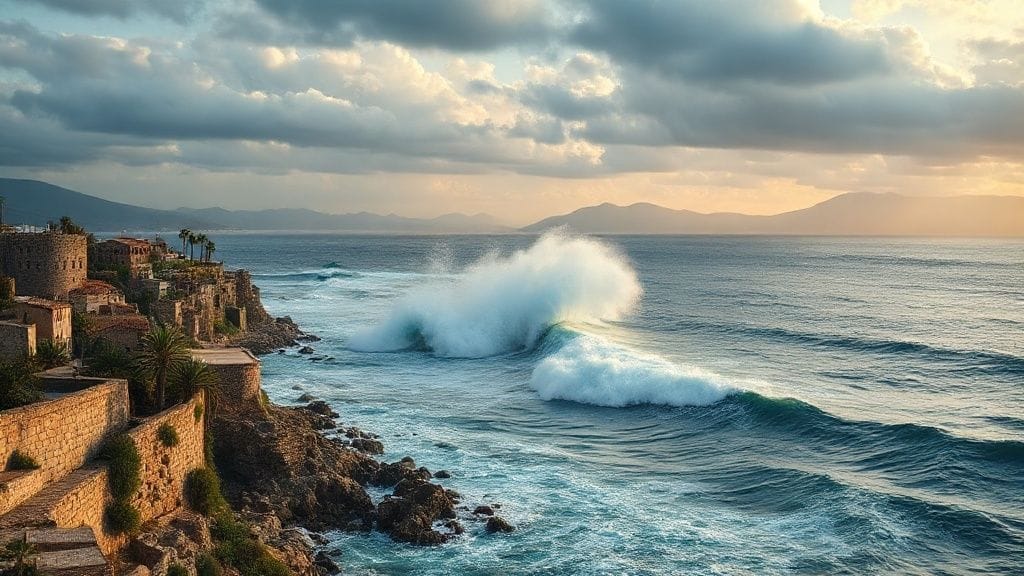
It was the tsunami’s arrival that turned disaster into catastrophe. Waves invaded coastal cities, sweeping away people, animals, and homes alike. The relatively shallow and enclosed nature of the Eastern Mediterranean meant the energy of the waves was amplified upon reaching the shorelines.
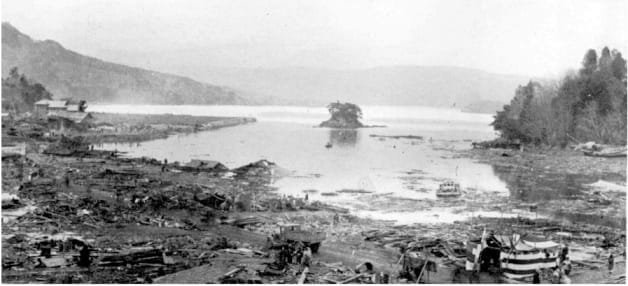
In some accounts, the sea reportedly retreated hundreds of meters before surging back in monstrous waves, swallowing harbors and inundating urban centers. Entire neighborhoods were annihilated in Alexandria and along the Levantine shores.
Devastation Across Coastal Cities: Callinicum, Alexandria, and Beyond
The ripple effects of the tsunami extended far beyond a single city. The port city of Alexandria, famed for its lighthouse and intellectual heritage, suffered devastating losses. Coastal towns from Cyprus to modern-day Israel and Lebanon are believed to have been hit, though records vary in detail.
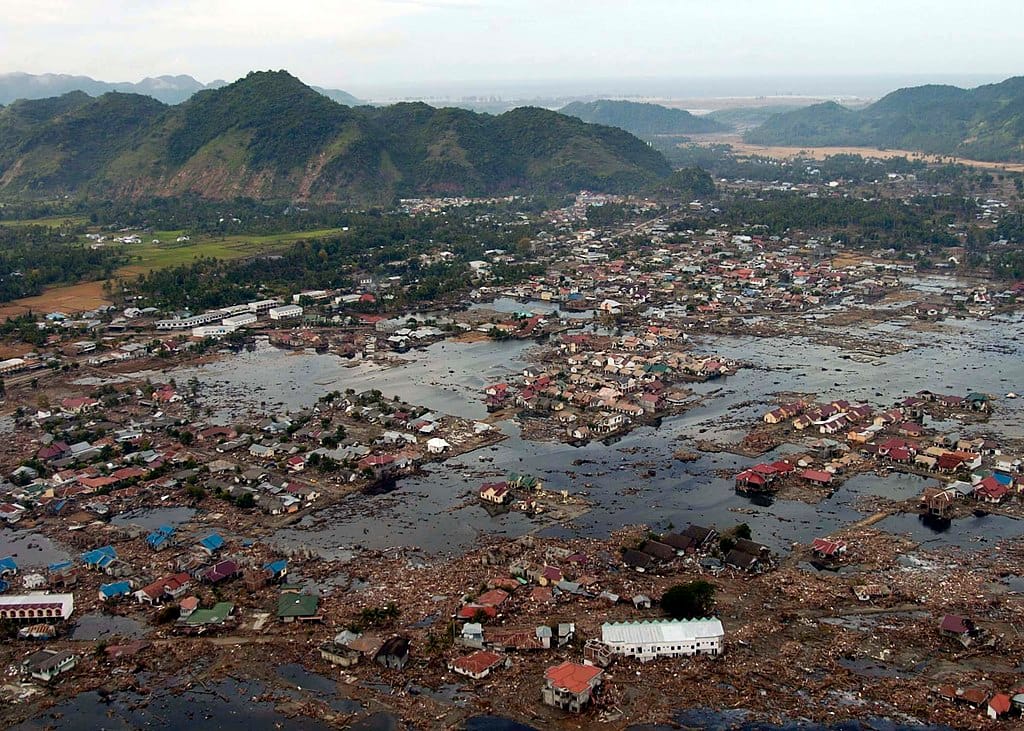
A picture emerges of a wide swath of destruction—harbors rendered unusable, farmlands flooded and salted, ships pulverized along rubble-ridden docks. This widespread ruination disrupted lifelines that connected the Mediterranean in an intricate network of commerce and culture.
Eyewitness Testimonies: Voices from the Disaster
Fragments from chroniclers and later historians serve as our window to this catastrophe. John Malalas wrote poignantly about the Earth's shaking and the flood that followed, capturing the collective trauma. The “Chronicle of Zuqnin” also provides vivid imagery of the aftermath.
Legendary oratory from survivors speaks of men watching the sea recede in horror minutes before it obliterated their homes, underscoring the thin line between fate and survival.
The Human Toll: Lives Lost and Societies Shattered
Estimations of casualties are impossible to verify precisely, but historical scholarship suggests tens of thousands perished. Beyond the immediate mortalities, entire families and communities were uprooted or scattered.
The emotional and psychological devastation—though largely unrecorded—must have been vast. Survivors faced homelessness, famine, and disease, common companions in the wake of such calamities.
The Impact on Trade and Mediterranean Economies
The Mediterranean economy was heavily dependent on maritime trade. Ports flooded, infrastructure destroyed. The ripple effects affected grain shipments from Egypt, luxury goods from the Levant, and the Byzantine Empire’s tax revenues.
Merchant fleets were grounded, warehouses lost, and merchant communities scattered. The tsunami, paired with the earthquake, thus delivered a potent blow to the economic dynamism of the region.
Rebuilding Amid Ruins: Responses of Byzantine and Local Authorities
Recovery was slow and uneven. Byzantine officials organized relief where possible, seeking to rebuild defenses, restore trade, and prevent famine. Archaeological evidence shows reconstruction in key cities, but the scars of destruction endured.
In some instances, coastal urban centers experienced lasting decline, shifting economic activity inland or to alternative ports.
Cultural Reverberations: Art, Literature, and Memory of the Disaster
Natural catastrophes often find echo in the culture of survivors. The 551 tsunami inspired literary lamentations, religious reflections, and local myths. Artistic representations—though rare and primarily lost—may have served as both memorials and warnings.
The disaster became woven into local religious interpretations as punishment or trial, influencing theological thought in the Byzantine world.
Geological and Historical Investigations: Discovering the Truth of 551 AD
Modern geology and archaeology have brought clarity to historical narratives. Sediment layers and geomorphological evidence identify tsunami deposits dating to the mid-6th century. Earthquake fault lines and tectonic studies confirm the scale and source.
This convergence of disciplines highlights how the mingling of science and history enriches understanding of ancient catastrophes.
Comparing Ancient Mediterranean Tsunamis: Patterns and Lessons
The 551 event was not isolated. The Mediterranean has been a stage for multiple tsunamis over millennia—the AD 365 Crete tsunami is perhaps most famous. Analyzing patterns reveals the continuity of seismic dangers and community resilience.
Such lessons are vital, reminding us that this region remains susceptible and that the past can inform present and future preparedness.
The Tsunami’s Legacy in Modern Seismology and Disaster Studies
Today, the 551 tsunami stands as a case study for tsunami genesis in semi-enclosed seas, complex basin dynamics, and human vulnerability. It informs regional hazard mapping, tsunami warning protocols, and emergency response planning.
Scientists point to this event as emblematic of the powerful interplay between geological forces and human societies.
A World on the Edge: How Natural Calamities Shaped Ancient Civilizations
The 551 tsunami was one among many ancient disasters that tested the adaptability and strength of civilizations. Societies’ reactions—whether collapse, recovery, or transformation—shed light on human resilience.
It is a humbling lesson on the ephemeral nature of human achievements in the face of nature’s indifference.
Conclusion: The Enduring Human Spirit Amidst Nature’s Fury
The 551 Mediterranean tsunami stands as a haunting chapter where the earth and sea conspired to devastate flourishing coastal civilizations. Yet, amid ruin and despair, the story also illuminates humanity’s indomitable spirit. Cities were rebuilt, commerce resumed, and memories endured—testaments to resilience etched deeply into the Mediterranean’s soul.
This event invites reflection on the precarious balance between humankind and nature, a relationship eternal yet fragile. As we face modern challenges shaped by climate and geology, remembering such moments from the past grounds us in humility and urgency. The earth may shake, the seas may rise, but through collective memory and courage, humanity persists.
FAQs: Unraveling Mysteries of the 551 Mediterranean Tsunami
Q1: What triggered the 551 Mediterranean tsunami?
A1: The tsunami was caused by a massive earthquake resulting from tectonic activity along fault lines in the Eastern Mediterranean basin. Underwater landslides triggered by the quake generated enormous waves that inundated coastal cities.
Q2: Which cities suffered the most damage during the disaster?
A2: The port cities of Callinicum (modern Raqqa), Alexandria in Egypt, and various coastal towns across Syria, Lebanon, and Cyprus were severely affected, with widespread destruction of infrastructure and loss of life.
Q3: How reliable are historical sources describing the 551 tsunami?
A3: While ancient chronicles like those of John Malalas provide valuable accounts, they blend observation with religious and cultural interpretation. Modern geological evidence helps corroborate many details, enhancing reliability.
Q4: What was the human impact of the catastrophe?
A4: Tens of thousands perished, with entire communities uprooted. Beyond immediate deaths, survivors faced famine, disease, and economic collapse, altering demographic and social structures of the region.
Q5: How did the Byzantine Empire respond to this disaster?
A5: Byzantine authorities coordinated relief efforts and rebuilding, though resources were stretched. Some cities never fully recovered, while others were reconstructed to resume their roles in Mediterranean trade.
Q6: Has this event influenced modern tsunami research?
A6: Absolutely. The 551 event informs understanding of tsunami mechanisms in enclosed seas and regional seismic risk, influencing hazard assessments and disaster preparedness for Mediterranean coastal populations.
Q7: Are there similar historic tsunamis in the Mediterranean?
A7: Yes, other significant tsunamis, such as the 365 AD Crete tsunami, share similar geological origins, underscoring the continuous seismic threat to this historically vital region.
Q8: How is the memory of the 551 tsunami preserved today?
A8: Though few direct cultural artifacts remain, historical texts, archaeological findings, and geological studies preserve its memory, engraved in regional consciousness and modern scientific discourse.