Table of Contents
- Introduction
- Birth and Childhood in Edirne
- Education and Preparation for Power
- First Reign as Sultan
- The Dream of Constantinople
- The Siege of 1453
- Aftermath of the Conquest
- Mehmed II’s Vision for the Ottoman Empire
- Cultural and Architectural Achievements
- Challenges and Later Campaigns
- Death and Succession
- Legacy of Mehmed II
- Anecdotes and Lesser-Known Facts
- External Resource
- Internal Link
Introduction
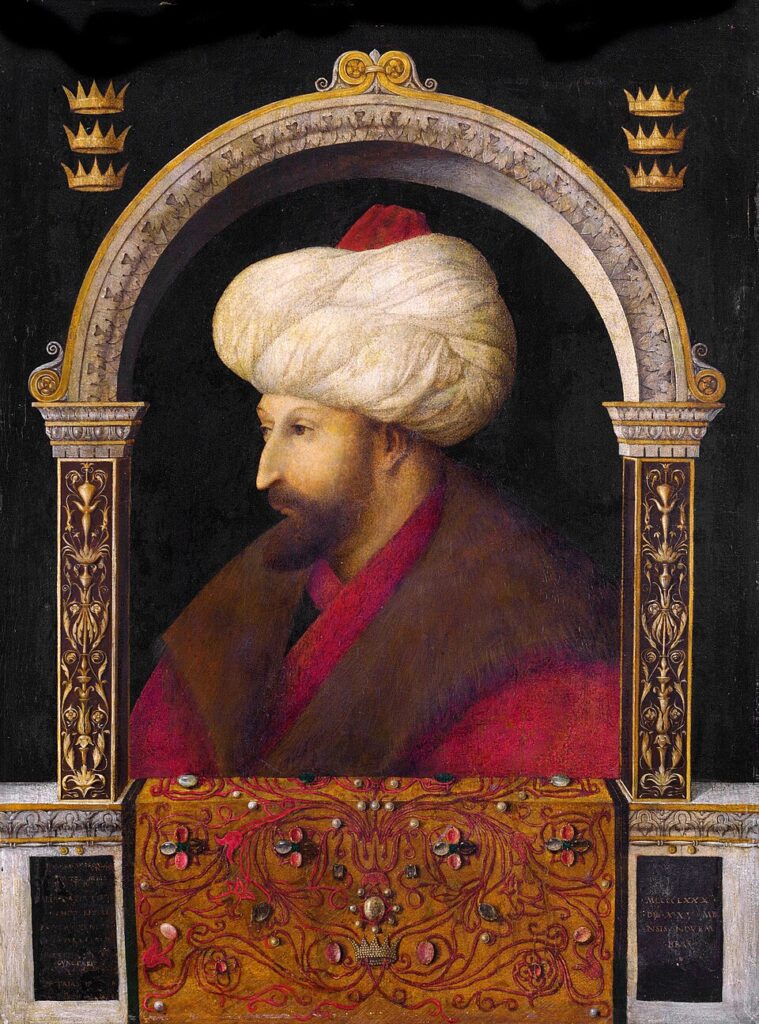
Mehmed II, often remembered as Mehmed the Conqueror, was born on March 30, 1432, in the city of Edirne, then the capital of the Ottoman Empire. From a young age, his name was linked with one of history’s most ambitious dreams — capturing Constantinople. This city, a jewel of trade and culture, had resisted countless sieges for over a thousand years. Yet, against all odds, Mehmed’s determination, military skill, and vision turned that dream into reality in 1453. The fall of Constantinople did not just mark the end of the Byzantine Empire; it reshaped the world’s political, cultural, and economic map.
Birth and Childhood in Edirne
Mehmed was the son of Sultan Murad II and Hüma Hatun. Edirne, a bustling capital in the 15th century, was more than just a political hub — it was a melting pot of cultures, religions, and ideas. Growing up here exposed Mehmed to the complexity of governance and the diversity of the Ottoman realm.
Historians recount that even as a child, Mehmed was fascinated by maps and tales of great conquests. His tutors often had to pull him away from history books so he could attend other lessons. The walls of Constantinople, so often described in these accounts, became an almost mythical obsession for him.
Education and Preparation for Power
Unlike many princes of his time, Mehmed’s education was rigorous and multidimensional. He was trained in philosophy, science, languages, and, most importantly, military strategy. He could speak several languages fluently — including Arabic, Persian, Greek, and Latin — which allowed him to understand both his allies and his enemies.
Under the guidance of scholars like Molla Gürani and Molla Hüsrev, Mehmed learned not only about Islamic law but also about the traditions and politics of the Byzantine court. This blend of knowledge would later be crucial when he ruled over a multi-ethnic, multi-religious empire.
First Reign as Sultan
In 1444, at the age of just 12, Mehmed ascended the throne for the first time when his father abdicated temporarily. But this was a turbulent time — the empire faced both internal unrest and external threats. Realizing the difficulty of the situation, Murad II returned to the throne to stabilize the realm.
Although short-lived, this first reign taught Mehmed valuable lessons about leadership, loyalty, and the unpredictable nature of politics. Some say this early taste of power and responsibility only deepened his ambition.
The Dream of Constantinople
Constantinople was more than a strategic city — it was a symbol. Controlling it meant dominating the trade between Europe and Asia, holding a key religious seat for Eastern Christianity, and commanding one of the most impregnable fortresses ever built.
For centuries, the Ottomans had tried and failed to take it. But Mehmed saw what others did not: the city’s defenses were formidable, but not unbreakable. He invested years in preparing an army, a navy, and, most famously, massive cannons capable of breaching the city’s walls.
The Siege of 1453
In April 1453, Mehmed’s forces surrounded Constantinople. The siege lasted 53 days. The city’s defenders, led by Emperor Constantine XI, fought with incredible courage. But Mehmed’s use of advanced artillery, naval blockades, and strategic engineering gradually weakened their defenses.
One of the most famous moments came when Mehmed ordered his ships to be dragged over land to bypass the chain boom blocking the Golden Horn. This daring move shocked the Byzantines and demonstrated his willingness to think beyond conventional warfare.
On May 29, 1453, the Ottomans breached the walls, and Constantinople fell. Mehmed entered the city with both triumph and restraint, ensuring order and protecting its inhabitants.
Aftermath of the Conquest
Renaming the city Istanbul, Mehmed declared it the new capital of the Ottoman Empire. He envisioned it not as a destroyed prize but as a revived center of culture and governance. Churches, mosques, markets, and schools flourished under his rule.
He also welcomed diverse communities — Muslims, Christians, and Jews — giving them a degree of religious autonomy. This policy helped the city quickly regain its vibrancy.
Mehmed II’s Vision for the Ottoman Empire
Mehmed was not content with just one victory. He wanted an empire that spanned continents. He reorganized the administration, improved tax systems, and expanded the empire’s territories into the Balkans, Anatolia, and beyond.
Cultural and Architectural Achievements
Mehmed’s reign also saw remarkable architectural projects. He commissioned the construction of the Topkapi Palace, which became the heart of Ottoman governance, and supported the building of mosques and public works that still stand today.
He patronized scholars, artists, and poets, blending Ottoman, Persian, and Byzantine influences into a unique cultural identity.
Challenges and Later Campaigns
The sultan’s ambitions led to many more campaigns, including conflicts with Venice, Hungary, and other European powers. While some were victories, others revealed the limits of even his military genius. Still, his relentless drive kept the empire expanding.
Death and Succession
Mehmed II died on May 3, 1481, during a military campaign. His death marked the end of an era, but his legacy continued under his successors. The empire he shaped would dominate Southeast Europe, Western Asia, and North Africa for centuries.
Legacy of Mehmed II
Today, Mehmed is remembered as a visionary leader who blended military skill with cultural sophistication. His conquest of Constantinople is one of the most studied events in world history, symbolizing the transition from the medieval to the early modern era.
Anecdotes and Lesser-Known Facts
- Mehmed loved literature and wrote poetry under the pen name “Avni.”
- He was fascinated by Renaissance art and even invited Italian painters to his court.
- Some historians suggest he had a personal library of thousands of books, rare for the time.
External Resource
🌐 Wikipedia – Mehmed the Conqueror