Table of Contents
- Introduction
- A Sneaky Quake in the Meiji Era
- The Silent Wave That Struck
- The Human Toll
- Science Learns a Harsh Lesson
- Legacy Along Japan’s Coast
- Conclusion
- External Resource
1. Introduction
Picture a quiet evening on June 15, 1896, in the coastal villages of Sanriku, northern Japan. Families gathered in prayer, fishermen enjoyed a calm sea, and a minor tremor—barely felt—shook the ground. Who would’ve guessed that mere minutes later, a tsunami wave taller than most trees would obliterate everything in its path? That’s the story of the Meiji Sanriku Tsunami, a disaster that ironically taught us more than it should have.
2. A Sneaky Quake in the Meiji Era
At around 7:32 pm local time, a magnitude 8.5 megathrust earthquake struck roughly 166 km offshore. The initial shaking didn’t seem too serious just enough to rattle a few dishes. But hidden beneath the seabed, intense pressure built, setting the stage for a tsunami earthquake a slow-moving quake that triggers massive waves with surprisingly mild initial shaking .
3. The Silent Wave That Struck
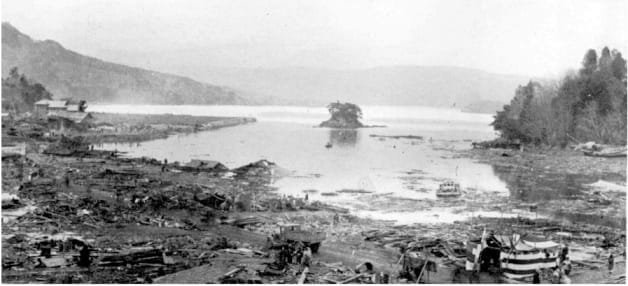
About 35 minutes later, a monstrous wave crashed onto the coast. A second one followed shortly after. These waves reached staggering heights up to 38 m near Ryōri in Iwate the tallest recorded at the time. Here’s where tragedy struck hardest: the quake had lulled everyone into a false sense of calm, so when the waves came, there was no warning.
4. The Human Toll
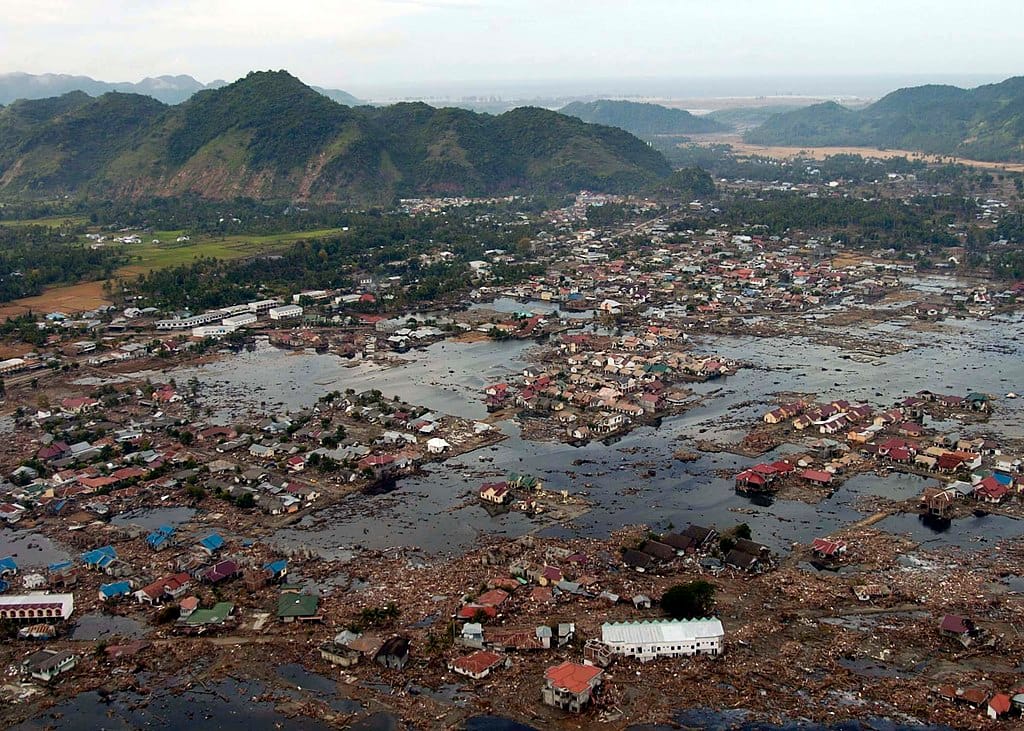
The results were devastating: around 22,000 people killed or missing, and 9,000 homes swept away. In tiny villages like Ōfunato and Kuji, entire communities vanished, leaving haunting silence and wreckage. Boats that were out at sea miraculously survived, only to return and find shores ravaged and loved ones.
5. Science Learns a Harsh Lesson
This disaster didn’t spare just lives it wake‑up‑called the scientific world. The mismatch between the modest quake and the massive tsunami pushed researchers to recognize “tsunami earthquakes”, where slow fault slips displace massive water volumes. It also highlighted how Japan’s jagged Sanriku coast with its deep bays and inlets amplified the waves.
6. Legacy Along Japan’s Coast
The disaster spurred the installation of tsunami stones markers carved into rock to warn future generations and led to early coastal-rescue planning. Sadly, lessons weren’t fully heeded until after later tsunamis in 1933 and 2011, both in the same area .
Even today, survivor stories remind us of a community that faced unimaginable loss—and quietly rebuilt, knowing nature can strike even when the earth seems calm.
7. Conclusion
The Meiji Sanriku Tsunami of 1896 is a stark reminder: deadly disasters don’t always announce themselves with loud warnings. This event changed how we perceive tsunami risks, especially tsunami earthquakes. It taught Japan and the world a painful but essential lesson: always be prepared, even when all seems still.
8. External Resource
- 🌐 Wikipedia: 1896 Sanriku earthquake – Full details on the earthquake, tsunami, death toll, wave heights, and geological insights.
- image source
Home Page: