Table of Contents
- The Roar from the Heart of Java: An Awakening of Mount Merapi
- Century-Old Sleeping Giant: The Historical Threat of Merapi
- The Setting: Central Java’s Vulnerable Landscape and Communities
- Early Signs and Foreshadows: The Volcano’s Stirring in 2010
- Scientists on High Alert: Monitoring Nature’s Fury
- October 26, 2010: The First Explosive Awakening
- The Human Toll: Lives Lost in the Shadow of Fire and Ash
- Evacuations in Chaos: The Race to Save Thousands
- Cultural Reverberations: Merapi in Javanese Myth and Society
- Government Response: Crisis Management amidst Uncertainty
- The Volcano’s Fury Escalates: November’s Deadly Pyroclastic Flows
- Stories of Survival: Human Courage Amid Catastrophe
- Environmental Consequences: The Altered Landscape of Central Java
- Economic Impact: From Agriculture to Tourism, Devastation and Recovery
- The Role of Media: Bringing Merapi’s Fury to the World
- International Aid and Scientific Collaboration
- Post-Eruption Reconstruction: Rebuilding Lives and Hopes
- The Long Shadow of Merapi: Psychological and Social Aftermath
- Lessons Learned: Advances in Volcanology and Emergency Preparedness
- Merapi Today: A Volcano Still Watching, Still Living
- Conclusion: The Enduring Reverberation of Fire and Resilience
- FAQs: Understanding the 2010 Merapi Eruption
- External Resource
- Internal Link
Nestled at the heart of Java, Indonesia’s most populous island, Mount Merapi had slumbered quietly for decades. Yet beneath its serene slopes, a monstrous power brewed, waiting for its moment to remind the world of nature’s uncontrollable might. As the skies of Central Java grew dense with ash and fire in late October 2010, the lives of thousands—farmers, children, elders—transformed overnight from peaceful routine to desperate struggle.
The Roar from the Heart of Java: An Awakening of Mount Merapi
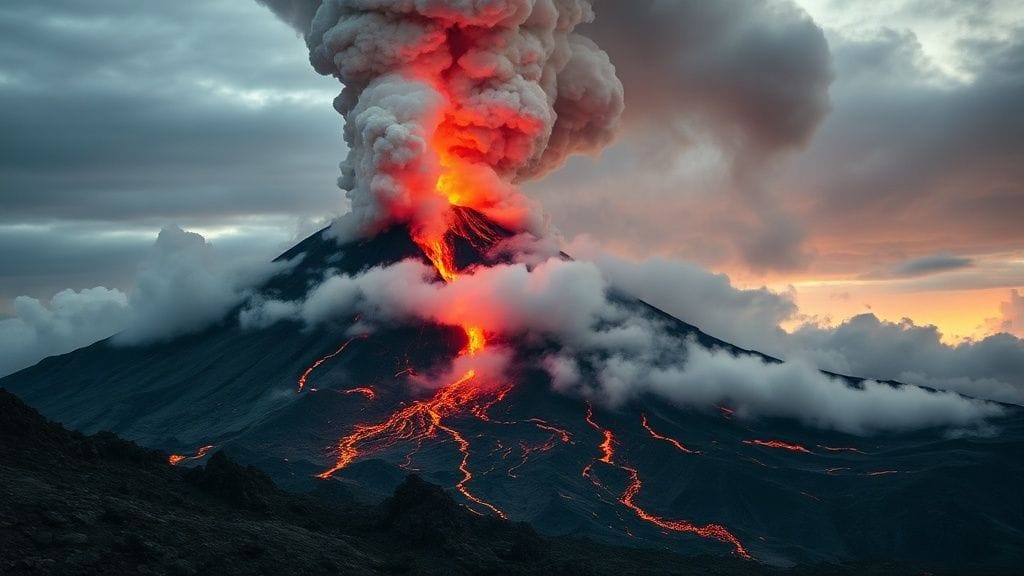
The morning of October 26, 2010, began much like any other in Central Java’s fertile valleys. But the skies soon darkened, heavy with smoke and ash. Mount Merapi, one of Indonesia’s most active and dangerous volcanoes, erupted fiercely, producing colossal plumes that blotted out the sun and sent streams of lava descending its flanks. Beneath the towering cloud of destruction, thousands were caught in an epic struggle for survival.
The air was thick with the acrid scent of sulfur and burning vegetation. Families hastily packed what little they could carry while distant roars echoed like a harbinger of doom. The ground trembled underfoot, and rivers carried the ash-laden water downstream, choking crops and settlements alike. It was a moment that exposed both the fragility and resilience of life in Merapi’s shadow.
Century-Old Sleeping Giant: The Historical Threat of Merapi
For centuries, Mount Merapi's eruptions have shaped the landscape and livelihood of Central Java. Its name itself — "Merapi" meaning “Mountain of Fire” in Javanese — hints at an intrinsic violence masked beneath cultural reverence.
Historically, Merapi’s frequent activity brought destruction and rebirth in cycles. The volcano’s pyroclastic flows and lava spawned fertile soils sustaining generations of farmers, yet the toll on human lives was brutally high. In 1930, a catastrophic eruption claimed more than a thousand lives; later, in the late 20th century, multiple eruptions continued this deadly pattern. Each event reminded locals and scientists alike that Merapi was one of the world's most volatile volcanoes, its explosive personality both feared and respected.
The Setting: Central Java’s Vulnerable Landscape and Communities
Central Java is a tapestry of dense agricultural zones, villages, and small towns, all nestled near or on volcanic slopes. Centuries of volcanic ash enriched the soil, creating some of the most productive farmlands in Indonesia. Yet this bounty comes at a price. With so many people living within close range—often fewer than 20 kilometers from the crater—the stakes of any volcanic activity are devastatingly high.
Communities around Merapi are tightly knitted, infused with deep cultural and spiritual connections to the mountain. Javanese beliefs imbue Merapi with sacred significance; rituals and offerings aim to appease the mountain’s spirits, seeking to harness and mitigate its fury. However, these customs coexist uneasily with the harsh realities of modern governance, scientific observation, and emergency response.
Early Signs and Foreshadows: The Volcano’s Stirring in 2010
In early 2010, subtle tremors beneath Merapi hinted at impending unrest. Indonesian volcanologists employed modern seismic equipment to monitor changes in gas emissions and tremor frequencies. Gradually, the mountain began exhibiting signs of swelling and minor explosions.
Local villagers reported increased smoke plumes and ash falls throughout the months leading to the major eruption, many unsure how seriously to take these signals. Scientific data suggested a buildup of magma—the molten rock that, once forced to the surface, would unleash devastating flows of lava and ash.
Despite these warning signs, the sheer scale and timing of the eruption caught many unprepared, sparking frantic evacuation efforts when the explosive eruption finally occurred.
Scientists on High Alert: Monitoring Nature’s Fury
The Center for Volcanology and Geological Hazard Mitigation (PVMBG), Indonesia’s primary volcanology agency, was on high alert. Utilizing seismographs, thermal imaging, and gas analysis, researchers tracked every tremor and change in Merapi’s restless summit.
Experts debated the potential scale of the eruption, weighing historical patterns against fresh data. In late October, the growing intensity forced authorities to raise evacuation alerts, recommending relocation for villages in designated danger zones.
International collaborations provided additional technical support, with volcanologists worldwide sharing models to predict flow paths and ash dispersal. These efforts underscored the growing role of science in mediating natural disasters—though even the best predictions can fall short against nature’s devastation.
October 26, 2010: The First Explosive Awakening
The eruption began with an earth-shaking rumble on the morning of October 26, sending a massive column of ash 6 kilometers high into the sky. Explosive pyroclastic flows—fast-moving currents of hot gas and volcanic matter—poured down the slopes, obliterating everything in their path.
By late afternoon, thick ash clouds coated villages, blanketing rooftops and choking the air. The intense heat incinerated forests and farmland. Many residents caught unprepared fled amid chaotic conditions, while others stayed behind, paralyzed by shock or unable to escape.
The eruption was a violent declaration of the mountain’s dominance, shattering the quiet agricultural rhythms with catastrophic force.
The Human Toll: Lives Lost in the Shadow of Fire and Ash
Over the course of the eruption, the death toll climbed tragically high—more than 350 people would eventually perish. Many were villagers who stayed too close to the danger zone, some returning to their homes despite warnings to retrieve belongings or ensure the safety of livestock.
Children, elders, and entire families were swept away by the deadly pyroclastic flows. Hospitals in nearby Yogyakarta and Magelang were overwhelmed with burns and respiratory injuries caused by the toxic ash and heat.
Yet the numbers only tell part of the story. Behind every casualty lies a heartbreaking personal tale—of dreams cut short, homes destroyed, and communities shattered.
Evacuations in Chaos: The Race to Save Thousands
As the volcano's activity escalated, Indonesian authorities faced the Herculean task of organizing evacuations for over 350,000 people. Overburdened emergency services and limited infrastructure made this a logistical nightmare.
Villagers were moved into temporary shelters—schools, mosques, and government buildings retrofitted to house displaced persons. But many evacuees found these camps overcrowded and lacking in basic hygiene, spurring humanitarian concerns.
Communication hurdles complicated warnings, especially in remote hamlets where rumor and fear spread as fast as ash clouds. Volunteers and local leaders played critical roles in persuading hesitant residents to flee before the worst struck.
Cultural Reverberations: Merapi in Javanese Myth and Society
Merapi’s eruptions have long intertwined with Javanese spirituality. The mountain is seen as the dwelling place of powerful spirits and ancestral kings. Each eruption reverberates not only physically but symbolically, stirring cultural expressions of respect, fear, and resilience.
In 2010, traditional rituals intensified as villagers sought protection. The royal city of Yogyakarta, historically linked to Merapi, reinforced these connections with ceremonies led by sultans and shamans.
This cultural dimension added complexity to evacuation efforts; for some, leaving their homes meant abandoning ancestral lands and sacred spaces—choices laden with emotional and spiritual weight.
Government Response: Crisis Management amidst Uncertainty
The Indonesian government mobilized military and civil defense units to assist evacuation, distribute supplies, and maintain order. Provincial authorities coordinated with the national disaster agency (BNPB) to streamline efforts.
Nevertheless, challenges such as fluctuating eruption intensity and logistical obstacles hindered responses. Some criticized delays or inadequate infrastructure for sheltering evacuees.
Internationally, Indonesia’s handling of the crisis showcased the country’s growing capacity in disaster management while highlighting areas needing improvement—especially in communication and community engagement.
The Volcano’s Fury Escalates: November’s Deadly Pyroclastic Flows
November 2010 marked the most dangerous phase of the eruption. On November 5, colossal pyroclastic flows swept down the southwest slope with devastating force, killing dozens more despite evacuations.
These flows—dense, boiling avalanches of gas and rocks reaching temperatures over 600°C—destroyed entire villages, leveling houses in seconds.
This escalation forced an expansion of danger zones and heightened the urgency of relocating more residents. The unpredictability of Merapi’s activity kept everyone on edge, as any sudden shift could spiral into further calamity.
Stories of Survival: Human Courage Amid Catastrophe
Amid the devastation, remarkable stories emerged. Families trapped under ash clouds rescued by neighbors, villagers guiding lost elders through choking smoke, children miraculously escaping destruction.
One image that captured global attention showed a young girl clinging to her mother as volcano ash rained down—a symbol of vulnerability and hope.
Emergency workers braved treacherous conditions to provide aid, while local communities offered shelter and support to displaced neighbors. These acts of courage and solidarity illuminated the human spirit’s strength in adversity.
Environmental Consequences: The Altered Landscape of Central Java
Merapi’s eruption transformed the region’s ecology dramatically. Rivers became clogged with volcanic debris, disrupting water supplies and fisheries. Heavy ash falls smothered vegetation over thousands of hectares.
Long-term soil fertility was initially compromised, threatening crop cycles. Reforestation efforts needed urgent attention to prevent erosion and landslides.
Yet volcanic ash also promises renewal; in coming years, richer soils would emerge, continuing the cycle of destruction and rebirth that defines this landscape.
Economic Impact: From Agriculture to Tourism, Devastation and Recovery
Central Java’s economy suffered deeply. Agricultural losses ran into millions of dollars as crops were destroyed or contaminated. Livestock deaths added to farmers’ hardships.
Tourism—a vital source of income linked to Merapi’s mystique—declined sharply during and after the eruption due to safety concerns.
However, reconstruction programs and government subsidies aimed to restore livelihoods. Slowly, replanting initiatives and infrastructure repairs paved the way for economic revival.
The Role of Media: Bringing Merapi’s Fury to the World
Global media eyes captured the tempestuous eruption, broadcasting footage of ash plumes and fleeing villagers internationally. News coverage raised awareness and mobilized aid.
Social media platforms allowed survivors and observers to share firsthand accounts, creating a digital archive of the event.
However, sensationalism sometimes risked overshadowing the nuanced human stories and scientific explanations critical to understanding Merapi’s complex behavior.
International Aid and Scientific Collaboration
Humanitarian aid poured in from neighboring countries and global organizations, contributing food, medical supplies, and expertise.
Scientific institutions worldwide intensified collaboration with Indonesian authorities to improve monitoring technologies and eruption modeling.
The 2010 crisis underscored how volcanic disasters transcend borders, necessitating global solidarity and knowledge exchange.
Post-Eruption Reconstruction: Rebuilding Lives and Hopes
After the eruption’s fury subsided, focus shifted to long-term recovery. Reconstruction of homes, public facilities, and infrastructure was paramount.
Government programs provided financial assistance to displaced families, albeit with challenges in equitable distribution.
Community rebuilding was as much psychological as physical—healing trauma and restoring a sense of security demanded sustained efforts.
The Long Shadow of Merapi: Psychological and Social Aftermath
Trauma lingered in the collective psyche. Many survivors faced post-traumatic stress, anxiety, and grief.
Social displacement altered community dynamics, with some families permanently resettled away from ancestral lands.
Yet resilience endured. Cultural rituals continued, bonds strengthened, and narratives of survival became pillars of communal identity.
Lessons Learned: Advances in Volcanology and Emergency Preparedness
The 2010 eruption accelerated advancements in volcano monitoring, including real-time seismic data integration and improved risk mapping.
Emergency response protocols were revamped to include clearer communication strategies and community education.
Indonesia’s experience became a model for other volcanic regions, combining scientific innovation with culturally sensitive disaster management.
Merapi Today: A Volcano Still Watching, Still Living
Today, Merapi remains one of the world’s most watched volcanoes. Scientists continue to monitor its subtle changes vigilantly.
Communities live in cautiously maintained proximity, balancing respect, fear, and adaptation.
The 2010 eruption remains a stark reminder of nature’s power—and humanity’s capacity both to withstand and coexist with it.
Conclusion
Mount Merapi’s 2010 eruption was more than a geological event; it was a crucible of human endurance, cultural identity, and scientific endeavor. From the fiery devastation emerged narratives of loss and courage, community and resilience. The tragedy underscored the delicate balance between humans and nature, especially in places where survival means learning to live with both bounty and danger.
Merapi’s roar echoed through the valleys of Central Java, silencing daily life while awakening profound reflections on vulnerability and strength. It challenged us to listen—to the mountain and to the stories of those who dwell near its fiery heart. Through ashes and smoke, hope began its slow ascent, reminding the world that even the fiercest fire can kindle renewal.
FAQs
Q1: What triggered the 2010 eruption of Mount Merapi?
A: The eruption was caused by rising magma beneath the volcano, which increased pressure until it explosively released through vent openings. This buildup of molten rock was detected by increased seismic activity and gas emissions months prior.
Q2: How many people were affected by the eruption?
A: Over 350,000 people were evacuated, with more than 350 reported deaths and thousands injured. Tens of thousands lost homes or livelihoods due to ash and pyroclastic flows.
Q3: What role did cultural beliefs play during the eruption?
A: Javanese spiritual traditions influence residents’ views of Merapi as a sacred, living entity. Rituals intended to appease the mountain’s spirits were widely practiced, affecting decisions around evacuation and community responses.
Q4: How did the Indonesian government respond to the crisis?
A: Authorities organized large-scale evacuations, set up refugee camps, mobilized military and emergency workers, and collaborated with scientists. While effective in many respects, they faced challenges in communication and infrastructure.
Q5: What were the environmental consequences of the eruption?
A: The eruption devastated vegetation, contaminated water sources, and altered river courses with volcanic debris. Long-term soil fertility was initially reduced but expected to recover, continuing natural regeneration cycles.
Q6: Did the eruption impact the global scientific community?
A: Yes, it spurred international collaboration in volcanology, leading to advances in monitoring and eruption prediction technologies, as well as sharing of disaster response strategies.
Q7: How has Merapi’s 2010 eruption influenced disaster preparedness?
A: It highlighted the importance of early warning systems, community engagement, and integrating scientific data with cultural sensitivity in emergency planning.
Q8: What is the current status of Mount Merapi?
A: Merapi remains active but is closely monitored. Communities nearby live with ongoing risk managed by enhanced surveillance and preparedness measures.

