Table of Contents
- The Night the Sea Roared: December 28, 1908
- Setting the Stage: Italy at the Dawn of the 20th Century
- The Geology of Disaster: Earthquakes, Fault Lines, and the Messina Strait
- Early Warnings and Quiet Tremors
- The Cataclysm Unfolds: The Magnitude and Mechanics of the Ground Shattering Event
- The Tsunami Emerges: Waves of Destruction Across the Strait
- Cities Shattered: Messina and Reggio Calabria at Ground Zero
- Voices from the Rubble: Eyewitness Accounts and Personal Tragedies
- The Scale of the Human Catastrophe: Death Toll and Devastation
- International Aid and Responses: Solidarity and Struggles
- Political Reverberations within Italy: A Kingdom in Mourning
- Scientific Investigations and Advancements Born from Tragedy
- Urban Reconstruction: Rebuilding Messina and Reggio Calabria
- The Tsunami’s Place in Italian Cultural Memory
- Global Impact: How the 1908 Messina Tsunami Shaped Tsunami Science Worldwide
- A Lesson Etched in Stone and Sea: Preparedness and Legacy
- Conclusion: Remembering 1908 with Empathy and Resolve
- FAQs: Understanding the Messina Strait Tsunami
- External Resource
- Internal Link
1. The Night the Sea Roared: December 28, 1908
The moon hung low over the narrow waters of the Messina Strait on an ordinary winter night. Silence blanketed the streets of Messina and Reggio Calabria, two vibrant southern Italian cities separated by just a few kilometers of Mediterranean waters. Families prepared for sleep, unaware that within moments their lives would be catapulted into chaos by one of the deadliest natural disasters in European history. Around 5:20 a.m., the earth beneath the strait convulsed violently — a monstrous earthquake swiftly followed by a towering tsunami that crushed everything in its path. In mere minutes, humanity faced the unfathomable: a monstrous fusion of earth and sea tearing civilizations apart.
On December 28, 1908, the Messina Strait tsunami shattered not only buildings and infrastructure but also the fragile sense of security that the communities clung to. Its echoes still resonate today, reminding us of nature’s raw power and the resilience of humanity.
2. Setting the Stage: Italy at the Dawn of the 20th Century
Italy in 1908 was a country of contrasts, balancing tradition and modernization, rural hardship and urban growth. The Mezzogiorno—the southern region that includes Sicily and Calabria—was economically disadvantaged compared to the industrializing north but teeming with cultural vitality. Messina and Reggio Calabria were bustling ports, gateways between the Italian peninsula and the island of Sicily, enriched by trade and fishing but shadowed by poverty for many.
The Kingdom of Italy, only a few decades into its unified existence, faced political tensions, economic challenges, and an emergent national identity. The significance of Messina as a strategic maritime hub meant local life intertwined with international currents—commerce, migration, and the fragile relationships between neighboring communities.
Nature, too, played its part. The Mediterranean basin is a restless place, geologically shaped by the convulsions of the African and Eurasian tectonic plates. Earthquakes had occurred before, and many locals were familiar with the trembling of the earth. Yet the quiet December night of 1908 would prove an extraordinary exception.
3. The Geology of Disaster: Earthquakes, Fault Lines, and the Messina Strait
Beneath the tranquil waters of the Messina Strait lies a complex geological reality. The interaction between the African tectonic plate pushing northward and the Eurasian plate bending southward creates immense pressure along fault lines crossing the region. This tectonic tension was the ignition point for the disaster.
The 1908 earthquake measured a staggering 7.1 on the Richter scale—a force powerful enough to rupture the earth, displacing the seafloor and triggering a tsunami. Geologists later understood that the quake originated on the Aspromonte fault system running along the Calabrian coast, within a seismically volatile zone.
Understanding the mechanics of this event became a cornerstone for seismology and tsunami science. The Messina Strait tsunami was not just a natural disaster; it was a geological lesson etched in stone and water.
4. Early Warnings and Quiet Tremors
On the dawn of December 28, locals experienced minor tremors that hinted at the catastrophic force brewing beneath their feet. Anecdotal records report unsettling shaking during the preceding days, yet no alarm bells rang far enough to provoke mass evacuation.
The Mediterranean’s history of seismic activity was uneven; many inhabitants knew of occasional quakes but did not anticipate a disaster of such magnitude. In many ways, the lack of systemic early warning was a tragedy rooted in the technological and institutional limitations of the early 20th century.
5. The Cataclysm Unfolds: The Magnitude and Mechanics of the Ground Shattering Event
At precisely 5:20 a.m., the Messina Strait convulsed with unimaginable fury. Buildings crumbled, chimneys toppled, and the ground split open beneath terrified residents. The earthquake’s shaking was felt for over 150 kilometers, extending from Sicily’s northern coast to southern Calabria.
Witnesses spoke of an earth’s roar, a deafening sound akin to thunder but far more terrifying. According to one survivor, “It was as if the world had lost its balance and was throwing everything down to chaos. I clung to my wife and we waited for the end.”
However, the earthquake was only the prologue. Moments after the tremors subsided, the sea betrayed the shore.
6. The Tsunami Emerges: Waves of Destruction Across the Strait
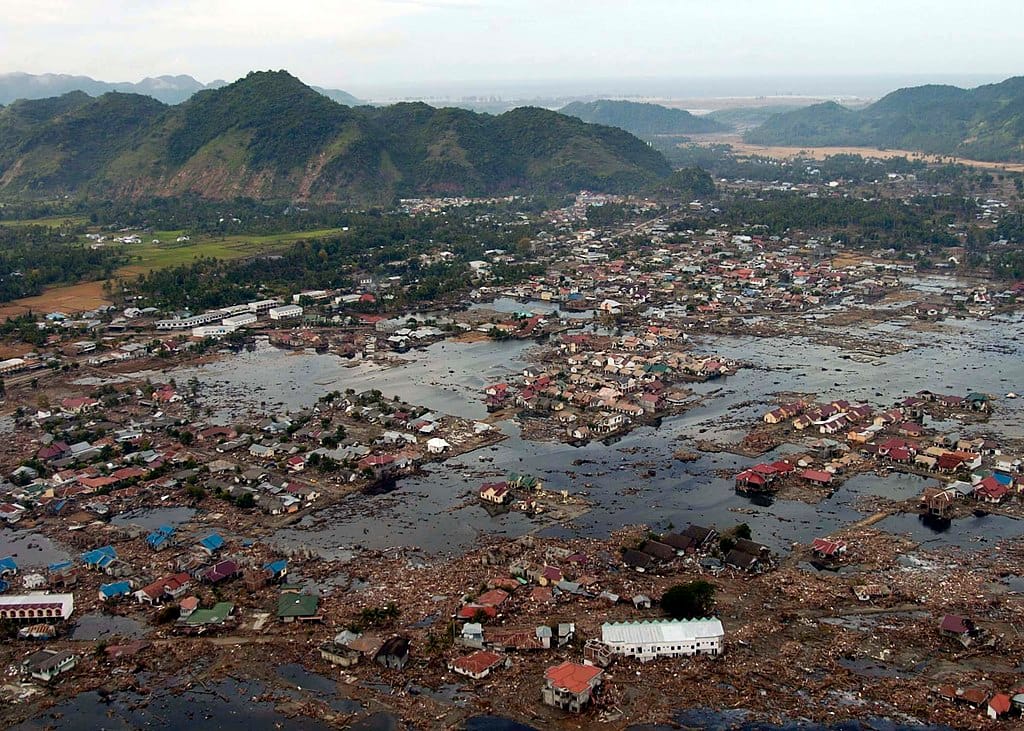
The earthquake had displaced massive volumes of seawater, sending colossal waves racing across the Messina Strait. The tsunami’s height reached up to 12 meters near the coast, engulfing harbors, boats, and entire neighborhoods.
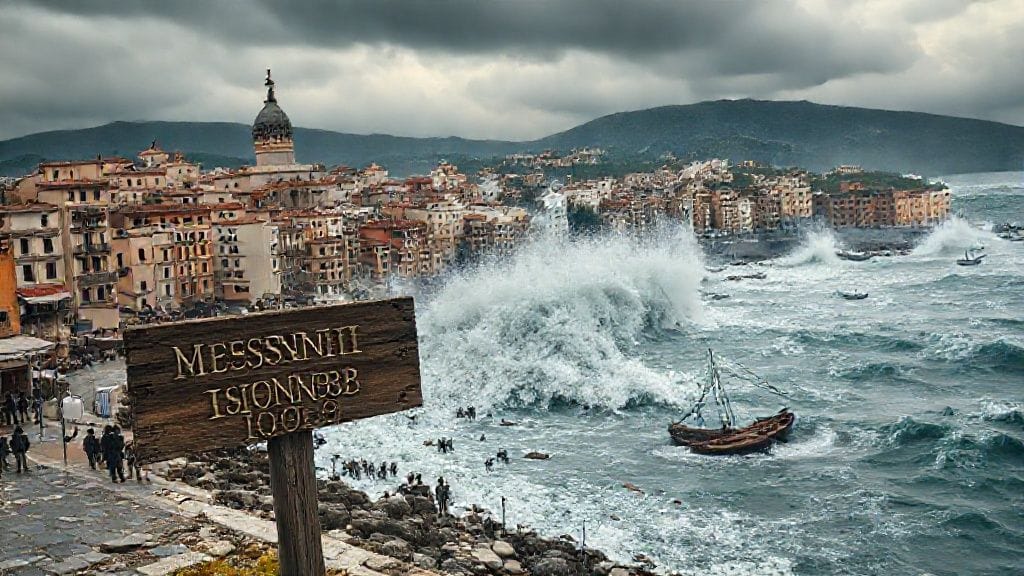
In Messina, the waves crashed against the harbor with deadly force, dragging ships, homes, and people into a churning abyss. In Reggio Calabria, similar destruction unfurled; the sea surged inland, dismantling infrastructure and drowning families.
The speed of the tsunami allowed no time for warning or escape. The ordinary fishing boats and maritime vessels became death traps rather than shelters. The roaring water carried wreckage far inland, leaving a trail of mud and ruin.
7. Cities Shattered: Messina and Reggio Calabria at Ground Zero
Messina, often called the "Gateway to Sicily," and Reggio Calabria, the “City of the Strait,” bore the brunt of nature’s wrath. Nearly 90 percent of Messina's edifices were destroyed or damaged beyond repair; entire districts were leveled.
Reggio Calabria, with a dense population and narrow streets, fared no better. The infrastructure—water supplies, roads, railway lines—was decimated. Fires ignited in the destruction, adding further anguish to the morning.
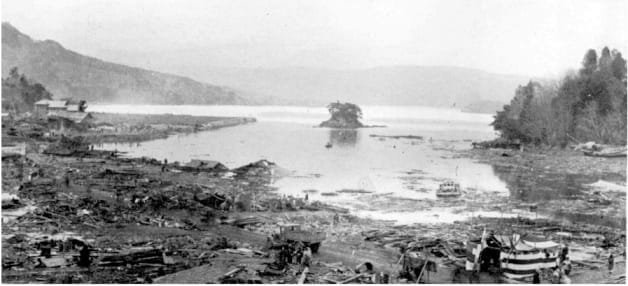
Photographs taken in the aftermath depict scenes of streets clogged with rubble, skeletal remains of buildings stoically standing amid ash and dust, and the faces of survivors marked by shock and despair.
8. Voices from the Rubble: Eyewitness Accounts and Personal Tragedies
Among those who lived through the chaos were fishermen, shopkeepers, mothers, and children whose lives were uprooted in seconds. One elderly woman recounted how her entire family perished in the collapse of their home: “I felt the walls bending, like paper. Then everything fell, and I was buried alive.”
Survivors spoke of miraculous escapes—some climbing to rooftops, others swimming through flooded streets. The medical services were overwhelmed; many had to care for the injured themselves amid the devastation.
These stories humanize statistics and remind us that behind the death toll were vibrant lives forever altered.
9. The Scale of the Human Catastrophe: Death Toll and Devastation
The numbers are staggering—estimates place the death toll between 75,000 and 100,000, making the 1908 Messina Strait disaster one of Europe's deadliest natural calamities.
Victims included men, women, children, elderly, and even rescue workers. Many bodies were never recovered, swallowed by both earth and sea.
The disaster obliterated families, communities, and livelihoods, turning once-thriving urban areas into ghost towns. Hospitals and churches became temporary morgues, and the psychological trauma rippled through generations.
10. International Aid and Responses: Solidarity and Struggles
News of the disaster spread quickly across the globe, triggering a wave of international compassion. Governments, charitable organizations, and thousands of individuals mobilized aid—funds, food, medical supplies, and manpower.
However, coordinating relief in the early 20th century posed immense logistical challenges. Roads were blocked, communications severed, and winter weather added further obstacles.
Despite these difficulties, the disaster highlighted a budding international humanitarian awareness. Donations arrived from as far as the United States, Russia, and throughout Europe. The efforts saved many but could never erase the scars.
11. Political Reverberations within Italy: A Kingdom in Mourning
The King of Italy, Victor Emmanuel III, personally visited the devastated area. The disaster tested the young nation’s governmental capacity and solidarity.
A wave of national mourning swept through Italy, along with debates about infrastructure, urban planning, and disaster preparedness. The cataclysm intensified conversations about social inequalities, as poorer neighborhoods suffered disproportionately.
Ultimately, rebuilding became not just a physical task, but a political and symbolic challenge to restore faith in the state and foster national resilience.
12. Scientific Investigations and Advancements Born from Tragedy
The Messina Strait tsunami sparked one of the earliest detailed scientific investigations of such phenomena in Europe.
Italian geologists, seismologists, and oceanographers collaborated to understand the causes and effects of the earthquake and tsunami. Their work contributed to the nascent field of seismology, informing building codes and disaster prediction theories in the decades to follow.
In many ways, the disaster transformed tragedy into knowledge—laying foundations that still influence seismic research today.
13. Urban Reconstruction: Rebuilding Messina and Reggio Calabria
Rebuilding efforts began amidst ruins, with architects, engineers, and urban planners taking on the monumental task of reimagining the cities.
The Italian government enacted new building laws, emphasizing earthquake resistance and urban hygiene, reflecting lessons learned from the disaster.
Both cities gradually rose from the rubble, blending old traditions with modern design. Yet, for many survivors, the process was slow and painful—a daily confrontation with loss and hope.
14. The Tsunami’s Place in Italian Cultural Memory
The 1908 disaster became embedded in the collective memory of Italy, remembered through literature, memorials, and oral history.
Local communities hold commemorations; survivors’ descendants recount stories passed down as cautionary tales intertwined with identity.
The event also permeated Italian art and cultural discourse as a symbol of human vulnerability and the enduring spirit.
15. Global Impact: How the 1908 Messina Tsunami Shaped Tsunami Science Worldwide
Internationally, the Messina Strait tsunami became a case study for understanding tsunami generation, coastal vulnerability, and disaster management.
It influenced the development of early warning systems, even if rudimentary, and the design of coastal defenses.
Scholars across disciplines examined the disaster, positioning the event as a pivotal moment in humanity’s relationship with seismic hazards.
16. A Lesson Etched in Stone and Sea: Preparedness and Legacy
With over a century passed, the lessons of the 1908 tsunami resonate even more keenly amid today’s climate challenges.
The disaster underscores the need for vigilance, preparedness, and scientific investment. Mediterranean countries continue to improve early warning technology and emergency planning, honoring those lost by striving to protect future generations.
The Messina Strait tsunami remains a solemn reminder: nature’s fury respects no boundaries or eras.
Conclusion
The night of December 28, 1908, forever transformed the souls of Messina and Reggio Calabria, searing into history an unforgettable lesson of mortality and resilience. This tragedy fused earth and sea in a violent dance—one that claimed almost 100,000 lives and destroyed entire cities, yet also catalyzed scientific progress and humanitarian consciousness.
Human memory is fragile, yet the commemoration of the Messina Strait tsunami is a testament to the capacity to remember, to mourn, and ultimately, to rebuild. In every stone that rose anew, in every story told across generations, the spirit of those lost endures.
In reflecting on this disaster, we recognize not only the force of nature but also the profound human courage to face devastation and reclaim life. It is a narrative as much of loss as of hope—a reminder to cherish our fragile existence and strive ceaselessly to understand and respect the earth beneath our feet.
FAQs
Q1: What caused the Messina Strait tsunami in 1908?
A1: The tsunami was triggered by a powerful magnitude 7.1 earthquake caused by tectonic movements along the Aspromonte fault system in southern Italy, which displaced a massive volume of seawater, creating deadly waves.
Q2: How many people died during the 1908 Messina Strait disaster?
A2: Estimates vary, but it is believed that between 75,000 and 100,000 people lost their lives, making it one of the deadliest natural disasters in European history.
Q3: Were there any warning signs before the tsunami struck?
A3: Minor tremors were reported prior to the main earthquake, but there was no formal early warning system, and the speed of the tsunami gave communities virtually no time to respond.
Q4: How did the Italian government respond to the disaster?
A4: The government coordinated rescue and relief efforts, enacted new building codes to improve earthquake resistance, and spearheaded urban reconstruction projects in Messina and Reggio Calabria.
Q5: What impact did the disaster have on science?
A5: It accelerated research into seismology and tsunami science, leading to improved understanding of tectonic causes and the behavior of tsunamis, which influenced later disaster preparedness worldwide.
Q6: How is the 1908 tsunami remembered in Italy today?
A6: It is commemorated through memorials, cultural events, and historical narratives that highlight both the tragedy and the resilience of affected communities.
Q7: Did the disaster influence global disaster preparedness?
A7: Yes, the Messina Strait tsunami became a key case study that informed early warning development, urban planning, and scientific inquiry about tsunamis internationally.
Q8: Are Messina and Reggio Calabria still vulnerable to tsunamis?
A8: Due to their geographic location, both cities remain at risk, but advances in monitoring, emergency planning, and building standards have increased their resilience.