Table of Contents
- The Deadly Dawn: Messina and Calabria on December 28, 1908
- A Landscape of Faults: Geology and Tectonics of the Straits of Messina
- The Calm Before the Storm: Sicily and Calabria at the Turn of the Century
- The Earth Trembles: The Initial Earthquake’s Impact and Magnitude
- The Sea Rises Against the Shore: The Tsunami’s Sudden Surge
- Cities in Ruins: The Devastation of Messina and Reggio Calabria
- Human Stories Amidst the Chaos: Witnesses, Survivors, and Heroes
- Rescue and Relief: Early Responses to the Disaster
- The Death Toll that Shook a Nation: Estimations and Challenges
- Scientific Curiosity and Controversies: Understanding the Disaster
- Political and Social Reverberations in Italy
- Rebuilding from Rubble: The Long Road to Recovery
- Cultural Memory: How Sicily and Calabria Remember 1908
- The Metaphor of Nature’s Fury in Literature and Art
- Lessons from the Past: Disaster Preparedness and Modern Implications
- The Messina Tsunami in Global Context: Comparing Catastrophes
- Final Thoughts: Nature’s Wrath and Human Resilience
The Deadly Dawn: Messina and Calabria on December 28, 1908
On a crisp winter morning, just as the dawn light struggled to pierce the mist settling over the narrow strait separating Sicily from the Italian mainland, peace reigned—if fragile and palpable—in the bustling towns of Messina and Reggio Calabria. Streets slowly awoke to the rhythm of everyday life: fishermen hauling nets, market stalls unfolding their vibrant wares, children chasing stray cats under stone balconies. Yet, just as the town clocks struck 5:20 a.m., that fragile calm fractured. The earth itself convulsed, an avalanche of sonic roars and shuddering tremors. In seconds, landscapes were altered, buildings disintegrated, and lives were swallowed by an unforgiving tide.
This was no ordinary morning. What would follow would be a dual catastrophe—the earthquake and the tsunami—that would ripple far beyond the narrow straits, embedding itself in the collective memory of Italy and the history of natural disasters worldwide. The 1908 Messina tsunami was an unrelenting display of nature’s grim power, yet it is also a story steeped in human courage, tragedy, and the quest for understanding.
A Landscape of Faults: Geology and Tectonics of the Straits of Messina
To grasp the ferocity of the 1908 disaster, one must first peer beneath the surface—literally and figuratively. The Strait of Messina, a slender waterway dividing Sicily and Calabria, is thrust upon a complex tectonic setting marking the boundary where the African and Eurasian plates collide. This region festers with the tension of geological forces, a place where the earth’s crust bends, breaks, and grinds.
The area is riddled with faults, mostly strike-slip and normal faults, and the convergence of these plates has resulted, over millennia, in frequent seismic activity. Geologists now understand the 1908 quake to have originated from the fault systems running beneath the strait, where accumulated stress was suddenly unleashed.
Yet, at the dawn of the 20th century, this violent groundwork was only partially understood. The trembling earth of Messina and Calabria had long been a faint harbinger of warning for residents living at the crossroads of Italy’s torrid geodynamics.
The Calm Before the Storm: Sicily and Calabria at the Turn of the Century
Messina and Reggio Calabria, vibrant Mediterranean cities, were thriving hubs of commerce, culture, and daily life on the cusp of modernity. The cities’ populations had grown steadily through the 19th century, with Messina as a key port on the island of Sicily, and Reggio Calabria as a gateway to the Italian mainland. Their harbors bustled, marketplaces overflowed with fruits, fish, and spices, and the rhythm of church bells marked everyday routines.
But beneath this bustling veneer, both pride and precarity existed. The social fabric of these communities bore the marks of regional disparities—economic hardship shadowed rapid urbanization, and the looming threat of natural calamities was part of a continuing story. Villagers in Calabria whispered of earthquakes passed; fishermen spoke in hushed tones about the sea’s caprice.
That morning, as families prepared breakfast and merchants readied their goods, no one could anticipate that fate was about to rewrite the very contours of their cities and lives.
The Earth Trembles: The Initial Earthquake’s Impact and Magnitude
At 5:20 a.m. local time, the earth unleashed its cataclysmic roar. The Messina earthquake registered an estimated magnitude of 7.1 to 7.3—colossal enough to flatten cities and kill tens of thousands instantly. The violent shaking lasted less than a minute, but the damage was instantaneous and immense.
Walls cracked and tumbled like paper. The ornate facades of cathedrals, centuries old, shattered, burying the faithful beneath rubble. Houses collapsed with sickening crashes, trapping residents under debris. Rail lines twisted grotesquely, and telephone poles snapped like toothpicks, severing communication. The quake’s intensity was such that it was reportedly felt as far away as Malta and North Africa.
But the physical destruction was only part of the horror. Panic cascaded through the streets as tremors rolled in violent waves, toppling furniture and opening cracks in the earth. The air filled with dust and the screams of the trapped and wounded.
The Sea Rises Against the Shore: The Tsunami’s Sudden Surge
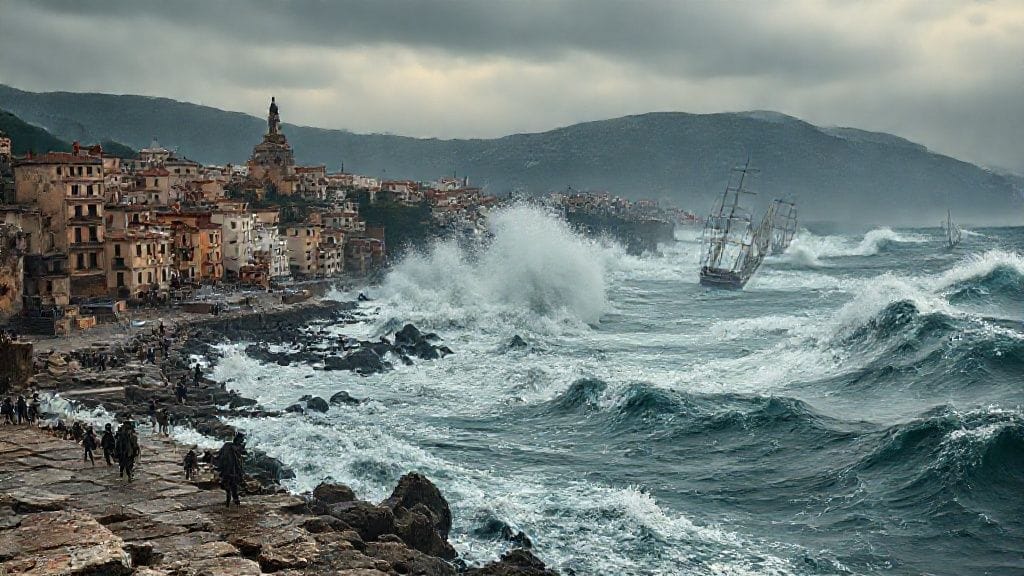
As if the earth’s fury had not been enough, the sea soon exacted its own devastating toll. In the aftermath of the quake, a massive tsunami—waves estimated between 6 and 12 meters high—rushed across the Strait of Messina, smashing into shorelines with relentless power.
Witnesses later described a surreal scene: the sea first withdrawing as if holding its breath, exposing the seabed in eerie clarity, before rushing back with terrifying velocity—sweeping away boats, homes, and people alike. The harbor waters roared through Messina and Reggio Calabria’s streets, turning roads into rivers of destruction.
It is extraordinary to imagine the speed at which normal life turned apocalyptic—one minute, children played at the waterfront; the next, families were scrambling against a towering wall of water. The tsunami’s force was such that entire neighborhoods were swept into the sea or buried beneath sediment.
Cities in Ruins: The Devastation of Messina and Reggio Calabria
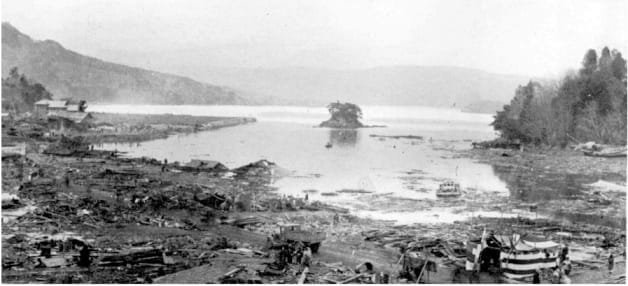
When the tsunami receded, the devastation that remained was staggering. Messina, a city of approximately 140,000 people, lay in ruins. Over 90% of its buildings were destroyed or irreparably damaged. Iconic landmarks, including the Messina Cathedral, were reduced to rubble. In Reggio Calabria as well, the destruction was near-total.
The human toll is what haunts history most vividly: estimates of the dead vary widely, but it is generally believed that between 75,000 and 100,000 people perished—making it one of the deadliest natural disasters in European history.
Entire families vanished overnight. Survivors emerged from collapsed buildings or clung to debris in the flooded streets. The scale of trauma was incalculable, and emergency services, unprepared for the scope, struggled to cope.
Human Stories Amidst the Chaos: Witnesses, Survivors, and Heroes
Behind the staggering numbers stand stories of loss, courage, and perseverance. Among the witnesses was Giuseppe Pugliese, a young teacher from Messina, who recounted the terrifying moment the ground opened beneath his feet, only to later help organize rescue efforts amidst the rubble. Another was Maria Russo, a mother who miraculously pulled her children from the wreckage, only to lose her husband.
Stories also emerged of local clergy, doctors, and citizens who risked their lives to dig through debris, tend to the wounded, and offer what solace they could. The heroic efforts of emergency responders and volunteers sowed the first seeds of hope amid desolation.
These personal accounts revealed not just chaos but also humanity’s resilience—the impulse to rebuild, to remember, and to heal.
Rescue and Relief: Early Responses to the Disaster
The Italian government faced overwhelming challenges in the disaster’s immediate aftermath. Communication lines had been destroyed, roads were impassable, and the cities’ infrastructures were crippled. Military units and naval ships were dispatched quickly to provide aid, but the magnitude of destruction rendered rescue operations slow and fraught with difficulty.
International aid trickled in, with offers from neighboring countries and diaspora communities. Yet, poorly coordinated efforts and limited technology of the time hampered effective relief.
Refugees flocked to nearby towns; makeshift camps arose; epidemics loomed as sanitation became impossible. Despite the hardships, the disaster galvanized a national and international response that, while imperfect, marked a turning point in Italy’s approach to emergency preparedness.
The Death Toll that Shook a Nation: Estimations and Challenges
The question of how many lives the 1908 Messina tsunami claimed is complex, entwined in the chaos of the event itself. Reports from the time ranged from 70,000 to over 100,000 deaths, with additional thousands injured or missing.
Accurate counting was hindered by the widespread destruction of civil records, the scattering of survivors, and the hasty burials necessitated by sanitary concerns. Entire families disappeared, leaving behind echoes rather than names.
The disaster’s scale shocked earthquake scientists and humanitarian agencies alike. For Italy, it was a national trauma on a colossal scale—a grim reminder of nature’s indifference to human boundaries.
Scientific Curiosity and Controversies: Understanding the Disaster
The 1908 Messina tsunami became a subject of intense scientific scrutiny. Seismologists sought to dissect the earthquake’s cause, intensity, and effects, while oceanographers studied the generation and behavior of the tsunami. These investigations advanced the study of tectonics and early tsunami science.
However, controversies emerged around the magnitude of the quake, the precise fault responsible, and the tsunami’s formation. Some early theories even debated if the tsunami was causally linked to the earthquake or triggered by a submarine landslide.
Despite gaps in knowledge at the time, the event catalyzed developments in earthquake engineering, hazard mapping, and international scientific collaboration. It underscored the necessity for better monitoring and preparedness in vulnerable zones.
Political and Social Reverberations in Italy
Beyond immediate physical destruction, the disaster rippled through Italy’s political and social landscape. The government, headed by Prime Minister Giovanni Giolitti, was criticized for its slow response and apparent lack of infrastructure investment in southern Italy.
The calamity deepened north-south disparities, highlighting the marginalized status of Sicily and Calabria within the Italian state. It intensified calls for reform across social, economic, and administrative structures.
Moreover, the disaster intersected with Italy’s ongoing modernization and nationalism, becoming a rallying point for civic solidarity but also a stark illustration of the challenges faced by the unified country.
Rebuilding from Rubble: The Long Road to Recovery
Reconstruction proved daunting. Entire cities had to be rebuilt from scratch amid limited resources and substantial economic strain. Italian engineers initiated the redesign of Messina and Reggio Calabria with modern urban planning principles, including wider streets and earthquake-resistant structures.
The recovery took years, reshaping not only the physical landscape but architectural styles and community organization. Yet, for many survivors, the trauma lingered, memories etched into the stones and neighborhood fabric.
Government aid, foreign loans, and local initiatives intertwined in the slow, painful process of revival—a testament both to the fragility and tenacity of human settlements.
Cultural Memory: How Sicily and Calabria Remember 1908
The Messina tsunami left an indelible mark on the collective memory of southern Italy. Annual commemorations, memorial plaques, and oral histories preserve the event’s legacy. Museums in Messina and Reggio Calabria host exhibits displaying artifacts, photographs, and personal testimonies.
Local literature and folk songs recount the disaster, blending fact with myth. The trauma is woven into regional identity—a somber reminder but also a gesture of resilience.
Memory serves not merely to remember loss but also to honor the strength of communities that faced annihilation and refused to vanish.
The Metaphor of Nature’s Fury in Literature and Art
Artists, writers, and poets have long grappled with the profound symbolism of the 1908 disaster. The earthquake and tsunami inspire metaphors of human vulnerability and the sublime terror of nature unleashed.
In literature, the event sometimes appears as a backdrop for stories of love and loss, fate and survival. Painters capture the shattered cityscapes and tumultuous seas with haunting brushstrokes.
These works fuel reflection on the tensions between man and nature, fragility and endurance—a dialogue that continues to resonate.
Lessons from the Past: Disaster Preparedness and Modern Implications
The 1908 Messina tsunami remains a cautionary tale in disaster risk management. It spurred calls for improved urban planning, early warning systems, and emergency coordination in seismic zones.
Modern Italy, equipped with advanced seismographs, tsunami monitoring, and civil defense strategies, constantly studies the Strait of Messina’s complex risk profile. The memory of 1908 frames policies aimed at protecting populations from similar future disasters.
Globally, the event shaped scientific and humanitarian approaches to earthquake-tsunami combinations, emphasizing preparedness and rapid response.
The Messina Tsunami in Global Context: Comparing Catastrophes
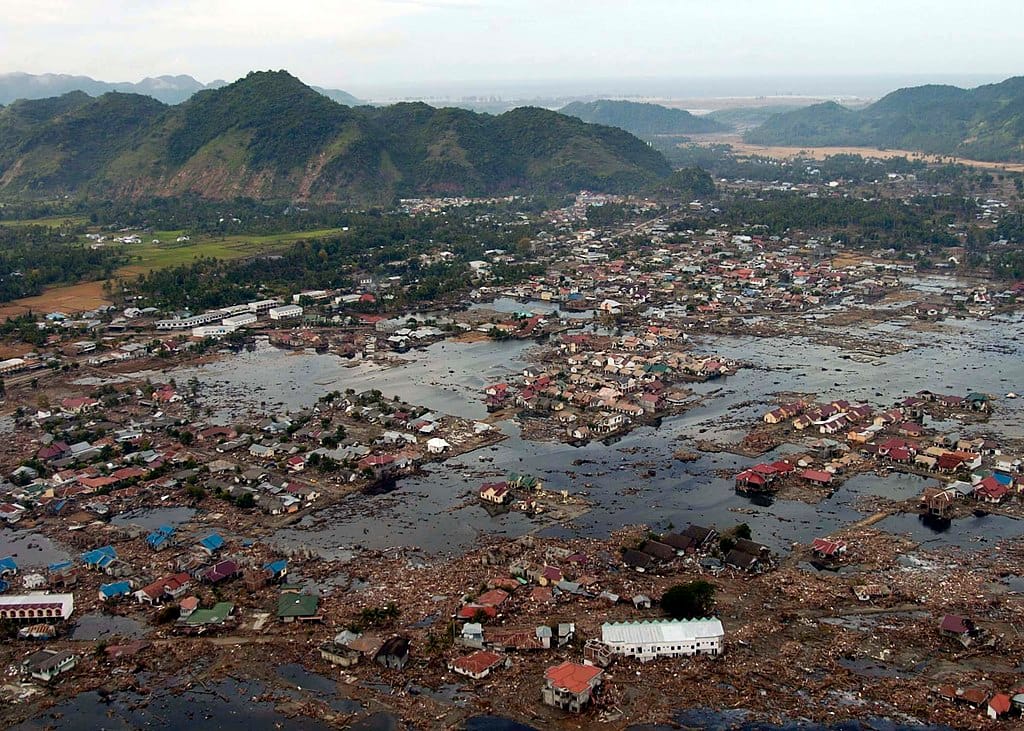
When viewed against other major natural disasters, the 1908 Messina tsunami reveals patterns of vulnerability shared across regions. Though overshadowed in public consciousness by events such as the 2004 Indian Ocean tsunami or the 2011 Tōhoku earthquake, 1908’s combined quake and tsunami stand as a stark lesson in scale and impact.
Its human cost rivaled some of history’s deadliest events, reminding the world that disaster knows no borders, and that geography dictates shared fates.
Final Thoughts: Nature’s Wrath and Human Resilience
The Messina tsunami of 1908 is a story of enormity—of an earth cracked and seas rising with lethal intent. It is a chapter where destruction and despair intertwined with humanity’s capacity to endure, rebuild, and remember.
Even today, over a century later, the echoes of that terrible morning resonate: in the stones of rebuilt homes, in the voices of descendants, in the science that seeks to predict and prevent.
History teaches us that while nature’s fury may be unstoppable, human spirit offers a legacy of resilience—an enduring flame amid the ruins.
Conclusion
The Messina tsunami of December 28, 1908, remains one of the most devastating natural catastrophes in European history. It was not simply an earthquake or a tsunami—it was both, a brutal sequence of events that reshaped landscapes, claimed tens of thousands of lives, and profoundly altered the course of southern Italy's social and political fabric.
Yet, beneath the horror lies a story of human endurance: communities banding together, cities rebuilt from rubble, science advancing to prevent future tragedies. The disaster compelled Italy to confront its vulnerabilities and inspired a deeper understanding of the powerful forces shaping our planet.
In remembering Messina and Reggio Calabria’s catastrophe, we honor not only those lost but also the resilience of the human spirit—forever intertwined with the volatile heart of the earth itself.
FAQs
Q1: What caused the 1908 Messina tsunami?
The disaster was triggered by a powerful earthquake along faults beneath the Strait of Messina. This sudden tectonic movement displaced large volumes of seawater, generating a tsunami that struck the coasts of Sicily and Calabria.
Q2: How many people died during the Messina tsunami?
Estimates vary, but it is widely accepted that between 75,000 and 100,000 people died, making it one of the deadliest natural disasters in European history.
Q3: How did the Italian government respond to the disaster?
The government mobilized military and naval forces for rescue and relief efforts, though the scale of destruction and limited infrastructure made response difficult. The disaster exposed weaknesses in Italy's emergency preparedness, especially in the impoverished south.
Q4: What was the scientific significance of this event?
The Messina tsunami prompted important advancements in seismology and tsunami science. It was one of the first well-documented earthquake-tsunami events, fueling research into tectonic activity and wave generation.
Q5: How do Sicily and Calabria remember the disaster today?
Commemorations, museums, memorials, and oral traditions in both regions keep the memory alive. The event is woven into local culture as a symbol of tragedy and resilience.
Q6: Were there any warning systems in place at the time?
No effective early warning systems existed in 1908. Most residents were caught unaware, which contributed to the high death toll.
Q7: Has the area experienced similar disasters since 1908?
The region remains seismically active, though no disasters of comparable magnitude have occurred since. Continuous monitoring and improved building standards aim to reduce risks.
Q8: What lessons has the 1908 tsunami taught modern disaster management?
It underscored the need for earthquake and tsunami preparedness, including urban planning, early warning, public education, and coordinated emergency responses, lessons that resonate globally.