Table of Contents
- The Dawn of Conflict: The Battle of Palo Alto, May 8, 1846
- Texas and the Seeds of War: A Territory Contested
- Manifest Destiny and the American Expansionist Spirit
- Mexico in Turmoil: Political Instability and National Pride
- The Annexation of Texas: Triggering a Powder Keg
- Diplomatic Failures and the Road to Hostility
- General Zachary Taylor: A Leader Emerges
- The Mexican General Mariano Arista and the Defense of Northern Mexico
- Across the Rio Grande: Forces Prepare for Confrontation
- The Battle Unfolds: Strategies, Weapons, and Terrain at Palo Alto
- The Thunder of Artillery: Technological Edge and Battlefield Dynamics
- Soldier’s Stories: Courage, Fear, and the Human Face of Battle
- Aftermath of Palo Alto: Strategic Victory and Morale Boost for the U.S.
- Mexican Defeat and National Shockwaves
- The Beginning of a Larger War: Pursuit toward Resaca de la Palma
- Political Reverberations in Washington and Mexico City
- The War's Place in American Identity and Expansion
- Mexican–American War: Prelude to Future Conflicts
- Remembering Palo Alto: Memory and Myth in Historiography
- Conclusion: Lessons from the First Shots on the Texas Plains
- FAQs about the Mexican–American War and the Battle of Palo Alto
- External Resource
- Internal Link
The Dawn of Conflict: The Battle of Palo Alto, May 8, 1846
The morning sun rose over the windswept plains just north of Matamoros, casting long shadows over the dry, scrubby brush that had witnessed countless footsteps of both Native peoples and settlers. May 8, 1846, was no ordinary day. It was the day the simmering tensions between two nations erupted violently in what would become the first major battle of the Mexican-American War. On these dusty fields near Palo Alto, Texas, the thunder of artillery and the crack of musket fire shattered a fragile peace, setting the stage for a conflict that would reshape North America’s geopolitical landscape forever.
General Zachary Taylor, calm and resolute, surveyed the horizon as his forces prepared for combat against a determined Mexican army commanded by General Mariano Arista. Both commanders, aware that beyond the immediacy of the day’s fight lay a war borne from decades of ambition, loss, and disputed boundaries. The battle would last only hours but resonate across the decades, a turning point charged with the raw emotions of patriotism, fear, and the stark realities of 19th-century warfare.
Texas and the Seeds of War: A Territory Contested
The origins of the Mexican-American War trace back to the vast and contested lands along the southern border of the United States. Texas was not always part of the United States. Once a province of Mexico, it declared its independence in 1836 after a brutal revolution against Mexican rule. The Republic of Texas lived uncertainly for nearly a decade, caught in political limbo and economic hardship.
While some Texans envisioned annexation by the United States as a path to stability and protection, many Mexican officials saw Texas always as a rebellious piece of their nation to reclaim. This territorial tug-of-war intensified as American settlers flooded into Texas, drawn by fertile lands and a promise of prosperity. The annexation of Texas by the U.S. in 1845 ignited deep resentment in Mexico, which still refused to recognize the loss, seeing the move as a provocative act of American expansionism.
Manifest Destiny and the American Expansionist Spirit
The 1840s were a time of fervent nationalism and expansionist zeal in the United States. The belief in Manifest Destiny—the idea that America was destined by providence to spread liberty and civilization across the continent—was woven deeply into the national psyche.
This conviction motivated politicians, settlers, and the military alike, fueling a hunger for new lands, resources, and strategic advantage. The annexation of Texas, the Oregon dispute with Britain, and aspirations for California were all parts of a grand vision. But Manifest Destiny was a double-edged sword: it inspired hope among Americans even as it bred anger and resistance among the peoples and governments displaced or threatened by America’s unstoppable drive west and south.
Mexico in Turmoil: Political Instability and National Pride
Meanwhile, Mexico was grappling with profound internal difficulties. Since its independence in 1821, it endured wild political swings—from conservative monarchists to liberal republicans—and frequent coups and rebellions. Economically burdened and militarily stretched, the Mexican government struggled to assert control over its northern provinces.
Yet, despite such fragility, Mexican society was hallmarked by a proud nationalism. The memory of the recent brutal Texas rebellion burned deeply. To many Mexicans, the loss of Texas symbolized the threat of American imperialism and national dismemberment. Leaders like President Mariano Paredes y Arrillaga, and later President Antonio López de Santa Anna, alternated between conciliatory and belligerent policies, but their authority was always challenged and their efforts complicated by the country's internal chaos.
The Annexation of Texas: Triggering a Powder Keg
The tipping point came with the formal annexation of Texas by the United States in December 1845, followed immediately by the deployment of American troops to the contested Rio Grande border. Mexico refused to acknowledge the Rio Grande as the legitimate border; instead, it claimed the boundary was the Nueces River farther north. American troops, under General Taylor, moved into the disputed strip between these rivers, a deliberate assertion of claims bound to provoke confrontation.
President James K. Polk, a fervent supporter of expansionism, saw this as a strategic gamble to coerce Mexico or, if necessary, justify war. The Mexican government, feeling encircled and insulted, mobilized its forces. The stage was set for armed conflict along the ragged line of the Rio Grande. What followed would spark a war—not simply for territory, but for the soul and future of two nations.
Diplomatic Failures and the Road to Hostility
Diplomatic channels were brief, tense, and rapidly exhausted. John Slidell, sent by Polk as a special envoy to negotiate the purchase of California and resolve border disputes, was rebuffed outright. Mexico’s government refused to pay heed to demands, distrustful of Polk’s intentions and unwilling to cede any further sovereignty.
By late April 1846, an American patrol under Captain Seth Thornton was attacked by Mexican cavalry in the disputed territory. Polk's administration declared that a state of war existed "by the act of Mexico" following this clash. On May 8, Taylor’s forces engaged Mexican troops near Palo Alto, formalizing the start of armed hostilities.
General Zachary Taylor: A Leader Emerges
Zachary Taylor, already a seasoned veteran of the U.S. Army and the Second Seminole War, earned the nickname "Old Rough and Ready" for his pragmatic leadership style and perseverance under difficult conditions. His reputation as a competent and courageous commander gave him the confidence not just of his men but also of the American public eager for swift victory.
Taylor was a complex figure—deeply patriotic but also reputed for fairness toward his soldiers and respect for the enemy. His practical judgement and willingness to innovate became crucial in the battles he fought along the Mexican border. Palo Alto would be his crucible, the moment when his command abilities would be tested in full.
The Mexican General Mariano Arista and the Defense of Northern Mexico
Opposing Taylor was General Mariano Arista, a veteran Mexican officer with a strong sense of military discipline and deep commitment to defending his country. Tasked with delaying and defeating the advancing American troops, Arista sought to exploit every natural defense and challenge the often better-equipped U.S. forces.
Arista faced significant challenges: his army was underfunded, not fully trained, and often lacking resources. However, his strategic deployment of artillery and cavalry in the palo Alto battlefield demonstrated resourcefulness and bravery, even if ultimately outmatched by American firepower and tactics.
Across the Rio Grande: Forces Prepare for Confrontation
May 1846 saw the two armies arrayed against each other on the ragged brushlands north of the Rio Grande. American forces numbered approximately 2,300 men, including infantry, cavalry, and, critically, an abundance of well-serviced artillery units. Mexican forces were larger but less cohesively trained.
The terrain was open, dotted with mesquite trees, grasses, and ridges that both sides eyed strategically. Both commanders understood the importance of artillery supremacy. American forces utilized the "flying artillery" tactic—light, mobile cannons that could quickly reposition to provide continuous fire support—a relatively new innovation on the North American battlefields.
The Battle Unfolds: Strategies, Weapons, and Terrain at Palo Alto
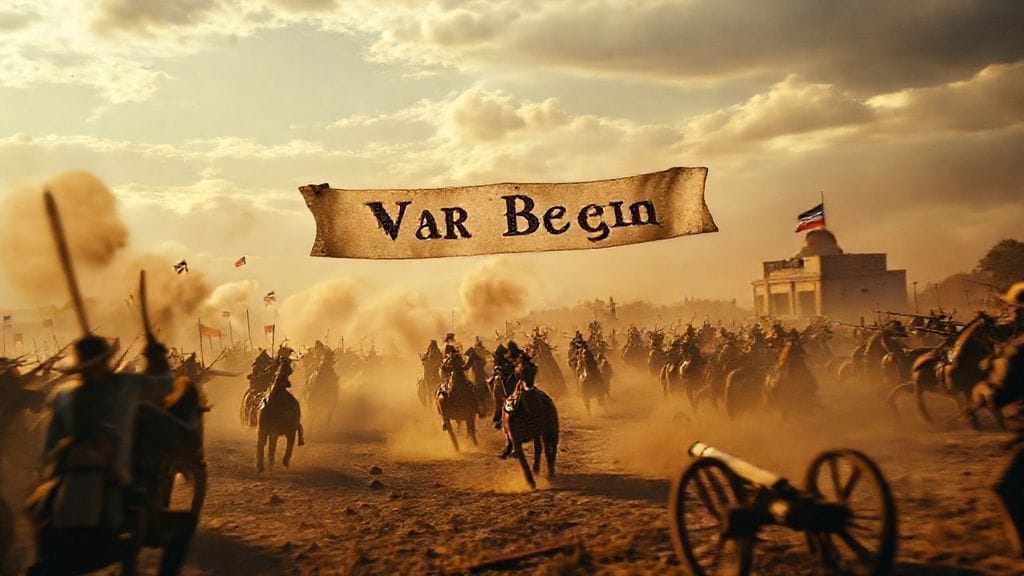
The battle commenced late morning on May 8 with Mexican cavalry charges designed to break American lines. Despite initial aggression, Mexican forces struggled to overcome the American’s superior artillery barrage. The "flying artillery," with rapid, targeted volleys of grape shot and cannonballs, decimated advancing Mexican troops and horses, blurring the line between battlefield and chaos.
Taylor’s forces employed both defensive and offensive movements, skillfully using cover and the wind's direction to prevent Mexican smoke from obscuring their battlefield visibility while suffocating Mexican advances. The open terrain, which might have favored cavalry maneuvers, turned into a gauntlet under relentless artillery fire.
The Thunder of Artillery: Technological Edge and Battlefield Dynamics
What truly distinguished the Battle of Palo Alto was the central role that artillery played. The U.S. Army’s "flying artillery" units, under officers like Captain Braxton Bragg (future Confederate general), showcased unprecedented battlefield mobility.
Unlike the traditionally static placement of cannons, these units swiftly repositioned to respond dynamically to Mexican attacks. This adaptation granted Taylor’s forces a flexibility Mexican gunners found hard to counter. The sheer volume and precision of American artillery fire disrupted Mexican lines before cavalry and infantry could engage fully, highlighting how technology and tactics intertwined to rewrite battlefield norms.
Soldier’s Stories: Courage, Fear, and the Human Face of Battle
Beyond grand strategies and artillery salvos, Palo Alto was a crucible of human experience. Letters from American soldiers reveal a mixture of fear, exhilaration, and grim determination. Corporal John Smith wrote to his wife, “The cannon thundered like the wrath of gods, yet we held firm, for the flag of liberty must not falter here.”
On the Mexican side, private Antonio García recalled "the smoke thickened, and the sound of men crying pierced the air. We fought for the soil of our fathers, but the rain of metal was terrible." Such memories render the battle profoundly human—courage tempered with the heartbreak of conflict.
Aftermath of Palo Alto: Strategic Victory and Morale Boost for the U.S.
By late afternoon, Mexican forces had withdrawn from the field, leaving the Americans in possession of the battlefield. While not a catastrophic defeat, it was a clear strategic victory for Taylor and the United States. The triumph boosted American morale and lent confidence to Polk’s administration as it prepared for a broader campaign.
Taylor’s reputation soared, eventually fueling his ascent to the presidency after the war. Meanwhile, the Mexican government reeled from the loss, faced with the reality that the United States was a formidable foe armed with determination and military innovation.
Mexican Defeat and National Shockwaves
The loss at Palo Alto revealed the vulnerabilities of the Mexican military and its fragmented political leadership. Though bitter and defiant, Mexico’s forces had failed to prevent the U.S. army from asserting control over the contested region.
News of the defeat spread quickly through Mexico City, provoking disdain for the government and calls for more vigorous resistance. The initial set-back was, however, only the prelude to a protracted conflict that would drain Mexico and change the territorial map of the continent forever.
The Beginning of a Larger War: Pursuit toward Resaca de la Palma
Barely 24 hours after Palo Alto, the American and Mexican armies clashed again at Resaca de la Palma, further south. This second battle would decisively push Mexican forces back across the Rio Grande and cement American control over the disputed territory.
The swift follow-up demonstrated Taylor’s offensive momentum and Polk’s strategic intent to leverage battlefield successes into political gains. Palo Alto was not an isolated fight but the opening salvo in a war destined to redraw borders and redefine sovereignties.
Political Reverberations in Washington and Mexico City
In the halls of power, both Washington and Mexico City responded to the battle’s outcome with starkly contrasting moods. Polk capitalized on the victory, pressing Congress for a declaration of war and framing the conflict as a defense of rightful American territory.
Meanwhile, Mexican leaders faced mounting pressure to reconcile internal divisions and mount a robust defense. The war highlighted the broader struggles within Mexico—a nation torn between modernization and tradition, unity and fragmentation, survival and pride.
The War's Place in American Identity and Expansion
The Mexican-American War, catalyzed by battles like Palo Alto, became a defining moment in U.S. history. It propelled the nation’s borders westward and southward, completing much of the territorial ambitions envisioned in Manifest Destiny.
Yet, the war was not just about land. It tested American ideals—the tension between expansionism and democracy, liberty and imperialism. Soldiers returned home as heroes, but debates erupted over the ethics of conquest and the future of slavery in acquired territories—issues that would propel the nation toward civil war two decades later.
Mexican–American War: Prelude to Future Conflicts
For Mexico, the war was a devastating crucible. The loss of nearly half its territory—Texas, California, Arizona, New Mexico—was a national trauma with lasting scars. It reshaped Mexican identity and politics, feeding nationalist movements and deepening mistrust of its northern neighbor.
The war also foreshadowed future conflicts between the U.S. and Mexico, as well as complex dynamics in borderlands culture and migration that continue to resonate today. Palo Alto was the point of ignition, but the ramifications would burn for generations.
Remembering Palo Alto: Memory and Myth in Historiography
Historians and popular memory have elevated the Battle of Palo Alto as more than a military engagement. In the United States, it has been commemorated as a heroic genesis of American martial prowess, emphasizing Taylor’s leadership and the technological innovations that secured victory.
In Mexico, the battle remains a symbol of resistance against invasion and loss, a poignant reminder of a country fighting against overwhelming odds. Historical interpretations continue to evolve, engaging with the complexities of imperialism, cultural conflict, and national identity.
Conclusion: Lessons from the First Shots on the Texas Plains
The Battle of Palo Alto stands as a powerful opening chapter in the Mexican-American War and a microcosm of the 19th century’s imperial struggles. It was a clash fueled by ambition, ideology, and human bravery, but also marked by tragedy and contested memories.
As we reflect on that dry, windswept plain on May 8, 1846, we see beyond the cannon smoke and battle cries to the deeper currents shaping two nations—currents of destiny and choice, pride and loss, hope and warning. Palo Alto was not merely a military victory; it was a moment that cast long shadows across history, reminding us of the cost of conflict and the fragile nature of peace.
FAQs
Q1: What exactly triggered the Mexican-American War?
The primary trigger was the U.S. annexation of Texas in 1845, disputed border claims along the Rio Grande, and a skirmish between American and Mexican troops in the contested territory. Diplomatic breakdowns and Manifest Destiny-driven ambitions also played crucial roles.
Q2: Who was General Zachary Taylor and why was he important at Palo Alto?
Taylor was the American commander whose leadership and deployment of innovative "flying artillery" secured victory at Palo Alto. This success boosted his military and political career, eventually leading him to the U.S. presidency.
Q3: How did the Battle of Palo Alto influence the course of the war?
Palo Alto was the first major engagement, demonstrating American military effectiveness and giving momentum to U.S. forces. It set the stage for further incursions into Mexican territory and shaped subsequent strategic decisions.
Q4: What were the main technological advantages for the U.S. forces at Palo Alto?
The U.S. employed mobile artillery units ("flying artillery") with rapid-firing cannons and superior logistics, which overwhelmed the Mexican cavalry and infantry tactics poorly adapted to such firepower.
Q5: How did Mexico respond politically and militarily after Palo Alto?
Mexico viewed the defeat as a grave setback but rallied to continue fighting despite internal divisions and resource shortages. The loss intensified political instability and nationalist sentiment.
Q6: What was the impact of the Mexican-American War on future U.S.-Mexico relations?
The war redrew national borders and seeded distrust and resentment that influenced cross-border relations, migration issues, and bilateral politics well into the modern era.
Q7: In what ways does the Battle of Palo Alto remain significant in historical memory?
Palo Alto is remembered as the opening salvo of a pivotal war, symbolizing American expansion and Mexican resistance. It is commemorated and studied as an event that shaped the destinies and identities of both nations.
Q8: Could the war have been avoided through diplomacy?
Many historians argue that diplomacy might have delayed or prevented war, but the confluence of American expansionism, Mexican sovereignty claims, and nationalist fervor made conflict highly probable.