Table of Contents
- The Dawn of a New Era: Mexico’s Plan of Iguala Unfolds
- The Tumultuous Backdrop: Colonial Mexico on the Brink
- The Rise of Revolutionary Ideals: Seeds of Independence
- The Pivotal Figure: Agustín de Iturbide Emerges
- The Tricolor Banner: Symbolism Behind the Plan of Iguala
- February 24, 1821: The Proclamation in Iguala’s Plaza
- The Three Guarantees: Unity, Religion, and Independence
- The Role of the Army of the Three Guarantees
- The Reaction of the Spanish Crown and Viceroyalty
- Factions and Alliances: Conservatives Meet Insurgents
- The Strategic Shift: From Rebellion to Negotiation
- The Road to the Treaty of Córdoba
- The Collapse of Spanish Control: Military and Political Turmoil
- The Advent of the First Mexican Empire
- Consequences for Colonial Society: Criollos, Mestizos, and Indigenous Peoples
- International Reverberations: Europe and the Americas React
- The Legacy of the Plan of Iguala in Mexican National Identity
- Lessons and Contradictions: A Fragile Unity
- Remembering Iguala: Historical Memory and Commemoration
- Conclusion: The Birth Pangs of Mexican Sovereignty
- FAQs: Unpacking the Plan of Iguala
- External Resource
- Internal Link
1. The Dawn of a New Era: Mexico’s Plan of Iguala Unfolds
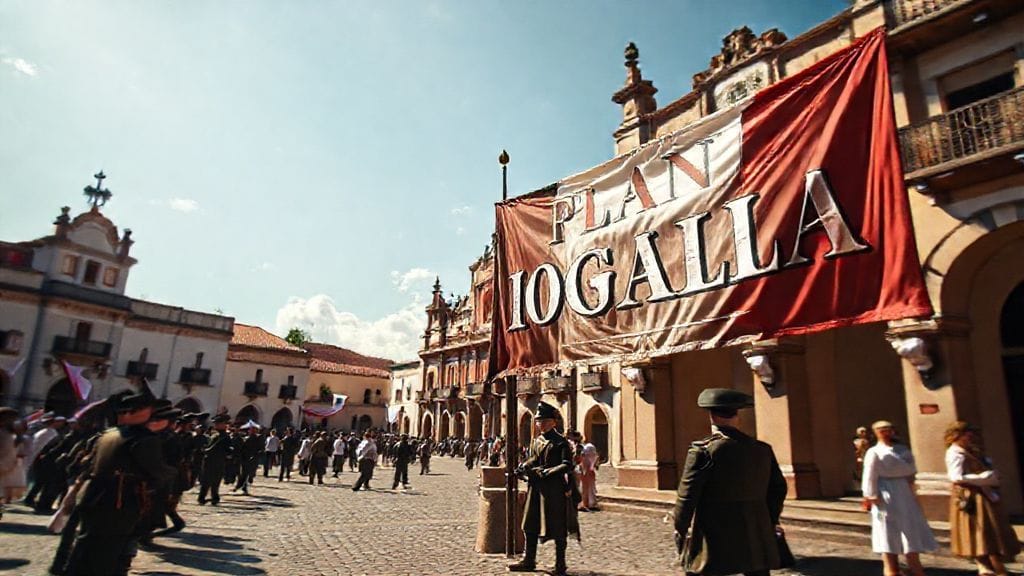
February 24, 1821. The sun was high over the modest town of Iguala, its warm rays illuminating the restless crowd gathered in the central plaza. Anticipation hung heavy in the air, mingling with the ancient scent of dusty earth and gunpowder. Men clad in the disparate uniforms of insurgents and former royalists gathered, united by a document as hopeful as it was revolutionary—the Plan of Iguala. This proclamation would not merely signal the formal birth of Mexican independence; it was a carefully crafted blueprint to reconcile the divided factions; a political salve to heal wounds torn open by a decade of brutal conflict.
Juan O’Donojú, the last Spanish viceroy, and Agustín de Iturbide, the formidable ex-royalist turned insurgent leader, stood shoulder to shoulder, their eyes set on a future neither could have imagined a few years earlier. The Plan of Iguala was a promise: one nation under the banner of religion, independence, and unity.
But this was just the beginning of a complex journey. Mexico’s struggle for freedom was a tale of ideals clashing with pragmatism, power forged in blood and diplomacy, hope shadowed by doubt. The proclamation at Iguala was a turning point—an explosive moment loaded with tension and potential that would shape the destiny of an emerging nation.
2. The Tumultuous Backdrop: Colonial Mexico on the Brink
Before the declaration of the Plan of Iguala, New Spain—modern-day Mexico—was a cauldron simmering with centuries of injustice and social stratification. The Spanish Empire had ruled since the early 16th century with a rigid caste system: peninsulares (Spanish-born elites) dominated governance, while criollos (American-born Spaniards) found themselves locked in an uneasy resentment. Beneath them, mestizos, indigenous peoples, and enslaved populations navigated lives defined by marginalization and exploitation.
The 18th-century Bourbon Reforms intensified these tensions by attempting centralization and tighter control, alienating many criollos who saw their economic and political influence threatened. The Napoleonic invasion of Spain in 1808, which deposed King Ferdinand VII, threw the empire into crisis, shaking the very foundations of colonial rule and opening a door through which revolutionary ideas would flood Mexico.
3. The Rise of Revolutionary Ideals: Seeds of Independence
The Mexican War of Independence officially ignited on September 16, 1810, when Miguel Hidalgo y Costilla, a parish priest, rang the bell of Dolores to rally the masses. Hidalgo’s call mobilized peasants, indigenes, and mestizos, fanning the flames of rebellion. Yet, his movement was as chaotic as it was revolutionary, culminating in his capture and execution in 1811.
For the next decade, leaders like José María Morelos and Vicente Guerrero carried the torch, transforming the rebellion into a more structured campaign for political emancipation and social justice. Morelos’ Congress of Chilpancingo in 1813 declared independence and abolished slavery, but Spanish forces continued to suppress uprisings with relentless brutality.
4. The Pivotal Figure: Agustín de Iturbide Emerges
Enter Agustín de Iturbide, a man whose path seemed contradictory at first glance. Born into a wealthy criollo family, Iturbide was initially a loyal royalist officer tasked with crushing insurgencies. However, his pragmatism and ambition led him to recognize a new way forward when the war stalemated and Spain itself seemed paralyzed.
Iturbide's self-styled vision was not just about independence; it was about creating a stable monarchy that would protect Catholicism and preserve the privileges of the elite classes. He leveraged his military prowess and social connections to unite conservative factions with insurgents disillusioned by years of violence.
5. The Tricolor Banner: Symbolism Behind the Plan of Iguala
One of the enduring symbols born with the Plan of Iguala was its flag—a tricolor with green, white, and red stripes. Each band carried profound meaning: green for independence from Spain, white for the purity of the Catholic faith, and red for the union of Europeans and Americans (criollos and mestizos alike).
The flag would eventually become the basis for the Mexican national emblem, a vivid reminder that the struggle was not merely political, but cultural and spiritual—a collective identity forged from division.
6. February 24, 1821: The Proclamation in Iguala’s Plaza
The day dawned crisp and charged with excitement. Iturbide, flanked by his officers and a growing number of soldiers, publicly read the Plan of Iguala aloud. The document was more than a declaration; it was a call for peace, order, and a new social contract.
With proclamations swirling in the air, citizens and soldiers alike were confronted with a vision of a united Mexico under three guarantees: the preservation of the Catholic religion, independence from Spain, and equality between peninsulares and criollos.
This moment, though deceptively simple, was a profound turning point where centuries-old chains of colonialism began to fray.
7. The Three Guarantees: Unity, Religion, and Independence
The Plan of Iguala rested on what came to be known as the Three Guarantees:
- Religion: Guaranteeing Catholicism as the sole religion of the new nation, thus appealing to conservatives and the deeply religious populace.
- Independence: Declaring Mexico a sovereign empire, free from Spanish rule but retaining monarchy to ensure stability.
- Union: Calling for equality between peninsulares and criollos, a revolutionary idea intended to heal the fractures within the ruling class and integrate former enemies.
This triadic foundation reflected Iturbide’s careful balancing act, attempting to forge a nation that amalgamated varied interests without igniting fresh conflict.
8. The Role of the Army of the Three Guarantees
Soon after the proclamation, the Army of the Three Guarantees was formed. This newly unified force comprised insurgents and former royalists, standing as a physical embodiment of the Plan’s ethos.
Under Iturbide’s command, the army marched towards Mexico City with growing momentum and popular support. Their disciplined advance symbolized not just military strength but political legitimacy in a fragile era.
9. The Reaction of the Spanish Crown and Viceroyalty
The Spanish authorities, ravaged by war and internal crises back in Europe, struggled to react. The viceroyalty’s grip was weakening, with the arrival of Juan O’Donojú—the last royal representative sent to negotiate rather than suppress.
O’Donojú, recognizing the untenable nature of Spanish rule and sympathizing with Mexican elites, chose to sign the Treaty of Córdoba in August 1821, formally accepting the Plan of Iguala’s terms and recognizing Mexican independence.
10. Factions and Alliances: Conservatives Meet Insurgents
Iturbide’s genius lay in political pragmatism. He fused conservative criollos who feared social upheaval with insurgents committed to independence. The Plan’s moderate but firm guarantees ensured broad support while containing radicalism.
This alliance, however, was fragile. Radical insurgents like Vicente Guerrero found themselves uneasy allies with former colonial loyalists. The political landscape was a powder keg, requiring constant negotiation and delicate balancing.
11. The Strategic Shift: From Rebellion to Negotiation
The Plan of Iguala marked a profound shift from guerrilla warfare to political strategy. Iturbide’s path combined military strength with diplomatic outreach, signaling an era where negotiation would complement battlefield success.
In this sense, the proclamation was a masterstroke that united disunited factions and paved the way for constitutional discussions and an empire rather than anarchy.
12. The Road to the Treaty of Córdoba
Following the Plan, the Treaty of Córdoba sealed Mexico’s independence in August 1821.
This treaty, negotiated between Iturbide and O’Donojú, codified the Plan’s objectives but fell short in some areas, particularly regarding indigenous rights and full sovereignty nuances. Yet it symbolically ended Spain’s three centuries of dominion.
13. The Collapse of Spanish Control: Military and Political Turmoil
Spain’s inability to halt Mexico’s independence movement stemmed from internal turmoil—Napoleon’s invasion, political fragmentation, and waning imperial power.
The ground forces, exhausted and demoralized, and liberal movements in Spain itself meant no effective reinforcements could be sent. This facilitated the revolutionary tide that culminated with Iguala’s proclamation and subsequent liberation.
14. The Advent of the First Mexican Empire
With independence achieved, Iturbide crowned himself Emperor Agustín I in 1822, inaugurating the First Mexican Empire. Though short-lived, this new state embodied the aspirations and contradictions of the Independence era.
The Empire struggled against republican ideals rising from within and external pressures, culminating in Iturbide’s abdication by 1823.
15. Consequences for Colonial Society: Criollos, Mestizos, and Indigenous Peoples
The Plan of Iguala's promise of unity often betrayed the realities on the ground. While it ended colonial rule, many lower classes saw little improvement. Land distribution, indigenous autonomy, and social equality remained elusive.
Yet, the acknowledgement of mixed-race citizens under the flag’s symbolism planted seeds for future Mexican identity: a mestizo nation bridging old divides.
16. International Reverberations: Europe and the Americas React
Mexico’s independence inspired other Latin American movements and shifted geopolitical alignments. Spain’s retreat weakened its global status, while the U.S. watched cautiously, aware of the power vacuum this created.
European powers recalibrated relations, balancing recognition of the new nation with their colonial interests elsewhere.
17. The Legacy of the Plan of Iguala in Mexican National Identity
The Plan’s principles endured far beyond its immediate political moment. The tricolor flag became a national emblem; the Catholic faith remained central to identity debates, and the concept of unity forged through varied groups persisted as a guiding ideal.
Despite uneven fulfillment, the Plan became a foundational myth for Mexico’s national story.
18. Lessons and Contradictions: A Fragile Unity
Though visionary, the Plan embodied contradictions—monarchy but independence, equality but privilege, unity but social hierarchy. These tensions foreshadowed decades of political instability and civil strife.
The fragility of the new nation exposed the complexity of liberating a divided society.
19. Remembering Iguala: Historical Memory and Commemoration
Today, the proclamation of the Plan of Iguala is commemorated annually on February 24th as a pivotal moment in Mexico’s Independence narrative.
Statues, murals, and festivals keep alive the memory of this turning point, inviting reflection on patriotism, unity, and the costs of freedom.
20. Conclusion: The Birth Pangs of Mexican Sovereignty
Mexico’s Plan of Iguala proclamation was more than a declaration; it was a masterful act of political craftsmanship in a turbulent time. It galvanized a fractured country toward sovereignty under a shared banner, blending idealism and realpolitik.
Yet, beyond the celebration lies the story of a nation’s birth pains—the challenges, compromises, and dreams that continue to shape Mexico’s journey to this day.
FAQs: Unpacking the Plan of Iguala
Q1: What were the main goals of the Plan of Iguala?
The Plan aimed to unite all Mexican factions under three guarantees: preservation of the Catholic religion, independence from Spain, and equality between peninsulares and criollos, establishing Mexico as a constitutional monarchy.
Q2: Who was Agustín de Iturbide and why was he crucial?
Iturbide was a conservative royalist who shifted to support independence, using his military influence and political savvy to unite previously hostile groups, leading the independence movement to success.
Q3: How did the Plan affect indigenous and lower-class populations?
While promoting equality between certain groups, the Plan largely maintained social hierarchies, with limited improvements for indigenous peoples and mestizos, leaving systemic inequalities largely intact.
Q4: What was the Spanish response to the Plan of Iguala?
Spain’s weakened empire struggled to counter the Plan effectively. Juan O’Donojú negotiated and ultimately recognized Mexican independence via the Treaty of Córdoba.
Q5: How did the Plan of Iguala influence Mexican nationalism?
It established key symbols—like the tricolor flag and Catholic identity—and set a framework for national unity, profoundly influencing Mexico’s self-perception and political evolution.
Q6: Was the Plan of Iguala universally accepted within Mexico?
No, some radical insurgents opposed the conservative elements of the Plan, leading to further political conflict even after independence.
Q7: What happened after the Plan’s proclamation?
It led to the victory of the Army of the Three Guarantees, Spain’s formal recognition of independence, and the short-lived First Mexican Empire under Iturbide.
Q8: How is the Plan of Iguala commemorated today?
It is celebrated annually on February 24th, remembered as the moment Mexico formally declared its unity and independence under a shared banner.