Table of Contents
- The Last Day of a Scientific Giant: Michael Faraday’s Final Hours
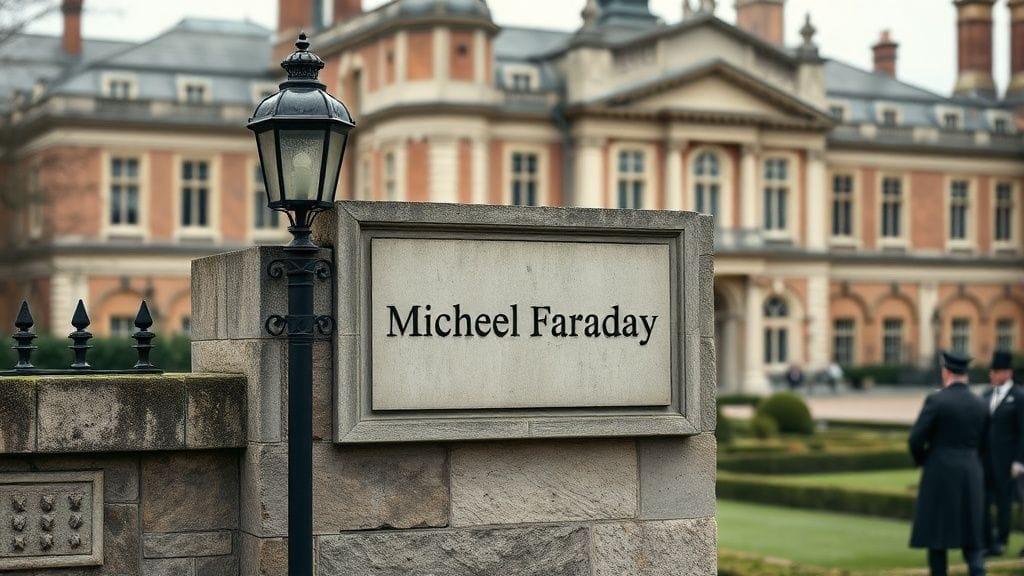
- The Setting: Hampton Court, England in Late August 1867
- Michael Faraday: A Life Illuminated by Discovery
- The Man Behind the Genius: Humble Origins and Relentless Curiosity
- Faraday’s Radical Contributions to Electromagnetism and Chemistry
- The Decline of the Luminary: Health and Isolation in His Final Years
- The Scene at Hampton Court on August 25, 1867
- Eyewitness Accounts: Family, Friends, and Fellow Scientists
- The Emotional Weight of a Passing Legend
- Public Reaction across England and Beyond
- The Burial and Commemoration at Highgate Cemetery
- Faraday’s Legacy in Science Education and Popular Science
- How Faraday’s Discoveries Shaped the Industrial Age
- The Moral and Spiritual Dimensions of Faraday’s Life and Death
- Faraday’s Posthumous Honors and Memorials
- The Evolution of Electromagnetism Since Faraday’s Demise
- Reflections from Contemporaries and Later Scientists
- The Cultural Resonance of Michael Faraday’s Death
- Death in the Victorian Era: Mourning the Scientist
- Faraday’s Place in the Pantheon of Scientific Heroes
- Final Thoughts: The End of an Era, The Dawn of Modern Science
1. The Last Day of a Scientific Giant: Michael Faraday’s Final Hours
On August 25th, 1867, as the summer sun dipped toward the horizon of an English summer reluctantly yielding to early autumn, one of the greatest minds of the 19th century quietly drew his final breath. Michael Faraday, the man whose discoveries would forever alter humanity’s understanding and manipulation of electricity and magnetism, passed away at Hampton Court, England. This was not a grand, heralded farewell, but rather a solemn conclusion to a life defined by wonder, rigor, and a relentless drive to unveil the secrets of nature.
The room at Hampton Court where Faraday died was said to be suffused with a quiet reverence, the air heavy with a mixture of sorrow and awe. His hand, once steady and deft in steering currents of electricity and manipulating magnetic fields, now rested motionless. Around him, family members, close friends, and a few devoted colleagues gathered, each bearing witness to the end of an epoch. Faraday’s death marked the close of not just a life, but a pivotal era in the scientific revolution that was transforming the world.
2. The Setting: Hampton Court, England in Late August 1867
Hampton Court, with its storied royal palace and gardens, was a place where history’s grandeur often mingled with the quiet rhythms of everyday life. In August of 1867, the country was brimming with the energy of the Victorian era’s technological and imperial ascendancy. Steam engines roared in factories, railways stitched the country together, and the flicker of new electric lights promised a future far different from the candle-lit past.
Amidst all this progress, Faraday—then aged 75—resided not far from the palace grounds. His frail form, bent by years of dedicated study and a modest life, contrasted sharply with the vibrant scene outside his windows. The air was thick with the scents of late summer flowers and the faint smoke of distant factories. But inside, the grandeur of scientific genius was waning, ready to pass on its torch to a new generation.
3. Michael Faraday: A Life Illuminated by Discovery
Born in 1791 in Newington Butts, a modest London neighborhood, Faraday’s journey from a poor apprentice bookbinder to one of the most celebrated experimental scientists is nothing short of remarkable. Unlike many great men of science who were born into privilege, Faraday’s ascent was hammered out by sheer talent and tenacity.
His discoveries in electromagnetism and electrochemistry—fields that were still embryonic in his youth—would lay the foundation for modern electrical engineering. Faraday’s name is synonymous with phenomena such as electromagnetic induction, which led directly to the development of electric generators and transformers, the engines of our electrically powered modern world.
4. The Man Behind the Genius: Humble Origins and Relentless Curiosity
Faraday’s story is as human as it is extraordinary. Little formal education, a working-class background, and an insatiable curiosity defined his formative years. Apprenticed to a bookbinder, he devoured every scientific book he could find, copying notes, sketches, and experiments with a meticulous hand.
His attendance at Humphry Davy’s lectures at the Royal Institution—to which he famously applied for a job by sending his own notes—marked the turning point. Davy, impressed by Faraday’s intellect and work ethic, took him on as an assistant. From there, the youthful apprentice slowly became a pioneer, transforming experimental science through intuition and perseverance.
5. Faraday’s Radical Contributions to Electromagnetism and Chemistry
Faraday’s experiments struck at the heart of a mystery that fascinated Victorian scientists: how electricity and magnetism interacted. The revelation that a changing magnetic field could induce an electric current—now called Faraday’s Law—was a groundbreaking step in understanding the invisible forces that underpin much of the universe.
Beyond physics, Faraday was a chemist of great renown, isolating benzene and developing early theories of chemical bonding. He was a master of scientific communication, demystifying complicated science for the public through his famous Christmas Lectures, thus founding a tradition in science education still alive today.
6. The Decline of the Luminary: Health and Isolation in His Final Years
As the decades passed, Faraday’s health deteriorated. The man who once wielded scientific instruments with deft hands became more withdrawn. His eyesight dimmed; bouts of illness interrupted his work. Though esteemed and beloved among peers, Faraday increasingly retreated from public life.
By 1867, he suffered from arteriosclerosis and other ailments that sapped his vitality. In Hampton Court, removed from London's bustle, the old scientist spent his days surrounded by memories of discoveries and lectures, manuscripts, and the gentle care of family and attendants who recognized they were tending a national treasure in his twilight.
7. The Scene at Hampton Court on August 25, 1867
That summer’s day dawned calm and bright. Friends recorded how Faraday seemed peaceful but fatigued, his breathing shallow but steady. As evening gathered, he spoke little, his mind no longer racing through the equations and experiments that had consumed him for years.
It was late afternoon when Faraday’s pulse slowed, and his hand went limp in the gentle grasp of his daughter, who had been reading to him prior to his passing. The quiet of the room was punctuated only by the steady ticking of a mantel clock and the muffled sounds of daily life outside.
8. Eyewitness Accounts: Family, Friends, and Fellow Scientists
Close friends attested to the dignity Faraday maintained to the end. His daughter, Sarah Barnard, recalled how “Father possessed a serenity in his final moments that spoke of a life well-lived, a mind unwavering till the last.” Fellow scientists like John Tyndall mourned the loss of a mentor whose humility belied his towering intellect.
Letters sent to the Royal Institution spoke of personal grief mingled with a collective sense of mourning among the scientific community. “The light that illuminated our path flickers out today,” one physicist wrote, encapsulating the somber mood.
9. The Emotional Weight of a Passing Legend
More than just a scientist, Faraday had become a symbol of Victorian values: curiosity, industriousness, moral integrity, and faith. Many contemporaries noted his deep Christian beliefs, which influenced his view of science as a means of understanding God’s creation rather than as a path to personal glory.
His death resonated beyond laboratories and lecture halls, stirring reflections on mortality, knowledge, and the responsibility of science to humanity. Newspapers carried obituaries that praised his life’s work as not simply academic achievement but as a gift to civilization itself.
10. Public Reaction across England and Beyond
News of Faraday’s passing spread quickly. The press honored him in columns that traced the arc of his life and placed him beside Newton and Darwin as one of England’s great intellectual giants. Scientific societies held meetings wherein memorials were read, and plans arranged to preserve his legacy.
Internationally, scholars mourned the loss, drawing attention to the global impact of his discoveries. The language of science, far from parochial, was enriched by his work—bridging national divides in the growing community of researchers.
11. The Burial and Commemoration at Highgate Cemetery
Faraday was laid to rest in Highgate Cemetery, London, a site reserved for many of Victorian England’s illustrious figures. His modest grave, marked by a simple stone, belies the monumental influence of the man beneath the earth.
Every year since, admirers and scientists alike have visited his resting place, leaving tokens of remembrance and renewing the dialogue between past and present. The cemetery itself, a Victorian innovation in memorial culture, fittingly preserves the memory of one of the era’s greatest minds.
12. Faraday’s Legacy in Science Education and Popular Science
One of Faraday’s enduring legacies is his dedication to accessible science. His Christmas Lectures at the Royal Institution were more than demonstrations; they were an invitation to the public to join the adventure of discovery. The tradition continues, drawing crowds eager to open the mysteries of nature.
Through these lectures and his own writings, Faraday left a template for science communication that emphasized clarity, wonder, and inclusiveness—a far cry from the insular practices sometimes found even today.
13. How Faraday’s Discoveries Shaped the Industrial Age
Faraday’s work on electromagnetic induction directly enabled the invention of electric motors and generators—technologies that sparked the Second Industrial Revolution. Cities illuminated by electric light, factories powered by motors, and the eventual rise of telecommunication all owe a debt to his experimental insight.
This shift triggered profound economic and social changes worldwide, underpinning everything from transportation networks to the modern computer. Faraday’s death in 1867 happened as this transformation was accelerating, a passing of the torch to engineers and inventors who would industrialize his discoveries.
14. The Moral and Spiritual Dimensions of Faraday’s Life and Death
Faraday was a devout member of the Sandemanian church, for whom faith and science were deeply intertwined. His humility and sense of duty infused his scientific endeavors, positioning discovery as a form of worship, rather than conquest.
His death was thus seen by many as a passage consistent with his worldview—a serene coming home after a lifetime seeking truth. This blend of science and spirituality sets Michael Faraday apart, a figure whose death stirred introspection on the relationship between human knowledge and meaning.
15. Faraday’s Posthumous Honors and Memorials
In the decades following his death, Faraday’s memory has been immortalized through statues, named scientific awards, and institutions. The Faraday Medal, instituted by the Institution of Electrical Engineers, celebrates outstanding contributions to the field he helped create.
Memorial lectures, museums, and exhibitions continue to chronicle his life and work—reminding new generations of the power of curiosity paired with perseverance. His name emblazoned on schools, streets, and scientific concepts marks a legacy that transcends his own era.
16. The Evolution of Electromagnetism Since Faraday’s Demise
From Faraday’s initial discoveries grew the unified theory of electromagnetism, famously formalized by James Clerk Maxwell. This theoretical leap laid the groundwork for modern physics and technology, including radio waves, wireless communication, and quantum mechanics.
Faraday’s experiments provided empirical foundations; Maxwell’s equations gave them mathematical form. Together, their synergy accelerated progress well into the 20th century, demonstrating how Faraday’s death did not close a chapter but opened a new volume.
17. Reflections from Contemporaries and Later Scientists
Scientists from Michael Faraday’s contemporaries like William Thomson (Lord Kelvin) to 20th-century figures such as Albert Einstein recognized Faraday’s foundational status. Einstein reportedly admired Faraday as much for his experimental skill as for his philosophical approach to science.
These reflections highlight a continuity of influence that transcends disciplines, reminding us that Faraday’s life and death are not merely historical facts but living elements within the ongoing narrative of science.
18. The Cultural Resonance of Michael Faraday’s Death
Faraday’s passing became a touchstone for Victorian society’s grappling with progress and mortality. Poets, writers, and journalists sought to capture the essence of a man who had helped the world move from darkness—both literal and metaphorical—into light.
His death echoes the Victorian tension between faith and reason, tradition and innovation. Faraday’s place in the cultural imagination as a gentle genius who bridged both worlds persists, inspiring artistic and philosophical inquiry.
19. Death in the Victorian Era: Mourning the Scientist
The Victorian period developed intricate rituals around death and mourning, with public figures’ deaths often carrying symbolic weight. Faraday’s passing was not only a personal loss but a public event that invited communal reflection.
The widespread mourning illustrates how scientific figures were becoming national heroes, their lives and deaths part of the collective cultural heritage. This phenomenon would only grow in the following century, establishing patterns still present today.
20. Faraday’s Place in the Pantheon of Scientific Heroes
Faraday ranks among the few whose names are synonymous with both groundbreaking discovery and moral virtue. Unlike many scientists whose reputations are confined to technical circles, he is celebrated for his character, accessibility, and dedication.
His death sealed a legacy that combines intellect with humanity—an ideal that remains a beacon within science and society. Faraday is not just a figure of the past but a role model for all who seek to understand the world while remaining humble before it.
21. Final Thoughts: The End of an Era, The Dawn of Modern Science
The death of Michael Faraday on that quiet day in Hampton Court signaled more than the end of a man’s life; it marked a turning point in history. The discoveries he nurtured would propel the world into new realms of power, knowledge, and potential.
Yet, far beyond the machines and theories, Faraday’s story reminds us of the human journey behind every great advance—the wonder, the struggle, the faith that drives discovery. His passing invites reflection on the fragility of genius and the immortal light it leaves behind.
Conclusion
Michael Faraday’s death in August 1867 closed the chapter on one of science’s most inspiring lives, yet it also underscored the enduring power of curiosity and dedication. His journey—from humble beginnings to global renown—embodies the spirit of inquiry that defines humanity. Faraday’s discoveries, born from countless hours of painstaking experimentation, laid the cornerstone for our electrified world and shaped the course of modern physics and chemistry.
But beyond the science, his character—marked by humility, faith, and a profound sense of responsibility—offers a timeless lesson. As he breathed his last in the peaceful surroundings of Hampton Court, the world mourned not just a great scientist, but a man whose life bridged knowledge and wisdom.
Today, Faraday’s legacy lives on, not only in the technologies that define modern life but in the spirit of discovery he championed. His death, far from an end, was a threshold into a new era, one illumined by the forces he so carefully unlocked.
FAQs
Q1: What were the main discoveries that defined Michael Faraday’s career?
Faraday is best known for his work on electromagnetic induction, the principles of electrolysis, and the isolation of benzene. He discovered that changing magnetic fields could induce electrical currents, a foundational concept for electric generators and transformers.
Q2: How did Faraday’s background influence his scientific work?
Coming from a modest, working-class family and having little formal education, Faraday’s achievements were propelled by innate curiosity, self-education, and determination. His humility and practical approach defined his experimental style.
Q3: What was the significance of Faraday’s Christmas Lectures?
These public lectures at the Royal Institution were designed to engage and educate young people about science through accessible demonstrations. They laid the groundwork for modern science communication and outreach.
Q4: How was Faraday’s death received by the public and the scientific community?
His passing was widely mourned. Obituaries praised his intellect and character, and the scientific community reflected on his pioneering work. Memorials and commemorations cemented his status as a national hero.
Q5: What role did Faraday’s faith play in his life and work?
A devout Sandemanian Christian, Faraday saw his scientific investigation as a way to understand divine creation, emphasizing humility and moral responsibility in his pursuit of knowledge.
Q6: Where is Michael Faraday buried?
He is buried in Highgate Cemetery in London, a place reserved for many notable Victorians, where his grave remains a site of remembrance and homage.
Q7: How did Faraday influence subsequent scientific developments?
His experimental findings laid the groundwork for James Clerk Maxwell’s equations and the formal unification of electromagnetism, influencing everything from electric power generation to telecommunications.
Q8: Are there any significant memorials or honors named after Faraday?
Yes, including the Faraday Medal, commemorative statues, scientific awards, and institutions that honor his contributions and inspire future generations.