Table of Contents
- The Unseen Tremor Beneath the Waves: Opening the Atlantics’ Wrath
- The Mid-Atlantic Ridge: Earth’s Underwater Backbone
- Geological Portrait of a Volatile Frontier
- Revisiting the History of the Mid-Atlantic Seismicity
- The 2018 Prelude: Build-up to a Deep Oceanquake
- August 24, 2018: The Day the Atlantic Trembled
- Locating the Epicenter: Deep Beneath the Abyss
- Measuring the Fury: Magnitude, Depth, and Intensity
- Global Reactions to an Oceanquake in the Midst of Atlantic Waves
- Seismic Waves and Tsunami Fears: The Immediate Aftermath
- Scientific Teamwork: Recording and Analyzing a Rare Event
- Impact on Seafaring, Coastal Communities and Ecosystems
- Underwater Quakes and their Contribution to Plate Tectonics Studies
- Media Chronicles: Covering an Event in Open Waters
- Legacy Under the Waves: How the 2018 Earthquake Changed Atlantic Studies
- Looking Ahead: Monitoring Future Risks Along the Mid-Atlantic Ridge
- The Human Element: Stories from Researchers and Mariners
- From Ocean Floor to Global Awareness: The Broader Implications
- Conclusion: Echoes Beneath the Sea and Lessons from the Deep
- FAQs: Understanding the 2018 Mid-Atlantic Ridge Earthquake
- External Resource: Further Reading and Research
- Internal Link: Dive Deeper Into History at History Sphere
The Unseen Tremor Beneath the Waves: Opening the Atlantics’ Wrath
On a seemingly quiet summer day, far from any bustling metropolitan shoreline, the Atlantic Ocean harbored a secret deep within its shadowy folds. August 24, 2018, was marked not by the usual calm of the sea but by a cavernous roar from the earth’s interior—a seismic pulse shaking the Mid-Atlantic Ridge, the immense underwater mountain range that snakes like a spine beneath the ocean’s vast expanse. The deep rumble was invisible, unnoticed by the millions above, yet its implications reverberated through scientific communities and stirred the imagination of those attuned to the restless forces shaping our planet.
The Mid-Atlantic Ridge: Earth’s Underwater Backbone
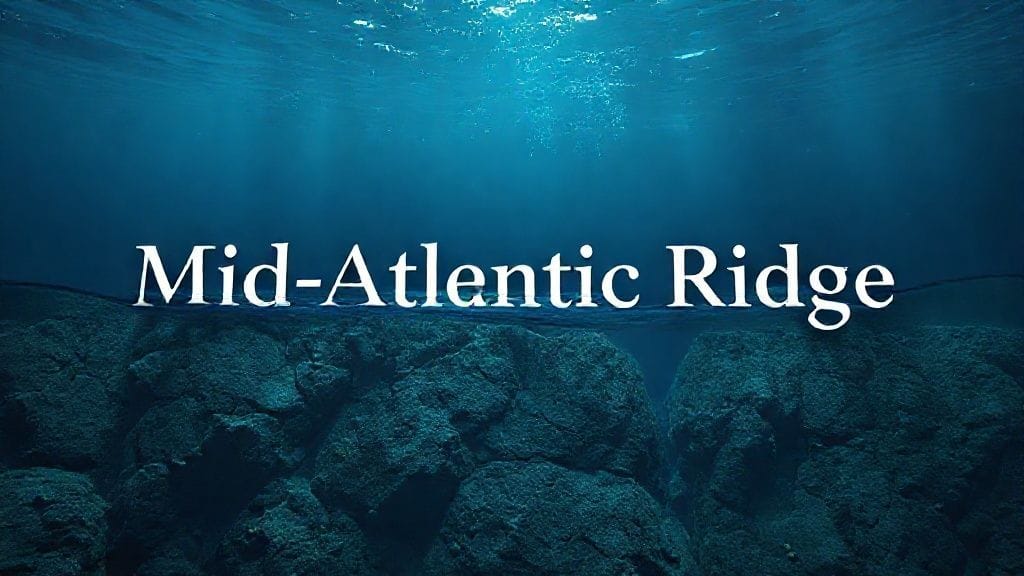
Few know this colossal range for what it is: a colossal tear in the earth’s crust where tectonic plates diverge, continuously birthing the ocean floor. Stretching over 16,000 kilometers from the Arctic Ocean in the north to the Southern Ocean near Antarctica, the Mid-Atlantic Ridge is the site of perpetual geological drama—a slow but inexorable process where new crust is fashioned and old patterns shattered.
Geological Portrait of a Volatile Frontier
Understanding the 2018 earthquake commands looking beneath the photosynthesis-lit surface into the dark, crushing depths where pressure and heat mold rock like clay. The Mid-Atlantic Ridge, the meeting place of the North American and Eurasian Plates in the north, and of the South American and African Plates down south, symbolizes a natural laboratory for tectonic scientists. Stretches along this ridge are riddled with fault lines, volcanic activity, and hydrothermal vents, making it a hotspot of subtle but relentless geological energy.
Revisiting the History of the Mid-Atlantic Seismicity
Earthquakes here are not unknown, though seismic disturbances at such depths often register less dramatically at the surface because of the insulating properties of water and the remote ocean location. Recorded seismic history shows that while the ridge hosts frequent small tremors, events reaching magnitude 6 or above are relatively rare but significant—moments where the slow geology roars to life.
The 2018 Prelude: Build-up to a Deep Oceanquake
By the summer of 2018, seismic monitoring systems deployed by oceanographic institutions had detected a series of minor trembles hinting that something larger was afoot. The subtle shifts in strain along fault lines under the Atlantic foreshadowed a moment where accumulated tension would release—an inevitable but unpredictable dance choreographed by the shifting earth below.
August 24, 2018: The Day the Atlantic Trembled
At precisely 03:46 UTC, seismographs worldwide synchronized as the earth beneath the ocean midline shifted with a sudden jolt. This earthquake, originating roughly 10 kilometers beneath the seabed, registered at a magnitude of 6.3 — a powerful jolt for a zone often overshadowed by more active fault lines on land. The tremor rippled outward, traveling thousands of kilometers beneath the ocean’s surface.
Locating the Epicenter: Deep Beneath the Abyss
Pinpointed near the Azores fracture zone, the epicenter lay just east of the Mid-Atlantic Ridge’s crest—an area known for its complex tectonic interplay and volcanic activity. The precise location was critical, as it provided insight into which tectonic structures bore the brunt of the strain and where future seismic hazards might unfold.
Measuring the Fury: Magnitude, Depth, and Intensity
At a depth nearing 10 kilometers below the oceanic crust, the earthquake’s force was confined beneath kilometers of water, muting its surface effects but making it a noteworthy occurrence for marine seismic studies. Inspecting seismograms revealed a sharp initial rupture followed by a series of aftershocks, signaling a readjustment in the earth’s lithosphere.
Global Reactions to an Oceanquake in the Midst of Atlantic Waves
Despite its remoteness, the earthquake captured headlines and academic discourse alike. International oceanographers, seismologists, and environmental scientists convened virtually and physically to exchange initial data. Media coverage was cautious, noting the rarity of such a magnitude occurring out in the deep ocean and the minimal immediate threat to coastal life.
Seismic Waves and Tsunami Fears: The Immediate Aftermath
One pressing concern after such quakes lies in tsunami potential. Fortunately, the particular mechanics of this event—the depth and rupture orientation—mitigated tsunami risk, yet it reignited discussions about preparedness even for far-flung coastal regions. The Atlantic Ocean’s expanse dampened the energy, reassuring emergency response units that no immediate action was needed.
Scientific Teamwork: Recording and Analyzing a Rare Event
The earthquake invigorated collaborative research between institutes in Portugal, the United States, and Iceland, spurring new deployments of underwater sensors and hydrophone arrays. These tools offered unparalleled views into the quake’s subterranean ripple effects, contributing to advancements in understanding plate dynamics and seismic wave propagation through oceanic crust.
Impact on Seafaring, Coastal Communities and Ecosystems
While the quake passed unnoticed by most ships and inhabitants of the Atlantic rim, its occurrence laid bare the latent risks beneath maritime trade routes and fishing areas. The event served as a reminder of the ocean’s hidden volatility and the complex relationship between human activity and Earth’s restless foundations. Ecologically, subtle changes in the seabed topography possibly influenced hydrothermal vents and deep-sea fauna, silenced witnesses to the quake’s raw power.
Underwater Quakes and their Contribution to Plate Tectonics Studies
The 2018 earthquake was more than a momentary tremble; it was a data treasure trove. It offered real-world evidence confirming models of plate divergence, transform faults, and crustal growth. Through detailed analysis, scientists refined timelines of oceanic spreading, enhancing predictive capabilities not only for the Mid-Atlantic but for similar underwater ridges worldwide.
Media Chronicles: Covering an Event in Open Waters
News outlets balanced technical explanations with human interest angles—stories of researchers aboard ships, the challenge of studying an event thousands of meters below the ocean surface, and the poetic notion of an ocean that moves silently yet powerfully beneath our feet. The earthquake became a narrative of Earth’s enduring vitality, its unseen heartbeats pulsating beneath blue horizons.
Legacy Under the Waves: How the 2018 Earthquake Changed Atlantic Studies
In the months and years following the quake, scientific papers proliferated in journals, conference debates intensified, and funding for oceanographic expeditions increased. The 2018 event marked a milestone in underwater seismic awareness, prompting long-term monitoring installations that would shape Earth sciences for decades.
Looking Ahead: Monitoring Future Risks Along the Mid-Atlantic Ridge
Despite its seeming isolation, the Mid-Atlantic Ridge remains a key indicator of planetary interior processes. Investments in ocean-bottom seismometers, autonomous underwater vehicles, and satellite monitoring continue to improve understanding and early warning capabilities, heightening vigilance over an often overlooked seismic frontier.
The Human Element: Stories from Researchers and Mariners
Personal accounts added flesh to the scientific skeleton of the event. Researchers recalled days spent at sea, tracking faint signals amid ocean noise, their fascination etched with humility towards a planet far larger than human reckoning. Mariners, though untouched by physical harm, passed along tales of subtle shifts felt onboard that stirred curiosity and respect.
From Ocean Floor to Global Awareness: The Broader Implications
The 2018 earthquake transcended its oceanic isolation to remind humanity that even its vast, mysterious seas are intimately connected to the planetary system. It punctuated the narrative of Earth as a dynamic organism, where even deep underwater boundaries vibrate with vitality, shaping coastlines and climates over time.
Conclusion
August 24, 2018, was a day when the deep Atlantic Ocean whispered one of its oldest secrets—earthquakes happen even far from populated lands, in places unseen by human eyes but critical to our planet’s continual renewal. This seismic event under the Mid-Atlantic Ridge serves as a compelling testament to the powerful geodynamic forces that sculpt our world beneath quiet waves. It invites us to listen closely to the earth’s pulse, to respect its rhythms, and to deepen our understanding of the invisible processes upon which life itself depends.
The 2018 earthquake did not bring destruction or headlines of disaster; instead, it delivered a quieter gift: knowledge and awe. It reminded scientists, sailors, and global citizens alike that the planet’s hidden heart continues to beat, forging new lands, shaping ecosystems, and echoing a tale as old as time.
FAQs
Q1: What caused the 2018 Mid-Atlantic Ridge earthquake?
A1: It was caused by tectonic activity where the North American and Eurasian plates, or South American and African plates, move apart along the Mid-Atlantic Ridge. The earthquake released built-up strain from these divergent boundaries.
Q2: How strong was the earthquake and how was the magnitude measured?
A2: The magnitude was approximately 6.3, measured by global seismographic networks detecting seismic waves. The depth was about 10 km below the ocean floor.
Q3: Did the earthquake cause any tsunamis or damage?
A3: No tsunamis or significant surface damage occurred due to the earthquake’s depth and offshore epicenter, as well as the ocean’s cushioning effect.
Q4: Why are underwater earthquakes significant to science?
A4: They help scientists understand plate tectonics, oceanic crust formation, and seismic hazards, improving models and risk assessments for coastal areas.
Q5: How do scientists record earthquakes deep beneath the ocean?
A5: Using underwater seismometers, hydrophones, satellite data, and oceanographic vessels equipped with sensitive instruments, researchers detect and analyze seismic waves.
Q6: What is the Mid-Atlantic Ridge and why is it tectonically active?
A6: It is a tectonic boundary where plates diverge, causing new crust to form and frequent volcanic and seismic activity due to the relative movement of Earth's plates.
Q7: How has the 2018 earthquake influenced marine and geological research?
A7: It prompted enhanced monitoring efforts, interdisciplinary research, better seismic hazard mapping, and technology investments in ocean exploration.
Q8: What lessons can coastal communities learn from deep oceanquakes?
A8: Even remote earthquakes can impact coastal safety through tsunami risk; therefore, continuous monitoring and preparedness are essential.