Table of Contents
- The Silent Tremor: Mongolia on the Brink
- Geological Underpinnings of the Gobi-Altai Region
- Mongolia in the 1950s: A Nation in Transition
- The Calm Before the Storm: December 3, 1957
- The fateful morning of December 4, 1957
- The Earth Shakes: The Mainshock Unfolds
- Aftershocks and Panic: The Unfolding Crisis
- Human Stories Amidst the Rubble
- The Mongolian Government’s Immediate Response
- Soviet and International Aid: A Cold War Gesture?
- Impact on Infrastructure and Agriculture
- The Role of Indigenous Knowledge in Disaster Response
- Seismological Discoveries Stemming from the Earthquake
- How the Earthquake Shaped Mongolian National Identity
- Lessons Learned and Preparedness for the Future
- The Gobi-Altai Earthquake in Global Seismological Context
- Cultural Memory: Oral Histories and Mongolian Folklore
- Scientific Advances: Mapping Faults and Fault Dynamics
- The Socio-Economic Aftermath and Recovery Efforts
- Environmental Consequences: Landscape and Ecosystems
- Mongolia’s Earthquake Legacy in the Second Half of the 20th Century
- Remembering the 1957 Disaster Today
- Conclusion: Earthquake as a Mirror of Nature and Society
- FAQs about the 1957 Gobi-Altai Earthquake
- External Resource
- Internal Link
1. The Silent Tremor: Mongolia on the Brink
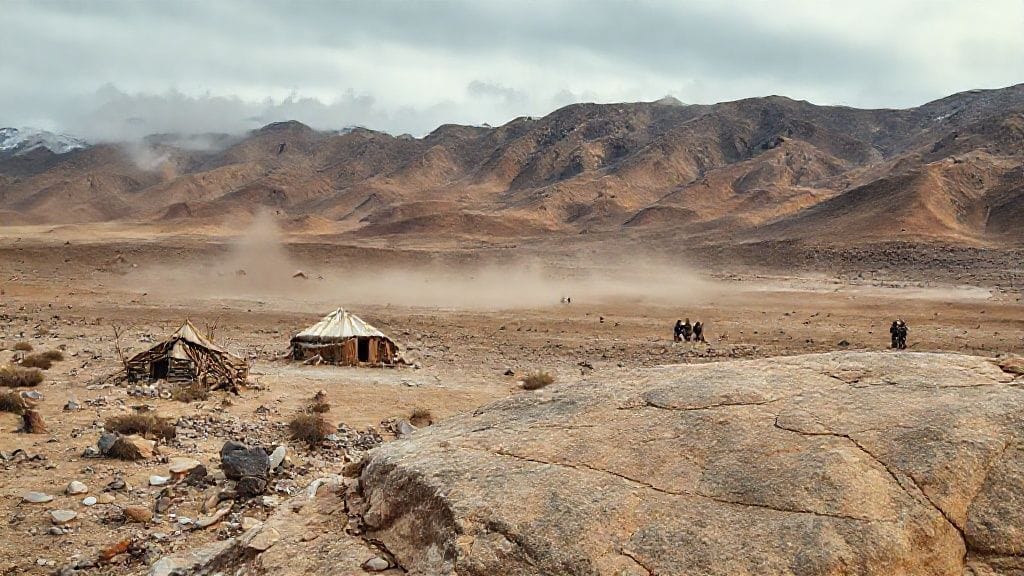
It was a day shrouded in cold silence, the kind only the Gobi-Altai’s vast, rugged landscape could host. In the first hours of December 4, 1957, an invisible threat lurked beneath Mongolia’s arid earth, where the ancient mountains met sweeping steppes. Few could imagine the sudden wrath waiting to rip through this quiet corner of the world—a violent rupture, the land itself groaning in pain. This was no ordinary winter’s day. Beneath the frozen surface, deep forces conspired to forever imprint the region with a scar of stone and sorrow.
The 1957 Gobi-Altai earthquake would become one of Mongolia’s deadliest natural disasters of the 20th century, its seismic roar heard far beyond the country's borders. It was a dramatic reminder that even isolated, sparsely populated lands are not sheltered from the Earth’s tumultuous heartbeat. In this narrative, we journey back to that morning when the ground betrayed its calm and the people of Mongolia faced an ordeal that tested endurance, community, and resilience.
2. Geological Underpinnings of the Gobi-Altai Region
To understand the earthquake, one must first understand Mongolia’s rugged anatomy. The Gobi-Altai range is a complex tectonic tapestry where the vast Eurasian plate endures pressures from multiple directions. Nestled between the Siberian craton to the north and the dynamically changing Tibetan Plateau to the south, the area is a hotbed of seismic activity.
Throughout geological time, the region has experienced immense tectonic forces, folding the earth’s crust into a labyrinth of mountains, basins, and fault lines. The dominant feature involved in 1957 was the Bogd Fault—a strike-slip fault behaving similarly to California’s San Andreas, where lateral motion occurs as parts of the earth scrape past one another.
These movements sometimes build up tremendous energy, only to be released suddenly in violent earthquakes. Such was the case on that December day, when the accumulated strain finally broke free.
3. Mongolia in the 1950s: A Nation in Transition
In the decades following World War II, Mongolia navigated a complex political landscape. Officially the Mongolian People's Republic, it was a socialist state heavily influenced by the Soviet Union’s ideology and political frameworks. Its economy was largely agrarian, with vast nomadic communities blending ancient traditions with the pressures of modernization.
Infrastructure development was limited, especially in the expansive Gobi region, where settlements were few and sparse. Communication lines were fragile, and medical facilities rudimentary. This backdrop of limited resources and political dependence on Moscow informed both the nation’s response to natural disasters and the global perception of Mongolia.
Hence, the earthquake struck not just the earth, but a nation delicately balancing tradition and modernity, isolation and connection.
4. The Calm Before the Storm: December 3, 1957
On the eve of December 4, the Gobi-Altai experienced a strange stillness. The skies were clear, stars puncturing the cold desert night. Local herders coursed their animals to shelter, their breath forming ephemeral clouds in the chilled air. Families huddled around fires, unaware of the violent upheaval about to fracture their world.
Any subtle signs—small ground vibrations or unsettling creek noises—went unnoticed or were attributed to the day’s weariness. Scientists had yet to fully map the area's fault lines; Mongolia’s remote reaches were a blind spot in early seismological monitoring.
Few imagined that beneath their feet, a powerful tectonic dance was reaching its climax.
5. The Fateful Morning of December 4, 1957
At precisely 10:32 a.m. local time, the earth’s surface ruptured with a force measuring an estimated magnitude of 8.1 on the Richter scale. It was an event rare for the region’s recorded history—a devastating jolt that shook mountains, cracked the desert floor, and sent dust clouds billowing into the pale morning sky.
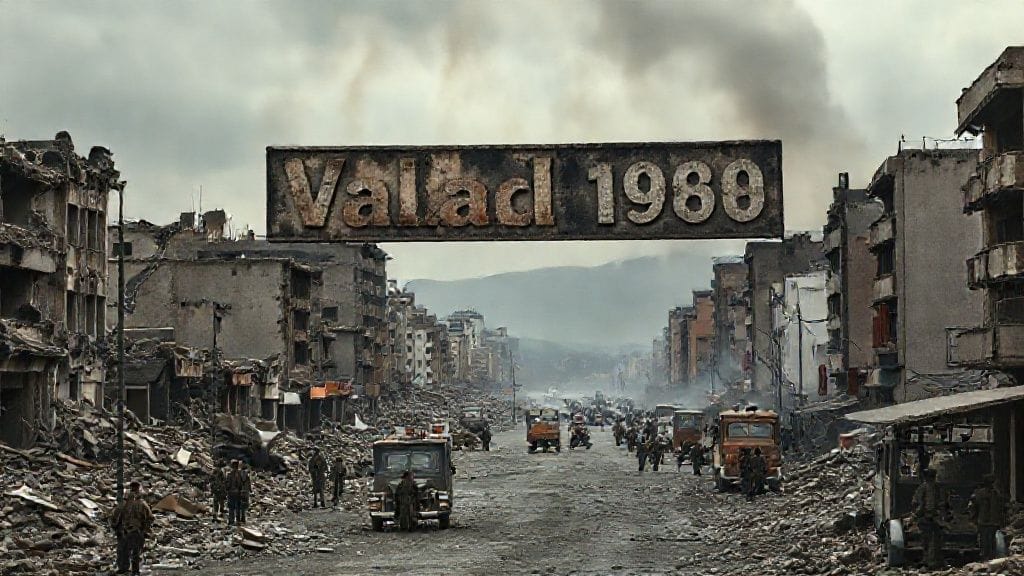
Villages in the earthquake's epicenter—around the Tariat district—were thrown into chaos. Homes, mostly composed of mud bricks and wooden frames, crumbled like sandcastles under the anger of the quake. Terrified inhabitants scrambled for safety, children cried, and the elderly clutched one another in disbelief.
6. The Earth Shakes: The Mainshock Unfolds
This earthquake was not just strong, but complex. Its focal depth was shallow enough to inflict grave surface damage, yet deep enough to be felt hundreds of miles away. Witnesses described waves of shaking that rolled in throbs, sweeping violently from one horizon to the next like an enormous pulse.
In the tens of seconds it lasted, the fault shifted near 12 meters—a tectonic leap that reshaped local topography. Mountainsides slid, river courses altered, and vast fissures split the earth’s face. Such dramatic surface deformation would become a cornerstone case for seismologists studying the mechanics of fault ruptures.
7. Aftershocks and Panic: The Unfolding Crisis
But the nightmare did not end with the initial shock. In the hours and days that followed, dozens of aftershocks rumbled through the Gobi-Altai, their smaller quakes perpetuating fear and destroying remaining structures. For the local nomadic populations, the natural rhythm of life turned into an endless tension, punctuated by tremors that haunted every step.
Communication failures exacerbated panic. With telegraph and telephone lines downed, relief and information flowed slowly. Stories spread, sometimes exaggerated or mistaken, feeding anxiety across the vast Mongolian steppes.
8. Human Stories Amidst the Rubble
Amid the geological catastrophe, it was the human tales that breathed life into cold statistics. One story speaks of a herder named Dorj, who risked hypothermia and aftershocks to rescue his family stranded in a collapsed yurt. Another recounts an elderly woman in Bayankhongor who, despite having lost her home, cooked warm food for neighbors the following day, embodying the Mongolian value of solidarity.
Yet not all stories had happy endings. With official death toll estimates numbering at least 30, many families mourned relatives lost beneath earth and debris, casualties compounded by the harsh winter that ensued.
9. The Mongolian Government’s Immediate Response
The response of the Mongolian People's Republic was swift yet constrained by limited infrastructure. The government mobilized troops and volunteers to affected regions, prioritizing rescue and the distribution of blankets, food, and medicine.
Radio broadcasts informed the populace, urging calm and cooperation. International aid was sought discreetly, reflecting careful political optics amid Cold War sensitivities. The disaster also prompted a reevaluation of national emergency preparedness, planting the seeds for future disaster management policies.
10. Soviet and International Aid: A Cold War Gesture?
Given Mongolia’s position as a Soviet satellite, Moscow’s influence was unmistakable in the relief efforts. Soviet specialists, including seismologists and engineers, were dispatched to assist with assessing damage and rebuilding.
Some historians argue that this aid was as much a political statement as a humanitarian effort—showcasing Soviet solidarity and scientific prowess. However, the support did provide key technologies and expertise, accelerating Mongolia’s understanding of earthquake risk and mitigation strategies in its remote territories.
11. Impact on Infrastructure and Agriculture
The quake devastated fragile infrastructure. Roads became impassable, bridges collapsed, and irrigation systems were ruptured. This disruption struck hard a country dependent on nomadic herding and localized agriculture.
Livestock losses were significant, some estimates suggesting thousands of animals perished in landslides or from exposure following the quake. The economic shock reverberated through rural communities that counted every sheep and camel as vital livelihood.
12. The Role of Indigenous Knowledge in Disaster Response
Interestingly, Mongolian herders’ intimate knowledge of their environment influenced survival strategies. Traditional warnings based on animal behavior—such as agitated horses or birds—may have helped some families take evasive action before the tremors struck in full force.
This interplay between modern scientific understanding and indigenous wisdom exemplifies a unique cultural adaptation to natural hazards, one that contemporary disaster studies increasingly recognize as vital.
13. Seismological Discoveries Stemming from the Earthquake
The 1957 earthquake became a landmark event for seismology. Researchers studied the massive surface rupture to better comprehend strike-slip fault mechanics and seismic hazard in intracontinental settings, which differ fundamentally from those near ocean trenches or subduction zones.
New fault mapping techniques emerged from field studies, making the event a foundational case for understanding continental earthquakes outside well-known zones like Japan or California. The Gobi-Altai quake reminded scientists that nowhere on Earth is free from seismic risk.
14. How the Earthquake Shaped Mongolian National Identity
Natural disasters often forge or reshape national identity, and Mongolia was no exception. The Gobi-Altai earthquake came to symbolize resilience in the face of overwhelming natural forces, reinforcing narratives of endurance embedded deeply in Mongolian culture.
Oral histories and commemorations keep alive the memory of those days, weaving the disaster into the nation’s collective consciousness alongside ancient legends and modern struggles.
15. Lessons Learned and Preparedness for the Future
In the quake’s aftermath, Mongolia prioritized improving seismic monitoring. The country invested in seismographs, trained specialists, and constructed more resilient buildings—though progress was gradual given the vast geography and economic constraints.
Emergency protocols evolved, informed by the tragic lessons of 1957, laying groundwork that would benefit Mongolia in future seismic events.
16. The Gobi-Altai Earthquake in Global Seismological Context
Though relatively unknown globally, the Gobi-Altai event rang alarm bells in seismology circles. It revealed that large, devastating earthquakes could unleash on continental interiors, distant from tectonic boundaries traditionally deemed the most dangerous.
The event helped shift scientific paradigms, highlighting the complexity of tectonic processes beneath stable cratons and sparking interest in rural earthquake risk assessment worldwide.
17. Cultural Memory: Oral Histories and Mongolian Folklore
Mongolian storytelling transformed the earthquake into a mythic event, mixing fact and fable. Elders recall “the earth’s roar” reverberating like a dragon’s breath, and songs commemorate the enduring spirit of the people.
These oral traditions function as living archives, preserving lessons about nature’s power and community solidarity for generations yet unborn.
18. Scientific Advances: Mapping Faults and Fault Dynamics
Detailed surveys of the Bogd Fault and related fractures emerged from intensive studies prompted by 1957. These mapped shifts in earth layers, fault slip rates, and stress accumulation.
The Gobi-Altai earthquake thus became a natural laboratory, advancing methods such as paleoseismology—studying historical earthquakes through sediment and rock analysis—that are now standard in seismic research.
19. The Socio-Economic Aftermath and Recovery Efforts
Recovery took years. Economically, the region struggled with lost livestock and damaged infrastructure. Yet, international aid and government programs gradually revived agriculture and animal husbandry.
Communities adapted, rebuilding stronger dwellings and developing local early warning signs. Recovery narratives emphasize both hardship and hope—an enduring testament to human tenacity.
20. Environmental Consequences: Landscape and Ecosystems
Beyond human toll, the quake reshaped landscapes. Landslides altered slopes, new springs emerged from underground fractures, and river courses shifted, impacting ecosystems.
Such changes reverberated in the delicate balance of the Gobi desert-steppe, with subtle effects on wildlife and vegetation that scientists continue to study.
21. Mongolia’s Earthquake Legacy in the Second Half of the 20th Century
Since 1957, Mongolia has experienced other quakes but none matching the Gobi-Altai disaster’s magnitude and impact. Nevertheless, the country’s seismic awareness has grown steadily, integrated into educational curricula and national policy.
The legacy of 1957 endures as a call for vigilance in a land where ancient forces sleep just beneath the soil.
22. Remembering the 1957 Disaster Today
Today, memorial plaques and local commemorations honor the victims, while scientific conferences revisit the event’s lessons. The earthquake remains a defining episode in Mongolia’s 20th-century history, a poignant reminder of nature’s unpredictability and human endurance.
Through all this reflection, the Gobi-Altai earthquake straddles history and memory, science and spirit.
Conclusion
The 1957 Gobi-Altai earthquake was a profound intersection of earth’s raw power and human vulnerability—a sudden rift in the vast silence of Mongolia’s steppes that reshaped lives, landscapes, and thinking. It illuminated the fragile dependence of human societies on geological quiescence and illustrated the indomitable spirit of a people enduring amidst adversity.
More than just a seismic event, it was a narrative of resilience, tradition mingling with modernity, and a nation learning to read the tremors beneath its feet—not only as threat but as a catalyst for growth and preparedness. The Gobi-Altai earthquake remains lodged in memory, a solemn, living testament to the dance between humanity and the restless planet we call home.
FAQs
Q1: What caused the 1957 Gobi-Altai earthquake?
A1: The earthquake was caused by a sudden slip along the Bogd Fault, a strike-slip fault in Mongolia resulting from tectonic stresses due to the collision of the Eurasian Plate and the Indian Plate's complex movements.
Q2: How strong was the earthquake?
A2: Estimates place the earthquake at approximately magnitude 8.1, making it one of the most powerful intraplate earthquakes recorded in Mongolia.
Q3: How many people were affected or died in the earthquake?
A3: Official death toll estimates are around 30, though exact numbers are uncertain due to sparse population and communication difficulties; many were injured, and thousands were displaced.
Q4: How did the Mongolian government respond?
A4: The government responded with rescue operations, mobilizing troops and volunteers, distributing aid, and alerting the population—though resources were limited, and international aid, primarily from the Soviet Union, supplemented efforts.
Q5: Did the earthquake lead to advancements in seismology?
A5: Yes, the event contributed significantly to understanding strike-slip fault mechanics, continental earthquakes, and spurred development in fault mapping and paleoseismology.
Q6: How is the earthquake remembered in Mongolia today?
A6: It is commemorated through oral histories, memorials, and academic study, symbolizing human resilience and the interaction between Mongolia’s cultural traditions and natural hazards.
Q7: Were there environmental impacts from the quake besides destruction?
A7: Yes, the earthquake altered river courses, triggered landslides, and created new springs, impacting local ecosystems and landscapes.
Q8: How did traditional Mongolian knowledge influence responses to the disaster?
A8: Herders’ observations of animal behavior sometimes predicted or foreshadowed seismic activity, aiding survival strategies in an environment where scientific information was scarce.