Table of Contents
- The Dawn of Disaster: November 1, 1755
- The Earth Trembles: Setting the Stage for Catastrophe
- Lisbon’s Fury: The Great Earthquake and Its Shaking Reach
- The Hidden Enemy: How the Atlantic Tsunami Formed
- Waves of Destruction: The Tsunami’s Arrival on Moroccan Shores
- Agadir Under Siege: A City Swept Away
- Essaouira’s Ordeal: From Calm Harbor to Death Trap
- Eyewitness Accounts: Voices from the Edge of the Cataclysm
- The Scale of the Devastation: Lives Lost and Landscapes Changed
- Political Chaos and Human Tragedy: Moroccan Reactions to the Disaster
- Messengers of Horror: News Travels Across Continents
- The Atlantic Connection: How the Disaster Reshaped Maritime Awareness
- Cultural Ripples: Art, Literature, and Oral Histories Born from the Tsunami
- Scientific Awakening: Early Understandings of Earthquakes and Tsunamis
- The Forgotten Tragedy: Why Morocco’s 1755 Disaster Remains Understudied
- Remembrance and Memorials: Preserving the Memory of the Tsunami
- Lessons from the Past: Historical Tsunamis and Modern Preparedness
- Conclusion: Human Fragility at the Mercy of Nature’s Wrath
- FAQs: Understanding the Morocco Atlantic Tsunami of 1755
- External Resource
- Internal Link
The Dawn of Disaster: November 1, 1755
On the chill morning of November 1, 1755, as dawn stretched its pale fingers over the Atlantic coast of Morocco, life carried on as usual in the promising port towns of Agadir and Essaouira. The scent of roasting fish mingled with the salty ocean breeze, and fishermen prepared their boats for a day at sea. Children chased one another along sandy streets, merchants arranged their goods, and mosques echoed with prayers commemorating All Saints’ Day and religious solemnity felt across Catholic Europe.
But beneath the serene waves of the Atlantic Ocean, the earth was already convulsing. In a heartbeat, the familiar world shattered. The ground roared, the skies darkened—not from clouds, but from the dust of collapsing buildings—and the ocean withdrew violently from the shore as if drawing breath before unleashing a savage return.
From Lisbon to the Moroccan shores, the earth and sea had conspired in a calamity of biblical proportions—the infamous 1755 earthquake of Lisbon coupled with a devastating tsunami that battered cities along the Atlantic coast, including the Moroccan ports of Agadir and Essaouira. While Lisbon’s disaster has been etched into history books and collective memory, the dramatic plight of Morocco’s Atlantic coast remains less chronicled, yet equally profound.
This is the story of a seismic terror that transcended borders and centuries—a story of nature’s fury, human resilience, and forgotten tragedy.
The Earth Trembles: Setting the Stage for Catastrophe
The mid-18th century was an era marked by burgeoning empires, intricate trade networks, and fragile political alliances. The Atlantic coast of North Africa, particularly modern Morocco, was a crossroads where Berber, Arab, Ottoman, and European influences intertwined. Ports such as Agadir and Essaouira (then called Mogador) were gateways to Mediterranean and Atlantic trade, vital to both local economies and European powers seeking spices, textiles, and precious metals.
Geologically, this region lies near the complex collision zone between the African and Eurasian tectonic plates. The seam of these massive plates fractures under tension and pressure, rendering the Atlantic coast vulnerable to occasional seismic upheaval. But nothing in recent memory rivaled the disaster of 1755.
Far to the north, Lisbon, Portugal’s majestic capital, stood upon the edge of the Atlantic, its wealth derived from global exploration and colonial expansion. Unknown to many at the time, a massive earthquake—one of the most powerful in recorded history—was about to strike the Iberian Peninsula, sending shockwaves rattling the earth for hundreds of miles.
For Moroccan coastal towns basking in an early autumn sun, the impending earthquake and tsunami were shrouded in silence—an approaching terror yet invisible.
Lisbon’s Fury: The Great Earthquake and Its Shaking Reach
At approximately 9:40 a.m. on November 1, 1755, the ground beneath Lisbon heaved violently. Estimates suggest the earthquake’s magnitude was around 8.5–9.0, making it one of the strongest earthquakes to strike Western Europe.
Buildings crumbled like sandcastles. Churches, palaces, and marketplaces collapsed, claiming tens of thousands of lives. Fire broke out, fed by broken gas lamps and overturned hearths, spreading quickly and causing devastation that lasted days.
Though centered near Lisbon, the quake’s immense power was felt across Iberia and extended into parts of Morocco. According to records, tremors were intense enough to shake structures along Morocco’s Atlantic coast, signaling the ominous global scale of the event.
But the earthquake was only the prelude. What followed would transform this tragedy into a continental nightmare.
The Hidden Enemy: How the Atlantic Tsunami Formed
From the ocean floor, the violent shifting of the tectonic plates displaced enormous volumes of seawater. This displacement generated a tsunami—a series of powerful waves radiating outward across the Atlantic Ocean.
Unlike normal ocean waves driven by wind, tsunamis are formidable and swift-moving, capable of traveling hundreds of miles per hour in deep water. As these waves approached shallower coastal areas, they slowed but grew exponentially in height and destructive power.
Mariners and coastal dwellers had little understanding of tsunamis in the 18th century. To many, the sudden retreat of the sea from the shore—a failure often reported by survivors—was a terrifying but inexplicable omen, often ignored until the fatal wave crashed down.
The 1755 tsunami, triggered by the Lisbon earthquake, surged not only across Portugal and Spain but also struck the coasts of Morocco—a sobering reminder that nature’s wrath acknowledges no human boundaries.
Waves of Destruction: The Tsunami’s Arrival on Moroccan Shores
On the Moroccan coast, towns like Agadir and Essaouira faced an unexpected and unprecedented assault from the sea. The first warning sign was a sharp withdrawal of ocean waters, sometimes several hundred meters back from the shores, exposing the ocean bed as bewildered residents and fishermen peered outward.
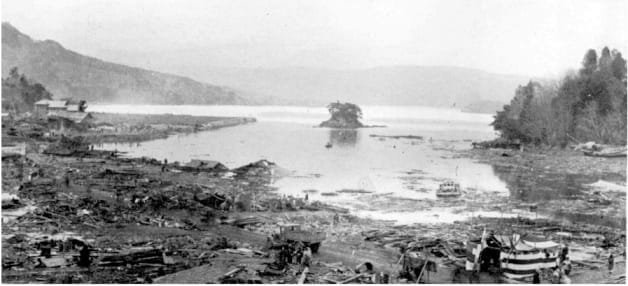
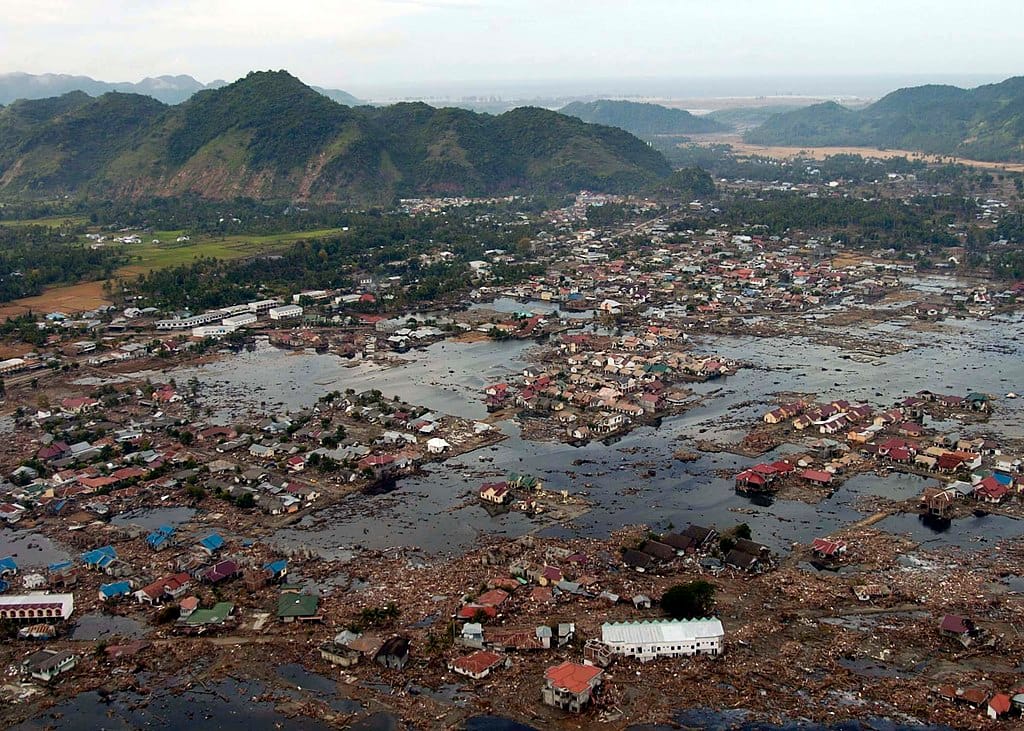
Moments later, monstrous waves thundered back with a force that overwhelmed fortifications, swept away buildings, and drowned entire neighborhoods. Boats moored in the harbors capsized instantly. Streets turned to rivers, homes became tombs, and cries for help were swallowed by the roaring water.
Morocco’s Atlantic coastline was ill-prepared for such a calamity. Unlike Lisbon, where the earthquake itself had already devastated the city, Morocco’s towns faced devastation mainly from the towering tsunami waves, their destruction magnified by coastal geography and the absence of early warning.
Agadir Under Siege: A City Swept Away
Agadir, then a bustling port at the southern edge of Morocco’s Atlantic coast, suffered one of the worst blows. Contemporary records, though sparse, describe a city almost entirely destroyed by the tsunami.
Notably, the holiday had brought many residents and traders to the harbor, making the human toll particularly high. The wave’s force demolished fortifications, tore apart the fleet of fishing and trading vessels, and inundated the marketplace where merchants had set up for the day.
The landscape itself transformed. Beaches were reshaped, harbors silted or scoured, and decades-old buildings reduced to rubble or swept out to sea. Survivors were left to grapple with loss, grief, and the daunting challenge of rebuilding amid a world that seemed irreversibly changed.
Essaouira’s Ordeal: From Calm Harbor to Death Trap
Further north, Essaouira—a strategic port and trading hub—was similarly overwhelmed. Founded officially only a few decades earlier, it was a jewel of the Moroccan coast known for its secure harbor and cosmopolitan character.
The tsunami caught residents off guard. Accounts speak of fishermen who witnessed the terrifying retreat of the ocean, a moment filled with dread but not fully understood. Then came the pounding waves—walls collapsed, docks vanished, and many lost their lives.
The disaster effectively paralyzed trade for months, upsetting economic balance and fomenting social distress. Yet, the resilience of Essaouira’s inhabitants would see the city begin to rise from its watery grave, a testament to human endurance.
Eyewitness Accounts: Voices from the Edge of the Cataclysm
Among the few surviving descriptions are letters from European merchants, Moroccan chroniclers, and sailors recounting the horror and confusion. One Portuguese trader described the sea “retreating as if fleeing some terror,” followed by a “black and endless wall” devouring everything in its path.
A Berber fisherman in the Agadir region told how “the air filled with screams, the earth cracked, and the sea attacked with the fury of a thousand storms.” For many, this disaster was a moment when familiar nature turned alien and monstrous.
Though clothed in the language of superstition and religious interpretation at the time, these accounts offer invaluable human perspectives—images filled with fear, loss, and the fragile pulse of survival.
The Scale of the Devastation: Lives Lost and Landscapes Changed
While estimates of casualty numbers in Morocco remain elusive, historians agree that thousands perished. Entire communities were uprooted; coastal forests and wetlands were destroyed; fishing fleets and trade infrastructure vanished.
Maps drawn years later showed altered shorelines where once bustling towns stood. This physical and demographic upheaval would resonate for decades, impeding economic development and reshaping demographic patterns.
The trauma extended beyond death tolls to include profound displacement, psychological scars, and the destruction of cultural landmarks intertwined with regional identity.
Political Chaos and Human Tragedy: Moroccan Reactions to the Disaster
The Moroccan sultanate, facing threats both internal and external, found itself grappling with the fallout of this natural disaster. With limited communication networks and fragile authority structures along the periphery, delivering aid and orchestrating reconstruction was a nearly impossible task.
Local governors struggled to maintain order as survivors competed for rapidly dwindling resources. Some coastal tribes retreated inland; others tried to salvage trade and fishing operations.
The disaster also shifted political dynamics—as weakened coastal defenses made the region vulnerable to corsair raids and European intervention, complicating the already delicate balance of power.
Messengers of Horror: News Travels Across Continents
News of the Lisbon earthquake and Atlantic tsunami spread swiftly across Europe and beyond, with Moroccan suffering mentioned only sparsely in European dispatches. Yet, among diplomats, merchants, and sailors, awareness grew of the perilous nature of Atlantic navigation and the need for caution.
Moroccan traders and emissaries relayed tragic stories back to imperial courts, while European intellectuals debated the meaning and causes of such disasters—fueling early Enlightenment thought on natural philosophy, theology, and human vulnerability.
The Atlantic Connection: How the Disaster Reshaped Maritime Awareness
For the European powers and North African states whose fates were intertwined by the ocean, the 1755 tsunami was a jarring lesson.
It revealed the vast, interconnected nature of maritime risk and prompted early conversations about coastal defenses, urban planning, and scientific study of seismic events. Navigation charts were reconsidered, and the Atlantic ceases to be seen merely as a route of riches but also a realm subject to sudden cataclysms.
The disaster underscored the Atlantic as a shared space of danger and opportunity where human ambition must contend with natural forces.
Cultural Ripples: Art, Literature, and Oral Histories Born from the Tsunami
While Portugal’s literary and philosophical circles produced an outpouring of reflection—Voltaire’s “Poème sur le désastre de Lisbonne” being among the most famous—Morocco’s cultural response took more oral and localized forms.
Stories and songs passed down generations kept alive memories of the terrifying waves and the communal losses. For centuries, these narratives informed local identity, framed as a testament to endurance and divine will.
In recent years, historians and anthropologists have sought to recover these forgotten voices, illuminating Morocco’s profound connection to the 1755 disaster.
Scientific Awakening: Early Understandings of Earthquakes and Tsunamis
The 1755 disaster catalyzed one of the first systematic attempts to understand earthquake phenomena. European scholars like the Marquis of Pombal in Portugal initiated survey commissions to document damage and investigate causes.
In Morocco and the broader Maghreb, scientific understanding lagged behind but began influencing traditional medicine, architecture, and urban design, introducing new awareness of seismic vulnerability.
Though rudimentary by modern standards, these early studies sparked a shift from fatalism to inquiry, planting seeds for earth sciences centuries later.
The Forgotten Tragedy: Why Morocco’s 1755 Disaster Remains Understudied
Despite its scale and human cost, Morocco’s tsunami disaster has long remained overshadowed by Lisbon’s catastrophe and later colonial histories.
Several factors contributed: limited archival preservation, oral tradition dominance, Eurocentric historical focus, and geopolitical isolation. It is only recently that scholars have begun piecing together archaeological, geological, and documentary evidence to reconstruct the Moroccan side of the 1755 tragedy.
This rediscovery challenges narratives and enriches understanding of Atlantic history as a shared human story of catastrophe and survival.
Remembrance and Memorials: Preserving the Memory of the Tsunami
Today, few physical memorials mark the 1755 tsunami along the Moroccan coastline. Where they exist—simple plaques, oral history projects, or local ceremonies—they serve as vital reminders of nature’s power and human resilience.
Some coastal communities honor the dead annually, blending religious observance with historical remembrance. Educational initiatives have begun integrating the disaster into curricula to foster awareness and preparedness in a region still vulnerable to seismic events.
These memorials ensure that the past remains a living lesson, echoing through time.
Lessons from the Past: Historical Tsunamis and Modern Preparedness
The 1755 Morocco Atlantic tsunami provides important insights for contemporary disaster management. It highlights the need for regional cooperation, improved early warning systems, resilient infrastructure, and public education.
As climate change and coastal urbanization increase risks, understanding historic events like this tsunami anchors modern science and policy to human experience—a crucial step toward reducing future vulnerabilities.
Conclusion
The Morocco Atlantic tsunami of November 1, 1755, remains both a shadowy tragedy and a powerful testament to nature’s indomitable force. In the space of moments, centuries of history, culture, and personal lives were swept away by a convergence of earth’s subterranean violence and ocean’s wrath.
Yet, embedded in this catastrophe lies a story of human endurance—a call to remember, learn, and prepare. The Moroccan ports of Agadir and Essaouira, battered but unbroken, hold within their sands the memory of loss and the unyielding spirit of survival.
This disaster teaches us that history is not merely a record of dates and numbers but the living pulse of human stories buffeted by the tides of time and nature.
FAQs
Q1: What caused the Morocco Atlantic tsunami of 1755?
A1: The tsunami was triggered by the massive earthquake centered near Lisbon, Portugal, caused by tectonic movement along the African and Eurasian plates. The displacement of the ocean floor generated powerful waves that struck Morocco's Atlantic coast.
Q2: How severe was the impact on Moroccan towns like Agadir and Essaouira?
A2: Both cities suffered devastating damage, with entire districts destroyed, thousands of lives lost, and severe disruption to trade and fishing industries.
Q3: Why is the Moroccan disaster less well-known than the Lisbon earthquake?
A3: Factors include limited historical records, focus on European losses, oral rather than written transmission of memories, and the broader dominance of colonial narratives in historiography.
Q4: Did the Moroccan authorities respond effectively to the disaster?
A4: Responses were constrained by limited infrastructure, communication difficulties, and political complexities. Local leaders did their best but faced overwhelming challenges.
Q5: What role did the tsunami play in changing scientific understanding at the time?
A5: The tsunami, coupled with the Lisbon earthquake, spurred early scientific inquiry into seismic activity and natural disasters, marking a shift toward more empirical investigation.
Q6: Are there memorials commemorating the 1755 tsunami in Morocco today?
A6: Although few, some local memorials and oral traditions preserve the memory, increasingly incorporated into educational and cultural efforts.
Q7: What lessons can modern societies learn from the 1755 Morocco tsunami?
A7: The event underscores the importance of disaster preparedness, resilient urban planning, early warning systems, and regional cooperation in managing natural hazards.
Q8: How did this event affect Morocco’s economic and political landscape?
A8: The disaster disrupted maritime trade, strained political control over coastal regions, and contributed to social and economic challenges in the short to mid-term.