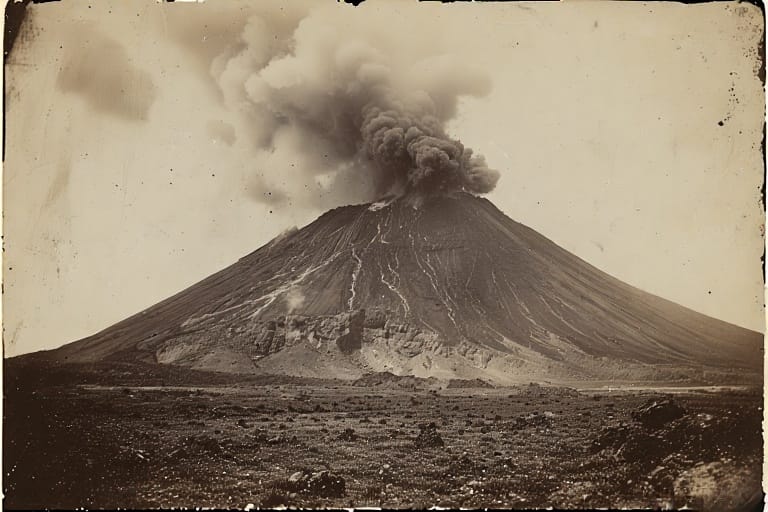
Mount Lamington 1951: A Sudden Fury in the South Pacific
Table of Contents
- Introduction
- The Sleeping Giant of Oro Province
- Geology of Mount Lamington
- Signs Before the Blast
- The January 18 Cataclysm
- Pyroclastic Horror
- Human Toll and Survivors
- Rescue and Relief Missions
- The Role of Australian Scientists
- Long-Term Impact on the Region
- Environmental and Agricultural Effects
- Cultural and Spiritual Ramifications
- Memorials and Remembrance
- Lessons for Modern Volcanology
- Conclusion
- External Resource
- Internal Link
1. Introduction
In the quiet foothills of Papua New Guinea, near Higaturu in the Oro Province, life proceeded with routine calm. That calm shattered on January 18, 1951, when Mount Lamington erupted with apocalyptic power.
An estimated 3,000 people died in a matter of minutes.
2. The Sleeping Giant of Oro Province
✔️ Mount Lamington was not known to be a volcano
✔️ Appeared as an ordinary mountain covered in dense vegetation
✔️ Local communities had no oral history of past eruptions
This made the eruption even more shocking.
3. Geology of Mount Lamington
✔️ Stratovolcano part of the Owen Stanley Range
✔️ Volcanic dome with explosive potential
✔️ Composition rich in andesite and pyroclastic materials
Its explosive potential had been long underestimated.
4. Signs Before the Blast
Days prior to the eruption:
✔️ Seismic activity intensified
✔️ Steam venting and ground rumblings began
✔️ Wildlife reportedly disappeared from nearby forests
Unfortunately, these were not widely recognized as warning signs.
5. The January 18 Cataclysm
✔️ Massive explosion created a new crater
✔️ Pyroclastic flows descended at high speeds
✔️ Villages were wiped off the map
The eruption’s violence left almost no time for escape.
6. Pyroclastic Horror
✔️ Superheated gases and ash engulfed Higaturu and nearby areas
✔️ Temperatures reached over 500°C
✔️ Vegetation incinerated instantly
Survivors described it as “a wall of fire and darkness.”
7. Human Toll and Survivors
✔️ Around 3,000 deaths, many burned or asphyxiated
✔️ Hundreds more injured and orphaned
✔️ Survivors lived in camps for months
Entire families vanished in an instant.
8. Rescue and Relief Missions
✔️ Led by Australian patrol officers and missionaries
✔️ Makeshift hospitals were established in tents
✔️ Aircraft dropped supplies into remote areas
Aid came, but devastation had already taken its toll.
9. The Role of Australian Scientists
✔️ Volcanologist Tony Taylor studied the eruption
✔️ Documented gas emissions, lava domes, and pyroclastic deposits
✔️ His work helped define new volcanic warning systems
Taylor’s research became foundational for Pacific volcanology.
10. Long-Term Impact on the Region
✔️ Oro Province lost vital infrastructure
✔️ Schools, churches, and trade routes destroyed
✔️ Migration patterns changed for decades
The region would take years to recover.
11. Environmental and Agricultural Effects
✔️ Ashfall damaged farmlands
✔️ Rivers contaminated with volcanic debris
✔️ Forests needed decades to regenerate
The local ecosystem suffered long-term harm.
12. Cultural and Spiritual Ramifications
✔️ Traditional beliefs interpreted eruption as divine anger
✔️ Rituals and taboos evolved to honor victims
✔️ Oral histories began preserving the tragedy
The event became a spiritual watershed for local communities.
13. Memorials and Remembrance
✔️ Annual remembrance ceremonies
✔️ Monuments erected in Higaturu and Popondetta
✔️ Survivors share their stories in schools and public forums
The legacy is kept alive through education and cultural pride.
14. Lessons for Modern Volcanology
✔️ Importance of recognizing subtle geological signs
✔️ Need for community education in remote areas
✔️ Value of volcanologist presence in disaster zones
Lamington shaped global strategies for volcanic risk.
15. Conclusion
The Mount Lamington eruption of 1951 was a turning point for Papua New Guinea and the field of volcanology. Its surprise nature, human cost, and enduring lessons continue to influence how the world prepares for such disasters today.
Mountains may sleep for centuries—but when they awaken, they rewrite history.
16. External Resource
🌐 Wikipedia: Mount Lamington Eruption

