Table of Contents
- The Untamed Majesty of Mount Shasta in the Late 18th Century
- The Calm Before the Storm: California’s Natural and Cultural Landscape in 1786
- Indigenous Peoples and the Spiritual Presence of Mount Shasta
- The Quiet Roar: Signs of an Impending Eruption
- The Eruption Unleashed: A Detailed Chronology of the 1786 Event
- Witness Accounts and Oral Traditions Passed Down Through Generations
- The Ash Descent: Effects on Climate and Environment
- The Impact on Flora and Fauna: A Silent Transformation
- Human Loss and Survival: The Toll on Indigenous Communities
- Response and Adaptation: How Local Tribes Coexisted with the Volcano
- Geological Significance: What the 1786 Eruption Reveals About Mount Shasta’s Nature
- The Aftermath in California’s Wilderness: Landscape Changes and Recovery
- Mount Shasta’s 1786 Eruption in the Global Volcanic Context of the 18th Century
- The Eruption’s Legacy in Science and Mythology
- Modern Interpretations: How Today’s Scientists Understand the 1786 Event
- Preservation of Memory: Mount Shasta in Indigenous Oral Histories and Contemporary Culture
- Lessons from the Past: Volcanoes as Agents of Change in Human History
- Conclusion: The Lasting Echoes of Fire from Mount Shasta’s 1786 Awakening
- FAQs – Unearthing the Mysteries of the 1786 Mount Shasta Eruption
- External Resource: Wikipedia Link
- Internal Link: Visit History Sphere
The Untamed Majesty of Mount Shasta in the Late 18th Century
In the crisp morning air of 1786, Mount Shasta stood as a silent, snow-capped sentinel, its towering presence dominating the northern Californian skyline. Cloaked in ancient glaciers and veiled by wisps of cloud, the volcano exuded a kind of serene majesty that belied the ominous forces simmering within. To the people living at its base—the Wintu, Modoc, and other Indigenous tribes—it was a sacred mountain, a sentinel of stories, spirits, and cycles of life and death.
Yet, nature’s tranquility was deceptive. Beneath the surface, molten currents churned restlessly, an imminent roar waiting to break the silence. The eruption that would shake the mountain awake was not merely a geological event; it was destined to weave threads of fear, transformation, and meaning into the fabric of history.
The Calm Before the Storm: California’s Natural and Cultural Landscape in 1786
In the late 18th century, California was a land of spectacular natural diversity, but far from the bustling state it would become centuries later. The Shasta region was thickly cloaked with dense forests of pine, fir, and cedar, sprawling meadows rich with wildflowers, and rivers teeming with salmon. This wilderness was home to Indigenous peoples who lived in harmony with the land, their livelihoods interwoven with seasonal cycles, plant medicines, and spiritual rites connected intimately to the mountains.
European colonization was just beginning to scratch the edges of California’s vast expanse. Spanish missions had been established along the coast, but the inland territories remained largely untouched by direct foreign influence. The 1786 eruption thus struck within a context dominated by Indigenous cultures, their traditions, and their profound respect for the mountain’s formidable power.
Indigenous Peoples and the Spiritual Presence of Mount Shasta
To the natives inhabiting the shadow of Mount Shasta, the mountain was more than a geological formation; it was a living spirit, an axis mundi connecting earth and sky. The Wintu believed Shasta was the home of powerful beings, including the Great Spirit and other guardians of the natural world. Ceremonies and stories reflected a reverence for the mountain as a source of life and a site of profound spiritual significance.
These beliefs shaped how communities interpreted natural phenomena. An eruption was not simply a catastrophe but a message imbued with meaning—warning, purification, or transformation. This spiritual framework influenced their responses to the eruption in 1786, marking it as a critical event in their cultural memory.
The Quiet Roar: Signs of an Impending Eruption
In the weeks and months leading up to the 1786 eruption, subtle but alarming signs began to appear. Residents at a distance noted tremors beneath their feet—first gentle, then growing in intensity. The mountain’s summit, usually serene and snow-laden, emitted faint plumes of smoke and a sulfurous smell that drifted down into the valleys.
Wildlife exhibited strange behaviors: flocks of birds scattered abruptly, and animals seemed restless. Indigenous observers interpreted these phenomena as omens, sensing the mountain’s growing unrest.
The Eruption Unleashed: A Detailed Chronology of the 1786 Event
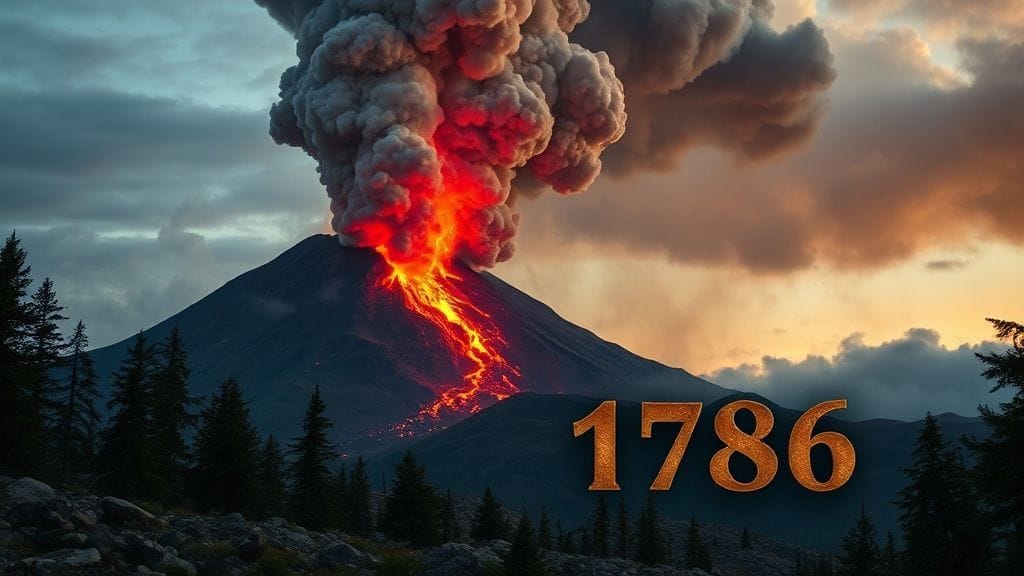
The eruption began in the early hours of a summer morning, catching the local inhabitants in a blend of awe and terror. A fiery explosion shattered the calm, ejecting clouds of ash and blazing rock high into the sky. A hot avalanche of volcanic debris cascaded down the mountain’s slopes, consuming everything in its path and reshaping the landscape violently.
The eruption was characterized by powerful explosive phases, followed by effusive lava flows that slowly oozed from the volcanic vents. The ash cloud darkened the sky for miles around, turning day into night temporarily. Rain of pumice and soot coated the region, leading to poor air quality and widespread disruption.
Though lacking precise historical scientific recordings, geological evidence and oral histories align to paint a picture of a multi-week cataclysm, after which the mountain gradually returned to relative dormancy.
Witness Accounts and Oral Traditions Passed Down Through Generations
No written European records exist to describe the eruption firsthand, but the oral testimonies from the local Indigenous peoples preserve vivid memories of the event. Stories tell of the mountain’s fierce anger, of smoke turning the sky black, and of the earth trembling beneath the feet of those who fled.
One Wintu narrative describes the eruption as a manifestation of the Great Spirit’s wrath, expressing both destruction and renewal. These oral traditions offer invaluable insight, painting an emotional and spiritual canvas that supplements the scientific understanding of the eruption.
The Ash Descent: Effects on Climate and Environment
The volume of volcanic ash expelled was immense. Experts estimate that the eruption scattered ash particles across tens of thousands of square miles, blanketing forests and meadows under a gritty, gray layer. This fallout altered sunlight penetration, affecting photosynthesis and disrupting local ecosystems.
Climatic anomalies were subtle but notable, with temporary cooling and increased precipitation patterns recorded in geological proxies in the broader Pacific Northwest region. Though not a global catastrophe like later eruptions (e.g., Tambora in 1815), Mount Shasta’s 1786 eruption was a regional force that reshaped the environment materially and atmospherically.
The Impact on Flora and Fauna: A Silent Transformation
Forests around Mount Shasta bore the brunt of the eruption's fiery breath. Fires flared amidst the ash fall, consuming underbrush and some older stands of trees. Yet this destruction laid the groundwork for ecological renewal. Pioneer species—fireweed, grasses, and certain conifers—colonized the newly exposed volcanic soils, changing the ecological succession patterns for decades.
Fauna faced immediate peril, with many animals dislocated or killed by lava flows and ash clouds. However, survivors repopulated the area quickly, leading to shifts in species distribution and behavior. The eruption initiated a slow but inexorable transformation, turning tragedy into an emblem of nature’s resilience.
Human Loss and Survival: The Toll on Indigenous Communities
The eruption's toll on the Indigenous populations was profound but not fully quantifiable. Some tribes may have suffered casualties or displacements due to lava flows and ash storms. Entire settlements likely relocated to safer grounds as survival strategies.
Yet, accounts emphasize the resilience and adaptability of these communities. Through ancestral wisdom, spiritual guidance, and intimate knowledge of their environment, the tribes endured. Their experience offers a narrative of human fortitude in the face of nature’s overwhelming power.
Response and Adaptation: How Local Tribes Coexisted with the Volcano
Rather than fleeing permanently, Indigenous peoples incorporated the eruption into their cultural landscape. Seasonal migrations adjusted to avoid dangerous periods; new rituals emerged to honor the mountain’s changed face. Oral histories became stronger custodians of memory, ensuring subsequent generations understood both the perils and gifts breathed out by Mount Shasta.
This communal adaptation underscores a broader theme of coexistence with natural forces, rather than futile resistance.
Geological Significance: What the 1786 Eruption Reveals About Mount Shasta’s Nature
From a geological perspective, the 1786 eruption is pivotal in understanding Mount Shasta’s volatility. Classified as a stratovolcano, Shasta's eruptive behavior involves cycles of explosive eruptions and quieter lava effusions.
Analysis of volcanic deposits linked to 1786 informs modern volcanologists about the magma composition, eruption styles, and potential hazards. This knowledge is crucial for assessing current and future risks in a region now significantly populated.
The Aftermath in California’s Wilderness: Landscape Changes and Recovery
Post-eruption, the Mount Shasta region bore scars visible for decades. New lava domes altered drainage patterns, ash layers sealed soils, and forests regrew differently. Over time, the landscape healed, but the traces of fire and stone remained etched into the geography—silent reminders of the mountain’s transient fury.
This renewal process illustrates nature’s capacity for recovery, weaving destruction into the ongoing cycle of life.
Mount Shasta’s 1786 Eruption in the Global Volcanic Context of the 18th Century
Volcanic activity in the 1700s was not uncommon, but Mount Shasta’s 1786 eruption stands out as one of the more significant North American events before the Industrial Age. It predates larger explosions such as Laki (1783) and Tambora (1815), offering a relative scale of the incremental geological storytelling that shapes continents and climates.
This eruption fits into a larger chronology of volcanic impacts that influenced human and environmental history well beyond local borders.
The Eruption’s Legacy in Science and Mythology
The 1786 eruption left a dual legacy. Scientifically, it spurred interest in American volcanology as explorers and settlers later encountered Mount Shasta’s marked landscape. Mythologically, it reinforced Indigenous narratives of creation, destruction, and spiritual connection—stories that continue to resonate in cultural revitalization movements today.
Mount Shasta became not just a mountain of stone and fire but a repository of collective memory bridging science and spirit.
Modern Interpretations: How Today’s Scientists Understand the 1786 Event
With advancements in geochronology, satellite imaging, and seismology, today's scientists reconstruct the 1786 eruption with increasing accuracy. By studying volcanic deposits, ash layers, and oral histories, modern research paints a comprehensive picture of the eruption’s magnitude and dynamics.
This ongoing investigation enhances disaster preparedness and deepens appreciation for the mountain’s complex life.
Preservation of Memory: Mount Shasta in Indigenous Oral Histories and Contemporary Culture
Today, Mount Shasta remains integral to Indigenous identity and cultural activism. The 1786 eruption stories persist in ceremonies, songs, and art, serving as poignant links to ancestors and the earth’s timeless rhythms.
Contemporary environmental groups also champion the mountain’s sacredness and ecological importance, blending heritage and conservation in a powerful testament to respect for the natural world.
Lessons from the Past: Volcanoes as Agents of Change in Human History
The 1786 eruption teaches enduring lessons: the fragility of human life in the face of natural forces, the resilience born of adaptation, and the intertwined nature of geological and cultural histories.
Volcanoes are more than hazards; they are powerful agents sculpting landscapes, climates, and civilizations. Understanding their past outbursts enriches our capacity for future coexistence.
Conclusion: The Lasting Echoes of Fire from Mount Shasta’s 1786 Awakening
Mount Shasta’s 1786 eruption was a fiery chapter etched in ash, rock, and memory. It shattered calm, tested survival, and forged new narratives binding people to place and spirit. Though centuries have passed, the echoes of that violent awakening continue to ripple—through science, story, and the enduring heartbeat of the mountain itself.
As we gaze up at Mount Shasta today, serene and snow-draped, we glimpse not just a peak of rock, but a witness to history’s fiery dance—a symbol of nature’s might and humanity’s enduring resilience.
FAQs
Q1: What caused the Mount Shasta eruption in 1786?
The eruption was caused by the movement of magma beneath Mount Shasta’s stratovolcano structure, triggered by tectonic activity along the Cascadia Subduction Zone, which feeds magma into the region.
Q2: How severe was the eruption compared to other historic volcanic eruptions?
While significant regionally, the 1786 eruption was moderate in scale compared to global events like the 1815 Tambora eruption. It featured explosive phases and lava flows causing environmental disruption and local devastation.
Q3: Were there any recorded casualties?
Direct historical records of casualties do not exist, but Indigenous oral accounts suggest displacement and possible loss of life among local tribes.
Q4: How did Indigenous peoples interpret the eruption?
They viewed the eruption as a spiritual event, a message from powerful ancestral spirits, integrating it deeply into their cosmology and cultural practices.
Q5: Did the eruption affect the climate?
The ash cloud caused localized cooling and altered weather patterns temporarily, but unlike larger eruptions, it did not trigger global climatic changes.
Q6: What geological evidence remains today of the 1786 eruption?
Lava flows, ash deposits, and volcanic domes on Mount Shasta’s slopes serve as geological markers of the 1786 event.
Q7: How is Mount Shasta regarded today in terms of volcanic risk?
Mount Shasta is monitored as an active volcano, with modern technology aimed at early detection of future eruptions to protect surrounding communities.
Q8: How do present-day communities honor the eruption in culture or memory?
Through Indigenous traditions, storytelling, ceremonies, and environmental stewardship, the 1786 eruption remains a powerful symbol of resilience and connection to the land.

