Table of Contents
- The Calm Before the Fury: Early Signs at Mount St. Helens
- Geological Prelude: Understanding a Restless Giant
- The Birth of the 2004 Eruption Sequence
- February 2004: The First Tremors Shake Washington
- A Veil of Ash and Steam: Initial Explosive Activity
- Underground Fireworks: The Growing Lava Dome
- Monitoring Mount St. Helens: Science on High Alert
- Local Communities on Edge: Fear, Preparation, and Resilience
- The Human Face of the Eruption: Eyewitness Accounts
- The Role of the United States Geological Survey (USGS)
- Nature’s Fury and Fragility: Ecological Impacts of the Dome Growth
- A New Chapter in Volcanic History: Comparing 1980 and 2004 Eruptions
- Media Frenzy: How the World Watched a Volcano Awaken
- The Economic Toll: Timber, Tourism, and Transportation Disruptions
- Lessons Learned: Advances in Volcanology Post-2004
- The Slow Process of Renewal: Recovery in the Shadow of the Volcano
- Cultural Reverberations: Mount St. Helens in Local and Popular Imagination
- The End of an Episode: Signs the Volcano Had Settled Down
- Legacy of the 2004 Eruption: Scientific, Environmental, and Social Outlooks
- Mount St. Helens Today: A Living Laboratory and Cautionary Tale
- Conclusion: The Eternal Dialogue Between Humans and Volcanoes
- FAQs about Mount St. Helens’ 2004 Eruption
- External Resource
- Internal Link
The Calm Before the Fury: Early Signs at Mount St. Helens
In the chill of the Pacific Northwest winter, Mount St. Helens lay dormant but not silent. Far from the explosive catastrophe that scarred the region in 1980, the mountain had since sunk into a deceptive quiet. Yet beneath its weathered slopes, the earth whispered secrets—small tremors, faint plumes of steam, subtle uplift—that hinted at a brewing storm still half a continent away in geological time. February 2004 marked the moment when those whispers turned into a resounding announcement: the volcano was waking once again.
The first foreshocks echoed through the snow-laden forests of Washington, unsettling a landscape still healing from the devastating 24-year-old eruption. For residents, scientists, and park rangers, the dormant giant’s murmurs forced a reckoning with the uneasy reality that nature’s rhythms never cease. Mount St. Helens, a towering sentinel with a violent past, was gesturing toward a new chapter.
Geological Prelude: Understanding a Restless Giant
Long before the explosive spectacle of 2004, Mount St. Helens had already made its mark in the annals of volcanic activity—a youthful stratovolcano rising to 9,677 feet, crowned by a crater formed during the cataclysmic eruption of May 18, 1980. That event had overturned the surrounding ecology, reshaped the landscape, and claimed lives, imprinting an indelible scar on the collective consciousness.
But even before 1980, the volcano had exhibited signs of its volatile temperament. Located within the geologically restless Cascade Range, a string of volcanoes born from the subduction of the Juan de Fuca plate beneath the North American plate, Mount St. Helens stood as both a testament to and a harbinger of the region’s tectonic unrest.
By the early 2000s, geologists closely monitored the volcano’s subtle activity. Decades of relative calm could lull one into a false sense of security, but Mount St. Helens was a master of patience, storing energy deep within its magma chambers, waiting for the precise moment to unveil its power once more.
The Birth of the 2004 Eruption Sequence
It was on February 1, 2004, that the first unmistakable signs of renewal appeared. Local seismic stations registered low-magnitude earthquakes deep beneath the volcano, a jittery dance of molten rock shifting underground. Scientists recorded swarms of small quakes that escalated in frequency over the following weeks, foreshadowing magma’s persistent push toward the surface.
A subtle but relentless deformation of the volcano’s north flank was noted, the mountain’s skin slowly bulging and cracking as molten rock accumulated in a growing underground dome. Satellite images captured tiny changes in the landscape, like the swelling of a living creature preparing to breathe fire again.
This sequence was not a sudden awakening but a gradual crescendo. It was nature’s slow, deliberate unveiling of power—the kind of geological story that requires patience to read and interpret.
February 2004: The First Tremors Shake Washington
By mid-February, the tremors became impossible to ignore. The US Geological Survey (USGS) reported over a thousand small earthquakes within days, sending shockwaves through the scientific community and the nearby towns nestled in the volcano’s shadow.
Ash emissions began subtly, as delicate puffs of steam mingled with volcanic gases at the crater’s rim, painting a ghostly veil above the mountain. This smoke was a harbinger, warning of magma making its way upward and steam pressurizing beneath the core.
The local governments started implementing emergency response plans, urging residents to prepare for possible evacuations. Schools conducted drills, and businesses reviewed contingency measures. Despite the tension, daily life sought normalcy—a paradox found wherever nature’s unpredictability confronts human routine.
A Veil of Ash and Steam: Initial Explosive Activity
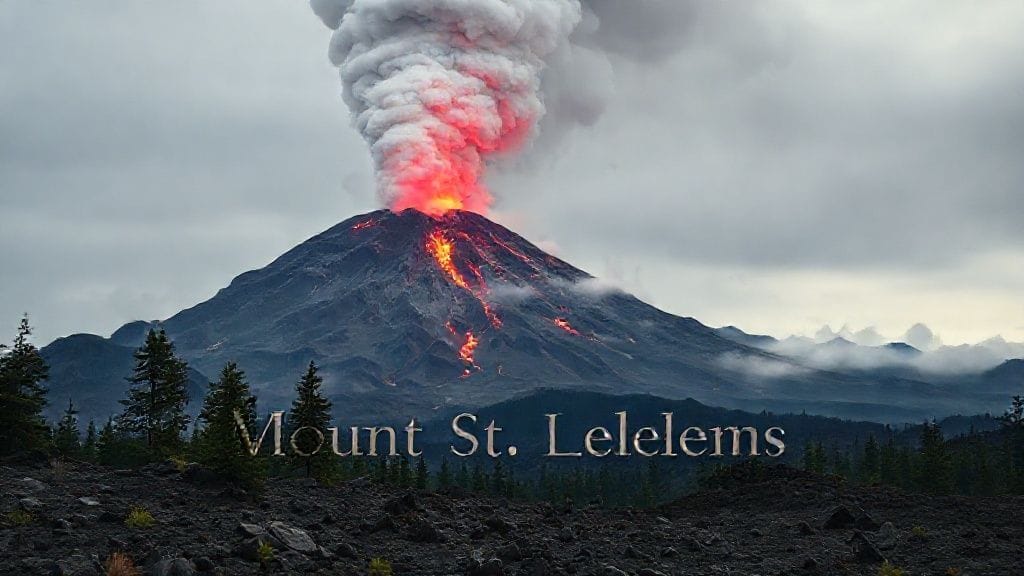
On March 8, 2004, the volcano’s crust ruptured with a faint explosion that scattered ash clouds over nearby forests. Small eruptions, though nowhere near the scale of 1980, marked the arrival of molten rock at the surface. As ash settled over the landscape, the eruption transitioned from a silent underground struggle into one that visibly altered the environment.
This intermittent explosive activity produced ash plumes rising several thousand feet, disrupting air traffic and cloaking the surrounding region in a fine, gray dust. For the volcano watchers and residents alike, the spectacle was both awe-inspiring and a reminder of nature’s capacity for disruption.
Underground Fireworks: The Growing Lava Dome
Beneath the swirling clouds of ash, a new lava dome was taking shape in the crater’s heart — a slow, oozing flow of viscous magma pushing upward, solidifying as it cooled. Scientists peered with binoculars and employed sensitive infrared equipment to track the dome’s growth over the weeks.
Unlike the violent lateral blast that had felled forests in 1980, the dome extrusions were deliberate, like swelling lumps of viscous clay rising over months. With each advance, the Earth’s surface deformed slightly more, and the risk of dome collapse or pyroclastic flows remained a constant threat.
This phase underscored the complexity of volcanic behavior — even a less explosive eruption could wield devastating force if monitored poorly or misunderstood.
Monitoring Mount St. Helens: Science on High Alert
Scientists assigned to Mount St. Helens found themselves at the forefront of a high-stakes operation. Instruments measuring seismic activity, ground deformation, gas emissions, and thermal images were pushed to their limits, feeding real-time data to volcanologists attempting to decode the mountain’s message.
The USGS Volcano Hazards Program, in collaboration with universities and local authorities, maintained continuous vigilance. The eruption sequence emerged as a textbook case of how modern technology could enhance eruption prediction and response—yet nature stayed unpredictable.
A delicate balance was maintained between caution and alarm, between scientific curiosity and the imperative to protect human life.
Local Communities on Edge: Fear, Preparation, and Resilience
For the communities surrounding Mount St. Helens—towns like Castle Rock, Toutle, and Woodland—the volcano’s reawakening was a stark reminder of past trauma. Older residents recalled the 1980 eruption with a mix of horror and respect, while younger generations grappled with a different fear: an invisible threat lurking beneath their feet.
Emergency services coordinated evacuation routes; schools educated pupils about volcanic hazards; and local media provided daily updates. But underlying these efforts was a persistent mixture of anxiety and hope—the hope that this eruption would be minor, manageable, unlike the destructive history written in ash and mudflows.
The resilience of these communities was tested anew, yet their determination to live alongside the volcano remained unbroken.
The Human Face of the Eruption: Eyewitness Accounts
Amid the scientific data and official reports were human stories that captured the eruption’s emotional toll. “I remember looking up and seeing the ash cloud darken the sky like a storm,” recalled a local farmer. “We all knew what it meant—the mountain was angry again.”
Park rangers spoke of restless nights watching over fragile trails. Pilots flying over St. Helens for research missions described surreal views of the smoking crater and bubbling lava dome — a reminder of Earth’s primal forces.
These testimonies give voice to the eruption, transforming sterile numbers into lived experience, connecting readers to the mountain’s reawakening on a profoundly human level.
The Role of the United States Geological Survey (USGS)
The USGS stood at the center of the response effort, balancing the demands of public safety, scientific inquiry, and media scrutiny. Their team of volcanologists became interpreters of subterranean tremors and steam plumes, crafting forecasts that could save lives.
By issuing timely warnings and coordinating with emergency managers, the USGS helped avert disasters. Their work highlighted the vital importance of government investment in geoscience and the benefits of long-term monitoring for active volcanoes.
Nature’s Fury and Fragility: Ecological Impacts of the Dome Growth
While the human drama unfolded, nature bore witness to the eruption’s ecological consequences. The ashfall affected vegetation, water quality, and animal habitats. Yet paradoxically, volcanic activity is also a creator of fertile soil and new landscapes.
Scientists documented early signs of ecological recovery around the new dome, noting pioneer species like mosses and lichens colonizing fresh volcanic deposits. Mount St. Helens, with its cycles of destruction and rejuvenation, offered a vivid lesson in nature’s resilience.
A New Chapter in Volcanic History: Comparing 1980 and 2004 Eruptions
The 2004 eruption was often framed in the shadow of 1980’s cataclysm, a benchmark of volcanic power etched in American history. Yet the two events were markedly different—1980’s lateral blast released massive ashfalls and lahars, while 2004’s activity was characterized by dome-building and smaller ash emissions.
This comparison enriched the scientific community’s understanding of volcanic behavior and pointed to the varied faces of eruption styles. Both events underscored the constant volatility of stratovolcanoes and the need for vigilance.
Media Frenzy: How the World Watched a Volcano Awaken
Mount St. Helens’ rekindled activity sparked a media frenzy. From local news to international outlets, cameras and reporters descended upon the region. The volcano featured in documentaries, live feeds, and newspapers, transforming it into a global spectacle once more.
This widespread attention highlighted society’s complex fascination with natural disasters—a mixture of fear, curiosity, and the desire to witness the sublime forces shaping our planet.
The Economic Toll: Timber, Tourism, and Transportation Disruptions
The eruption’s economic impact rippled through multiple sectors. Timber harvesting—already diminished since 1980—was further constrained by ashfall and access restrictions. Tourism fluctuated, with visitors drawn by volcanic intrigue but deterred by safety concerns.
Road closures and air traffic delays underscored the ripple effects a volcano’s agitation can have on daily commerce. Yet communities also leveraged the event for educational tourism, embracing their role as living crossroads between human activity and geological power.
Lessons Learned: Advances in Volcanology Post-2004
The 2004 eruption propelled advances in volcanic science. Real-time monitoring technology improved, predictive models grew more sophisticated, and emergency response protocols were refined.
The event reaffirmed the value of interdisciplinary collaboration—geologists, ecologists, emergency planners—and the necessity of public education for hazard preparedness.
The Slow Process of Renewal: Recovery in the Shadow of the Volcano
As eruptions waned in mid-2005, attention shifted toward recovery. Ecological succession accelerated around the crater, local communities expanded adaptation efforts, and scientists continued to monitor ongoing changes.
The scars left by the lava dome and ash deposits would take decades to fully heal, but life—both human and natural—showed remarkable tenacity.
Cultural Reverberations: Mount St. Helens in Local and Popular Imagination
Beyond science, Mount St. Helens became a symbol—of destruction, renewal, and the boundary between civilization and wilderness. Tribes native to the region revered the mountain as a sacred place; their stories intertwined with volcanic fire and earth’s unpredictable temperament.
Popular culture echoed this reverence and dread, with Mount St. Helens inspiring books, films, and art, reminding humanity of its fragile place amid temptation and terror.
The End of an Episode: Signs the Volcano Had Settled Down
By late 2005, the seismic activity had diminished, the volcanic plume faded, and the lava dome’s growth slowed to a stop. The mountain had settled, at least temporarily, returning to a state of quiescence that invited both relief and vigilance.
Scientists continued to emphasize that dormancy at volcanoes is never permanent—Mount St. Helens remains a sleeping giant, a restless presence in the Cascades.
Legacy of the 2004 Eruption: Scientific, Environmental, and Social Outlooks
The 2004 eruption left a multi-layered legacy—new scientific knowledge, renewed respect for natural hazards, economic challenges, and strengthened community bonds. It demonstrated the ongoing dialogue between humans and dynamic Earth, underscoring centuries of coexistence punctuated by sudden disruption.
It also fostered a renewed sense of stewardship and awareness, inspiring preparations for future events that will inevitably come.
Mount St. Helens Today: A Living Laboratory and Cautionary Tale
Today, Mount St. Helens stands as both a tourist attraction and a research hotspot. The volcano’s slopes, marked by fresh rock and scarred forests, attract scientists eager to study volcanic processes and environmental recovery.
It serves as a vivid reminder: Earth’s landscapes are alive, volatile, and humbling—inviting humans to listen closely to the planet’s unfolding stories.
Conclusion
Mount St. Helens’ 2004 eruption was not merely a geological event but a profoundly human one. It echoed through the communities nestled in its shadow, challenged the skills of scientists, and reignited a complex relationship between nature’s power and humanity’s resolve. Unlike the dramatic cataclysm of 1980, this eruption’s slow rhythm allowed for adaptation, reflection, and learning—a living narrative of resilience and respect.
In the quiet aftermath, as the ashes settled and the lava cooled, Mount St. Helens remained an enduring symbol: a potent reminder that beneath every tranquil mountain may lie a restless spirit, and that the dance of destruction and renewal shapes the very heart of our planet.
FAQs about Mount St. Helens’ 2004 Eruption
Q1: What triggered the 2004 eruption of Mount St. Helens?
The eruption was triggered by a buildup of magma beneath the volcano’s north flank, causing increased seismic activity, ground deformation, and ultimately the extrusion of a new lava dome.
Q2: How did the 2004 eruption compare to the infamous 1980 eruption?
Unlike the explosive lateral blast in 1980, the 2004 eruption was characterized by dome-building and intermittent ash emissions, making it less violent but still closely monitored due to hazards like dome collapse.
Q3: What role did local communities play during the eruption?
Communities engaged in preparedness activities, followed evacuation plans, and collaborated with authorities to reduce risks, demonstrating resilience and a commitment to living alongside active geology.
Q4: How did scientists monitor the volcanic activity?
Using seismic sensors, GPS stations, satellite imagery, gas analyzers, and thermal cameras, scientists tracked signs of unrest and provided timely forecasts.
Q5: What were the main ecological impacts of the eruption?
Ashfall affected vegetation and waterways, but also initiated volcanic soil formation and pioneer species colonization, showcasing nature’s cycles of destruction and renewal.
Q6: How did the eruption affect the local economy?
The eruption disrupted timber harvesting, hindered tourism and travel, but also created opportunities for geotourism and scientific research.
Q7: What lessons were learned from the 2004 eruption?
Improved monitoring technology, better emergency protocols, and enhanced public awareness were key takeaways, helping prepare for future volcanic activity.
Q8: Is Mount St. Helens still active today?
Yes, Mount St. Helens remains an active volcano monitored closely by scientists, and future eruptions remain possible.

