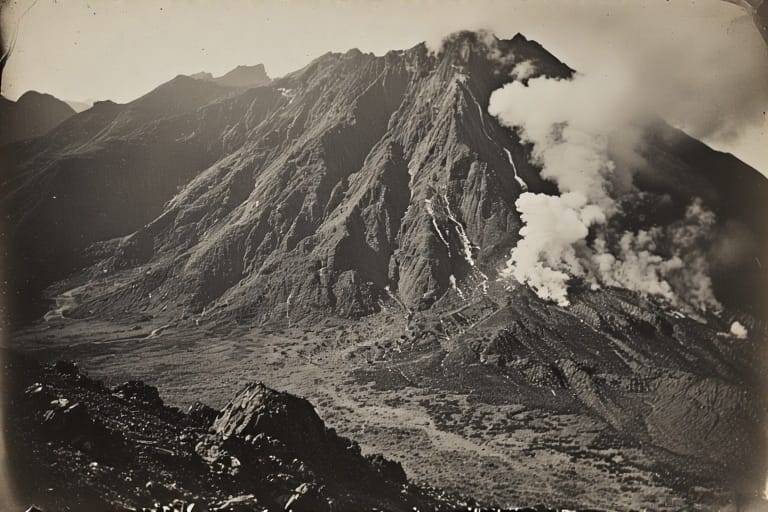
Mount Teide 1909: Chinyero’s Fiery Awakening
Table of Contents
- Introduction
- Teide: A Sleeping Giant of the Atlantic
- The Chinyero Vent and the 1909 Eruption
- Volcanic Activity and Timeline
- Impact on Local Communities
- Geological Features and Lava Flow
- Scientific Observation and Study
- Cultural Significance and Memory
- Long-Term Effects on Tenerife
- Teide National Park and Preservation
- Conclusion
- External Resource
- Internal Link
1. Introduction
On November 18, 1909, a relatively quiet corner of the Atlantic Ocean suddenly rumbled to life. Mount Teide, Tenerife’s towering stratovolcano, released lava through its Chinyero vent, marking the last volcanic eruption on the island to date. While not the most catastrophic event in history, the eruption left a deep impression on local culture, environment, and scientific records.
2. Teide: A Sleeping Giant of the Atlantic
✔️ Elevation: 3,715 meters (12,188 feet)
✔️ Spain’s highest peak and a UNESCO World Heritage site
✔️ Central feature of Teide National Park
Though often tranquil, Teide is still classified as active due to its historical eruptions.
3. The Chinyero Vent and the 1909 Eruption
✔️ The eruption occurred from a secondary vent: Chinyero
✔️ Located on the northwestern flank of Teide
✔️ Lasted from November 18 to December 27, 1909
The eruption was Strombolian in nature, with mild explosivity and extensive lava emissions.
4. Volcanic Activity and Timeline
✔️ November 18: Tremors began and fissures opened
✔️ Lava flowed slowly across pine forest terrain
✔️ Final emissions ceased by late December
The lava flow extended roughly 3 km, though no lives were lost.
5. Impact on Local Communities
✔️ Villages near Santiago del Teide were threatened
✔️ Evacuations carried out with assistance from the Spanish army
✔️ Some agricultural land was scorched
Despite the scale, the population showed resilience in the face of nature.
6. Geological Features and Lava Flow
✔️ Lava was basaltic and highly viscous
✔️ Formed unique fields still visible today
✔️ The flow did not reach the sea, halting inland
Today, these flows are studied by geologists and tourists alike.
7. Scientific Observation and Study
✔️ The eruption was one of the first documented in Spanish scientific literature
✔️ Geologists and naturalists from mainland Spain visited the site
✔️ Observations contributed to early volcanology in Europe
Reports helped build interest in Teide’s seismic monitoring.
8. Cultural Significance and Memory
✔️ The event is remembered in local oral history
✔️ Religious processions were organized to pray for safety
✔️ Annual commemorations still occur in nearby towns
The eruption reinforced the islanders’ deep relationship with the volcano.
9. Long-Term Effects on Tenerife
✔️ Created new volcanic terrain within protected areas
✔️ Boosted scientific and tourist attention
✔️ Increased investment in geological monitoring
Today, Tenerife has a robust volcanic emergency plan thanks in part to this historical experience.
10. Teide National Park and Preservation
✔️ Park established in 1954, now a UNESCO site
✔️ Includes lava fields from the 1909 eruption
✔️ Conservation efforts protect both ecology and geodiversity
Visitors can walk trails that traverse the once-fiery path of Chinyero.
11. Conclusion
The 1909 eruption of Mount Teide’s Chinyero vent may not have taken lives or reshaped nations, but it left a legacy still visible in Tenerife’s stunning volcanic landscape. It reminded locals and the world that even sleeping giants can stir, and when they do, the earth records their message in stone.
12. External Resource
🌐 Wikipedia: Chinyero eruption

