Table of Contents
- A Night Shattered: The Moment the Sea Roared
- The Restless Plates Beneath Japan’s Shores
- Japan before the Disaster: A Nation on the Edge
- The Nankai and Kii Channel Regions: Vulnerable Lands
- The Fateful Evening of December 24, 1854
- Tremors and Fury: The Earthquake That Shook Old Japan
- Birth of the Tsunami: Waves Racing through the Kii Channel
- Scenes of Destruction: Coastal Towns Engulfed by the Sea
- Eyewitness Accounts: Voices from the Abyss
- The Immediate Aftermath: Rescue, Loss, and Confusion
- The Role of Local Leadership Amid Chaos
- Cultural and Religious Interpretations of the Disaster
- The Disaster in Context: The Ansei Era’s String of Calamities
- Scientific Understanding: Earthquake and Tsunami Knowledge in 19th Century Japan
- The Rebuilding Effort: Resilience in the Face of Nature’s Wrath
- Lessons Drawn: How the 1854 Nankai–Kii Channel Tsunami Shaped Future Risk Awareness
- Lasting Impressions in Japanese Arts and Literature
- The Tsunami’s Role in Japan’s Seismic Research Evolution
- Global Impact and Recognition of Japan’s Vulnerability
- Remembering the 1854 Tsunami Today: Memorials and Modern Awareness
1. A Night Shattered: The Moment the Sea Roared
On the cold, quiet evening of December 24, 1854, as families in southern Japan prepared for the seasonal rest, a sudden and cataclysmic rupture tore the earth beneath the Nankai and Kii Channel regions. The ocean, usually a source of bounty and sustenance, betrayed the centuries-old relationship between the sea and those who lived along its shores. Before the stroke of midnight, towering walls of water surged inland with terrifying speed, swallowing villages whole and altering the coastline forever. It was a night when calm turned to chaos, and the sky itself seemed to mourn the calamity that had befallen the Japanese archipelago.
The Nankai–Kii Channel tsunami, triggered by a massive undersea earthquake, was not just a natural event; it was a profound moment that etched itself into the collective memory of a nation already beset by turmoil. As the waves clawed at the land, the human stories of loss, resilience, and hope emerged from the rising tide. For many, it was a moment of reckoning—one that revealed the terrifying power of nature and the fragility of human life.
2. The Restless Plates Beneath Japan’s Shores
Japan’s geographical destiny is written in the restless tectonic plates beneath its foundations. Sitting at the convergence of four major plates—the Pacific, Philippine Sea, Eurasian, and North American plates—the archipelago is a stage perpetually set for the drama of earthquakes and tsunamis. The Nankai Trough, off the southern coast of Honshū, is a subduction zone where the Philippine Sea Plate slips beneath the Eurasian Plate, locking and building pressure over decades. When it finally releases, the resulting seismic upheaval can be enormous.
The 1854 disaster was a product of this very geological mechanism. The Nankai segment of the trough had been accumulating tension, a ticking geophysical time bomb waiting to erupt. Yet in the mid-19th century, understanding of such natural phenomena was limited, framed more through superstition and folklore than scientific knowing. This made the shock and destruction even deeper, as the earthquake and tsunami struck “without warning,” plunging entire communities into a chaos they could scarcely comprehend.
3. Japan before the Disaster: A Nation on the Edge
Mid-19th century Japan was a nation poised between tradition and impending seismic change—political, social, and economic. The Tokugawa Shogunate ruled under the principle of sakoku, an enforced isolationism that had kept Japan relatively shielded from the Western world’s industrial surge and imperial ambitions. Yet inside this insulated realm, the fabric of society faced multiple pressures.
The Ansei era (1854-1860) had already begun under a shadow of suffering and instability. Natural disasters, including droughts, famines, and previous earthquakes, had weakened the country’s resilience. The arrival of Western powers demanding trade and information was about to shatter centuries of isolation. It was in this fracturing context that nature’s violence struck again—the Nankai–Kii Channel earthquake and tsunami—a disaster that coincided ominously with these broader upheavals.
4. The Nankai and Kii Channel Regions: Vulnerable Lands
The southern coasts of Honshū, particularly the Nankai and Kii regions, had long been known for their rugged coastlines and dynamic relationship to the sea. Fishing and small-scale agriculture formed the economic backbone here, with communities often nestled in narrow coastal plains or river deltas.
These regions were particularly vulnerable to tsunamis due to their geographical characteristics—steep undersea slopes that could amplify wave heights, river estuaries that funneled tsunami surges inland, and a dense human settlement closer to the water. Yet these communities still thrived, shaped by centuries of interaction with the ocean’s moods.
The fact that this coastal stretch had repeatedly suffered from seismic events was both an accepted peril and a source of local lore. In some villages, oral traditions passed down warnings and tales of past tsunamis. However, the magnitude and timing of the 1854 tsunami overwhelmed even the most seasoned of locals.
5. The Fateful Evening of December 24, 1854
The late autumn chill crept over the land that early winter night, but the day itself had been unremarkable. As darkness settled, families dined with careful candlelight or prepared for evening rituals. Suddenly, the earth groaned and shuddered—a prelude to a more violent upheaval.
At approximately 9:38 pm local time, the ground erupted with a fierce earthquake, lasting several minutes. This event, now known as the Ansei-Nankai earthquake, was measured retrospectively to have a magnitude between 8.4 and 8.6, a cataclysmic rupture of the seafloor slip fault. Buildings collapsed, trees toppled, and waves began to dance ominously on the horizon.
For many, the shaking was terrifying yet survivable. But the ocean’s response would be far deadlier.
6. Tremors and Fury: The Earthquake That Shook Old Japan
The earthquake was not a mere tremor; it was the violent release of energy along a locked fault segment southwest of Honshū. For minutes, the landscape itself convulsed brutally. Villages dotted along the Nankai and Kii coasts became epicenters of destruction.
This earthquake was part of a historical tsunami-productive sequence, a known but unpredictable cycle where the Nankai region repeatedly underwent massive seismic events every 100-200 years. The wave of destruction, however, was magnified by accompanying landslides, fires ignited by toppled lanterns, and the collapse of critical infrastructure such as bridges and roads. Isolation compounded the disaster's effect, as many communities became physically cut off from aid.
7. Birth of the Tsunami: Waves Racing through the Kii Channel
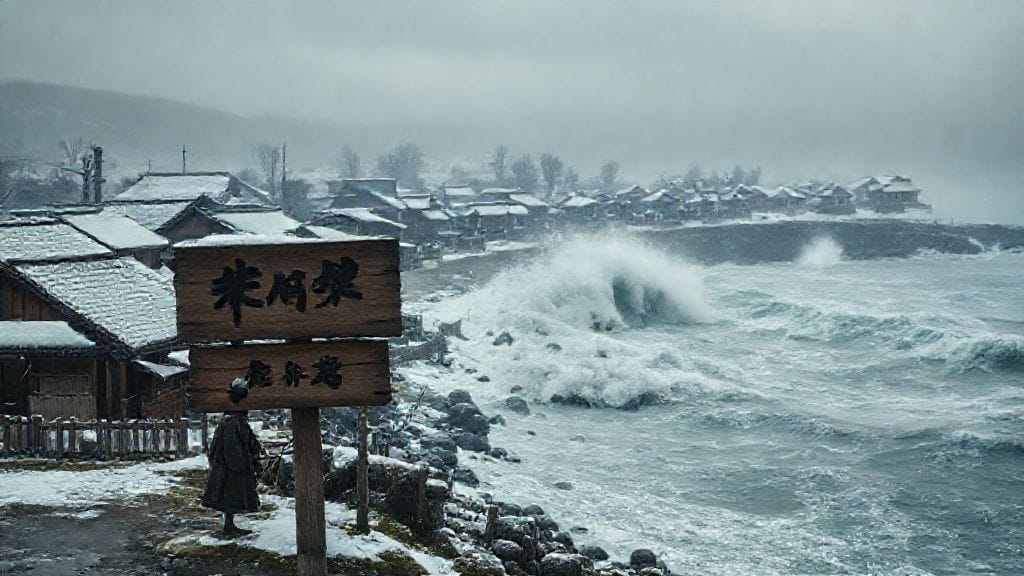
Soon after the earthquake’s fury receded, the sea responded with an unnatural surge. At first, the water near shorelines withdrew—some eyewitnesses described an eerie retreat of the waters like the ocean catching its breath before the assault. Then, almost as a furious wall, the tsunami hurled itself toward the coast with immense force.
The channel linking the Pacific Ocean and the inland seas—known as the Kii Channel—acted as a funnel, amplifying the tsunami’s energy. Waves climbed to heights estimated between 4 and 6 meters, reaching as far as two kilometers inland in some places.
The speed and height of the tsunami left no time for meaningful evacuation. Entire fishing fleets were destroyed, and coastal settlements were drowned in minutes. The terrifying roar of the water was the final sound heard by many victims before being swept away.
8. Scenes of Destruction: Coastal Towns Engulfed by the Sea
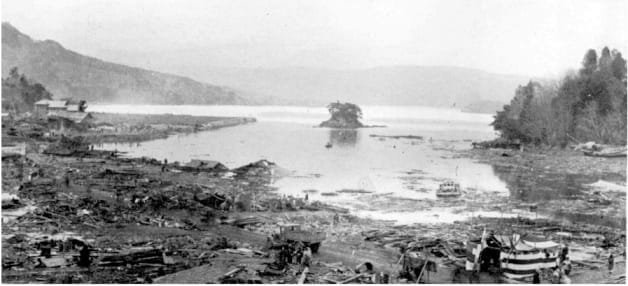
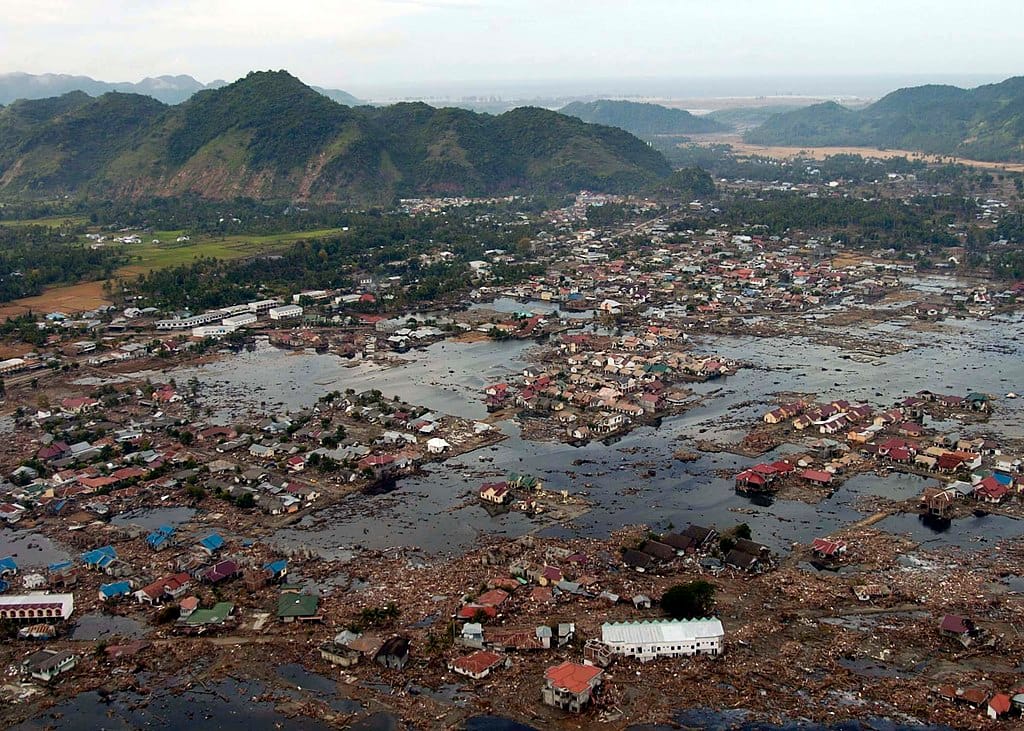
As dawn broke over a changed world, the damage became heartbreakingly clear. Historic towns like Shingū, Kumano, and Tanabe lay in ruins. Streets were flooded, homes flattened, and crops drowned under layers of saltwater. The death toll, though difficult to quantify exactly, was estimated in the tens of thousands, with many more injured and displaced.
Harrowing images emerge from survivor accounts: children clutching desperately to floating debris, elders wading waist-deep through muddy waters, ships twisted onto land like toys. Farmland was contaminated for years, and the fishing industry—the lifeblood of the region—was devastated.
Yet amidst the wreckage, there were miracles of survival. Communities banded together, fishermen braved dangerous waters to search for survivors, and local temples became makeshift refuges for the homeless.
9. Eyewitness Accounts: Voices from the Abyss
Diaries and oral histories give us poignant windows into the human experience of that night. One fisherman from Kumano recounted how the sea “disappeared like it was stolen, then roared back like a raging demon.” Another survivor spoke of the shaking, “as if the very earth was breathing fire.”
A temple priest recorded how he and his parishioners fled to higher ground, watching helplessly as beloved shrines were swallowed by waves. These personal narratives transform statistics into flesh-and-blood tragedy, reminding us that history is not merely dates and figures but lived trauma.
10. The Immediate Aftermath: Rescue, Loss, and Confusion
In the chaotic hours and days after the tsunami, survivors grappled with grief and the monumental task of rebuilding. Traditional communication networks were severed, making it difficult to assess the disaster’s scope. Aid was largely local; formal government response was hampered by the era’s nascent infrastructure and political constraints.
Many faced hunger and exposure as winter compounded their misery. Disease outbreaks, fueled by contaminated water, added a deadly secondary wave to suffering. Despite these challenges, human compassion shone through. Stories tell of farmers sharing their meager food supplies and temples opening granaries to the destitute.
11. The Role of Local Leadership Amid Chaos
Local samurai officials and village elders assumed critical roles, coordinating relief efforts, organizing rebuilding work, and negotiating for resources. Their leadership often differentiated survival and despair.
Historical records show that some domains implemented reconstruction codes that prioritized rebuilding vital infrastructures, like sea walls and roads, to restore economic stability. The disaster underscored how governance and social order sustain a population’s ability to rebound from catastrophe.
12. Cultural and Religious Interpretations of the Disaster
In an era where natural calamities were commonly interpreted as divine wrath or supernatural signs, the 1854 tsunami was enmeshed in a tapestry of faith and folklore. Shinto priests held special ceremonies invoking kami protection, while Buddhist monks preached impermanence and the transient nature of suffering.
Some local legends emerged, framing the tsunami as a manifestation of a vengeful sea god or a punishment for societal neglect. These narratives offered psychological solace but also influenced disaster preparedness beliefs and practices for generations.
13. The Disaster in Context: The Ansei Era’s String of Calamities
The tsunami was one in a series of disasters during the Ansei era, a six-year period marked by political unrest, earthquakes, famines, and epidemics. In 1854 alone, the Ansei Edo earthquake struck the capital region, amplifying national distress.
This sequence weakened the shogunate's grip on power and eroded public confidence in leadership, setting the stage for the eventual Meiji Restoration. The Nankai–Kii Channel tsunami, therefore, was not just a natural event but a thread in the tapestry of a profound national transformation.
14. Scientific Understanding: Earthquake and Tsunami Knowledge in 19th Century Japan
In 1854, Japanese seismology was still embryonic. Though local knowledge recognized certain “earthquake seasons” or “tsunami warnings,” there was no understanding of plate tectonics or seafloor subduction yet. The tsunami was mysterious, terrifying, and often incomprehensible.
It was only in the decades following that Japanese scholars began systematic earthquake observation, inspired in part by disasters like this. These early efforts laid groundwork for Japan’s world-leading seismic research in the 20th century, transforming fear into empirical knowledge and better preparedness.
15. The Rebuilding Effort: Resilience in the Face of Nature’s Wrath
Though the destruction was immense, humans have an innate drive to rebuild. Villages along the Nankai and Kii coasts saw reconstruction efforts rise from ruins within months and years. Homes were rebuilt with sturdier materials, sea defenses were designed or improved, and new community rituals integrated remembrance and caution.
Agriculture and fishing, though hampered, resumed gradually. These efforts showed the extraordinary resilience of the Japanese people, their determination to live and thrive despite nature’s caprice.
16. Lessons Drawn: How the 1854 Nankai–Kii Channel Tsunami Shaped Future Risk Awareness
The 1854 tsunami served as a stark reminder of the dangers posed by Japan’s geography. While knowledge was limited, the disaster seeded awareness that has influenced generations.
Oral traditions, early warning signals such as changes in sea behavior, and disaster memorials helped foster community preparedness. Over time, this vigilance became institutionalized, laying early groundwork for modern disaster risk reduction policies.
17. Lasting Impressions in Japanese Arts and Literature
Like many natural disasters, the tsunami inspired art, poetry, and literature capturing both tragedy and human spirit. Ukiyo-e artists portrayed scenes of waves and destruction, echoing cultural fears and fascinations with nature’s might.
Such works served dual functions: as memorials to the lost and as cautionary tales encouraging respect for natural forces. They remain invaluable cultural artefacts reflecting the intersection of disaster and human expression.
18. The Tsunami’s Role in Japan’s Seismic Research Evolution
The 1854 event notably influenced early Japanese scientific inquiry into earthquakes and tsunamis. Figures like Ryokichi Yatagai, decades later, would analyze records and try to map seismic patterns, inspiring further research.
Japan’s unique experience with repeated destructive quakes shaped its position as a pioneer in global earthquake preparedness. The legacy of 1854 reverberates into today’s sophisticated early warning systems deployed nationwide.
19. Global Impact and Recognition of Japan’s Vulnerability
Though a regional event in 1854, the Tsunami’s lessons became globally relevant as maritime trade and communication expanded. Japan’s vulnerability highlighted the need for international cooperation on earthquake and tsunami research.
Today, the Pacific Tsunami Warning System, for instance, owes part of its motivation to historical events such as those of the Nankai–Kii tsunami. This catastrophe helped fuel a broader understanding that such disasters crossed borders and demanded collective vigilance.
20. Remembering the 1854 Tsunami Today: Memorials and Modern Awareness
Memorials stand in towns lost or devastated by the 1854 tsunami—simple stone markers, dedicated shrines, and commemorative festivals. These serve as places of reflection and a somber reminder of nature’s power.
In education, the event features prominently in disaster preparedness curricula, ensuring successive generations respect the ocean and understand the signs of impending catastrophe. It is a living memory—a dialogue between past and present that continues to shape Japan’s relationship with its volatile environment.
Conclusion
The 1854 Nankai–Kii Channel tsunami was more than a natural cataclysm; it was a crucible that forged resilience, awareness, and transformation within Japan. In the dark night when the sea turned to death and destruction, the human spirit flickered against overwhelming odds. This event invited Japan to confront its place between the unyielding sea and the restless earth, to intertwine tradition with emerging science, and to weave tragedy into collective memory.
Today, as Japan stands vigilant with sophisticated warnings and rebuilt communities, the echoes of that night over 160 years ago remain a solemn, powerful testament. They remind us that nature’s fury can strike without notice, but through history, knowledge, and unity, humanity can endure—sometimes even rise stronger from the waves.
FAQs
Q1: What caused the 1854 Nankai–Kii Channel tsunami?
A1: The tsunami was caused by a massive undersea earthquake along the Nankai Trough, where tectonic plates converge and create stress that periodically ruptures, displacing the seafloor and generating tsunami waves.
Q2: How many people died in the 1854 tsunami?
A2: While exact numbers are difficult to confirm, historical estimates suggest the death toll reached tens of thousands across the affected coastal regions.
Q3: Why was the area around the Kii Channel particularly vulnerable?
A3: The geography of the area—narrow channels funneling waves, dense coastal settlements, and fragile infrastructure—amplified the tsunami’s impact.
Q4: How did the 1854 disaster influence Japan’s approach to earthquakes and tsunamis?
A4: The events spurred early scientific inquiry into seismic phenomena, influenced local disaster preparedness traditions, and contributed to a long-term cultural awareness of natural hazards.
Q5: Were there any warnings before the tsunami struck?
A5: There were no formal warnings, but some locals noted abnormal withdrawal of water just before the tsunami, an observation that became part of traditional early warning signs.
Q6: What role did local leaders play after the tsunami?
A6: Local officials organized relief efforts, coordinated rebuilding, and maintained social order, which was crucial for community survival.
Q7: How is the 1854 tsunami remembered today in Japan?
A7: Through memorials, cultural rituals, education, and ongoing disaster risk awareness programs, ensuring the tragedy is not forgotten.
Q8: Did this event affect Japan’s political situation at the time?
A8: While primarily a natural disaster, it exacerbated social strain during the turbulent Ansei era, indirectly contributing to the weakening of the Tokugawa shogunate.