Table of Contents
- The Last Days of an Emperor: January 9, 1873
- From the Summit of Power to Exile: Napoleon III’s Life in Retrospect
- Chislehurst: The Quiet English Refuge of a Fallen Emperor
- The Decline of an Empire: How the Second French Empire Crumbled
- The Franco-Prussian War: The Final Blow
- Exile and Illness: Napoleon III’s Retreat to England
- The December Days Before His Death: A Man Reflecting on Glory and Defeat
- The Deathbed Scene: Witnesses and Emotions in Chislehurst
- The Political Impact of His Passing on France and Europe
- The Burial Controversy: Between Republic and Monarchy
- Mourning a Controversial Figure: Public Sentiment in France and Abroad
- The Legacy of Napoleon III: Between Ambition and Tragedy
- The Forgotten Exile: How History Remembered His Last Years
- Napoleon III and The House of Bonaparte: Endings and Continuities
- Chislehurst Today: Memory, Monuments, and Historical Pilgrimage
- Conclusion: The Emperor’s Final Chapter as a Mirror of 19th Century Europe
- FAQs: Unveiling the Mysteries Around Napoleon III’s Death
- External Resource
- Internal Link
The Last Days of an Emperor: January 9, 1873
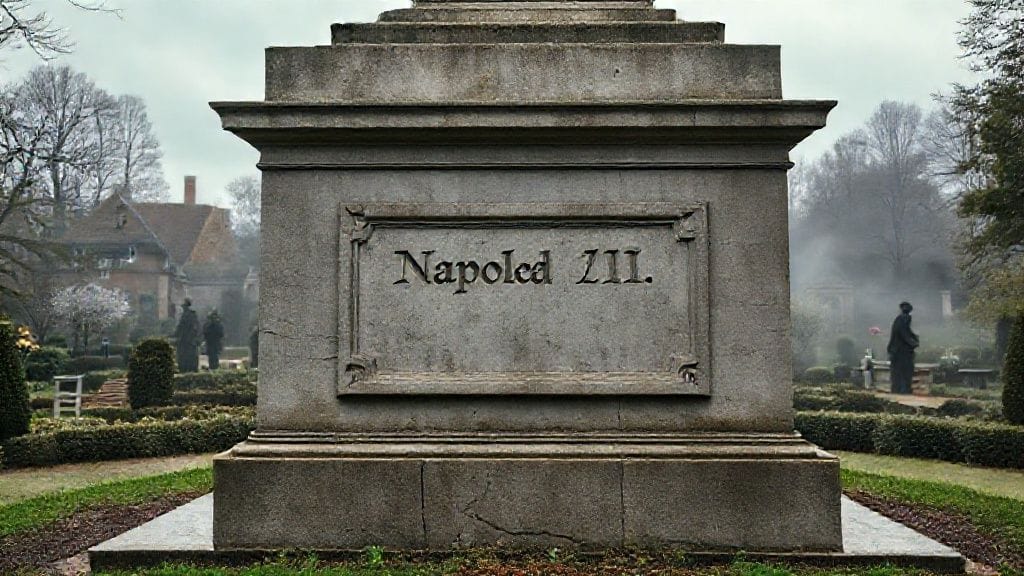
It was a cold winter’s day in Chislehurst, a sleepy English village far from the corridors of power in Paris. On January 9, 1873, Napoleon III breathed his last in exile, his life extinguished like the flickering flame of an extinguished empire. The once-mighty ruler who had crowned himself Emperor of the French was now a solitary figure, lying quietly on an English bed, far from the pomp, battles, and grandeur that had defined him. His face, etched with the burden of both triumph and defeat, reflected a complex narrative—a man who had risen against the odds, reshaped Europe’s political landscape, and ultimately lost everything.
The death of Napoleon III marked not just the end of a man’s life but the symbolic closure of an era filled with ambition, war, reform, and turmoil. His passing in exile, removed from his homeland, encapsulated the tragic arc of a sovereign whose dreams of glory dissolved into the harsh realities of international conflict and domestic upheaval.
From the Summit of Power to Exile: Napoleon III’s Life in Retrospect
To understand the poignancy of Napoleon III’s death, one must first trace the remarkable trajectory that led him from the son of Napoléon Bonaparte’s younger brother to the ruler of France. Louis-Napoléon Bonaparte, as he was known before crowning himself Emperor, was a man of resilience, ambition, and opportunism. Twice exiled and twice imprisoned following failed coups, his patience bore fruit in 1848, when the wave of revolutions offered him a path to the presidency of the newly formed Second Republic.
But Louis-Napoléon was not content with holding a mere title; in 1852, he dramatically staged a coup d’état and proclaimed himself Emperor Napoleon III, invoking the legacy of his uncle, Napoleon I. His reign, though initially welcomed with enthusiasm for the stability and modernization he promised, was fraught with contradictions: authoritarian control mingled with liberal reforms, military adventures shadowed by diplomatic maneuvers, and economic prosperity mingled with political repression.
Chislehurst: The Quiet English Refuge of a Fallen Emperor
After the crushing defeat at the Battle of Sedan in September 1870 during the Franco-Prussian War, Napoleon III was captured and his empire swiftly collapsed. Imprisoned in Germany for a brief period, he was released on parole and found refuge in Chislehurst, England. The quiet village offered him shelter and a somber backdrop for the final chapter of his life.
Chislehurst was not just a geographic exile; it became the silent witness to the emperor’s contemplations, regrets, and fading health. His English residence was modest, a far cry from the opulence of the Tuileries Palace, but it was here that he grappled with the weight of his legacy amid profound political isolation.
The Decline of an Empire: How the Second French Empire Crumbled
The fall of Napoleon III’s regime was swift and brutal, primarily caused by the unresolved tensions in Franco-German relations. France’s aggressive nationalism and political miscalculations set the stage for the Franco-Prussian War in 1870, which turned catastrophic for the empire.
The French army’s defeat exposed the emperor’s weakening authority and hastened the collapse of a regime that had ruled France for nearly two decades. Social unrest, political fragmentation, and economic instability all followed, culminating in the proclamation of the Third Republic amidst the ruins of the old order.
The Franco-Prussian War: The Final Blow
The tragedy that sealed Napoleon III’s fate was the disastrous Franco-Prussian War. His decision to enter conflict with the Kingdom of Prussia, under the astute leadership of Otto von Bismarck, was a gamble that backfired spectacularly. The war revealed the technological and organizational superiority of the Prussian military, leaving the French forces overwhelmed and disillusioned.
The emperor himself became a prisoner of war after the French defeat at Sedan, a humiliating moment that marked the end of his reign and France’s aspirations under the Second Empire. The war irreversibly shifted the balance of power in Europe, heralding the unification of Germany and altering continental dynamics forever.
Exile and Illness: Napoleon III’s Retreat to England
Upon release from German captivity, Napoleon III did not return to France. Instead, he accepted exile in England, where his health rapidly declined, exacerbated by the stresses of defeat and aging. The years in Chislehurst were marked by bouts of depression and illness, notably complications from bladder disease.
Despite his frailty, the former emperor maintained a resolute spirit, dictated memoirs and reflections on his tumultuous career, and remained attentive to the evolving political landscape in France, hoping for a restoration that never came.
The December Days Before His Death: A Man Reflecting on Glory and Defeat
The final weeks were a somber procession of pain, contemplation, and memory. Friends and physicians gathered as Napoleon III grew weaker. His thoughts reportedly oscillated between nostalgia for his past glory and resignation to the loss of empire and family dominion.
Remarkably, he retained his dignity and statesmanlike composure to the end, continuing to inspire loyalty among his household and reminding those around him of the complex man behind the crown.
The Deathbed Scene: Witnesses and Emotions in Chislehurst
Eyewitness accounts describe a quiet, almost peaceful passing at Chateau de Camden in Chislehurst on January 9, 1873. Those present spoke of a serene emperor, no longer burdened by power or politics but embraced by the respect of those who had tended him.
His last moments evoked a mix of sadness and reverence. For many, it was an end to a captivating epoch; for others, the death of a controversial figure whose legacy still sparked debate. The room was heavy with emotion – a poignant farewell to a former sovereign who embodied the 19th century’s tumultuous tides.
The Political Impact of His Passing on France and Europe
Napoleon III’s death extinguished one of the lingering embers of Bonapartist ambition, effectively closing the door on any immediate hopes of imperial restoration. In France, the Third Republic solidified its grip, though the country remained politically divided, with monarchists, republicans, and Bonapartists vying for influence.
In Europe, his passing was the end of a complex player whose policies had shaped international diplomacy through wars, alliances, and modernization efforts. It signaled the beginning of a new era—one increasingly dominated by nation-states and rival imperial ambitions.
The Burial Controversy: Between Republic and Monarchy
The fate of Napoleon III’s remains stirred political tensions. While some monarchists wished to honor him with grandeur befitting his rank, republican authorities were wary of glorifying a defeated emperor. Eventually, his body was interred in England, far from the land he once ruled—a testament to the unresolved divisions France faced regarding its past.
This controversy underscored the unsettled nature of French national identity in the aftermath of empire and war.
Mourning a Controversial Figure: Public Sentiment in France and Abroad
The responses to his death varied widely. In France, many mourned the loss of a figure who had championed modernization, economic growth, and national pride, while others remembered the authoritarian aspects of his rule and the catastrophic war.
Abroad, particularly in Britain, his death was noted as the passing of a pivotal figure in European politics, one who had shaped the diplomatic and military conflicts of the age. His life story inspired a mixture of sympathy, respect, and critical reflection.
The Legacy of Napoleon III: Between Ambition and Tragedy
Napoleon III’s life and death are inseparable from the broader narrative of 19th-century Europe: the rise and fall of empires, the tension between monarchy and republic, and the age of nationalism. His reign was marked by ambitious modernization projects—railways, Parisian urban renewal—and complex foreign policy adventures—from Mexico to Italy and the Crimean War.
Yet his legacy is also one of caution—a reminder of the dangers of overreach, vanity, and the volatile nature of power.
The Forgotten Exile: How History Remembered His Last Years
For decades, the final years of Napoleon III languished in relative obscurity, overshadowed by the dramatic events of his earlier rule. Chislehurst, for many, was simply the place where the last Bonaparte faded away, a footnote in the grand European saga.
Only recently have historians begun to reexamine these years, understanding exile not as mere defeat but as a reflective coda that completes the portrait of a man who once dared to remake the world.
Napoleon III and The House of Bonaparte: Endings and Continuities
Though Napoleon III died childless, his death did not close the chapter on the House of Bonaparte entirely. Family lines continued, and Bonapartist political movements persisted in various guises throughout the subsequent decades, embodying a nostalgia for empire and perhaps a hope for revival.
His passing, therefore, was both an end and a transformation, opening new pathways within French political culture.
Chislehurst Today: Memory, Monuments, and Historical Pilgrimage
Chislehurst remains a quiet village yet bears subtle marks of its imperial connection. The former residence of Napoleon III draws visitors interested in the intertwining of British and French history.
Memorials, plaques, and local museums preserve the memory of the emperor’s exile and death, inviting reflection on the human dimension behind grand historical events.
Conclusion: The Emperor’s Final Chapter as a Mirror of 19th Century Europe
Napoleon III’s death in Chislehurst was more than the demise of a once-powerful sovereign; it was the quiet close of a tumultuous century of revolution, empire, and nation-building. His life embodied the aspirations and contradictions of a Europe in transformation—where dreams of grandeur collided with the harsh realities of modern warfare and political change.
From the heights of imperial majesty to the solitude of exile, his story evokes empathy, reflection, and a nuanced understanding of history’s intricate dance between power and destiny.
FAQs
1. What were the immediate causes of Napoleon III’s death?
Napoleon III suffered from complications related to bladder disease, worsened by years of stress, exile, and declining health. His frailty culminated in his death on January 9, 1873, in Chislehurst, England.
2. Why did Napoleon III live in exile in England rather than returning to France?
Following his defeat and capture during the Franco-Prussian War, his regime collapsed. The newly established French Third Republic made it clear that the Bonapartist monarchy had no future, making exile in England the safest option for his survival.
3. How did Napoleon III’s death affect Bonapartist hopes in France?
His death largely ended any immediate Bonapartist restoration efforts. While some supporters remained loyal to the cause, the political climate in France favored republicanism and other monarchist factions.
4. Did Napoleon III leave any significant cultural or political legacies?
Yes, notably the modernization of Paris with wide boulevards, expansion of the railway system, and involvement in important European conflicts that shaped the continent’s political map.
5. How did the French public react to news of Napoleon III’s death?
Reactions were mixed. Many mourned the former emperor, recognizing his contributions, while others recalled the authoritarian and militaristic aspects of his reign.
6. What is the significance of Chislehurst in Napoleon III’s story?
Chislehurst served as the quiet refuge and final home of Napoleon III, symbolizing his shift from power to exile and imbuing the village with historical importance.
7. Where is Napoleon III buried?
Napoleon III was buried in England, reflecting the political sensitivities in France that prevented a grand imperial funeral and interment in his homeland.
8. How is Napoleon III remembered in modern historiography?
Modern historians approach him with nuance, acknowledging his modernization efforts, complex personality, and the ultimately tragic trajectory of his reign and exile.

