Table of Contents
- The Midnight Strike: NATO’s Air Campaign Takes Flight
- The Balkans on Edge: A Region in Turmoil
- Roots of Conflict: Yugoslavia’s Disintegration
- Kosovo’s Silent Suffering: Ethnic Tensions and Rebellion
- Diplomatic Deadlock: From Rambouillet to Refusal
- The Stakes Unveiled: NATO’s Strategic Calculus
- March 24, 1999: The First Bombers Roar Over Belgrade
- Precision and Power: The Technology Behind the Air War
- Civilian Lives at Risk: The Human Cost of the Campaign
- Belgrade’s Resilience and the War of Narratives
- The International Divide: Allies, Critics, and the UN’s Role
- Escalating Fire and Yugoslav Countermeasures
- The Role of Media: Broadcasting the War in Real-Time
- Secret Missions and Covert Operations in Support of NATO
- The Turning Tide: Bombing’s Impact on Yugoslav Military Strategy
- The Endgame Discussions: Negotiations Amidst the Bombardment
- Consequences Beyond the Bombs: Refugees and Reconstruction
- Political Aftershocks: Yugoslavia’s Fragmentation Deepens
- Legacy of the Air Campaign: A Precedent in Modern Warfare
- Reflections on Interventionism: Ethics, Law, and Sovereignty
- Remembering 1999: Memorials, Memory, and Lessons Learned
On a cold night in late March 1999, the blackened skies above Europe bore witness to the thunderous echo of jets breaking the stillness. The NATO air campaign against Yugoslavia had officially begun. At exactly 7:45 pm CET on March 24, the first wave of sorties was launched from bases across Europe, targeting strategic installations deep inside the Federal Republic of Yugoslavia. The eerie glow of missile trails and exploding munitions lit the horizon over Belgrade, signaling a new era of warfare — one fought not by soldiers on the ground but by machines high above. Yet beneath the mechanical precision and technological prowess lay the echoes of shattered families, displaced communities, and a fractured continent struggling to contain chaos. This was the starting point of a 78-day operation that would redefine intervention, test alliances, and challenge international law.
The Balkans on Edge: A Region in Turmoil
To truly grasp the magnitude of NATO’s decision to commence air strikes, one must revisit the tormenting history of the Balkans in the late 20th century. The Yugoslav federation, once held together by the iron grip of Marshal Tito, had teetered on the brink of dissolution throughout the 1990s. The death of Tito in 1980 unraveled this tenuous thread, unleashing centuries-old ethnic rivalries and nationalist awakenings: Serbs, Croats, Bosniaks, Albanians — all jostling for self-determination, survival, and power.
The 1990s saw brutal wars engulfing Croatia and Bosnia-Herzegovina, characterised by ethnic cleansing and grim atrocities. By 1998, the simmering conflict in Kosovo — a province with a majority ethnic Albanian population seeking independence from Serbian control — had escalated into armed rebellion. The Kosovo Liberation Army (KLA) clashed regularly with Serbian security forces. International mediation efforts foundered, unable to resolve a crisis that threatened to destabilise the entire region.
Roots of Conflict: Yugoslavia’s Disintegration
Yugoslavia’s break-up was less a sudden rupture than a slow convulsion. The socio-political fabric was rent by competing nationalist agendas and historical grievances. Serbia, under the leadership of Slobodan Milošević, pursued a policy of “Greater Serbia” that heightened fears among minority populations. International observers condemned numerous human rights abuses, and as ethnic tensions mounted, the possibility of a “Kosovo bloodbath” loomed ominously.
The Kosovo conflict boiled down to fundamental questions about sovereignty, self-determination, and the limits of tolerance in a multiethnic state. Western governments, wary of a replay of Bosnia’s horrors, pressured Yugoslavia to comply with negotiations, leading to the Rambouillet Peace Accords. But Milošević’s refusal to sign the agreement, seeing it as an infringement on national sovereignty, marked a turning point.
Kosovo’s Silent Suffering: Ethnic Tensions and Rebellion
By early 1999, the Kosovo region was a land of fear and displacement. The KLA had gained momentum, growing from an informal militia to a battle-hardened insurgency. In retaliatory sweeps, Serbian forces employed scorched earth tactics — destroying villages, imprisoning civilians, and reportedly committing widespread abuses.
The images emerging from Kosovo were harrowing: refugees streaming across borders, ghost towns burned to the ground, and anguished cries for help that echoed beyond the mountains. International organizations attempted to document atrocities, yet political will to intervene decisively remained fractured.
Diplomatic Deadlock: From Rambouillet to Refusal
The Rambouillet talks, held between February and March 1999, became a symbol of failed diplomacy. NATO and Western powers proposed an accord demanding military access and autonomy clauses for Kosovo — terms deemed unacceptable by Belgrade. Milošević’s intransigence hardened, and with mediation deadlocked, NATO prepared for the ultimate diplomatic fallback — military action.
Despite intense lobbying and debate, the North Atlantic Council voted on March 24 to launch Operation Allied Force, the codename for the air campaign, marking a dramatic escalation from negotiation to confrontation.
The Stakes Unveiled: NATO’s Strategic Calculus
For NATO, the decision to undertake air strikes was fraught with risk and symbolism. It was the first campaign conducted without explicit United Nations Security Council authorization, raising constitutional questions about the legitimacy of the strike. The alliance claimed humanitarian necessity: preventing a genocide and restoring peace.
Strategic planners envisioned a campaign that would leverage air power’s precision to degrade Yugoslavia’s military capabilities swiftly and decisively. At the same time, politicians faced the challenge of maintaining alliance cohesion while managing the concerns of European governments wary of prolonged conflict.
March 24, 1999: The First Bombers Roar Over Belgrade
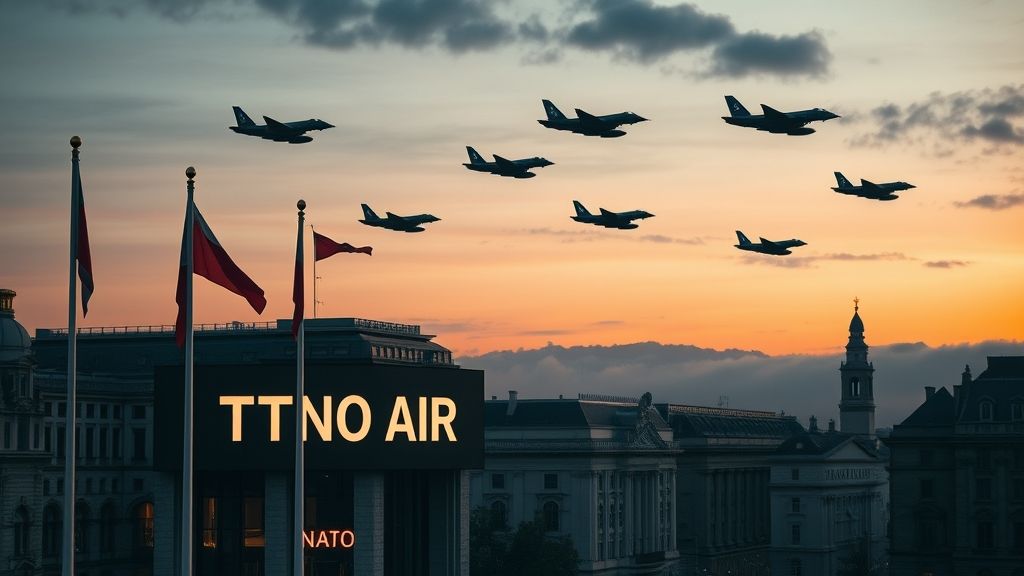
As the sun dipped into twilight on March 24, NATO’s Combined Air Operations Centre began coordinating the initial waves of strikes. Hundreds of aircraft — including F-16s, Tornados, and B-52 bombers — ascended from airbases across Italy, Germany, and the United Kingdom. Targets included military barracks, communications hubs, air defense systems, and infrastructure deemed essential to the Yugoslav war effort.
The sounds of explosions reverberated through Belgrade’s streets as residents fled shelters, cinema screens flickering with news of the assault. The Yugoslav government initially tried to project resilience, downplaying the impact. But the scale and precision of the attack stunned many: bridges collapsed, radar stations went silent, and command centers were crippled.
Precision and Power: The Technology Behind the Air War
This campaign was a landmark in modern warfare, showcasing the increasing reliance on advanced technology. Precision-guided munitions, often dubbed “smart bombs,” formed the backbone of NATO’s arsenal. Laser-guided and GPS-enabled bombs allowed for destruction of targets with minimal collateral damage — at least in theory.
Surveillance drones, electronic jamming devices, and stealth aircraft became critical assets, enabling NATO to avoid costly ground engagements. The silent ballet of technology masked a brutal calculus: each strike measured to deny Yugoslavia’s capacity to wage war without unleashing a full-scale ground invasion.
Civilian Lives at Risk: The Human Cost of the Campaign
Yet war from the skies, however sophisticated, could not spare civilians from suffering. Despite strict targeting protocols, numerous strikes resulted in unintended casualties and destruction of civilian infrastructure — hospitals, schools, and residential neighborhoods.
The bombing of a Chinese embassy in Belgrade, although officially called a tragic accident due to outdated intelligence, inflamed international tensions and underscored the fog of war’s unpredictability. Humanitarian organizations voiced concerns not only about immediate deaths but also about long-term displacement, trauma, and infrastructure degradation.
Belgrade’s Resilience and the War of Narratives
Milošević’s government responded with a propaganda campaign, portraying NATO as an imperial aggressor violating Yugoslav sovereignty. State-controlled media framed the air strikes as a fight for national survival against Western interference.
Despite physical destruction, morale among segments of the population remained defiant. Public rallies, symbolic gestures, and speeches by Milošević reinforced a narrative of victimhood and resilience, complicating NATO’s message of humanitarian intervention.
The International Divide: Allies, Critics, and the UN’s Role
Within and beyond NATO’s ranks, division emerged. While the United States and major European powers supported the campaign, some countries criticized it as an illegal act without UN sanction. Russia and China, in particular, vehemently opposed the operation, warning of regional destabilization and erosion of international law.
Human rights advocates remained split, torn between applauding intervention to halt atrocities and condemning the civilian toll and lack of legal mandate. The UN found itself sidelined, with Security Council paralysis highlighting geopolitical fractures post-Cold War.
Escalating Fire and Yugoslav Countermeasures
As weeks progressed, NATO intensified its campaign, expanding target lists and striking deep inside Yugoslav territory. Yugoslavia’s air defenses, though outmatched technologically, attempted to challenge NATO’s dominance through surface-to-air missiles and anti-aircraft fire, occasionally scoring hits.
Belgrade’s forces also engaged in scorched earth tactics within Kosovo, causing escalating humanitarian crises. NATO adapted tactics to avoid prolonged conflict, increasing the pressure on Milošević to capitulate.
The Role of Media: Broadcasting the War in Real-Time
For the first time in such a conflict, the global media landscape shaped public perception nearly instantaneously. Images of blazing bridges, fleeing refugees, and air strikes beamed into living rooms worldwide created a visceral experience of war.
Embedded journalists, live news reports, and emerging digital news formats amplified the stakes. Yet propaganda, misinformation, and differing narratives complicated the understanding, fueling polarized opinions about the war.
Secret Missions and Covert Operations in Support of NATO
Beyond the public eye, intelligence agencies engaged in clandestine operations — supporting the KLA with arms and training, gathering signals intelligence, and subverting Yugoslav command chains. These operations layered complexity onto the overt air campaign, blending kinetic warfare with covert action.
The intersection of covert support and open bombardment reflected evolving doctrines about hybrid and asymmetric warfare.
The Turning Tide: Bombing’s Impact on Yugoslav Military Strategy
By late May and June, the relentless bombing had significantly diminished Yugoslavia’s military capacity. Command and control systems were fragmented, supply routes disrupted, and morale deteriorated within the ranks.
While Milošević initially resisted calls to withdraw forces from Kosovo, pressure from military leaders and growing internal dissent began reshaping his calculation. NATO’s air campaign was slowly achieving its strategic objectives — or at least forcing political concessions.
The Endgame Discussions: Negotiations Amidst the Bombardment
Parallel to the bombing, diplomatic channels never entirely closed. Multiple rounds of negotiations in Europe sought a peaceful resolution. The Kumanovo Agreement, signed in June 1999, eventually outlined Yugoslav forces’ withdrawal and the introduction of international peacekeepers.
This milestone was both a victory for NATO’s military pressure and a landmark in post-Cold War peace enforcement. The campaign ended on June 10, after 78 days — a complex mix of triumph and tragedy.
Consequences Beyond the Bombs: Refugees and Reconstruction
The conflict left the Balkans scarred. More than 800,000 Kosovar Albanians had fled their homes; thousands of civilians were dead or missing. Infrastructure across Kosovo and Serbia required massive rebuilding.
International organizations began concerted efforts to provide humanitarian aid, rebuild institutions, and promote reconciliation — a process fraught with challenges given lingering ethnic tensions.
Political Aftershocks: Yugoslavia’s Fragmentation Deepens
The campaign weakened Milošević’s grip, contributing to his eventual downfall in 2000. Kosovo’s autonomy was effectively established under UN administration, but the scars of the war reverberated in Serbian politics and society.
Ethnic nationalism remained potent, complicating efforts toward regional integration and European Union aspirations. The NATO intervention remained a controversial chapter for Serbia and its diaspora.
Legacy of the Air Campaign: A Precedent in Modern Warfare
Operation Allied Force marked a watershed in how the international community viewed humanitarian intervention and the use of air power. It demonstrated both the possibilities and limitations of air campaigns as standalone tools of war.
The lack of UN authorization sparked debates on legal norms versus moral imperatives, influencing future interventions — from Kosovo itself to Iraq and Libya.
Reflections on Interventionism: Ethics, Law, and Sovereignty
NATO’s air campaign forced the global community to wrestle with complex questions. When is it legitimate to intervene? How to balance state sovereignty against human rights? What is the cost — in lives and international order — of bypassing established institutions?
Scholars, politicians, and activists continue to dissect these dilemmas, seeking lessons that could prevent or justify future conflicts.
Remembering 1999: Memorials, Memory, and Lessons Learned
More than two decades later, the 1999 air campaign remains a contentious memory across the Balkans and the world. Memorials in Kosovo honor victims, while Serbian narratives emphasize loss and resistance.
For historians and citizens alike, it serves as a sobering reminder of war’s complexities, the tragic cost of ethnic hatred, and the fragile pursuit of peace under difficult circumstances.
Conclusion
The NATO air campaign against Yugoslavia in 1999 was more than a military operation; it was a crucible of modern international relations. It exposed the raw edges of ethnic conflict, the limits of diplomacy, and the transformative power of technology in warfare. Yet it also revealed the human face beneath the headlines — communities shattered, lives uprooted, and ideals tested.
This campaign invites us to ponder the profound tensions between sovereignty and intervention, justice and realpolitik. It reminds us that history, in all its complexity and contradiction, is never just about the past — it informs the ethical choices of the present and future. The echoes of those long nights of bombing still linger, asking us to remember not just strategic victories but the human cost of war and the enduring hope for peace.
FAQs
Q1: Why did NATO launch the air campaign against Yugoslavia in 1999?
NATO launched the campaign to stop the humanitarian crisis in Kosovo caused by Yugoslav forces targeting ethnic Albanians, after diplomatic efforts failed and violence escalated.
Q2: What were the main objectives of the NATO air strikes?
The main goals were to degrade Yugoslavia's military capabilities, force withdrawal from Kosovo, and halt ethnic cleansing without committing ground troops.
Q3: Was the NATO campaign authorized by the United Nations?
No, the campaign proceeded without explicit UN Security Council authorization due to vetoes by Russia and China, raising legal controversies.
Q4: How did the Yugoslav government respond to the bombing?
Belgrade combined military resistance, propaganda portraying NATO as an aggressor, and efforts to maintain civilian morale despite infrastructure damage.
Q5: What was the human cost of the campaign?
Thousands of civilians were killed or injured, and hundreds of thousands displaced. Civilian infrastructure like hospitals and residential areas suffered significant damage.
Q6: How did the campaign affect the political landscape of the Balkans?
The campaign weakened Milošević’s regime, accelerated the return of refugees, and led to Kosovo’s administration by international forces, but ethnic tensions persisted.
Q7: What legacy did the NATO air campaign leave on international law and military strategy?
It prompted debates over the legality of humanitarian intervention without UN approval and highlighted the potential and limitations of air power in limited wars.
Q8: How is the 1999 NATO air campaign remembered today?
Memories are divided: Kosovo celebrates liberation from oppression, while Serbia views it as a violation of sovereignty and a national trauma.