Table of Contents
- Dawn of Destruction: The Nevados de Chillán Awakens
- The Giant in Slumber: Geological Background of Nevados de Chillán
- Early Warnings: Signs of Impending Eruption in 2015
- Into the Fire: The First Explosive Activity of 2016
- Communities on Edge: Human Presence in the Shadow of the Volcano
- The March of Ash: Environmental and Atmospheric Impact
- Volcanic Fury Unleashed: The Major Eruption Phase
- Emergency Responses: Government and Citizen Actions
- Lives Interrupted: Human Stories from the Nevados de Chillán Crisis
- Scientific Eyes on the Mountain: Monitoring and Research Efforts
- Ashes and Agriculture: The Economic Toll on Ñuble Region
- Media and Perception: Narratives Around the Eruption
- After the Roar: The Slow Return to Normalcy
- Lessons Learnt: Volcano Preparedness in Chile
- The Ever-Present Threat: Nevados de Chillán in the 21st Century
- Conclusion: The Enduring Legacy of the 2016 Eruption
- FAQs: Understanding the Nevados de Chillán Eruption
- External Resource
- Internal Link
When the ground trembled beneath the feet of the people living near Chile’s Nevados de Chillán in early 2016, a primal fear gripped the communities. Against the backdrop of jagged snow-capped peaks dusted with volcanic ash, cracks of fire and billowing smoke transformed the serene landscape into a theater of nature’s raw power. The great mountain, long dormant, roared back to life, reminding all around of earth’s volatile heartbeat. This eruption was not just a geological event; it was a profound human story of resilience, adaptation, and the precarious relationship between humankind and the restless forces beneath their soil.
Nevados de Chillán, a complex volcanic group situated in the Ñuble Region of Chile, had been quietly simmering, but in 2016 it burst forth with renewed energy. What followed was a series of explosive events that reshaped the environment, challenged authorities, and left lasting marks on local populations. This article embarks on a detailed journey into that year of tremors and flames, excavating the layers of history, science, and human experience that surround one of Chile’s most formidable volcanoes.
1. Dawn of Destruction: The Nevados de Chillán Awakens
The year 2016 began uneasily in the Ñuble Region, located in the southern central Andes of Chile. Residents had grown accustomed to the mountain’s occasional grumbles, but never had the Nevados de Chillán shown such vigorous activity in the living memory of the locals. At first, subtle quakes rattled windows, while plumes of white steam whispered warnings against the early morning sky. Yet by February, volcanic tremors had escalated into audible eruptions, dark ash clouds beginning to obscure the horizon.
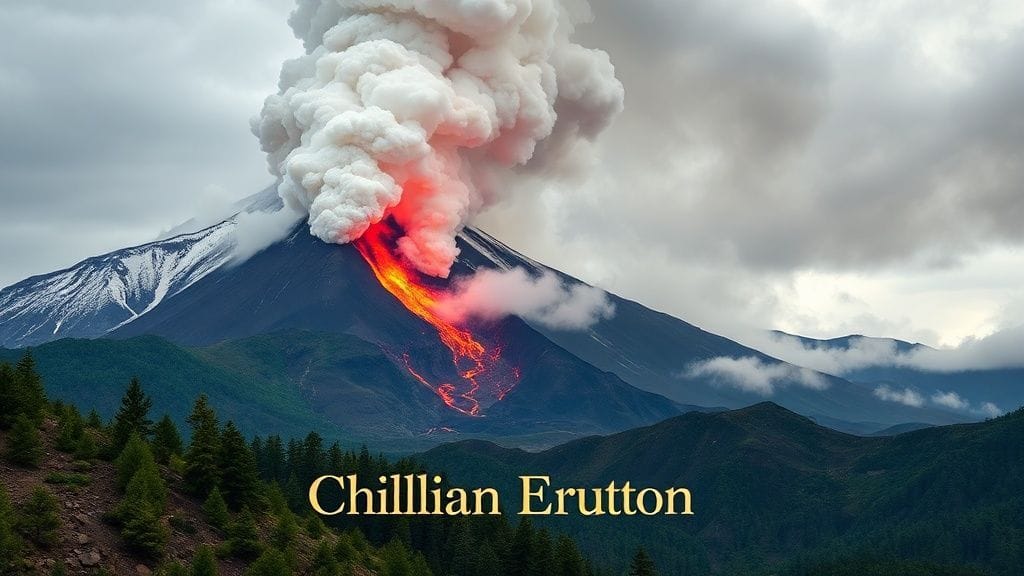
For a moment, it felt as if time itself slowed, villagers watching with a mix of awe and dread as the ancient volcano reclaimed its voice. The dramatic volcanic explosions were accompanied by rivers of molten lava snaking down the slopes, a spectacular but terrifying display against the lush green of the surrounding valleys. This was the awakening of a giant, long asleep but never dead.
2. The Giant in Slumber: Geological Background of Nevados de Chillán
Understanding the 2016 eruption requires a glance back at the natural history of this volcano. Nevados de Chillán is not a single peak but a volcanic complex composed of multiple stratovolcanoes and lava domes. It resides at the junction of the Nazca and South American tectonic plates, a seething subduction zone responsible for the Andes’ impressive chain of volcanoes.
The complex has a history of eruptive episodes dating back thousands of years, with documented activity roughly every few decades in recorded history. Its layers reveal successive cycles of explosive eruptions and lava flows, accentuating the dynamic nature of this geologic titan. Recent geological studies indicated that the volcano’s magma chamber was evolving beneath the surface, setting the stage for a potentially violent episode.
3. Early Warnings: Signs of Impending Eruption in 2015
The months leading to 2016 presented a buildup of ominous signs. Seismographs recorded increasing swarms of earthquakes beneath the volcano starting in late 2015 — consistent with magma movement forcing its way to the surface. Gas emissions of sulfur dioxide, typically low during dormancy, spiked considerably.
Several scientific teams stationed near the volcano issued warnings, noting deformation of the ground detected by GPS and satellite imagery. In nearby towns such as Coihueco and Pinto, a palpable unease set in — locals recalling stories of past eruptions told by their grandparents and clusters of historical documents recounting devastation and displacement. It was the classic tension of human settlements built close to the gifts and curses of volcanic land.
4. Into the Fire: The First Explosive Activity of 2016
In early February 2016, the volcano transitioned from tremors to spectacular eruptions. The first major blast sent ash plumes soaring over 3,000 meters into the atmosphere, visible from dozens of kilometers away. Residents awoke to the eerie sound of distant thunder as the volcano emitted continuous pulses of gas, ash, and incandescent bombs.
A striking feature of this early phase was the production of pyroclastic flows—fast-moving currents of hot gas and volcanic matter—that carved deadly paths across the mountain’s flanks. Though sparsely populated and guarded by authorities, these flows underscored the lethal potential of the unfolding disaster.
5. Communities on Edge: Human Presence in the Shadow of the Volcano
Despite the evident danger, thousands of people lived in the volcano’s immediate vicinity, engaged chiefly in agriculture, livestock, and tourism. Towns such as Pinto, Coihueco, and the broader Ñuble Region had long histories intertwined with Nevados de Chillán’s rhythms.
The local Mapuche communities, in particular, held spiritual ties to the mountain, treating it with reverence and caution. The eruption challenged traditions and forced rapid evacuation orders, disrupting livelihoods and ancestral connections. Schools were closed; roads monitored. The tension between safety protocols and everyday life created an atmosphere charged with anxiety and hope.
6. The March of Ash: Environmental and Atmospheric Impact
Volcanic ash blanketed vast stretches of farmland and transport routes. The ash was not merely a nuisance; its fine particles posed serious health risks to respiratory systems and complicated agriculture. Crops were buried under thick layers of soot, grazing lands spoiled, and water sources threatened by contamination.
The ash cloud’s reach spanned hundreds of kilometers, affecting atmospheric conditions and aviation routes regionally. Flights were canceled temporarily due to the visibility dangers posed by volcanic plumes. The volcanic aerosols also offered scientists a rare opportunity to study short-term climate interactions at a local scale, illustrating the intertwined nature of geology and meteorology.
7. Volcanic Fury Unleashed: The Major Eruption Phase
By March and April, Nevados de Chillán’s activity escalated into a sustained phase of powerful eruptions. Explosions hurling incandescent rock became more frequent, and lava flows extended further, threatening new villages and infrastructure. The volcano’s crater lake, a rare and unstable feature, vaporized amidst the heat, triggering steam-driven explosions adding to the chaos.
At night, the mountain glowed red with molten fury, peppering the skies with bright eruptions visible for miles. Scientists measured eruptive columns peaking above 4,000 meters and cataloged seismic events that spoke of intense underground movements. This phase was characterized by unpredictability, heightening fears of a larger-scale disaster.
8. Emergency Responses: Government and Citizen Actions
The Chilean government rapidly mobilized civil protection teams, the National Office of Emergencies (ONEMI) coordinating evacuations, shelter provisions, and information campaigns via radio and social networks. Infrastructure was reinforced where possible, and continuous volcanic monitoring was ramped up.
Emergency shelters were established in nearby safe zones, while surgical masks were distributed to mitigate ash inhalation risks. The national army provided logistics support to remote areas cut off by ash and rockfall. Local leaders played critical roles in maintaining communication and calm, advocating resilience amid uncertainty.
9. Lives Interrupted: Human Stories from the Nevados de Chillán Crisis
Behind the crisis statistics lay deeply personal tales. A farmer from Coihueco recounted how his family watched helplessly as ash choked their fields, the harvest lost. Children in nearby towns faced school closures but shared moments of solidarity and adaptation. Mapuche elders reflected on ancestral proverbs about fire and earth, interpreting the eruption as a call for balance.
Rescue workers described treacherous conditions, with ash and lava constantly reshaping the landscape. Amid pain and fear, these human testimonies bring invaluable perspectives—reminders that history is written not just in rocks and data, but in hearts and voices.
10. Scientific Eyes on the Mountain: Monitoring and Research Efforts
Chile’s National Geology and Mining Service (SERNAGEOMIN) alongside international experts deployed seismic arrays, gas analyzers, and remote sensing equipment to capture real-time data. Observatories set up camp, feeding data into hazard maps that informed emergency planning.
This eruption became a focal point for volcanic research, providing insights into eruption precursors, magma dynamics, and eruption plume behavior. The collaboration between volcanologists and local authorities exemplified a model of science serving society during natural disasters.
11. Ashes and Agriculture: The Economic Toll on Ñuble Region
Agriculture being the mainstay of the Ñuble economy, the eruption inflicted severe losses. Vineyards suffered reduced sun exposure, dairy farms faced contaminated pastures, and fruit orchards endured damage from falling ash.
Economic analyses estimated millions of dollars in damages, while recovery efforts entailed both short-term aid and long-haul programs aimed at restoring soil fertility and infrastructure. The eruption underscored vulnerabilities in rural economies dependent on natural cycles and the need for diversification and resilience-building.
12. Media and Perception: Narratives Around the Eruption
The eruption captured national and international media attention. News outlets framed it both as a dramatic natural event and a test of Chile’s disaster preparedness. Social media platforms amplified eyewitness accounts, photos, and live streams, connecting dispersed communities and fostering collective resilience.
Yet, media narratives also highlighted tensions — between fear and fascination, scientific facts and local beliefs. This duality revealed the complex role of communication in shaping public perception during natural catastrophes.
13. After the Roar: The Slow Return to Normalcy
As activity gradually waned in the latter half of 2016, displaced populations faced the daunting task of rebuilding. Ash clean-up campaigns became community efforts, schools reopened cautiously, and monitoring stations shifted to vigilance mode.
The mountain remained a volatile neighbor, a constant reminder of nature’s power and unpredictability. The eruption’s aftermath was not merely ecological or economic but deeply psychological. Local residents wrestled with trauma but also celebrated survival and renewed bonds.
14. Lessons Learnt: Volcano Preparedness in Chile
Chile’s 2016 experience reinforced critical lessons about volcanic risk management. Integrating indigenous knowledge with scientific data improved evacuation strategies and fostered trust between authorities and communities.
Investment in early warning systems, infrastructure resilience, and public education were recognized as vital components of preparedness. Nevados de Chillán’s eruption became a case study informing volcanic hazard policy both nationally and globally.
15. The Ever-Present Threat: Nevados de Chillán in the 21st Century
Today, Nevados de Chillán remains under constant watch. Technological advances in remote sensing, drone surveillance, and seismic tomography enrich understanding but cannot eliminate uncertainty.
Future eruptions are likely, and the stories of 2016 serve as cautionary tales and inspirations — a testament to the enduring dialogue between humanity and the restive earth. The mountain’s snow-capped peaks and volcanic vents continue to shape culture, economy, and science in Ñuble and beyond.
Conclusion
The 2016 eruption of Nevados de Chillán was more than a geological episode; it was a crucible where nature’s formidable forces met human vulnerability, courage, and ingenuity. This fiery upheaval etched itself into the memories of Ñuble’s people, transforming their relationship with the land and with each other. The mountain’s roar shattered the silence of generations, but in its echoes, communities found renewal and strength.
Volcanoes like Nevados de Chillán remind us that beneath the seemingly solid ground lies a restless world, shaped by fire and shadow. Understanding these phenomena bridges science and humanity, compelling us to listen, prepare, and live in awe of the remarkable planet we call home.
FAQs
Q1: What caused the 2016 eruption of Nevados de Chillán?
The eruption was triggered by magma rising from deep within the Earth due to tectonic subduction processes at the Nazca-South American plate boundary. This magma ascent led to pressure build-up and eventual explosive release.
Q2: How big was the 2016 eruption in terms of volcanic explosivity?
The eruption was considered moderate in strength, with ash columns reaching up to 4,000 meters and significant pyroclastic flows, but not reaching the scale of some historic massive eruptions.
Q3: Who were the most affected populations by the eruption?
Residents of the Ñuble Region, including the towns of Pinto, Coihueco, and indigenous Mapuche communities, were most directly impacted through evacuations, health hazards, and economic losses.
Q4: What measures did the Chilean government take during the eruption?
Authorities implemented evacuations, distributed protective masks, provided emergency shelters, and intensified volcanic monitoring and communication campaigns to safeguard citizens.
Q5: What are the long-term environmental effects of the ash fall?
Ash fall contaminated soil and water systems, impaired agriculture temporarily, and altered local microclimates, requiring remediation and adaptation efforts to restore lands.
Q6: How has the eruption influenced volcanic monitoring in Chile?
It accelerated investment in early detection technologies and fostered collaboration between scientists, government agencies, and local communities to enhance preparedness.
Q7: Are there myths or cultural beliefs related to the volcano?
The Mapuche people regard Nevados de Chillán as a sacred site, associating eruptions with spiritual messages about the balance between humans and nature.
Q8: Could a similar eruption happen again soon?
Yes, Nevados de Chillán remains an active volcanic complex, and further eruptions are possible, necessitating ongoing vigilance and preparedness.

