Table of Contents
- The Midnight Roar: When the Earth Shattered New Britain
- Forewarnings in the Silence: Geological Tensions Beneath Papua New Guinea
- The Tsunami’s Birth: From Underwater Earthquake to Coastal Catastrophe
- New Britain’s Night of Terror: Eyewitness Accounts and Immediate Impact
- The Devastation Unfolds: Waves of Destruction Along the Shore
- Community in Crisis: Struggles and Survival in Isolated Villages
- The Government’s Response: Mobilization Amidst Chaos
- International Aid and Solidarity: A World Watches New Britain
- Scientific Revelations: Understanding the 1985 Tsunami
- The Silent Toll: Human Losses and Psychological Scars
- How Traditional Knowledge Reshaped Disaster Response
- Rebuilding Lives: Long-Term Recovery Efforts
- Environmental Aftermath: Altered Landscapes and Marine Life
- Lessons Learned: Evolution of Tsunami Preparedness in Papua New Guinea
- Memory and Memorials: Honoring the 1985 Tragedy
- The 1985 Tsunami in Global Context: A Warning Forgotten?
- Reflections from Survivors: Voices Across Decades
- Conclusion: The Sea’s Fury and Humanity’s Resilience
- FAQs on the New Britain Tsunami
- External Resource
- Internal Link
At around midnight on July 16, 1985, the islands of New Britain and surrounding Papua New Guinea were rocked by a force so tremendous that for hours afterward, the landscape, the communities, and the very souls of those who lived there would be forever altered. The earthquake—an invisible hand shaking the undersea faults—triggered a tsunami wave that surged inland with terrifying power. Darkness and the roar of the ocean became entwined in the memories of those who survived, while the world watched on, riveted yet distant.
1. The Midnight Roar: When the Earth Shattered New Britain
It was 00:35 local time when the earth beneath New Britain began to convulse. An earthquake of magnitude 7.3 had struck deep beneath the Bismarck Sea, along the volatile Pacific "Ring of Fire." The island, with its volcanic peaks and lush rainforests, seemed to tremble under nature’s unrelenting power. Coffee plantations swayed as houses creaked and people were propelled from their slumber into a nightmare. Yet, as severe as the quake was, those who lived on these rugged islands had faced earthquakes before. The real horror—the crushing, inexorable tsunami—was still speeding beneath the ocean waves, approaching like a phantom menace few could foresee.
2. Forewarnings in the Silence: Geological Tensions Beneath Papua New Guinea
Papua New Guinea sits precariously where the Pacific Plate and the Indo-Australian Plate grind against each other, locked in a geological duel that frequently sparks seismic fury. For centuries, indigenous communities have regarded the earth with respect and fear, interpreting tremors and strange sea behaviors as omens. The region around New Britain is especially susceptible given its tectonic complexity—subduction zones, transform faults, and active volcanoes all intertwining beneath its shores.
Yet, in 1985 the modern world’s warning systems were sparse, and scientific understanding, while growing, lagged behind the immediate threats posed. The earthquake that night was the manifestation of accumulated stress, released suddenly with catastrophic consequences. The ocean floor ruptured, displacing millions of tons of water, and giving rise to the tsunami that simultaneously sealed fates and shattered hopes.
3. The Tsunami’s Birth: From Underwater Earthquake to Coastal Catastrophe
The moment the seabed ruptured, an immense wall of water began to build and move outward in all directions. Unlike the slow rise of tides or storm surges, this was a tsunami—a fast-moving, long-wave oceanic phenomenon capable of crossing entire ocean basins. Yet here, its fury was tragically close to shore.
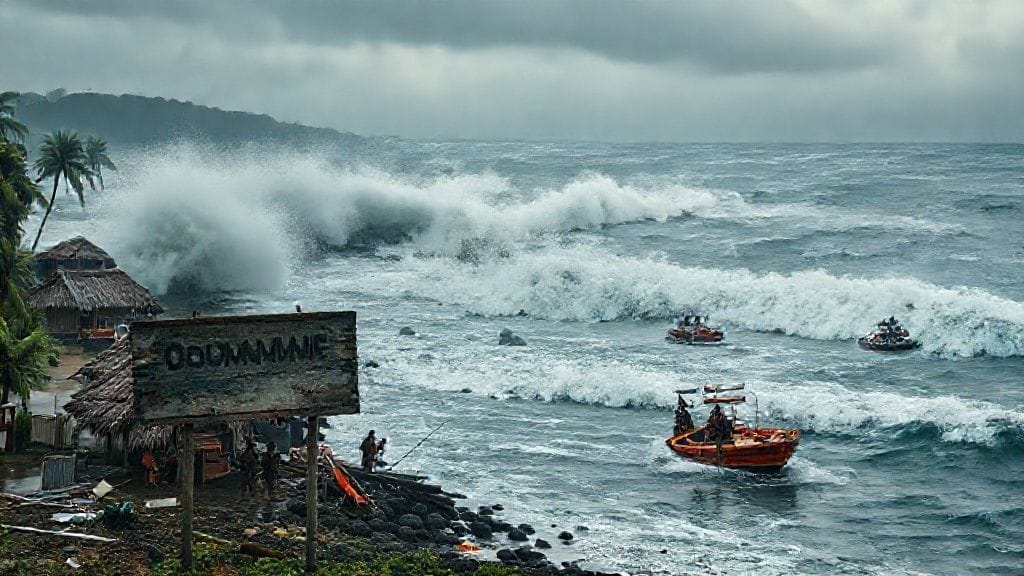
The first wave, reaching heights of up to 10 meters (33 feet) in some places, crashed against the jagged coastline minutes after the quake ceased. In moments, fishing boats moored in calm bays were flung inland or smashed against reefs; homes built precariously on the shore disappeared underwater. The very earth seemed to fold and merge with the sea in a violent embrace, swallowing trees, crops, and life itself.
4. New Britain’s Night of Terror: Eyewitness Accounts and Immediate Impact
Mary, a fisherwoman from Lassul village, recalled the eerie calm following the quake before a dark wall of water rose on the horizon:
"I had never seen the sea behave like that, rising and falling quickly like it was breathing. Then it charged toward us like a wild beast, swallowing the shore. We ran to the hills as fast as we could, hearing screams and the crashing sound that no one can forget."
Villages were caught unprepared; darkness added to confusion. Those who sought refuge uphill saved their lives, but many were trapped by the crushing force of water. The death toll remains uncertain, with estimates ranging from hundreds to over a thousand, considering many small communities were isolated and lost without record.
5. The Devastation Unfolds: Waves of Destruction Along the Shore
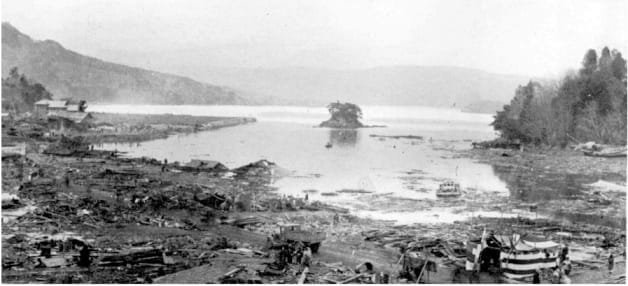
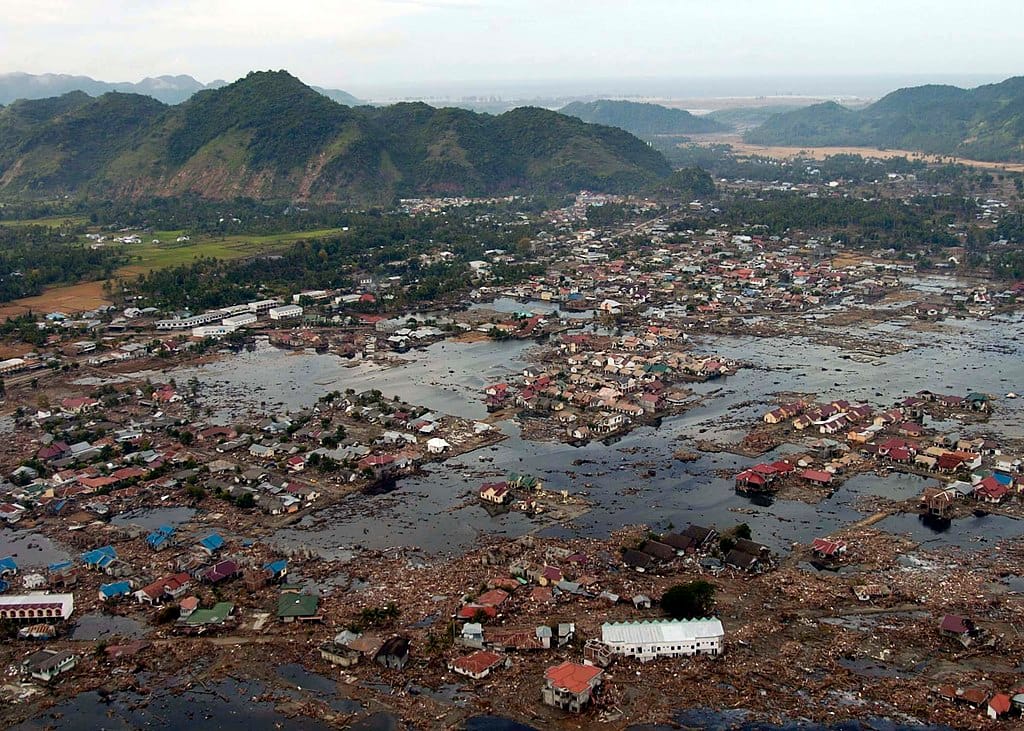
The tsunami was not a single wave but a sequence of surges, each one coming with renewed destruction. Low-lying areas, mangrove forests, and coral reefs—essential habitats and sources of food—were ravaged. Infrastructure like schools, clinics, and roads either collapsed or were buried under debris.
Agricultural lands were salted or flooded, threatening food security. The impact disrupted not only housing but also the fragile ecosystems and economies that had supported New Britain’s inhabitants for generations.
6. Community in Crisis: Struggles and Survival in Isolated Villages
The communities of New Britain are traditionally closely-knit, with social structures deeply rooted in clan systems. Immediately after the tsunami, survival depended on mutual aid and adaptability. Many survivors trekked miles across difficult terrain to reach aid centers or relatives. Stories emerged of miraculous rescues and profound loss, of elders guiding youths through wreckage, and of spontaneous community assemblies to decide on next steps.
Yet some smaller, remote villages effectively vanished. Without roads or radio communication, help would reach them late, if at all.
7. The Government’s Response: Mobilization Amidst Chaos
The government of Papua New Guinea, still developing its infrastructure, faced monumental challenges. With transport limited and little prior experience in large-scale disaster relief, prioritizing efforts became an agonizing process. Military and police forces were dispatched to assist; emergency shelters set up.
Despite their efforts, in some regions relief was slow, hampered by weather and the difficulty of geographic reach. The disaster revealed weaknesses in national contingency planning, triggering urgent calls for reform.
8. International Aid and Solidarity: A World Watches New Britain
News of the catastrophe traveled across the globe. Australia, New Zealand, Japan, and the United States were among the first to offer assistance, sending medical aid, supplies, and experts in disaster management. The United Nations and NGOs coordinated relief projects, focusing on water, sanitation, and food security.
Yet aid logistics were complicated by terrain and political challenges. Still, foreign teams helped map the damage, conduct field surveys, and build local capacities.
9. Scientific Revelations: Understanding the 1985 Tsunami
Geologists and oceanographers studied the New Britain event meticulously. It provided valuable data on how subduction-zone earthquakes generate tsunamis and the effects of underwater topography on wave behavior. The incident added to a growing awareness of tsunami risks in the South Pacific, a region often overshadowed by the Indian and Pacific Ocean disasters elsewhere.
Instrumentation limitations meant many details were reconstructed from eyewitnesses and remote sensing. Today, the 1985 New Britain tsunami remains a critical case study in tsunami science.
10. The Silent Toll: Human Losses and Psychological Scars
Beyond physical destruction, the trauma left invisible wounds. Survivors recounted post-event nightmares, anxiety, and a sense of dislocation. Psychological care was minimal in the mid-1980s; many relied on traditional healing and communal catharsis.
Family structures were decimated, cultural practices interrupted. The loss of elders—the keepers of languages and customs—amid the chaos was a blow impossible to quantify.
11. How Traditional Knowledge Reshaped Disaster Response
Paradoxically, indigenous understanding of natural signs aided survival. Oral traditions describe "strange sea retreat" and tell stories of giant waves. Some elders recognized the urgent need to seek higher ground based on ancestral memories.
In later years, disaster preparedness programs integrated local knowledge with modern technology, enhancing warning systems and community resilience.
12. Rebuilding Lives: Long-Term Recovery Efforts
Reconstruction was slow but determined. Housing projects incorporated disaster-resistant designs. Economic recovery meant aiding agriculture revival, fisheries, and income diversification. Health campaigns tackled waterborne diseases in the post-tsunami environment.
International cooperation laid foundations for sustainable development, emphasizing ecological balance and disaster risk reduction.
13. Environmental Aftermath: Altered Landscapes and Marine Life
The tsunami reshaped coastlines—removing soil, depositing sediment, and altering coral reefs critical for fish breeding. Mangrove forests, natural buffers, were damaged but later regrew, showcasing nature’s resilience.
Scientists noted shifts in fish populations and changes in water salinity affecting local species. The event underscored how human and environmental health are inseparable.
14. Lessons Learned: Evolution of Tsunami Preparedness in Papua New Guinea
The catastrophe provoked significant lessons. National disaster agencies were strengthened, early warning networks developed. Educational campaigns heightened awareness of tsunami signs.
The tragedy also inspired regional cooperation in the Pacific, contributing to the birth of regional tsunami warning systems decades later.
15. Memory and Memorials: Honoring the 1985 Tragedy
Memorial ceremonies continue, serving as moments to honor victims and reflect on human vulnerability. Local art, songs, and oral histories keep memories alive. Educational institutions include the event in curricula to preserve knowledge.
These acts of remembrance contribute meaningfully to social cohesion and a hope for safer futures.
16. The 1985 Tsunami in Global Context: A Warning Forgotten?
While overshadowed by larger tsunamis elsewhere, the New Britain event remains critical. It foreshadowed devastating tsunamis such as the 2004 Indian Ocean disaster. Its lessons on preparedness remain urgent, especially as climate change increases coastal vulnerabilities worldwide.
17. Reflections from Survivors: Voices Across Decades
Decades later, survivors offer wisdom forged in tragedy:
"The sea was both mother and destroyer," reflects one elder. "We must listen to her voice, for she speaks before she strikes."
Their stories remind us that history is lived experience, not just dates and statistics.
Conclusion
The 1985 New Britain tsunami was more than a natural disaster—it was a profound human ordeal and a pivotal moment for Papua New Guinea. In the face of overwhelming destruction, communities demonstrated resilience, drawing from tradition and courage. The catastrophe illuminated the fragile relationship between humankind and nature, urging us to listen and prepare.
Though the waves have long receded, their impact remains etched in landscapes, memories, and lives. The legacy of New Britain's midnight earthquake and tsunami is a testament to endurance and a somber reminder: nature’s fury respects no borders, but human solidarity and foresight can save countless lives.
FAQs on the New Britain Tsunami
Q1: What caused the 1985 New Britain tsunami?
The tsunami followed a magnitude 7.3 earthquake caused by tectonic shifts along the Pacific and Indo-Australian plate boundary beneath the Bismarck Sea.
Q2: How many people died in the tsunami?
Estimates vary but hundreds to over a thousand lives were lost. The remote nature of many villages complicated accurate counts.
Q3: Were there any warnings before the tsunami hit?
No formal tsunami warning system existed at the time. Some locals recognized signs from ancestral knowledge, but most were caught unaware.
Q4: How did the government of Papua New Guinea respond?
They mobilized emergency services, but relief was hampered by infrastructure challenges and geographic isolation.
Q5: What was the international community's role?
Several countries and organizations provided aid, medical supplies, and technical expertise to support relief and recovery.
Q6: What were the long-term environmental impacts?
Coastlines, coral reefs, and mangrove forests were dramatically altered but some ecosystems eventually recovered.
Q7: How did the tsunami influence disaster preparedness in the region?
It led to the development of national disaster agencies and contributed to regional tsunami monitoring efforts.
Q8: How is the disaster remembered today?
Through memorial ceremonies, oral histories, and education, the event remains an essential part of national memory in Papua New Guinea.