Table of Contents
- A Sudden Tremor: The Dawn of November 18, 1755
- The Unseen Fury Beneath the Waves: Origins of the New England Coast Tsunami
- The Global Stage: The Great Lisbon Earthquake and Its Transatlantic Reverberations
- The Atlantic Ocean as a Conduit of Disaster
- Early Warnings and Local Reactions: A Community Caught Off Guard
- Tidal Terror: The Tsunami’s Arrival on the New England Shores
- Eyewitness Accounts: Voices from the Edge of the Flood
- The Devastation Across Coastal Massachusetts and Beyond
- Navigating the Aftermath: Rescue, Recovery, and Reflection
- Geological Insights: What Scientists Say Today
- Communities Forever Changed: Social and Economic Impacts
- The Role of Indigenous Narratives and Oral Histories
- Disaster and Colonial Governance: Political Ramifications in British America
- Myth, Memory, and the Making of a Regional Legend
- Lessons Learned: Early American Natural Hazard Awareness
- The Rarity of Tsunamis on the Atlantic Coast: A Geological Anomaly
- Modern Technology and the Historical Event: New Interpretations
- Preparing for the Future: Coastal Safety Since 1755
- The New England Coast Tsunami in Popular Culture and Scholarship
- Unraveling the Mystery: Ongoing Debates Among Historians and Geologists
- Conclusion: Echoes from the Depths—A Tale of Nature’s Unpredictable Majesty
- FAQs: Understanding the 1755 New England Coast Tsunami
- External Resource
- Internal Link
1. A Sudden Tremor: The Dawn of November 18, 1755
On a cold and quiet morning of November 18, 1755, the coastal towns of New England awoke to a strange and unsettling rhythm. Long before the sun had fully kissed the horizon, fishermen observed the ocean behaving in impossible ways—the great Atlantic seemed to pull back, retreating farther than they had ever seen. Then, without warning, a horrifying wall of water began to surge forward, sweeping over docks, flooding harbors, and engulfing ships. For many, it was a morning marked not by the predictable calm of the sea but by a sudden, elemental terror. The New England coastline, so familiar and dear to its inhabitants, was rewritten that day by a catastrophic tsunami—an event few in the region understood at the time but which echoed a darker drama unfolding thousands of miles away.
2. The Unseen Fury Beneath the Waves: Origins of the New England Coast Tsunami
To understand how a tsunami could strike the Atlantic shores of North America, one must dive beneath the surface of geologic and historic truths. Unlike the Pacific Ocean, renowned for its volatile seismic zones and tsunami history, the Atlantic is traditionally considered less prone to such events. Yet, nature’s unpredictability proved otherwise in 1755. On the morning of November 1 (October 31 by some counts), the world witnessed the Great Lisbon Earthquake, a catastrophic seismic event off the coast of Portugal. The devastating tremor, estimated at a magnitude of 8.5 to 9.0, sent shockwaves not only through the Iberian Peninsula but across the entire Atlantic basin, birthing a tsunami that propagated at terrifying speed across the ocean to distant shores.
3. The Global Stage: The Great Lisbon Earthquake and Its Transatlantic Reverberations
The Great Lisbon Earthquake was no ordinary catastrophe. Striking the vibrant capital and other parts of Portugal, it triggered massive destruction, fires, and a death toll estimated between 10,000 and 100,000. But crucially, its underwater shaking displaced vast volumes of water, setting in motion a series of powerful waves racing across the Atlantic. For New England, thousands of miles from Lisbon, it meant an unwelcome communiqué from the earth’s restless interior—an abrupt reminder that even distant calamities could touch their shores in unexpected ways.
4. The Atlantic Ocean as a Conduit of Disaster
The Atlantic is a vast, deep, and powerful body of water that can carry waves generated by seismic events thousands of kilometers away. The tsunami triggered by the Lisbon earthquake moved outward in multiple directions, reaching the Caribbean, the Azores, the British Isles, and the eastern coast of North America. While tsunamis were and are far more common in the Pacific “Ring of Fire,” the 1755 event forced a reevaluation of how fragile and interconnected the Atlantic world truly was in terms of natural disasters.
5. Early Warnings and Local Reactions: A Community Caught Off Guard
In pre-industrial New England, no storm warning system existed—no seismic sensors or national weather service. Therefore, when the sea began to mysteriously recede on November 18, residents were baffled and, in many cases, took it as a sign of low tide or unusual weather. Ancient folklore warned of water retreating before a “great flood,” but most townspeople lacked an understanding of tsunamis. Reports from coastal settlements reveal a mix of curiosity, disbelief, and growing fear as the water level dropped abnormally before a sudden, fierce return.
6. Tidal Terror: The Tsunami’s Arrival on the New England Shores
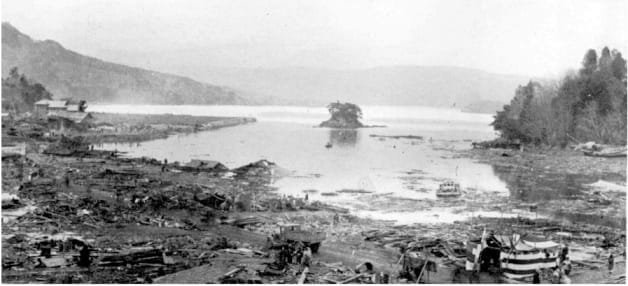
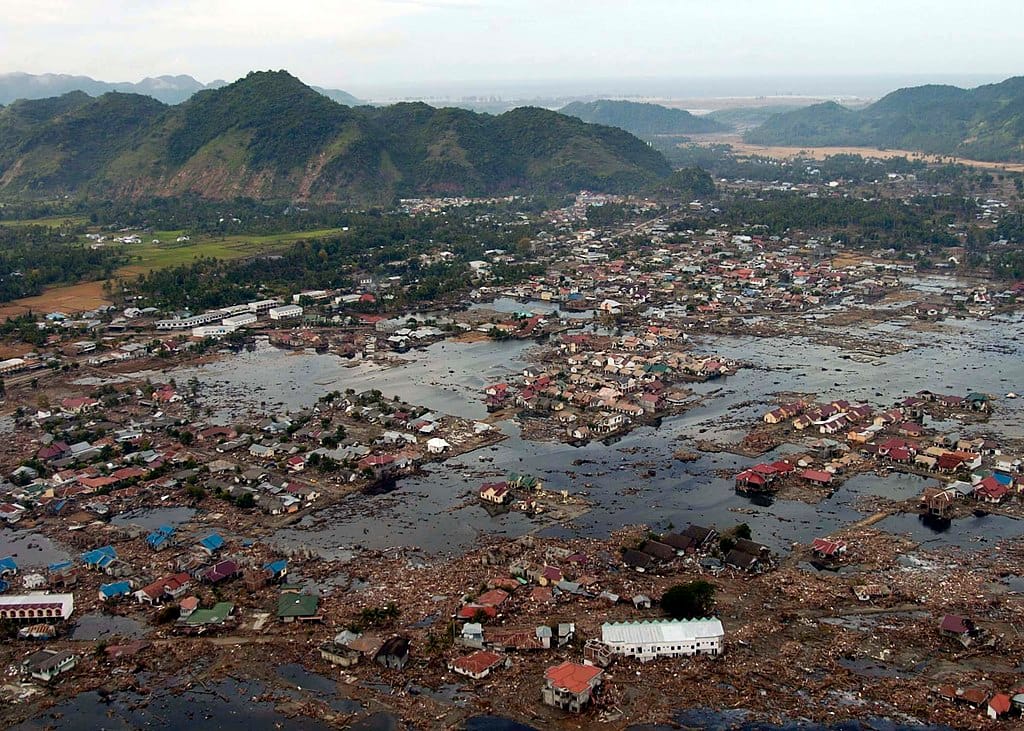
When the massive surge arrived, it unleashed destruction hitherto unseen on these shores. Eyewitnesses described waves that “towered like hills” crashing into harbors, ripping ships from their moorings, and flooding the streets of coastal towns. Homes built close to the water’s edge faced immediate peril, while many fishermen found themselves struggling against a merciless, inverted tide. Though less devastating than the events in Lisbon or the Caribbean, the tsunami’s reach in New England was nonetheless glaringly evident—a brutal demonstration of nature’s indiscriminate force.
7. Eyewitness Accounts: Voices from the Edge of the Flood
Survivors’ narratives, recorded decades and centuries later, paint a vivid and emotional picture. One sailor reportedly told how “the sea roared like a lion,” while a local minister’s diary entry described the sudden flooding as “a watery judgment from the Almighty.” Such testimonies provide invaluable windows into the human dimension of the disaster, capturing fear, helplessness, and resilience.
8. The Devastation Across Coastal Massachusetts and Beyond
The hardest-hit regions included coastal Massachusetts towns such as Gloucester, Salem, and Boston’s harbor, where docks were ruined, small ships capsized, and economies momentarily stalled. Damage was not limited to property; lives were lost, though sparse colonial demographic records make estimates difficult. Maritime trade was disrupted, and fishermen suffered not only from the wave but from the subsequent scarcity of fish and damaged equipment.
9. Navigating the Aftermath: Rescue, Recovery, and Reflection
In the weeks and months following November 18, communities grappled with rebuilding. Their efforts marked the beginning of colonial disaster response—a patchwork of aid from neighbors, reliance on church networks, and early forms of community resilience. The event was also absorbed into the colonial consciousness, challenging residents to understand their environment as dangerous and dynamic.
10. Geological Insights: What Scientists Say Today
Today’s geologists view the 1755 tsunami as part of a complex Atlantic seismic puzzle. The triggering earthquake in Lisbon displaced immense seawater, and the resulting waves propagated at high velocities, modulated by the ocean floor’s contours. Sediment studies along the New England coast reveal tsunami deposits, validating historical accounts with physical evidence. Understanding such events contributes vitally to modern coastal hazard assessment.
11. Communities Forever Changed: Social and Economic Impacts
The tsunami struck at a sensitive moment in New England’s development—just as colonial towns were expanding, economies diversifying, and maritime activities increasing. The temporary disruption to fishing and trade exposed vulnerabilities. Additionally, the disaster invoked theological and philosophical debates among colonists about nature, providence, and human fragility.
12. The Role of Indigenous Narratives and Oral Histories
Long before European settlements, Indigenous peoples of the New England region had their own ways of explaining natural phenomena. Some oral histories hint at awareness of catastrophic floods, possibly linked to seismic events or massive storms. Piecing these narratives together enriches the historical tapestry and sheds light on the enduring human relationship with the sea.
13. Disaster and Colonial Governance: Political Ramifications in British America
The tsunami and its aftermath occurred during a period of heightened colonial tensions under British rule. The event underscored the precariousness of colonial infrastructure and governance amid natural crises. Discussions emerged regarding relief efforts, readiness, and the need for better communication—early stirrings of colonial administration adapting to environmental risks.
14. Myth, Memory, and the Making of a Regional Legend
Over time, the 1755 tsunami transmuted into lore: a cautionary tale whispered by fishermen, a chapter in local histories, and a symbol of nature’s vengeance. Printed accounts, sermons, and later historical retellings layered myth upon fact. This blending created a lasting memory well outside scientific recounting—an emotional anchor for generations sensing the sea’s power.
15. Lessons Learned: Early American Natural Hazard Awareness
While primitive by today’s standards, the colonial response to the tsunami planted seeds for greater natural hazard awareness. Communities learned, sometimes painfully, that the Atlantic Coast was not impervious to seismic and oceanic disasters. These lessons contributed, much later, to the establishment of early warning networks and coastal management.
16. The Rarity of Tsunamis on the Atlantic Coast: A Geological Anomaly
What makes the 1755 tsunami so fascinating is its rarity. The Atlantic Coast rarely experiences such events due to the paucity of subduction zones along its margin. The 1755 event is thus an anomaly—a reminder that low frequency does not mean impossibility. This insight continues to inform risk assessment models for Atlantic coastal cities today.
17. Modern Technology and the Historical Event: New Interpretations
Recent advances in sonar mapping, sedimentology, and computer modeling have reawakened interest in the 1755 tsunami. Scientists now simulate the wave’s trajectory and impact, offering more precise reconstructions. Digital archives collating eyewitness testimonies complement this work, weaving a fuller story of the disaster.
18. Preparing for the Future: Coastal Safety Since 1755
Today, New England benefits from sophisticated seismic and ocean monitoring systems, partly spurred by historic lessons. Tsunami warnings, evacuation routes, and public education campaigns reflect a region transformed by the memory of 1755’s watery upheaval. Though the Atlantic remains generally calm, the past echoes in these precautions.
19. The New England Coast Tsunami in Popular Culture and Scholarship
Despite its significance, the 1755 tsunami remains relatively obscure in popular culture. However, it has garnered attention in academic circles, inspiring theses, articles, and documentaries. Local museums and historical societies occasionally spotlight the event, fostering public engagement with a forgotten chapter of regional history.
20. Unraveling the Mystery: Ongoing Debates Among Historians and Geologists
Debate surrounds many aspects of the 1755 event—extent of damage, wave heights, exact timing, and even the relative influence of the Lisbon earthquake versus local seismic activity. Scholars continue to investigate archival records, cross-examining them with scientific data to refine understanding of this transatlantic natural disaster.
21. Conclusion: Echoes from the Depths—A Tale of Nature’s Unpredictable Majesty
The New England Coast Tsunami of November 18, 1755, stands as a poignant reminder of nature’s caprice and the interconnectedness of the world’s oceans and peoples. It tells of an era when communities, both near and far, were humbled by forces as old as the planet itself. Yet it also speaks to human resilience—the capacity to rebuild, to question, and to prepare for the future, even when faced with the inscrutable power of an ocean’s fury. These echoes from the depths continue to resonate, inviting us to listen, learn, and respect the mighty rhythms of the sea.
Conclusion
History often gifts us with moments where human tranquility is shattered by the sublime forces of nature. The tsunami that struck the New England coast in 1755 was such an event—unexpected, devastating, and ultimately transformative. It bridged continents and connected disparate communities through a shared experience of loss and awe. More than just a geological curiosity, the event invites us to ponder the frailty of human settlements, the unpredictability of natural systems, and the enduring spirit of recovery and adaptation. It is a story written in water and remembered in human hearts—a narrative that deserves both our study and our reverence.
FAQs
Q1: What caused the New England Coast tsunami of 1755?
The tsunami was triggered primarily by the Great Lisbon Earthquake off the coast of Portugal on November 1, 1755. The earthquake displaced a massive volume of seawater, creating waves that traveled across the Atlantic Ocean and struck the New England coastline seventeen days later.
Q2: How severe was the damage in New England compared to Lisbon?
While Lisbon suffered catastrophic destruction and massive casualties, the New England tsunami caused relatively less physical damage but still disrupted ports, capsized ships, and resulted in loss of life and property. The difference in impact related to the distance from the earthquake’s epicenter and local geological conditions.
Q3: Were there any warning signs before the tsunami hit New England?
Local residents noticed the unusual retreat of ocean water before the waves arrived, but lacking scientific knowledge or warning systems, most were unprepared for the ensuing flood. Folklore existed regarding such phenomena, but practical awareness was limited.
Q4: How did the tsunami affect New England’s colonial society?
The tsunami disrupted economic activities, especially fishing and maritime trade. It prompted discussions about disaster preparedness and reflected in religious interpretations and colonial governance. It added a new dimension of vulnerability to colonial life.
Q5: Is the Atlantic coast prone to tsunamis today?
Tsunamis on the Atlantic coast are rare due to the absence of subduction zones common in the Pacific. However, they are not impossible, as the 1755 event shows. Modern monitoring and preparedness aim to mitigate risk from any future occurrences.
Q6: What sources do historians rely on to study this event?
Researchers use a combination of colonial archives, diaries, newspapers, oral histories, sediment analysis, and modern geological surveys to reconstruct the tsunami’s impact and course.
Q7: Did Indigenous peoples in New England have knowledge or stories about similar events?
Some Indigenous oral traditions hint at flooding and natural disasters, though direct links to the 1755 tsunami are speculative. Integrating Indigenous narratives enriches the overall historical understanding.
Q8: How has this event influenced modern tsunami preparedness in New England?
The event serves as a historical precedent reminding authorities of potential risks. Today, it influences emergency planning, public education, and coastal infrastructure design aimed at reducing tsunami vulnerability.