Table of Contents
- The Dawn Before the Disaster: Morning Calm in Wairarapa
- The Earth Trembles: The Great 1855 Wairarapa Earthquake Unfolds
- Shaking the Foundations: The Magnitude and Mechanics of the Quake
- Tsunami Emerges: The Unseen Fury of the Sea
- The First Wave Strikes: Panic and Chaos along the Coast
- Stories from the Shore: Eyewitness Accounts and Personal Testimonies
- After the Tempest: The Physical Devastation in Wairarapa and Beyond
- The Maori Perspective: Cultural Impact and Oral Traditions
- Colonial Society Reaction: Shock, Relief, and Reconstruction
- The Geological Legacy: Land Uplift and Landscape Transformation
- Scientific Insight: Early Understanding and Later Research
- From Destruction to Resilience: Human Adaptation and Rebuilding
- Comparing the Past: The 1855 Event in the Context of New Zealand’s Seismic History
- Myths and Memories: How the Tsunami Embedded Itself in Local Consciousness
- Lessons Learned: Tsunami Preparedness and Risk Management Today
- Conclusion: A Nation Shaped by Earth and Sea
- FAQs: Key Questions about the 1855 Wairarapa Tsunami
- External Resource
- Internal Link
The Dawn Before the Disaster: Morning Calm in Wairarapa
The sun rose unassumingly over the vast Wairarapa plains, bathing the early morning in pale golden light, as if oblivious to the cataclysm about to rupture the earth beneath the sleepy region. Settlers and Maori alike greeted the day with routines unchanged for generations—farmers preparing their sheep, families tending to hearths, fishermen mending nets. The sea hugged the coastline serenely, and no soul could imagine the violent convulsion that would soon rend both land and ocean apart.
Yet, beneath the placid surface of sky and earth, tectonic pressures had been surging and accumulating for centuries—slow, inexorable, unnoticed. It was January 23rd, 1855, when that simmering tension finally exploded in one of New Zealand’s most significant natural disasters—the Great Wairarapa Earthquake—and along with it, the wrath of a tsunami that swept the seaboard, etching itself forever in the annals of New Zealand’s history.
The Earth Trembles: The Great 1855 Wairarapa Earthquake Unfolds
At approximately 9:18 in the morning, a deafening roar split the air, as the very earth convulsed violently beneath Wairarapa and Wellington. The ground buckled into jagged ridges and sunk into yawning fissures. Buildings rocked precariously, some crumbled; the horizon itself seemed to writhe. The quake, estimated at a formidable magnitude of 8.2 on the moment magnitude scale, shook the foundations of the fledgling colonial settlements and the surrounding landscape alike.
This cataclysm was not a mere moment’s spectacle but a sustained unfolding—intense tremors pulsed for several minutes, accompanied by the relentless groan and crack of the land. Even those long familiar with the subtle tremors of an earthquake had never faced such a display of nature’s ferocity. It was New Zealand’s most powerful recorded earthquake until the 20th century, a seismic event that rattled nerves and reshaped geography.
Shaking the Foundations: The Magnitude and Mechanics of the Quake
Beneath this immense upheaval lay the collision zone of the Pacific and Australian tectonic plates. The Wairarapa Fault, one of the country’s major active fault lines, suddenly slipped—a rupture releasing pent-up energy along a fault nearly 120 kilometers long. Scientists now estimate the displacement of land was up to 8 meters vertically in some areas, and the earthquake persisted for an extraordinary 50 to 60 seconds—a lifetime when the quaking earth offers no respite.
The quake was complex, involving a series of jolts and aftershocks. Yet its initial violent release sent shockwaves radiating far beyond the immediate epicenter, shaking Wellington and even affecting distant towns. Entire hillsides shifted, and the land beneath Wellington Harbour uplifted by as much as 1.5 to 2 meters in places, forever altering the coastline. Such dramatic geological change was an awe-inspiring reminder of the power latent beneath the earth’s surface.
Tsunami Emerges: The Unseen Fury of the Sea
As the earth heaved, the seabed off the coast did not remain still. The vertical displacement of the seafloor caused a massive shift in the overlying ocean water—an enormous tsunami was born. The sudden uplift and subsidence of seabed triggered a wave of water surging toward the shore, invisible at first upon the vast expanse but gathering momentum, a liquid leviathan racing in from the deep.
Unlike the commonly dramatized giant waves racing shoreward from distant tremors, the Wairarapa tsunami was a local tsunami—generated close by and arriving with terrifying swiftness. Residents near the coast had perhaps only minutes before the first wave swept in, a catastrophic wall of water hungry to reclaim the land.
The First Wave Strikes: Panic and Chaos along the Coast
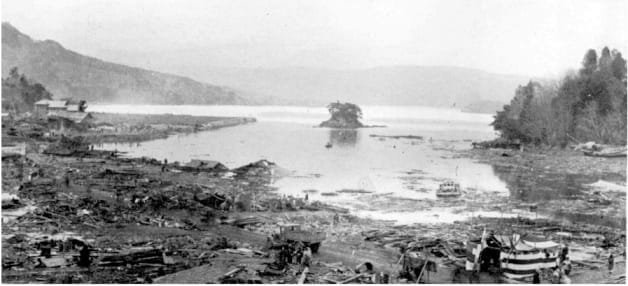
Along the southern shores of the North Island, eyewitnesses recall an eerie stillness before the waters abruptly pulled back, exposing the ocean floor far beyond the usual line—nature’s first grim signal. Within moments, a towering wave slammed onto low-lying areas, obliterating docks, washing away small homes and livestock, and uprooting trees.
Chaos reigned. The shrill cries of alarm mixed with the roar of turbulent waters. Some coastal settlers barely scrambled to safety on higher ground. The tsunami’s force was immense, sweeping far inland in certain areas and leaving a trail of destruction. With no warning systems—none could imagine such an event—people were wholly unprepared.
Stories from the Shore: Eyewitness Accounts and Personal Testimonies
From Maori elders to European settlers, narratives have survived, passed down through generations and recorded in letters and newspapers of the era. Hōri Te Whaiti, a respected Rangitāne leader, spoke of the “big coral food basket” — a metaphor for the sea’s sudden and violent upheaval. A settler family in the Porirua region wrote how their homestead was inundated, and only by clinging to a sturdy tree did they survive.
These personal accounts reveal the human dimension behind the geological data—the fear, bewilderment, and loss. Some survivors eventually banded together to cope, sharing food and shelter amidst the ruined landscape. The tsunami was more than a physical disaster; it was a profound emotional trauma etched in the collective memory of communities.
After the Tempest: The Physical Devastation in Wairarapa and Beyond
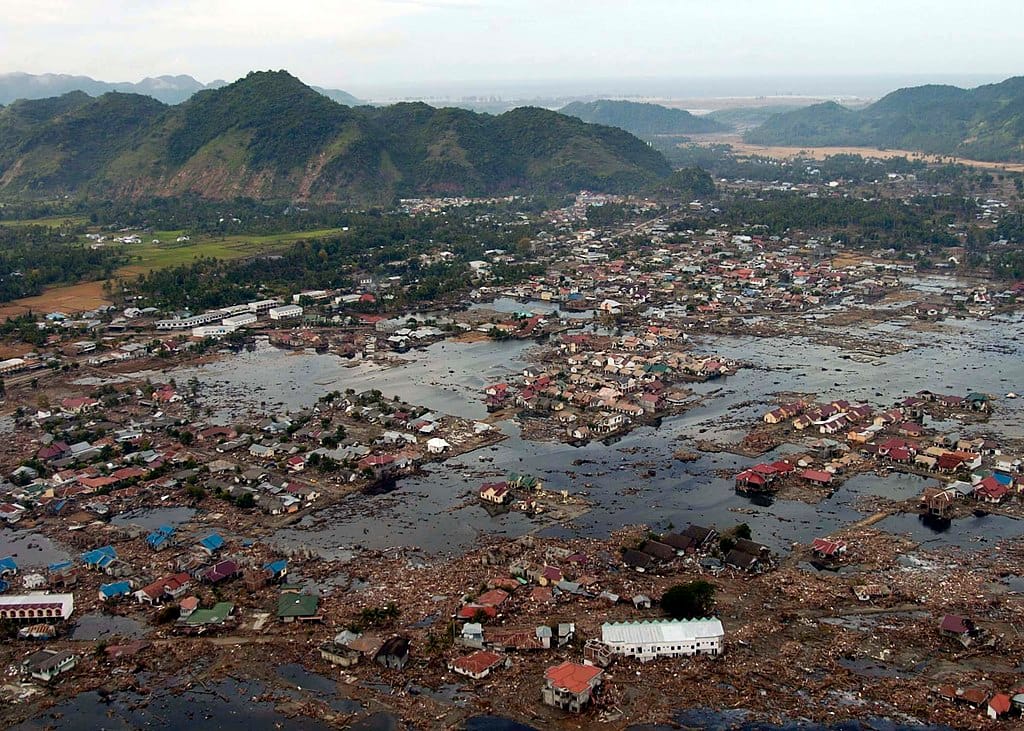
The environmental impact was staggering. Entire stretches of coastline had been reshaped. Farmland was inundated with saltwater, making it temporarily infertile. Forests were flattened, and countless animals perished. Infrastructure—already rudimentary—was left in ruins; roads torn apart, bridges collapsed, and fences destroyed.
In Wellington, the damage was also significant. The town, located on soft sedimentary soils, experienced liquefaction and subsidence, further undermining buildings. Yet, despite the widespread destruction, loss of life was relatively low compared to other tsunamis worldwide—partly thanks to the sparse population density and some early warnings preceding the tsunami from the earthquake's shaking itself.
The Maori Perspective: Cultural Impact and Oral Traditions
For indigenous peoples, this disaster carried layers of spiritual and ancestral significance. The Rangitāne, Ngāti Kahungunu, and other iwi of the region viewed the shaking earth and rising waters as manifestations of atua—gods expressing anger or warning. Oral histories describe the event as both tragic and sacred, pointing to the necessity of respect for the land and sea.
The waning and rising tides served as a powerful cautionary tale in tribal narratives, emphasizing the interwoven relationship between people and nature. These traditions helped preserve the memory of the tsunami, passing down an awareness of natural risks that modern science now seeks to validate.
Colonial Society Reaction: Shock, Relief, and Reconstruction
European settlers, still acclimatizing to life in rugged new lands, were stunned by the scale of devastation. Local newspapers chronicled a community torn between despair and determination. Relief efforts were spontaneous and localized; resources were scant, and the government infrastructure limited.
Rebuilding efforts took years. Some settlers moved inland, wary of the now-altered coastline. Churches and schools had to be rebuilt, and the disaster fostered a burgeoning sense of community solidarity but also highlighted vulnerabilities—social and environmental—in a young colony.
The Geological Legacy: Land Uplift and Landscape Transformation
One of the most remarkable features of the 1855 earthquake and tsunami was the permanent alteration of the landscape. The dramatic uplift of the Wairarapa coast rose by several meters, creating new land where once there was sea. Wetlands turned into grazing land, and tidal flats became firm ground, transforming economic possibilities and settlement patterns.
Geologists regard the event as a key case study in interpreting plate tectonics and fault behavior. The Wairarapa Fault’s activity proved essential in understanding New Zealand’s seismic volatility and guiding future hazard assessments.
Scientific Insight: Early Understanding and Later Research
Although 19th-century scientific knowledge was limited, explorers and geologists like Julius von Haast conducted early surveys of the uplifted coastlines. Later, advanced seismology and geological techniques enabled detailed reconstructions of the event’s dynamics.
Modern research has improved tsunami modeling, risk maps, and early warning protocols for New Zealand’s coastline, knowledge directly stemming from the lessons of 1855. The event remains a benchmark, illustrating how natural disasters can be studied retrospectively to improve future safety.
From Destruction to Resilience: Human Adaptation and Rebuilding
Despite initial trauma, human resilience soon blossomed. Farmers adjusted techniques to cope with salt-inundated soils, communities improved building methods, and emergency preparedness started to enter settlers' minds, even if formal systems were lacking.
The disaster served as a grim teacher, fostering a respect for natural forces and an intricate understanding that the earth beneath their feet was alive and sometimes violent. It shaped both policy and psyche, encouraging a more cautious and informed coexistence with nature’s unpredictability.
Comparing the Past: The 1855 Event in the Context of New Zealand’s Seismic History
New Zealand sits astride the restless boundary of two colossal tectonic plates, with the North Island particularly vulnerable to quakes and tsunamis. The 1855 Wairarapa quake remains one of the largest recorded, often compared to more recent events like the 2011 Christchurch earthquake or the 1947 Gisborne earthquake.
Studying it provides vital context for the nation’s seismic past and future, reminding that while science advances, nature’s power endures—a narrative continuously unfolding across the centuries.
Myths and Memories: How the Tsunami Embedded Itself in Local Consciousness
Over time, the 1855 tsunami becane enshrined in both Maori oral traditions and settler folklore. Stories of the “great wave,” warnings from the ancestors, and miraculous survivals circulated in communities as cautionary tales and cultural heritage.
Annual commemorations and historical markers today ensure the memory persists not merely as a geological fact but as a lived and shared human experience—a symbol of respect and remembrance.
Lessons Learned: Tsunami Preparedness and Risk Management Today
The legacy of the 1855 Wairarapa tsunami resounds loudly in contemporary disaster preparedness frameworks. Modern early warning systems, evacuation plans, and community education campaigns all trace roots to understanding the risks revealed by this event.
New Zealand’s commitment to seismic and tsunami research, building codes, and civil defense policies reflects a hard-earned wisdom: nature’s fury can strike without warning, but human foresight can save lives.
Conclusion: A Nation Shaped by Earth and Sea
More than a century and a half later, the 1855 Wairarapa tsunami stands as a poignant chapter in New Zealand’s geological and cultural story. It encapsulates the staggering power of the natural world and the indomitable spirit of the communities caught in its wake.
This event was not only a destruction of the familiar but a forcing ground for resilience, adaptation, and understanding—a reminder that New Zealand’s identity is deeply forged in the interplay of earth’s turbulence and human courage.
FAQs
Q1: What caused the 1855 Wairarapa earthquake and tsunami?
A1: The earthquake was caused by the rupture of the Wairarapa Fault, part of the boundary between the Pacific and Australian tectonic plates. The vertical displacement of the seabed triggered a local tsunami.
Q2: How strong was the earthquake and how long did it last?
A2: It is estimated at magnitude 8.2 and lasted around 50 to 60 seconds, making it one of New Zealand’s most powerful recorded quakes.
Q3: How many people were affected by the tsunami?
A3: While exact numbers are uncertain due to sparse population and records of the time, many coastal communities experienced destruction and displacement. Casualties were relatively low compared to more densely populated events.
Q4: How did Maori communities interpret the disaster?
A4: The earthquake and tsunami were seen as actions of atua (gods) and carried profound spiritual messages. The event features in oral traditions as a warning and part of their connection to the land and sea.
Q5: What geographical changes resulted from the earthquake?
A5: Significant land uplift occurred, with some coastal areas rising up to 8 meters. This permanently altered the coastline, transforming landscapes and ecosystems.
Q6: How did the settlers respond to the disaster?
A6: Settlers were initially shocked but gradually organized relief and reconstruction efforts, adapting their building and farming techniques in the aftermath.
Q7: What impact did the event have on scientific understanding?
A7: Early geological surveys and later advanced studies highlighted the active tectonics of the region, contributing greatly to knowledge about earthquake and tsunami risks in New Zealand.
Q8: What lessons from the 1855 tsunami inform today’s disaster preparedness?
A8: The event underlined the need for early warning systems, public education on natural hazards, and robust emergency response plans—all core parts of modern risk management.