Table of Contents
- The Day the Earth Roared: September 2, 1992
- Setting the Stage: Nicaragua’s Volcanic and Seismic Landscape
- Geology Unleashed: Understanding the Tsunami Earthquake Phenomenon
- The Morning Shake: The Earthquake’s Initial Tremors
- Waves of Terror: The Tsunami’s Surprise Assault
- Communities in Crisis: The Human Face of Disaster
- Government and International Response: Emergency Measures Amid Chaos
- The Role of Early Warning Systems: Lessons Learned and Lost
- The Aftershocks Within: Psychological and Social Impact on Survivors
- Reconstruction in Ruins: Economic Challenges Post-Disaster
- Environmental Toll: How Nature Both Suffered and Reacted
- Scientific Revelations: What the 1992 Tsunami Earthquake Taught Seismologists
- Narratives from the Ground: Eyewitness Accounts that Shook the World
- Media Coverage and Global Awareness: Bringing Nicaragua's Nightmare to Light
- Legacy of the Tsunami Earthquake: Memory and Memorials
- Building Resilience: How Nicaragua Changed Disaster Preparedness Forever
- Comparing Disasters: The 1992 Event in the Broader History of Tsunami Earthquakes
- The Unseen Forces: Tectonic Plates and the Pressure Cooker of Central America
- International Cooperation and Aid: From Relief to Long-term Partnerships
- Cultural Reflections: Art, Literature, and Music Emerging from Catastrophe
- A Nation’s Resolve: Stories of Survival, Courage, and Hope
- Conclusion: When the Earth Speaks, We Must Listen
- FAQs on the 1992 Nicaragua Tsunami Earthquake
- External Resource – Wikipedia Link
- Internal Link – Visit History Sphere
1. The Day the Earth Roared: September 2, 1992
It was a morning like so many others in coastal Nicaragua, where the sun’s first rays kissed the warm waters of the Pacific Ocean and fishermen readied their boats. The rhythm of daily life, shaped by the land and sea, was about to be shattered. Without warning, the earth beneath their feet trembled violently, an ominous drumbeat heralding a disaster few would ever forget. This was no ordinary earthquake; it was a rare and terrifying "tsunami earthquake," an event where the ground shakes deceptively mildly, yet unleashes devastating tsunami waves—waves that hammered the coast with unrelenting force. The disaster of September 2, 1992, caught many by surprise, leaving a trail of destruction that would change Nicaragua forever.
2. Setting the Stage: Nicaragua’s Volcanic and Seismic Landscape
Nicaragua’s geography reads like a chapter from a geology textbook written in fire and movement. Nestled on the volatile Pacific “Ring of Fire,” the country is a canvas of volcanoes, rift valleys, and tectonic plate boundaries. This tumultuous location means that earthquakes and volcanic eruptions are often part of daily life, sometimes viewed with a fatalistic calmness, other times with dread.
The Pacific coast lies at the intersection where the Cocos Plate dives beneath the Caribbean Plate in a subduction zone—a geological fault line where immense tectonic forces build up over decades to sporadically release vast energy. It is here that the 1992 catastrophe took shape, within the context of decades of political unrest, economic hardships, and an evolving understanding of seismic risk.
3. Geology Unleashed: Understanding the Tsunami Earthquake Phenomenon
What made the 1992 Nicaragua quake exceptional was its nature as a tsunami earthquake, a geological rarity. Unlike typical earthquakes where violent ground shaking is a clear warning, tsunami earthquakes release low-frequency energy that moves slower and causes less intense shaking on land—lulling populations into a false sense of security.
Yet beneath the sea floor, a massive slip occurs on the fault, causing the ocean floor to displace and unleash giant tsunami waves. It was a chilling reminder that Earth’s messages are not always loud and clear—some come in subtle tremors that hide violence beneath the surface.
4. The Morning Shake: The Earthquake’s Initial Tremors
At roughly 6:43 a.m., the earth began to vibrate beneath Nicaragua’s Pacific coast. The initial tremor measured approximately magnitude 7.6 but felt strangely weak to many residents. “It was almost as if the ground was whispering and not roaring,” recalled one survivor years later.
This deceptive shaking failed to trigger immediate evacuation protocols and left the populace dazed but unalarmed—an eerie calm before the storm. However, this was only the prelude.
5. Waves of Terror: The Tsunami’s Surprise Assault
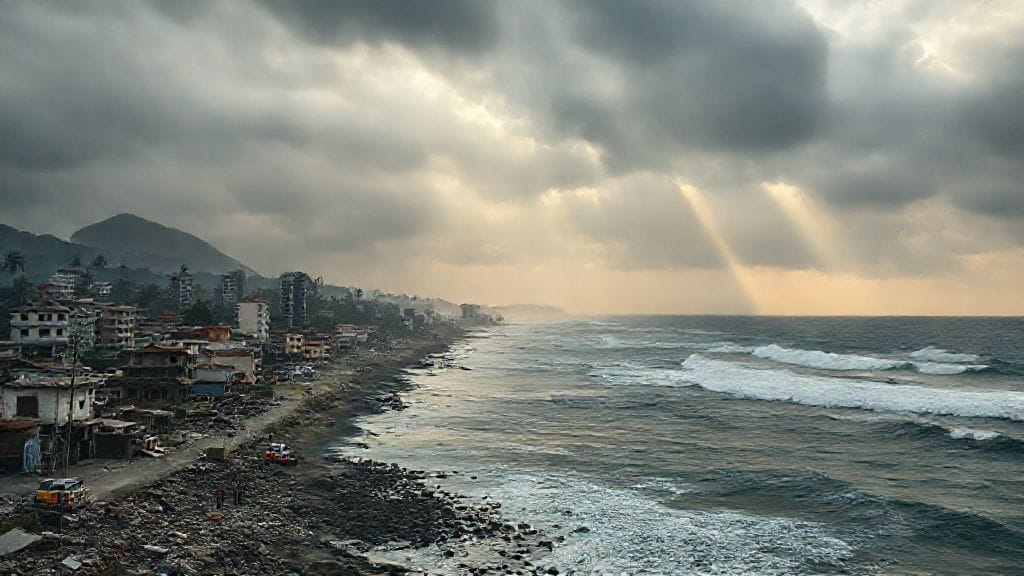
Minutes after the ground trembled, the ocean betrayed its apparent tranquility. First, the sea withdrew—a dreadful phenomenon now recognized as one of the earliest warnings of an impending tsunami. But the reality was cruel and swift: waves, some as high as 10 meters, surged inland with destructive fury.
Entire fishing villages along the coast were swallowed. Homes, boats, and families were overwhelmed by the relentless water. The scale of devastation was staggering; scores were swept away before any meaningful rescue efforts could be launched.
6. Communities in Crisis: The Human Face of Disaster
In the days following, personal stories emerged—of loss, survival, and humanity tested. María Elena, a mother of four, recounted how she held onto a tree limb, watching the waters erase everything she had known. Her village lay in ruins, and nearly half the population perished.
The elderly and children were most vulnerable; countless communities found themselves isolated as roads were washed away. Traditional systems of support collapsed in an instant, exposing deep-seated vulnerabilities in rural Nicaragua’s infrastructure and disaster preparedness.
7. Government and International Response: Emergency Measures Amid Chaos
As the gravity of the disaster became undeniable, the Nicaraguan government mobilized emergency services with limited resources. The nation, worn by years of civil strife and economic depression, found itself overwhelmed.
International aid arrived, an outpouring of solidarity from countries, NGOs, and humanitarian organizations. Emergency shelters were established, medical supplies flown in, and relief teams descended into the most ravaged areas. But bureaucracy, logistical challenges, and the scale of destruction meant that help often arrived too late for many.
8. The Role of Early Warning Systems: Lessons Learned and Lost
One tragic truth of the 1992 tsunami earthquake was the lack of an effective early warning system. At the time, Nicaragua’s seismic monitoring infrastructure was rudimentary, and no tsunami detection mechanism existed along the Pacific coast.
This absence cost many lives and spurred international efforts to improve tsunami detection technology across the region. The disaster became a potent catalyst for Marine and seismic research, emphasizing that timely warnings can mean the difference between life and death.
9. The Aftershocks Within: Psychological and Social Impact on Survivors
Physical destruction was matched by invisible wounds. Survivors faced a long road to psychological recovery. Post-traumatic stress became widespread, with nightmares, anxiety, and depression trailing behind the waves.
Social bonds were strengthened as communities banded together, but fractures also appeared—displacement, poverty, and the trauma of loss reshaped hearts and minds. The disaster’s impact extended far beyond the material ruins.
10. Reconstruction in Ruins: Economic Challenges Post-Disaster
Economically, Nicaragua was set back years. Coastal fishing, a key livelihood, was heavily disrupted. Rebuilding homes, roads, and public infrastructure demanded scarce funds, and international loans added to national debts.
Yet this adversity stimulated discussions around sustainable reconstruction—building structures resistant to future tsunamis, improving urban planning, and diversifying local economies to lessen vulnerability.
11. Environmental Toll: How Nature Both Suffered and Reacted
The tsunami carved scars in Nicaragua’s coastline: eroded beaches, destroyed coral reefs, and altered mangrove ecosystems which traditionally served as natural storm barriers.
Paradoxically, these environmental disruptions underscored the importance of ecological resilience. In the following years, efforts to restore mangroves and protect natural buffers became vital parts of coastal defense strategies.
12. Scientific Revelations: What the 1992 Tsunami Earthquake Taught Seismologists
For scientists, the event was a nightmare and a revelation. It validated years-old theories about tsunami earthquakes, deepening the understanding of subduction zone mechanics.
Data from the quake helped refine tsunami modeling, showing that magnitude alone was not a reliable predictor of tsunami risk, prompting a rethinking of hazard assessments globally.
13. Narratives from the Ground: Eyewitness Accounts that Shook the World
First-hand testimonies humanize statistics. Survivors’ voices reveal moments of raw terror and resilience. Piloto Juan, with his boat swept inland, described the ocean as “an angry monster.”
These stories became crucial for historians and emergency planners, reminding us that behind every data point lies a human life irrevocably changed.
14. Media Coverage and Global Awareness: Bringing Nicaragua's Nightmare to Light
Coverage of the disaster was uneven; the world’s gaze was often elsewhere. However, NGOs and journalists worked tirelessly to spotlight the tragedy, pushing for international awareness and aid.
The event helped elevate the discourse on natural disaster preparedness worldwide, especially for vulnerable developing nations facing similar threats.
15. Legacy of the Tsunami Earthquake: Memory and Memorials
Monuments along Nicaragua’s coast honor those lost, serving as solemn reminders. Annual commemorations foster collective memory and emphasize the importance of vigilance.
Through education and remembrance, the 1992 quake remains etched in the national consciousness—a somber teacher.
16. Building Resilience: How Nicaragua Changed Disaster Preparedness Forever
The disaster spurred national reforms. Investments in early warning systems, community training programs, and international partnerships flourished.
Today, Nicaragua stands better prepared, its people armed with knowledge and resilience forged in hardship.
17. Comparing Disasters: The 1992 Event in the Broader History of Tsunami Earthquakes
Though smaller than the 2004 Indian Ocean tsunami, the 1992 Nicaragua earthquake shares similar geological underpinnings and provides a critical case study on tsunami earthquakes’ quiet but deadly nature.
It remains a benchmark for scientists and policymakers studying underreported tsunami risks.
18. The Unseen Forces: Tectonic Plates and the Pressure Cooker of Central America
Beneath the surface, immense tectonic plates grind in relentless motion. Understanding these silent forces helps contextualize not only earthquakes but also volcanic activity and other environmental phenomena shaping Central America.
It is a reminder: the earth beneath Nicaragua is alive, restless, and demanding respect.
19. International Cooperation and Aid: From Relief to Long-term Partnerships
From immediate humanitarian aid to long-term environmental and infrastructural projects, international cooperation created new avenues for Nicaragua’s recovery.
Organizations like the Red Cross, UNDP, and neighboring countries played pivotal roles, fostering solidarity in adversity.
20. Cultural Reflections: Art, Literature, and Music Emerging from Catastrophe
Artists, writers, and musicians channeled collective grief and resilience into creative expressions. Poems memorialized lost lives; murals painted stories of hope; music echoed survival.
Cultural production became a form of healing and a testament to the human spirit’s endurance.
21. A Nation’s Resolve: Stories of Survival, Courage, and Hope
Amid tragedy, stories of courage shine. From heroic rescues to strangers opening their homes, the disaster revealed Nicaragua’s unbreakable communal bonds.
Hope emerged not as a naive wish but as a determined promise to rebuild and protect future generations.
22. Conclusion: When the Earth Speaks, We Must Listen
The 1992 Nicaragua tsunami earthquake remains a stark reminder of our planet’s fierce power and the fragility of human life. It calls us to listen more acutely, prepare more thoroughly, and respond with compassion.
More than a geological event, it is a human story—of loss, learning, and resilience that echoes beyond borders.
FAQs on the 1992 Nicaragua Tsunami Earthquake
Q1: What caused the 1992 Nicaragua earthquake and tsunami?
A1: The earthquake was triggered by the subduction of the Cocos Plate beneath the Caribbean Plate along a fault line near Nicaragua’s Pacific coast. It was a tsunami earthquake—characterized by slow fault movement underwater that generated a large tsunami with relatively mild initial shaking.
Q2: How many people were affected by the tsunami?
A2: Exact figures vary, but thousands were displaced, and estimates suggest several hundred deaths, with entire communities along the Pacific coast heavily impacted.
Q3: Why was the tsunami so unexpected?
A3: The earthquake’s shaking was deceptively weak, failing to trigger immediate warnings or evacuations. Nicaragua lacked a comprehensive early warning system then, contributing to widespread surprise.
Q4: What changes occurred in Nicaragua’s disaster preparedness after the tragedy?
A4: The country invested in seismic monitoring, installed tsunami warning buoys, conducted community training, and built better infrastructure to reduce future risks.
Q5: How has the international community contributed to Nicaragua’s recovery?
A5: Via emergency aid, reconstruction funding, technical assistance for early warning systems, and long-term sustainable development projects focusing on disaster risk reduction.
Q6: What is a 'tsunami earthquake,' and how is it different from other quakes?
A6: A tsunami earthquake generates disproportionately large tsunami waves compared to the low intensity of ground shaking it produces. Its slow rupture velocity on underwater faults causes this unique hazard.
Q7: Are similar tsunami earthquakes common in Central America?
A7: They are rare but possible along subduction zones in the region. The 1992 event remains one of the few well-documented cases.
Q8: How is the 1992 earthquake remembered today?
A8: Through memorials, annual commemorations, educational programs, and its lasting impact on national policy and culture.