Table of Contents
- Constantinople in Flames: The Storm Brewing in 532
- A City on Edge: The Political and Social Climate Before the Revolt
- The Chariot Factions: Blues and Greens Beyond the Circus
- Emperor Justinian I: The Visionary and the Vulnerable
- The Spark Ignites: The Arrest of the Blues and Greens Leaders
- The Outbreak of Violence: From a Riot to a Full-Scale Rebellion
- The Siege of the Hippodrome: Voices of Anguish and Fury
- Belisarius and Mundus: The Emperor’s Reluctant Generals
- Strategies of Suppression: Military Tactics Amid Urban Chaos
- The Day the Hippodrome Ran Red: The Massacre that Ended the Revolt
- The Price of Victory: Citywide Devastation and Human Toll
- Justinian’s Response: Reconstruction and Reconciliation
- The Aftermath: Power Shifts and Court Intrigues
- The Byzantine Empire Shaken: Political Reverberations Across the Realm
- Nika Revolt in Historical Memory: Myth, Literature, and Legacy
- Lessons From the Flames: Governance, Rebellion, and Urban Identity
- How Nika Reshaped Constantinople and Byzantine Authority
- Reflections: The Human Faces Behind the Revolt
- The Role of Religion and Culture During the Uprising
- An Eyewitness Account: Procopius and the Voice of History
- Modern Perspectives: What the Nika Revolt Tells Us Today
- Conclusion
- FAQs
- External Resource
- Internal Link
Constantinople in Flames: The Storm Brewing in 532
The year was 532 AD, a winter so bitter that even the harbor waters seemed to shudder. Yet beneath this chill, Constantinople—a jewel of the Byzantine Empire—was simmering with a dangerous heat. The streets that had once echoed with the cheers of chariot races were now filled with boiling resentment. Smoke darkened the sky as fires blazed uncontrolled, and the city’s famed Hippodrome became a battlefield, where voices of hundreds of thousands transformed into a roar of rebellion. This was not merely a riot; it was the Nika Revolt, the most devastating uprising in the history of Byzantium, threatening to topple Emperor Justinian I’s reign. But behind the chaos stood two remarkable men—Belisarius and Mundus—whose swift and brutal intervention would decide the fate of an empire.
A City on Edge: The Political and Social Climate Before the Revolt
To understand the eruption of the Nika Revolt, one must appreciate the volatile, layered fabric of Constantinople’s society. The capital of the Eastern Roman Empire was a metropolis of nearly half a million souls, a melting pot of ethnicities, classes, and professions. Yet this grandeur masked festering discontent—high taxes imposed by Justinian’s ambitious policies, widespread corruption, and a fractured bureaucracy fed a growing bitterness. The emperor’s desire to revive the old Roman glory clashed with the daily struggles of artisans, merchants, and the urban poor.
The city’s factions—the Blues and the Greens—were not mere sports teams but potent political entities deeply entwined with the social order. Their rivalry occasionally spilled into clashes, but by 532, these allegiances represented broader social and religious divides, making Constantinople a tinderbox primed for ignition.
The Chariot Factions: Blues and Greens Beyond the Circus
Too often reduced to fanaticism over chariot races, the Blues and Greens held far more intricate roles in Byzantine life. They were extensions of political power, connected with civic institutions, religious groups, and even imperial patronage. The Blues, often linked with the aristocracy and Chalcedonian Christianity, stood in contrast to the Greens, traditionally supported by the urban masses and linked with Monophysitism. This factionalism shaped votes in the Hippodrome, influenced the court’s decisions, and rivaled for control over public opinion.
By 532, simmering tensions between these groups merged with broader disaffection with government injustices. A trivial dispute at a chariot race would soon spiral into a revolt that threatened the very foundation of Imperial rule.
Emperor Justinian I: The Visionary and the Vulnerable
Emperor Justinian I, ascending the throne in 527, was a man of grand visions: restore Roman dominion in the West, codify laws into what would become the Corpus Juris Civilis, and reshape Constantinople itself. Yet, his determination to impose heavy taxes for military campaigns and monumental building projects sowed resentment. He was also politically isolated—his wife Theodora, a woman of remarkable influence, supported him, but many in court and among the populace viewed the emperor’s reforms as overbearing.
His rule was marked by contradictions—brilliant and autocratic, beloved and feared, admired but increasingly vulnerable to the undercurrents of rebellion.
The Spark Ignites: The Arrest of the Blues and Greens Leaders
It was in early January 532 when tensions reached a boiling point. Justinian’s administration made a misstep: the arrest and harsh sentencing of several Blues and Greens faction leaders, following a violent brawl at the Hippodrome. The factions perceived this as a direct attack on their honor and influence. When news spread rapidly through the city, the populace's anger, already volatile, ignited like dry tinder.
On January 13, the Hippodrome buzzed with an unusual mix of festive anticipation and simmering rage—chariot races were held, but beneath the cheers lurked cries for justice and change.
The Outbreak of Violence: From a Riot to a Full-Scale Rebellion
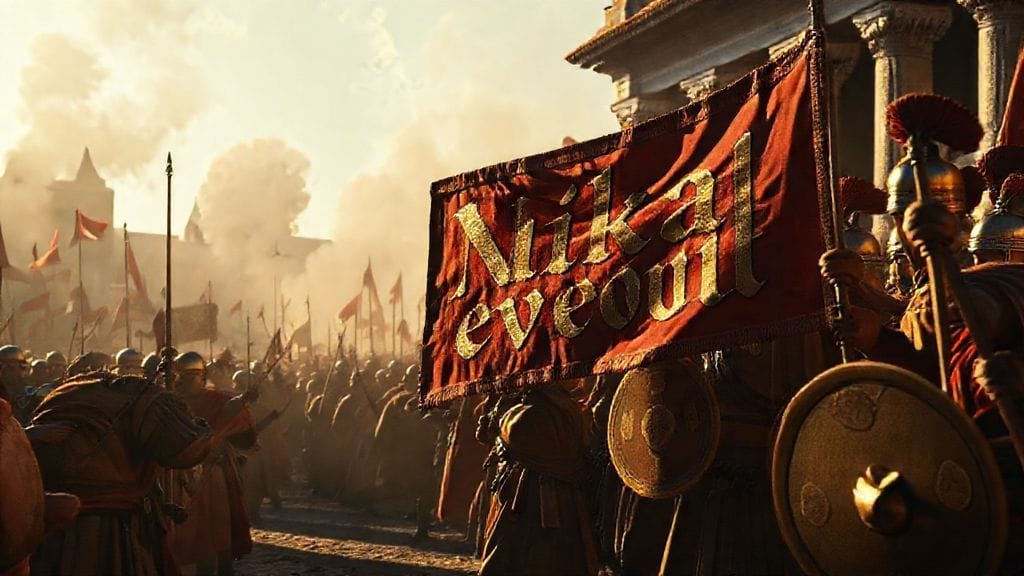
On that fateful day, what began as shouted protests escalated into open violence. The crowd at the Hippodrome started chanting “Nika!” — “Conquer!” or “Win!”—a rallying cry that soon turned from a sports cheer into a revolutionary chant. Officials were attacked, buildings set alight, and barricades sprang up across the city. The imperial guard was overwhelmed, and the emperor’s power seemed to crumble before the eyes of thousands.
For four days, Constantinople was engulfed in chaos. The faction fighters united in common cause, a rare moment of solidarity driven by shared disdain for the regime. The flame of civil war spread rapidly, consuming everything in its path.
The Siege of the Hippodrome: Voices of Anguish and Fury
The Hippodrome, an architectural marvel capable of holding 30,000 spectators, became the epicenter of the revolt. Normally a place of joy and spectacle, its seats now witnessed defiance against imperial authority. Voices clamored from the tiers in an angry sea, echoing with desperation and determination.
The rebels demanded that Justinian abdicate and hand over power to a figure of their choosing—Hypatius, a nephew of a former emperor. The weight of centuries of imperial legitimacy seemed in jeopardy under the shouts of a frenzied populace.
Belisarius and Mundus: The Emperor’s Reluctant Generals
Justinian was on the verge of fleeing the city, doubting if his rule could survive this unprecedented rebellion. It was then that two of Byzantium’s greatest military minds, Belisarius and Mundus, stepped forward. Belisarius, a brilliant commander renowned for his campaigns in North Africa and Italy, was calm and resolute. Mundus, his fellow general, was equally ruthless and strategic.
Though some accounts suggest the generals hesitated to act against fellow citizens, they understood the stakes: the revolt’s suppression was essential not only for the emperor’s survival but for the empire’s unity.
Strategies of Suppression: Military Tactics Amid Urban Chaos
The challenge was immense—how to pacify a population enraged, occupying the city's central heart, while minimizing destruction? Belisarius and Mundus devised a plan—disguising soldiers as civilians, infiltrating the Hippodrome under the cover of night.
The soldiers launched a swift and brutal assault. Equipped with swords and shields, moving through the labyrinth of seating, they cut down rioters mercilessly. The calm precision of this military operation contrasted starkly with the chaos inside the city.
The Day the Hippodrome Ran Red: The Massacre that Ended the Revolt
The slaughter lasted only hours but left an indelible mark on Byzantine history. Thousands were killed—reports suggest up to 30,000 dead within the Hippodrome alone. The cries of the defeated reverberated into the night, silencing the rebellion.
Hypatius was captured and executed publicly, a clear message of Imperial authority. The city fell back into fearful silence, but the wounds from this day would fester for years.
The Price of Victory: Citywide Devastation and Human Toll
The physical destruction—homes, markets, churches—pushed into ashes. Fires still smoldered days after the revolt’s end. The population, shaken by loss and trauma, faced famine and displacement.
Socially, the harsh reprisals fractured communities, especially among the factions whose identities had been so deeply entwined with the revolt. For many, the Nika Revolt would be remembered as a tragic fracture in the city’s soul.
Justinian’s Response: Reconstruction and Reconciliation
With the rebellion crushed, Justinian embarked on an ambitious campaign of rebuilding. The heart of Constantinople was transformed: churches repaired, markets restored, but more enduringly, the Hagia Sophia was commissioned—a symbol of divine and imperial authority rising from ashes.
Justinian also sought to mend social fractures through administrative reforms and waves of political purges that removed opposition. His tightened grip on power, however, was tempered by a keen awareness of the delicate balance between repression and concession.
The Aftermath: Power Shifts and Court Intrigues
The end of the revolt marked significant shifts within the imperial court. Theodora, often credited with persuading Justinian to stay and fight, gained even greater influence. Meanwhile, those who had hesitated during the revolt or shown sympathy for rebels found their careers abruptly ended.
The Nika Revolt revealed cracks in the governance structure that complicated Justinian’s subsequent campaigns in Italy and North Africa, reminding all that the empire’s stability depended as much on internal control as on military conquest.
The Byzantine Empire Shaken: Political Reverberations Across the Realm
News of the revolt and its bloody suppression sent shockwaves throughout the empire. Provinces watched as the capital trembled, fueling anxieties about the emperor’s vulnerability. Neighboring powers such as the Sassanian Empire considered the opportunity the unrest presented.
Internally, the rebellion underscored tensions between tradition and reform, wealth and poverty, paving the way for shifts in policies that would shape Byzantium’s future.
Nika Revolt in Historical Memory: Myth, Literature, and Legacy
The Nika Revolt’s dramatic flair captured the imaginations of historians and storytellers alike. Procopius, the primary chronicler, painted vivid scenes of heroism and tragedy. Over centuries, the revolt evolved into legend—a spectacle of barbarity and empire-defining moment.
The term “Nika” itself entered the lexicon as a symbol of defiance and upheaval, cited in literature, theater, and modern historical scholarship.
Lessons From the Flames: Governance, Rebellion, and Urban Identity
Studying the Nika Revolt offers insights beyond a simple revolt narrative. It reveals the complexities of civic identity in urban empires, the destructive potential of factionalism, and the lethal balance rulers must strike between authority and legitimacy.
Justinian’s experience stands as a cautionary tale on how reform and repression intertwine and the fragility of political systems under strain.
How Nika Reshaped Constantinople and Byzantine Authority
The revolt’s suppression changed Constantinople visibly and structurally. The aftermath saw the centralization of imperial power, reduced independence of factional groups, and reinvigoration of state propaganda.
The city’s reconstruction was both practical and symbolic—a reminder that even in destruction, empire found ways to assert continuity.
Reflections: The Human Faces Behind the Revolt
Amidst the grand history, one might pause on the lives lost—artisans, charioteers, mothers, and fathers caught in a maelstrom beyond their control. Their voices, often muffled by historical narrative focused on emperors and generals, represent the true toll of rebellion: a city’s heartbreak, families shattered, futures undone.
The Role of Religion and Culture During the Uprising
Religion, while not the primary driver, intertwined with political tensions. The Christian schisms between Chalcedonian and Monophysite communities partially overlapped with factional divides, fueling mistrust.
The revolt also disrupted religious festivals and rituals, striking at the spiritual fabric of Constantinople during a perilous winter.
An Eyewitness Account: Procopius and the Voice of History
Procopius’s account remains invaluable. His eyewitness narration combines dramatic vividness with analytical insight, presenting a multilayered image of the revolt.
Yet, even he bore his biases—a reminder that history is as much about interpretation as recording facts. His portrayal has shaped all subsequent understandings of the Nika Revolt.
Modern Perspectives: What the Nika Revolt Tells Us Today
In contemporary times, the Nika Revolt invites reflection on urban protest, the role of spectacle in politics, and the power of popular movements. It resonates with modern concerns about governance and civic unrest, showing that while centuries have passed, the essentials of political legitimacy and social justice continue to challenge empires and nations alike.
Conclusion
The Nika Revolt stands as a monumental episode in world history, not only for its scale or violence but for what it reveals about power, passion, and people. In the heart of Constantinople, where empire and citizenry collided, the revolt tested the limits of imperial authority and the resilience of a city.
Through fire and blood, Justinian’s Byzantium emerged transformed—scarred but stronger. The episode teaches us that history is never a sterile record, but a living tapestry of human ambitions, failures, and hopes. In the flames of the Hippodrome, we glimpse the eternal dance between rulers and the ruled, a narrative as relevant now as it was nearly 1,500 years ago.
FAQs
Q1: What were the main causes of the Nika Revolt?
A1: The revolt was caused by a mix of political dissatisfaction, heavy taxation under Justinian’s reforms, factional rivalries between the Blues and Greens, and immediate provocation after the harsh punishment of faction leaders.
Q2: Who were Belisarius and Mundus, and what was their role?
A2: Belisarius and Mundus were Justinian’s top generals. They led the military suppression of the revolt, orchestrating the decisive and brutal attack that ended the uprising.
Q3: How did the Nika Revolt affect Emperor Justinian’s reign?
A3: Although nearly overthrown, Justinian’s reign ultimately strengthened. His response to the revolt solidified his absolute power and led to significant rebuilding efforts, notably the Hagia Sophia.
Q4: What was the social significance of the Blues and Greens factions?
A4: Beyond chariot fans, they were social and political groups representing class, religious, and political divides within Constantinople, deeply embedded in urban culture and power dynamics.
Q5: How many people were killed during the revolt?
A5: Contemporary sources estimate that about 30,000 people died during the suppression of the Nika Revolt, particularly in the massacre at the Hippodrome.
Q6: Did the revolt have any lasting impact on Byzantine law or governance?
A6: Yes. Post-revolt, Justinian emphasized tighter imperial control, reformed local governance, and reduced the influence of factional groups to prevent similar uprisings.
Q7: How is the Nika Revolt remembered in historical literature?
A7: It is portrayed as a dramatic and tragic uprising, a symbol of popular resistance but also the brutal restoration of order, immortalized by historians like Procopius.
Q8: Are there any modern parallels drawn with the Nika Revolt?
A8: Historians and political scientists often compare it to urban riots and protests in modern cities, highlighting tensions between authority and popular will, control and freedom.

