Table of Contents
- A Thunderous Awakening: February 28, 2001
- The Sleeping Giant Beneath the Pacific Northwest
- Tracing the Fault Lines: The Cascadia Subduction Zone
- Building Tension: Geological Precursors and Historical Seismicity
- Early Morning Shocks: The Nisqually Earthquake Unfolds
- The City That Stirred: Seattle and Its Reaction
- The Ripple Effect: Impact Across Washington State
- Human Stories Emerged from Cracks and Rubble
- Infrastructure and Architecture: Assessing the Damage
- Emergency Response in the Hours that Followed
- Scientific Insights: What the Earthquake Taught Seismologists
- Public Awareness and Earthquake Preparedness: A New Urgency
- Political and Economic Reverberations in the Pacific Northwest
- The Nisqually Earthquake in Context: Comparing Regional Seismic Events
- Shadows of the Past: Ancient Earthquakes and Tsunami Risks
- Cultural Memory: How Communities Remembered and Rebuilt
- From Ruin to Resilience: Urban Planning and Mitigation Strategies
- The Earth’s Pulse: Geological Monitoring Advances Post-Nisqually
- Voices of Survivors: Anecdotes, Fears, and Hope
- The Nisqually Legacy: Lessons for the 21st Century
- Conclusion
- FAQs
- External Resource
- Internal Link
A Thunderous Awakening: February 28, 2001
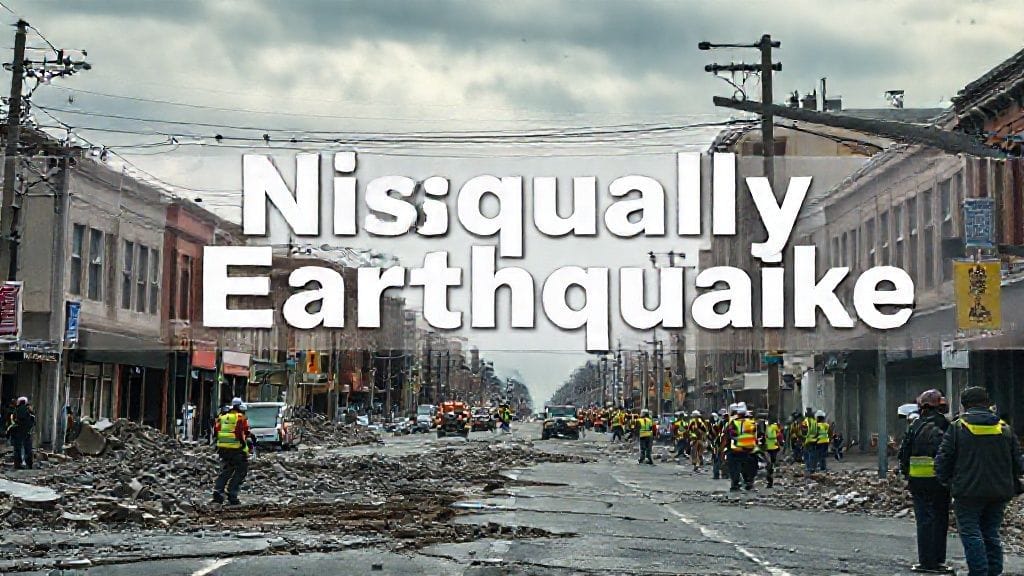
Before dawn on a winter morning, the earth beneath Washington State groaned, shifted, and cracked—a subtle but unmistakable herald of power unleashed. At precisely 10:54 a.m., February 28, 2001, a magnitude 6.8 earthquake ruptured the deep crust beneath the Puget Sound lowlands, shaking homes, toppling chimneys, and setting off the alarm bells of an entire region. For a moment, life paused. Heartbeats quickened, windows rattled, and beneath the calm façade of Seattle and its surrounding cities, time seemed to bend—as if the very earth was reminding its inhabitants of an ancient and waiting fury. This was the Nisqually Earthquake, a seismic event that reverberated far beyond its tremor zone, shaking the Pacific Northwest to its core and reshaping the conversation on earthquake preparedness for years to come.
The Sleeping Giant Beneath the Pacific Northwest
The Nisqually Earthquake was not just an isolated event; it was the physical manifestation of geological forces that had been at work for millennia. The Pacific Northwest sits at the heart of a colossal tectonic interface where the Juan de Fuca Plate subducts beneath the North American Plate along the Cascadia Subduction Zone. This interface is a slumbering giant—a fault line capable of spawning megathrust earthquakes far more devastating than anything recorded in modern times. Beneath the lush forests and bustling cities, this geological phenomenon silently carries the weight of countless centuries, its energy accumulating patiently, waiting for release.
Washington’s varied landscape—its rugged coastline, forested highlands, and intricate network of waterways—belies the tension lurking just kilometers below. The Nisqually event was, intriguingly, a “intraplate” quake occurring within the subducting slab itself, at about 50 kilometers depth, rather than a classic megathrust quake along the overriding plate boundary. Such deep quakes offer nuanced insight into the state of stress and deformation within geological plates, highlighting complexities that challenge even the most sophisticated seismic models.
Tracing the Fault Lines: The Cascadia Subduction Zone
Stretching from northern California to southern British Columbia, the Cascadia Subduction Zone had long been the subject of geological intrigue and public concern. Unlike the more notorious San Andreas Fault, which generates frequent moderate earthquakes, Cascadia’s seismic behavior is marked by rare but colossal earthquakes every 300 to 600 years—a clock that had not ticked for over three centuries by 2001.
Despite the absence of large earthquakes in recent history, the zone is far from dormant. Smaller, deeper quakes like Nisqually occur periodically, and they paint a picture of creeping plate movement, locked patches, and accumulating strain. Geologists and seismologists had been steadily piecing together the evidence—from ghost forests submerged by past tsunamis, to sediment layers revealing mysterious soil liquefaction—all testifying to events of unimaginable shaking and destruction.
Building Tension: Geological Precursors and Historical Seismicity
Though no one can predict exactly when the ‘big one’ will hit the Pacific Northwest, seismic activity leading up to the Nisqually earthquake was closely scrutinized. Earthquakes in the region varied from small tremors to moderate jolts, some registering barely perceptible ground movement, others unsettling buildings and rattling nerves.
Historical records depict other notable earthquakes—like the 1949 Olympia quake and the 1965 Puget Sound tremor—events which shook the region to varying degrees but paled in comparison to the anticipated megathrust potential. For communities living in the shadow of volcanic peaks like Mount Rainier and Mount St. Helens, the complex seismic setting demanded constant vigilance.
Scientists monitored subtle ground deformation, quiescent periods in seismicity, and changes in gas emissions around volcanic regions—but these indicators, while valuable, never offered a straightforward warning. Instead, the countdown to February 28 unfolded silently beneath layers of rock and sediment, invisibly stacking energy.
Early Morning Shocks: The Nisqually Earthquake Unfolds
The moment the Nisqually Earthquake struck, it caught the public with mixed surprise and preparedness. Originating near the town of Nisqually, about 11 miles southwest of Olympia, at a depth of approximately 51 kilometers (32 miles), the quake was felt across a broad swath of Washington State, western Oregon, and even parts of Idaho and British Columbia.
Unlike shallow crustal events, the depth of Nisqually moderated its surface shaking, yet the magnitude ensured it was powerful enough to rattle windows, dislodge ceiling fixtures, and send tumbling bookcases crashing down. The jolting motion lasted around 45 seconds, an eternity during which millions experienced the raw reminder of earth’s restless nature.
Seattle, perched on reclaimed waterfront and sedimentary soils, swayed ominously. Skyscraper lights flickered, elevators stopped mid-ascent, and thousands found themselves scrambling for cover. In some areas, minor landslides whispered through the hills and roadways, signaling the quake’s reach into the natural landscape.
The City That Stirred: Seattle and Its Reaction
Seattle, as the largest urban area affected, became the symbol of both vulnerability and resilience. Streets emptied momentarily; the hum of traffic paused. Emergency sirens melded with the general murmur of concern. Schools, offices, and homes executed practiced drills, but the stark reality of shaking earth was a visceral, often frightening experience.
Residents described the event with vivid clarity: the rumble like a passing freight train, the ground heaving as if breath was being drawn from beneath them. For some, the experience triggered weeks of heightened anxiety; for others, it was a point of awakening to the region’s seismic realities.
City officials quickly mobilized emergency services, assessed structural damage, and coordinated with state and federal agencies. Though no fatalities were reported, the Nisqually Earthquake highlighted the need to prioritize public safety infrastructure and reinforce older buildings ill-prepared for seismic events.
The Ripple Effect: Impact Across Washington State
Beyond Seattle and Olympia, smaller towns and rural communities also felt the earth’s tremors. Power outages affected tens of thousands; water service was interrupted in some areas; and communication networks briefly faltered. Bridges were inspected, roads cleared of debris, and schools ran facility assessments before resuming daily activities.
Historic landmarks took a particular brunt—facades cracked, ornamental stonework fell, and ceiling plaster crumbled. In some cases, communities united quickly to preserve and repair cultural heritage threatened by newfound fragility.
Agricultural areas experienced damage to irrigation systems, while residents grappled with the anxieties of aftershocks—smaller jolts that reminded them precautions could not be abandoned.
Human Stories Emerged from Cracks and Rubble
Amidst the shaking and aftermath, personal narratives surfaced—some heartening, others haunting. A mother breathlessly recalled clutching her children as family photos toppled from walls. Business owners described the harrowing moments checking inventory amid scattered merchandise. First responders recounted the surge of calls, from minor injuries to stranded elevator occupants.
The quake’s human dimension reminded all that seismic events are not mere geological curiosities but episodes that ripple through lives, reshaping emotions, relationships, and local histories.
Infrastructure and Architecture: Assessing the Damage
The Nisqually Earthquake provided a critical test for the region’s structural resilience. Several bridges, including portions of the Tacoma Narrows Bridge approach, suffered damage necessitating closures and lengthy repairs. Some highways developed cracks and settling issues due to liquefaction—the process by which saturated sediments lose strength during shaking.
Older masonry buildings, especially those built before modern building codes incorporated seismic standards, showed significant vulnerabilities. Yet, newer constructions employing seismic reinforcements performed better, swaying but remaining largely intact—a testament to evolving engineering knowledge.
Public facilities such as hospitals and emergency response centers underwent rapid evaluations to ensure functionality, an essential step in disaster management.
Emergency Response in the Hours that Followed
Washington State’s coordinated emergency response strategy was quickly set in motion. The Washington Emergency Management Division activated response centers; first responders prioritized rapid damage surveys and assistance.
Community shelters opened, though thankfully few were occupied due to minimal displacement. Utilities crews worked around the clock restoring power and water lines, while transportation agencies cleared key routes for emergency vehicles.
Governor Gary Locke declared a state of emergency, unlocking federal aid and enhancing resource mobilization. This effective collaboration underscored the importance of preparedness drills and communication networks—factors that would shape future policy.
Scientific Insights: What the Earthquake Taught Seismologists
For geologists and seismologists, Nisqually was a wellspring of data. The earthquake’s intermediate depth provided a unique window into the Cascadia subduction zone mechanics, especially the forces within the descending Juan de Fuca Plate.
The precise analysis of aftershock patterns, ground motion recordings, and fault rupture behaviors helped refine seismic hazard models. It also demonstrated that while deeper quakes often cause less damage than shallow ones, their widespread impact cannot be underestimated.
This understanding directly influenced local building codes, urban planning, and the design of critical infrastructure, driving innovation in earthquake engineering.
Public Awareness and Earthquake Preparedness: A New Urgency
Before 2001, public knowledge about Pacific Northwest earthquakes was growing but uneven. Nisqually transformed understanding from abstract possibility to immediate reality. Schools incorporated enhanced earthquake drills; public organizations ramped up educational campaigns; businesses invested in disaster continuity plans.
This earthquake was a candid reminder that while shrouded in geological time, seismic threats are imminent and demand vigilance. Community groups and governmental agencies collaborated to disseminate preparedness tips, reinforce emergency kits, and foster neighborhood resilience networks.
Political and Economic Reverberations in the Pacific Northwest
The earthquake’s political impact extended beyond emergency management. Legislators dedicated funding to seismic retrofitting programs, infrastructure upgrades, and scientific research initiatives. Awareness campaigns garnered bipartisan support as safety became a shared priority.
Economically, the damage prompted insurance claims, building renovations, and temporary business interruptions—costing millions. Yet, these expenses fueled investments in safer futures, balancing short-term loss with long-term gain.
Trust in government agencies surged as transparent communication and swift aid reassured populations. Nisqually underscored the need for integrated regional planning addressing both immediate response and sustained mitigation.
The Nisqually Earthquake in Context: Comparing Regional Seismic Events
In the historical panorama of Pacific Northwest seismicity, Nisqually occupies a significant, if less catastrophic, space. The 1949 Olympia quake, magnitude 6.7, shared similar characteristics; both events confirmed the region’s volatile nature without the truly historic megathrust rupture.
Compared to California’s frequent moderate earthquakes, Washington’s seismicity pattern is intermittent but potentially more powerful when unleashed. Nisqually captured public attention precisely because it defied patterns—reminding experts that the unknown always lingers beneath known science.
Shadows of the Past: Ancient Earthquakes and Tsunami Risks
Beyond seismic shaking, the Cascadia Subduction Zone looms as a generator of tsunamis. Geological investigations confirmed that roughly 300 years earlier, a massive earthquake devastated the region, triggering a giant tsunami along the coastline. Oral histories from Indigenous peoples preserved echoes of this cataclysm.
While Nisqually itself did not generate a tsunami, it sharpened focus on the broader risks—preparing coastal communities with warning systems, evacuation routes, and real-time monitoring.
This blending of ancient memory and modern science framed regional emergency frameworks in a holistic way, integrating natural history with community safety.
Cultural Memory: How Communities Remembered and Rebuilt
The earthquake entered local consciousness not merely as a moment of disruption but as a chapter in collective resilience. Commemorations, exhibitions, and storytelling events unfolded, preserving the emotional and experiential imprint.
Schools invited survivors to share their experiences; museums curated geological displays; artists channeled the tremors into creative expression—poetry, painting, and photography capturing both rupture and renewal.
This cultural memory ensured that Nisqually was not forgotten as a mere statistic, but kept alive as a source of shared identity and future caution.
From Ruin to Resilience: Urban Planning and Mitigation Strategies
Post-Nisqually, urban planners embraced new challenges. Building codes tightened, enforceable standards for retrofitting heritage structures expanded, and land-use policies adjusted to avoid high-risk zones.
Infrastructure projects incorporated cutting-edge seismic isolation technologies, aiming to allow cities to absorb shocks without catastrophic consequences. Community education programs became permanent fixtures.
This transformation exemplified shifting philosophies: from reactive rebuilding toward proactive resilience—recognizing that human safety is inseparable from geological realities.
The Earth’s Pulse: Geological Monitoring Advances Post-Nisqually
Nisqually stimulated the expansion of seismic networks and geological monitoring. Dense arrays of sensors, GPS stations, and real-time data processing systems were deployed across Washington.
This technological advancement enabled quicker detection of earthquakes, improved understanding of interplate stress, and enhanced early warning capabilities—though full early warning for large quakes remains an ongoing pursuit.
The event proved a catalyst, galvanizing investment into Earth sciences and fostering collaborations among universities, government agencies, and local communities.
Voices of Survivors: Anecdotes, Fears, and Hope
Stories from individuals underscore the earthquake’s profound human dimension. An elderly resident told of her trembling hands tending to fallen plants, whispering thanks that her home stood firm. A young couple described their first instinct to check on elderly neighbors despite their own broken belongings.
At the same time, some expressed lingering fears—unseen aftershocks triggered anxiety, and questions about readiness prompted family discussions on earthquake kits and escape plans.
Yet, hope emerged too: communities strengthened by shared experience, schools revising emergency protocols, and families bonding over resilience. These voices breathe life into dry tectonic narratives.
The Nisqually Legacy: Lessons for the 21st Century
Two decades on, the Nisqually Earthquake remains a touchstone for seismic awareness in the Pacific Northwest. It galvanized structural improvements, public engagement, and scientific inquiry.
Its legacy is a portrait of a society awakening to deep natural forces—embracing knowledge while acknowledging limits. The story of Nisqually is a reminder that progress lies not just in engineering marvels but in the communal resolve to live wisely on a restless earth.
Conclusion
The Nisqually Earthquake of 2001 was a vivid awakening for Washington State and the broader Pacific Northwest. It revealed both the power and subtlety of seismic forces lurking beneath a landscape of forests and bustling cities. Unlike the sudden catastrophe of some natural disasters, it translated geological processes into human terms—shaking lives, testing preparedness, and inspiring transformation.
Beyond the physical tremors lay a profound emotional and intellectual shock: a call to recognize, respect, and adapt to our planet’s restless heart. Nisqually taught lessons of vigilance, resilience, and community spirit—reminding us that beneath the surface, Earth’s ancient pulse continues unabated, inviting us to listen, learn, and prepare.
FAQs
Q1: What caused the Nisqually Earthquake in 2001?
The Nisqually Earthquake was caused by a fault rupture within the descending Juan de Fuca tectonic plate about 51 kilometers deep beneath the Puget Sound region. It is classified as an intraplate earthquake within the subducting slab.
Q2: How powerful was the Nisqually Earthquake?
It measured a magnitude of 6.8, powerful enough to cause widespread shaking across Washington State and neighboring regions, but moderate compared to potential megathrust events along the Cascadia Subduction Zone.
Q3: Were there any casualties or fatalities during the earthquake?
Remarkably, no fatalities were reported. However, there were injuries, property damage, and significant disruption in daily life.
Q4: How did the Nisqually Earthquake change earthquake preparedness in the Pacific Northwest?
It spurred increased public awareness, reinforced building codes, improved emergency management protocols, and motivated the expansion of seismic monitoring networks.
Q5: Is the Pacific Northwest at risk for larger earthquakes?
Yes. The Cascadia Subduction Zone is capable of producing megathrust earthquakes of magnitude 9 or higher, which could cause extensive damage and tsunamis.
Q6: What was unique about the Nisqually Earthquake compared to other regional quakes?
Its deeper focus within the subducting plate and moderate magnitude distinguished it from shallow crustal quakes. It provided valuable scientific data on stress distribution in the subduction zone.
Q7: How did communities cope and rebuild after Nisqually?
Communities engaged in rapid damage assessments and repairs, increased preparedness activities, and incorporated seismic resilience into rebuilding efforts, fostering a culture of readiness.
Q8: Where can I learn more about the Nisqually Earthquake?
Extensive information, scientific analysis, and historical context are available through academic resources and detailed entries such as on Wikipedia.