Table of Contents
- Dawn of a New Order: The Norman Arrival in Southern Italy
- The Complex Tapestry of Apulia and Calabria Before 1059
- The Rise of the Norman Condottieri: From Mercenaries to Lords
- Robert Guiscard and the Ambition to Rule
- The Papal Dilemma: Between Byzantine, Lombard, and Norman Influences
- The Council of Melfi: Setting the Stage for Recognition
- The Investiture of 1059: Papal Authority Meets Norman Power
- The Terms of the Duchy: Titles, Obligations, and Autonomy
- Symbolism and Ceremony: Power Legitimated in Melfi
- Reaction and Resistance: Byzantine and Lombard Responses
- Consolidation of Norman Rule: Military and Administrative Reforms
- Cultural Synthesis in Norman Apulia and Calabria
- The Impact on Mediterranean Politics and the Papacy
- The Norman Duchy’s Legacy in European Feudalism
- The Architectural Renaissance Under Norman Patronage
- The Dialogues of Power: Norman, Papal, and Imperial Relations
- The Socio-Economic Transformation of Southern Italy
- The Norman Duchy and the Crusading Impulse
- Enduring Myths and Historical Narratives
- Conclusion: The Birth of a Kingdom and a New Era in Italy
- FAQs
- External Resource
- Internal Link
Dawn of a New Order: The Norman Arrival in Southern Italy
It was a time of shifting alliances and fractured sovereignties, a landscape where swords and faith intertwined to redraw borders and destinies. The deep-hued sun of the Mediterranean cast long shadows over the rugged hills of Apulia and Calabria in 1059. In the bustling town of Melfi, a moment awaited poised to ripple far beyond the Italian peninsula: the formal recognition by Pope Nicholas II of the Norman dominion over these lands. This was no mere ceremony. It was the birth certificate of a duchy that would forge new political and cultural paths, signaling the rise of a formidable power in the south—Normans once mercenaries, now sovereigns.
But how did these fierce northern warriors, descendants of Vikings turned Frenchmen, arrive to claim titles once held by Byzantines and Lombards? What tides of ambition, shifting loyalties, and papal politics converged beneath the shadowed arches of Melfi’s cathedral? The Norman Duchy of Apulia and Calabria was more than a territorial grant—it was the crucible in which medieval identity, power, and faith found a new synthesis. This is the story of that pivotal moment in 1059.
The Complex Tapestry of Apulia and Calabria Before 1059
Prior to Norman intervention, southern Italy was a mosaic of fragmented powers and cultures, each vying for survival and supremacy. The Byzantines held sway over coastal cities, striving to maintain their waning influence since Justinian’s reconquest centuries earlier. Yet their grip was tenuous; costly wars and distant rulers eroded central control.
The Lombards ruled inland principalities stubbornly clinging to independence and tradition. They were warriors of Germanic descent, their duchies often in conflict with one another or the Byzantine governors, a patchwork of fragile alliances and betrayals. Greek-speaking populations, Arabs in pockets like Sicily, and various local magnates added to the complexity.
Into this volatile mix entered the Normans, initially fragmented groups of knights and adventurers eager for land and honor—a diaspora from Normandy in northern France whose martial prowess was famed but whose place in this intricate Italian chessboard was yet to be secured.
The Rise of the Norman Condottieri: From Mercenaries to Lords
Norman knights first arrived in southern Italy as mercenaries, hired by Lombards or Byzantines during conflicts that demanded fierce and disciplined warriors. Their reputation for combat efficiency soon grew—they were fearless, relentless, and adaptable.
One young leader, Robert Guiscard—born ‘the cunning’—was emblematic of this transformation. Under his command, the Normans shifted from hired blades to kingsmakers and rulers. Through campaigns of warfare, diplomacy, and marriage alliances, they expanded their influence, capturing key towns and castles. The Normans' military innovation combined with ruthless political acumen carved pathways toward sovereignty.
But power without legitimacy invites resistance; to cement their claims, they would need more than force. Recognition by the Pope offered a sacred seal validating their conquests and authority. Yet this was not a gift handed out lightly, for the papacy itself was navigating its place in European politics amid reform and external pressures.
Robert Guiscard and the Ambition to Rule
Robert Guiscard’s vision extended beyond mere survival or tribute. He sought a formal title that would confirm his authority over the lands he controlled while forging an alliance with the Church that could check both Byzantine ambitions and local dissidents.
His strategy was multifaceted: military conquests accelerated his territorial control; shrewd marriage alliances expanded influence; and above all, he courted the papacy, offering protection and military aid in return for recognition. Robert’s negotiations with Pope Nicholas II were critical, merging sacred endorsement with temporal power.
Robert’s capacity to navigate medieval politics made him a figure of awe and concern. He was described by chroniclers both as a liberator—freeing lands from Byzantine and Arab control—and as a ruthless conqueror, reshaping communities in his image.
The Papal Dilemma: Between Byzantine, Lombard, and Norman Influences
By 1059, the papacy sought to assert greater independence from the Holy Roman Empire and local nobles. The reform movement aimed to free the Church from secular interference but required allies to enforce autonomy.
The Normans presented a paradox: opportunistic warriors, yet potential defenders of papal interests against rivals. For Pope Nicholas II and his reformist cardinals, granting Robert Guiscard and his kin formal ducal titles was a pragmatic choice.
By recognizing the Normans, the Pope also aimed to curtail Byzantine influence and Lombard disunity. It marked a gamble: forging a partnership that would recalibrate power balances in Italy and beyond.
The Council of Melfi: Setting the Stage for Recognition
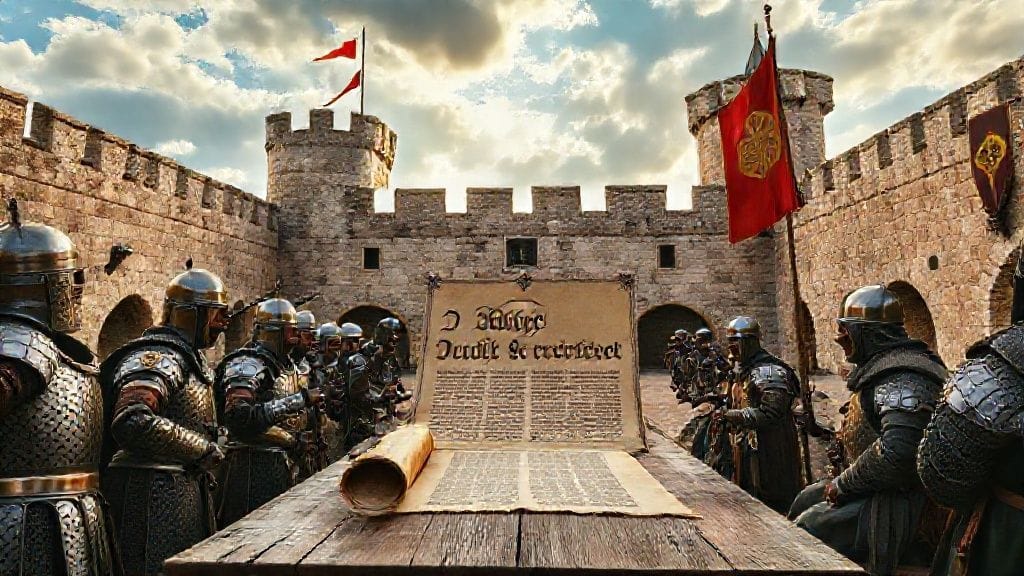
Melfi, a fortress town perched above the Capitanata plains, became the theater of this historic encounter. Convened in August 1059, the council gathered bishops, Norman leaders, and papal envoys amidst heightened anticipation.
Behind stone walls and stained glass, weighty deliberations unfolded. Letters, oaths, and promises wove a complex web of mutual interest. Robert Guiscard and his brothers—like Roger—stood ready to receive the pope’s investiture.
The council represented a rare moment where warrior culture met ecclesiastical ritual, forging an unprecedented treaty that would ripple through centuries.
The Investiture of 1059: Papal Authority Meets Norman Power
On that defining day, Pope Nicholas II formally bestowed upon Robert Guiscard the title of Duke of Apulia and Calabria, with Roger designated Count of Sicily. The pope vested them not simply as conquerors, but as legitimate rulers acting under the Church’s auspices.
The document, known as the diploma of Melfi, outlined obligations—military support for crusades and defense of the Church—while guaranteeing autonomy and land rights. It was a delicate balance of authority: the papacy rising in influence even as it depended on the martial prowess of the Normans.
Witnesses chronicled the solemnity: oaths made upon the altar, banners raised, and the mingling of Latin and Norman customs. The moment represented a fusion of spiritual and secular power.
The Terms of the Duchy: Titles, Obligations, and Autonomy
The diploma codified the Normans’ feudal relationship to the papacy but granted broad governing freedom. The duchy was to serve as a bulwark of Christendom in southern Italy—a role the Normans embraced with fervor.
Norman lords pledged to support crusading efforts, a nascent idea gaining traction. Likewise, they promised to respect Church rights and privileges. In return, papal recognition legitimized their territorial claims, effectively enabling them to raise armies, govern justice, and administer taxes.
This quasi-sovereign status distinguished Norman rule from earlier fragmented lordships. It marked the emergence of a new political order on Italian soil.
Symbolism and Ceremony: Power Legitimated in Melfi
The ritual of investiture was studded with symbolic gestures—golden crosses placed in Norman hands, papal blessings, and the swearing of fealty on sacred relics. Such ceremonies did more than convey power; they imbued rulers with divine sanction.
Medieval chroniclers marveled at the spectacle, interpreting it as a sign of God’s favor upon the Normans and the papacy alike. For Robert and his kin, it was a transformative moment—the shift from foreign mercenaries to divinely sanctioned princes.
The ceremony also broadcast a powerful message to neighboring powers—Byzantines, Lombards, and emerging Italian city-states—asserting papal authority and Norman strength alike.
Reaction and Resistance: Byzantine and Lombard Responses
The Byzantine Empire, long the suzerain of parts of southern Italy, perceived the papal recognition of the Normans as a direct affront. Attempts to reclaim lost territories met fierce Norman resistance bolstered by new legitimacy.
Lombard principalities were divided; some sought accommodation, others bristled at the loss of influence. The shifting alliances sparked fresh conflicts but ultimately underscored the Normans’ growing dominance.
Local populations experienced sudden changes—not all welcomed Norman rule. Yet over time, pragmatic acceptance and adaptation knitted disparate peoples into the ducal fold.
Consolidation of Norman Rule: Military and Administrative Reforms
Following 1059, Norman rulers implemented sweeping reforms for governance and defense. Castles dotted the landscape, combining Norman military architecture with local techniques.
The rule of law expanded, blending Norman feudal customs with Byzantine and Lombard traditions. The duchy developed a coherent administrative system, taxation was standardized, and trade reinvigorated.
Military campaigns continued, extending control over Sicily and coastal cities, solidifying Norman influence in the Mediterranean.
Cultural Synthesis in Norman Apulia and Calabria
Norman rule did not erase cultural diversity; rather, it forged new hybrid identities. Latin, Greek, and Arab influences merged in art, language, cuisine, and law.
The patronage of churches and monasteries promoted Roman liturgy, while Eastern Christian and Islamic traditions subtly infused local life. The architectural legacy—Romanesque churches embellished with Byzantine mosaics—is a testament to this fertile cross-cultural encounter.
This synthesis enriched southern Italy, making it a crossroads of medieval civilization.
The Impact on Mediterranean Politics and the Papacy
The duchy’s emergence shifted Mediterranean geopolitics. Normans became key players in crusading ventures, maritime trade, and diplomatic relations.
For the papacy, supporting Norman lords bolstered independence from imperial and secular pressures, setting precedents for future investitures in Europe.
The alliance redefined the balance between spiritual and temporal power, resonating through papal policies and European monarchies.
The Norman Duchy’s Legacy in European Feudalism
The formal recognition of the duchy laid foundations for feudal structures in Italy, blending continental models with local traditions. It demonstrated the papacy’s role in sanctioning rulers beyond the Holy Roman Empire.
Norman governance influenced medieval statecraft, exemplifying how martial conquest could transform into lawful rule.
The duchy’s success inspired other adventurers and contributed to the evolution of medieval kingship.
The Architectural Renaissance Under Norman Patronage
Norman dukes invested in grand building projects that symbolized their newfound status. Cathedrals, castles, and palaces reflected a mix of Norman robustness and Mediterranean elegance.
Melfi’s fortress expanded; Trani’s cathedral rose; the synthesis of Romanesque and Byzantine styles flourished. These monuments remain enduring markers of the dukes’ ambition and cultural vision.
The Dialogues of Power: Norman, Papal, and Imperial Relations
Though allied to the papacy, the Normans remained wary of the Holy Roman Emperor’s designs. The investiture sparked ongoing negotiations about sovereignty, loyalty, and influence.
Tensions between Rome and the Empire played out through Norman diplomacy, who at times leveraged rivalry to their advantage. The duchy’s position became a bargaining chip in broader European politics.
The Socio-Economic Transformation of Southern Italy
With political stability came economic growth. Agricultural reforms increased productivity; markets expanded; Mediterranean trade linked Apulia and Calabria to far-flung regions.
Norman law encouraged merchant activity and protected property rights, attracting settlers and artisans. Social hierarchies evolved, blending Norman nobility with local elites.
This transformation laid groundwork for the vibrant medieval economies of southern Italy.
The Norman Duchy and the Crusading Impulse
The duchy became a launchpad for crusading campaigns. Obligations to the papacy included military support that aligned Norman ambitions with emerging pan-European Christian warfare.
Leaders like Robert Guiscard and Roger would later participate or facilitate crusading efforts, intertwining their legacy with the broader history of Christendom.
Enduring Myths and Historical Narratives
Over centuries, the Norman duchy became mythologized in chronicles, literature, and local memory. Tales of bold knights, pious rulers, and heroic battles shaped identities.
Yet historians continue to unravel complex realities behind the colorful legends, illuminating the multifaceted nature of Norman rule.
Conclusion: The Birth of a Kingdom and a New Era in Italy
The investiture at Melfi in 1059 was not a mere formal gesture—it was the dawn of a transformative chapter in European history. The Norman Duchy of Apulia and Calabria emerged from the tumult of medieval politics as a bridge between conquest and governance, martial might and spiritual legitimacy.
Pope Nicholas II’s recognition forged an alliance with ramifications far beyond southern Italy: it redefined feudal relationships, reshaped cultural landscapes, and propelled new political realities. The Normans, once wandering warriors, had found a kingdom—and through them, the mosaic of medieval Italy was forever altered.
FAQs
Q1: Why did the papacy choose to recognize the Normans in 1059?
The papacy sought allies to strengthen its independence and counter Byzantine and imperial influence. The Normans, as powerful local leaders, offered military support and protection for Church interests in exchange for recognition.
Q2: Who was Robert Guiscard, and why was he central to this event?
Robert Guiscard was the most prominent Norman leader in southern Italy. His military prowess and political acumen enabled him to unify Norman holdings and negotiate papal investiture, becoming Duke of Apulia and Calabria.
Q3: How did the investiture affect relations between the Normans and the Byzantine Empire?
It heightened tensions, as Byzantium viewed papal recognition as a challenge to its sovereignty over southern Italy. This led to armed conflicts and the gradual Norman conquest of Byzantine territories in the region.
Q4: What were the obligations of the Norman dukes to the papacy?
They pledged military support for crusades and defense of the Church, while maintaining local autonomy in ruling their duchy.
Q5: How did Norman rule influence culture in Apulia and Calabria?
Norman rule fostered a cultural synthesis, blending Latin, Byzantine, and Arab elements, visible in architecture, art, language, and law.
Q6: Did the Norman duchy’s recognition have wider European implications?
Yes, it set precedents for papal investiture practices and exemplified how martial conquest could be legitimized through ecclesiastical authority, influencing feudal politics across Europe.
Q7: What role did Melfi play in medieval Italian politics?
Melfi was a strategic Norman stronghold and the site of important councils, including the 1059 investiture, serving as a political and military hub.
Q8: How is this event remembered today?
It is seen as a foundational moment for the Kingdom of Sicily and a symbol of the Norman legacy in Mediterranean history.

