Table of Contents
- A City at the Crossroads of History: Novgorod Before 1478
- The Cultural and Political Landscape of Rus' in the 15th Century
- The Rise of Muscovy: Grand Princes and Expanding Ambitions
- Novgorod Republic: An Ancient Merchant Power
- The Struggles Within Novgorod’s Political Elite
- Ivan III: The Architect of a Unified Russian State
- Tensions Mount: Diplomatic Dance Before the Annexation
- The Prelude to Conquest: Muscovite Pressure and Novgorod’s Response
- 1478: The March of Muscovy Into Novgorod
- The Annexation Ceremony and the Fall of the Novgorod Republic
- The Fate of Novgorod’s Political and Religious Institutions
- Economic Repercussions across Rus’: From Autonomy to Centralized Rule
- How Novgorod’s Annexation Shifted the Balance of Power in Eastern Europe
- Resistance, Repression, and the Myth of the “Novgorod Veche”
- Ivan III’s Vision: The Birth of “Third Rome” and Russian Identity
- The Annexation’s Legacy in Russian State Formation
- Novgorod in Art, Chronicles, and Memory after 1478
- Socio-Cultural Transformations Under Muscovite Rule
- European Reactions and the Wider Geopolitical Context
- Conclusion: From Republic to Province – The Echoes of 1478
- FAQs: Understanding Novgorod’s Annexation to Muscovy
- External Resource
- Internal Link
1. A City at the Crossroads of History: Novgorod Before 1478
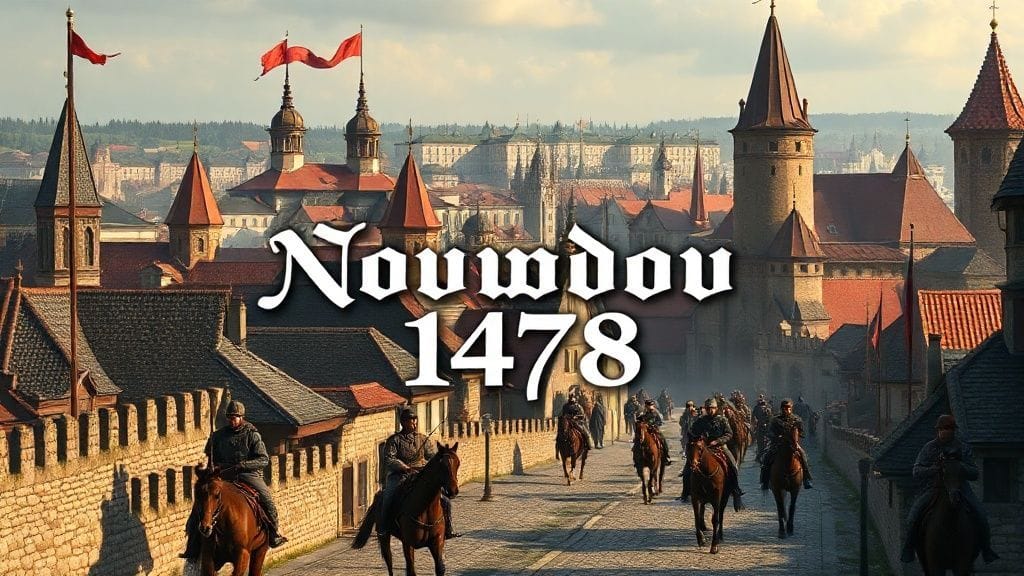
The ancient city of Novgorod, perched on the vital trade arteries of Eastern Europe, was more than a settlement: it was a living monument of medieval political innovation and cultural wealth. In the mid-15th century, it stood proud and prosperous, a beacon of civic self-governance and mercantile power in Rus’. But on a gloomy day in 1478, the winds of change swept through its cobblestone streets, shattering its centuries-old independence and weaving Novgorod into the expanding tapestry of Muscovite power.
This moment was not just a military conquest—it was a seismic shock, shaking the foundation of medieval Rus’ polity. To understand this pivotal turn, one must conceive of Novgorod not as a passive victim but as an active player in the ruthless chess game of Eastern European politics.
2. The Cultural and Political Landscape of Rus' in the 15th Century
The 15th century was an era of flux for the lands of Rus’. Once fragmented into myriad principalities vying for supremacy, the region oscillated between Mongol domination and gradual attempts at self-assertion. Russian Orthodox faith infused political legitimacy, while trade—spanning from the Baltic to Byzantium—sustained the principalities.
Novgorod was exceptional with its republic-like governance structure, where a broad assembly known as the Veche wielded significant influence. But threats loomed from the Grand Duchy of Muscovy, which under the long rule of Ivan III, tirelessly sought to unify Rus’ lands under its iron hand.
3. The Rise of Muscovy: Grand Princes and Expanding Ambitions
The city of Moscow had long been a modest player but rose to prominence after the fragmentation of Kievan Rus’ and the decline of Mongol power. Ivan III, the Grand Prince crowned in 1462, proved a master statesman and strategist—combining calculated marriages, shrewd diplomacy, and military campaigns.
By the 1470s, Muscovy’s expansion was unmistakable. Ivan’s vision stretched beyond Moscow’s modest walls: he dreamed of resurrecting a unified Rus’ state with the Orthodox Church as its pillar and Moscow as its capital.
4. Novgorod Republic: An Ancient Merchant Power
Novgorod was a unique entity: an oligarchic republic, governed by wealthy boyars and a Veche assembly that combined aristocracy with a form of proto-democracy. Its economy relied heavily on Northern European trade—the Hanseatic League maintained strong ties here, cementing Novgorod as a key link between East and West.
Unlike Muscovy’s autocracy, Novgorod represented a more open political model, though limited by elite control. Its citizens prided themselves on their autonomy, and the city preserved traditions dating back to the Viking-founded Rus’ era.
5. The Struggles Within Novgorod’s Political Elite
Despite the outward stability, Novgorod society was rife with factionalism. The old boyar families vied among themselves as to how to respond to Muscovite encroachment. Some favored alignment with Moscow for protection; others wished to maintain independence at all costs.
This internal division weakened Novgorod’s capacity to resist, casting shadows over unity amid the rising external threat.
6. Ivan III: The Architect of a Unified Russian State
Ivan III’s reign was defined by vision and ruthless determination. Known as Ivan the Great, he sought to position Moscow as the legitimate successor to Kievan Rus’ and the Byzantine Empire after Constantinople’s fall in 1453.
Taking advantage of religious symbolism and political cunning, he forged himself as the “gatherer of the Russian lands.” Novgorod stood as a daunting obstacle and a prized jewel on his path.
7. Tensions Mount: Diplomatic Dance Before the Annexation
In the years leading to 1478, political tensions surged. Novgorod’s refusal to accept Muscovite suzerainty led Ivan III to apply increased pressure. He demanded tribute and allegiance, which Novgorod’s leaders refused to yield.
Trade restrictions, border skirmishes, and diplomatic ultimatums echoed through the corridors of power. Both sides engaged in brinkmanship, fully aware war might be inevitable.
8. The Prelude to Conquest: Muscovite Pressure and Novgorod’s Response
Muscovy gradually tightened its grip, dispatching armies to compel compliance. Novgorod’s defiance was costly: its military poorly equipped to match Moscow’s growing forces. Despite appeals for Hanseatic support and offers for external alliances, Novgorod remained isolated in its resistance.
Fearing loss of autonomy, segments of the elite increasingly considered negotiation, but the hardliners prevailed, inadvertently sealing the city’s fate.
9. 1478: The March of Muscovy Into Novgorod
The year 1478 marked the culmination of the decades-long struggle. Ivan III’s forces marched towards Novgorod, imposing a swift siege. The once impregnable city walls trembled before the disciplined Muscovite army.
The city’s defenders, overwhelmed and politically fractured, could only resist briefly. The specter of bloodshed loomed, but Ivan displayed strategic leniency—an act designed to integrate rather than destroy.
10. The Annexation Ceremony and the Fall of the Novgorod Republic
On a bleak autumn day, Muscovy declared the annexation official. Novgorod’s Veche was dissolved, the boyar council disbanded, and Muscovite officials installed. The city’s centuries-old autonomy vanished overnight.
To many, it was a mournful end to a proud republic; to Ivan, a necessary step toward unity and strength.
11. The Fate of Novgorod’s Political and Religious Institutions
While political independence was crushed, Novgorod’s religious life endured, albeit under Moscow’s watchful eye. The archbishopric remained but swore fealty to Moscow’s grand prince, marking a transformation of spiritual authority.
This was both symbolic and practical: it guarded Novgorod’s cultural legacy while ensuring loyalty.
12. Economic Repercussions across Rus’: From Autonomy to Centralized Rule
Novgorod’s incorporation redirected trade flows and diminished the Hanseatic influence. The city’s vast wealth was harnessed by Muscovy to finance further expansions.
Centralization altered craft guilds, merchant classes, and taxation, profoundly transforming the local economy and social hierarchy.
13. How Novgorod’s Annexation Shifted the Balance of Power in Eastern Europe
The consolidation of Muscovy’s power signaled a new geopolitical order. No longer fragmented, Muscovy emerged as a power capable of resisting the Polish-Lithuanian Commonwealth and the remnants of the Golden Horde.
This set the stage for Russia’s historic eastward and westward ambitions.
14. Resistance, Repression, and the Myth of the “Novgorod Veche”
Despite official subjugation, the spirit of Novgorod lived on in legend and clandestine resistance. Tales of the Veche, the citizen assembly, became a symbol of lost freedom, romantically portrayed in chronicles centuries later.
Muscovy’s repression was firm but unable to erase entirely the memory of a self-governing city.
15. Ivan III’s Vision: The Birth of “Third Rome” and Russian Identity
With Novgorod annexed, Ivan III proclaimed Moscow heir to Orthodox Christianity, adopting titles that celebrated his mandate—the foundation of the “Third Rome” ideology.
This reshaped Russian identity, blending autocracy, religion, and historical destiny in powerful symbolism.
16. The Annexation’s Legacy in Russian State Formation
The fall of Novgorod was a cornerstone in the rise of a centralized Russian state. It foreshadowed future expansions and set precedents in governance, statecraft, and national narrative.
The event echoes as a defining moment in the emergence of modern Russia.
17. Novgorod in Art, Chronicles, and Memory after 1478
Novgorod’s annexation was immortalized in chronicles like the “Novgorod First Chronicle” and echoed in art, literature, and local lore. Scenes depicting the last Veche and Muscovite triumph captured the dramatic shift.
Yet, these portrayals were often tinged with nostalgia and ambivalence.
18. Socio-Cultural Transformations Under Muscovite Rule
New elites loyal to Moscow replaced old boyars; Orthodox Church reforms aligned religious practices with Muscovite policies. European cultural exchanges diminished as Novgorod’s Western openness receded.
Life changed socially as Muscovy moved towards a more autocratic, less pluralistic society.
19. European Reactions and the Wider Geopolitical Context
Western Europe watched with wary eyes. The ascendancy of Muscovy and collapse of an independent Novgorod altered Baltic trade dynamics and alliances.
Hanseatic League traders lamented the loss of a key partner; Poland-Lithuania recalibrated its eastern policies.
20. Conclusion: From Republic to Province – The Echoes of 1478
The annexation of Novgorod into Muscovy was a watershed that ended an era and heralded another. A city that once embodied civic independence became a jewel in an expanding empire.
But how much was truly lost? Novgorod’s spirit, its cultural wealth, and its historic legacy continue to fascinate and inspire, a poignant reminder that history is never truly erased—only transformed.
Conclusion
The story of Novgorod's annexation by Muscovy in 1478 is a powerful chapter in the drama of Eastern European history. It encapsulates transformation, the rise of a mighty state from fragmented principalities, and the complex tension between autonomy and centralization. Above all, it tells a tale of identity—a people and a city caught between past glory and an irrevocable future. The echoes of that decisive year resound not only in dusty chronicles but also in the enduring spirit of a nation poised on the cusp of empire. One imagines the narrow Novgorod streets that day—whether filled with fear, resignation, or hope—and recognizes in them the timeless human drama of change and survival.
FAQs
1. Why was Novgorod so important in the 15th century?
Novgorod was a major economic and political center, acting as a key trading hub between Russia, the Baltic, and even Western Europe through its Hanseatic ties. Its republican government was also unique in the region, contrasting with emerging autocracies.
2. What motivated Ivan III to annex Novgorod?
Ivan III aimed to unify all Rus’ lands under Muscovite rule, both for political power and ideological reasons—to establish Moscow as the "Third Rome" and protect Orthodoxy after Constantinople's fall.
3. How did the annexation affect Novgorod’s local institutions?
The Veche assembly was abolished, and local boyar control ended. Political authority centralized in Moscow, although the Orthodox Church maintained some local presence.
4. Was there significant resistance to the annexation?
Yes, both political factions and the general populace resisted to varying degrees, but internal divisions and lack of powerful allies made their defense unsustainable.
5. What were the economic impacts of the annexation?
Centralization disrupted Novgorod’s trade with Western partners and integrated the city’s wealth and economy into Muscovite frameworks, fueling the expansion of the Russian state.
6. How did this event shape future Russian history?
It marked the decline of Rus' fragmentation, bolstered the rise of autocracy, and laid foundations for the Russian Empire's territorial and political expansion.
7. Does Novgorod’s republican tradition influence modern Russia?
While often overshadowed by autocratic legacies, Novgorod's tradition is remembered as an early model of self-governance and civic responsibility, important for historical memory and regional identity.
8. How is the annexation remembered today?
In Russia, it is seen as a necessary step in state unification but also mourned as the loss of a distinct political and cultural entity, inspiring both scholarly debate and cultural reflection.

