Table of Contents
- The Dawn of a New Era: October 25, 1917, Petrograd Awakens
- The Crumbling Empire: Russia’s Tumultuous Road to Revolution
- Shadows of War: World War I and Russia’s Exhaustion
- Bolsheviks in the Making: Lenin’s Vision and the Struggle for Influence
- Petrograd: The Epicenter of Discontent and Power Struggles
- The Provisional Government’s Fragile Grip
- The Spark Ignites: Planning the October Insurrection
- Red Guards and Soldiers: Allies in Revolution
- The Storming of the Winter Palace: Myth and Reality
- Voices from the Streets: Eyewitness Accounts and Diaries
- Seizing the Soviet Power: The Declaration of the New Government
- International Shockwaves: Reactions Abroad to the Bolshevik Takeover
- The Fall of the Romanovs: The End of Imperial Russia’s Shadow
- Civil War Looms: The Seeds of Conflict in a Divided Nation
- Lenin’s First Decrees: Radical Change or Chaos?
- Social and Economic Upheaval: The Promise and Price of Revolution
- Women and the October Revolution: Agents and Beneficiaries of Change
- The Role of Propaganda: Shaping the Revolution’s Narrative
- Myths and Legends: The October Revolution in Soviet Memory
- The Global Legacy: How the October Revolution Reshaped the 20th Century
- Conclusion: Echoes of October in Today’s World
- FAQs: Understanding the October Revolution
- External Resource
- Internal Link
The Dawn of a New Era: October 25, 1917, Petrograd Awakens
The chill of an early November morning hung thick over Petrograd, the city then called the heart of the Russian Empire. Against the steel gray sky, the Neva River mirrored the restless murmur of a city perched on the verge of cataclysmic change. Flames flickered in makeshift fires where workers gathered, whispering of revolution, a word heavy with promise and peril.
As the dawn broke on October 25 by the Julian calendar (November 7 Gregorian), a profound silence enveloped the grand avenues and narrow alleyways alike. But beneath that silence stirred a surge of determination. The Bolsheviks, led by the enigmatic Vladimir Lenin, were ready to seize power. This was not simply a coup; it was a tectonic shift that would reshape not only Russia but the entire world. The revolutionaries moved decisively, closing down the Provisional Government and erecting a government “of the workers and peasants” under soviet control.
In this somber morning, the old order was crumbling — an empire gasping its last, a people yearning for change — and a new, radical chapter in history was being written in blood and fire.
The Crumbling Empire: Russia’s Tumultuous Road to Revolution
Russia in 1917 was a land of contradictions—immense in landmass yet fragile at its core; steeped in ancient traditions yet rapidly unraveling under the pressures of modernity and war. The Romanov dynasty, which had ruled for over three centuries, found itself increasingly isolated from a populace battered by poverty, famine, and political repression.
The 1905 Revolution had cracked the surface, shaking the foundations of autocracy, but it was World War I that tore open the deep fissures. The strain of military failures, devastating casualties, and economic collapse thrust an already fragile society into chaos. Peasants were land-starved, workers were starved for rights, and soldiers—demoralized and disillusioned—yearned for peace.
The Provisional Government, established after the February Revolution earlier that year, promised reform but failed to end the war or drastically improve conditions. In the streets of Petrograd, theater for revolutionary episodes, hopes turned swiftly to despair and then to fervent calls for radical change.
Shadows of War: World War I and Russia’s Exhaustion
Nearly collapsing under the weight of World War I, Russia was a nation drained not only of soldiers but of faith in its ruling structures. The German front was a relentless nightmare—the Battle of Tannenberg and the Masurian Lakes had decimated the Russian army. War inflated grain prices, disrupted supply chains, and deepened the chasm between the urban poor and autocratic rulers.
Daily life was a struggle—bread shortages led to women’s protests, strikes paralyzed factories, and the winter of 1916-17 brought hunger that no government could alleviate. The frontline and homefront alike were weary; Russia’s soldiers, many of them peasants forced into battle, increasingly mutinied or deserted.
The Provisional Government’s decision to continue fighting the war, hoping for victory or at least dignity, alienated popular support. Meanwhile, rival factions like the Bolsheviks gained ground, advocating peace, land redistribution, and power to the soviets—the councils of workers and soldiers born in the chaos.
Bolsheviks in the Making: Lenin’s Vision and the Struggle for Influence
At the core of October’s upheaval stood Vladimir Lenin, the exiled revolutionary who returned to Russia in April 1917, carried by the tides of history and German intrigue alike. Lenin’s ideology was radical and clear: the bourgeois provisional government had to be overthrown, power handed to the proletariat via the soviets, and Russia’s vast peasantry emancipated through land redistribution.
But gaining control was far from simple. The Bolsheviks were but one of many socialist factions. The Mensheviks, Socialist Revolutionaries, and anarchists all vied for the souls of workers and soldiers. Yet Lenin’s uncompromising stance—summed up in slogans like “Peace, Land, and Bread” and “All Power to the Soviets”—resonated with the desperate masses.
The summer and early autumn months saw growing unrest and the rapid swelling of Bolshevik membership. Key figures like Leon Trotsky injected organizational skill and ideological zeal into the movement, preparing the Bolsheviks for the decisive moment.
Petrograd: The Epicenter of Discontent and Power Struggles
Petrograd, the imperial capital, was a city alive with contradiction — opulent palaces shadowed by overcrowded tenements; grand theaters just blocks from factory floors. Here, the revolutionary spirit was both vibrant and volatile.
The soviets—councils formed from workers, soldiers, and sailors—had become key power bases where real authority challenged official institutions. The city’s garrison, initially reluctant, began sympathizing with revolutionary fervor, providing the Bolsheviks with a crucial spark for armed insurrection.
Daily strikes sapped the city’s functioning, and street demonstrations became a normal part of life. The mood was tense, electric, and full of possibility.
The Provisional Government’s Fragile Grip
Despite holding official power after the February Revolution, the Provisional Government was unable to assert effective control. Prince Georgy Lvov and later Alexander Kerensky struggled to maintain order, but their decisions often alienated the key constituencies needed to sustain their rule: the workers, the peasants, and critically, the soldiers.
Kerensky’s ill-fated offensive in July 1917, meant to invigorate morale, instead disintegrated into a rout. The attempt to suppress bolshevik agitation through arrests and censorship backfired. Instead of quelling unrest, it pushed many more Russians toward the revolutionary left.
By October, the Provisional Government was increasingly isolated within the Winter Palace, increasingly a façade of authority while the Bolsheviks organized openly and boldly.
The Spark Ignites: Planning the October Insurrection
Behind the scenes, the Bolsheviks meticulously organized a plan to overthrow the Provisional Government. The Military Revolutionary Committee, dominated by Bolsheviks and commanded by Trotsky, coordinated the insurrection.
Their strategy was precise: control key infrastructure—railways, telegraph offices, bridges, and government buildings. Key units of the Petrograd garrison were persuaded or coerced to join. Red Guards, armed factory workers loyal to Soviet ideals, prepared for street fighting.
Lenin’s return from hiding in hiding during the crucial days gave the movement focus; on October 24-25, the insurrection began. Street fighting ensued, but the Bolsheviks managed to minimize casualties by rapidly seizing points of power.
Red Guards and Soldiers: Allies in Revolution
The revolution was a dance of alliances — workers, Red Guards, and sections of the military banded together in a rare convergence. Sailors from the cruiser Aurora famously fired a blank shot signaling the start of the assault on the Winter Palace—although some historians argue the shot’s role was more symbolic than tactical.
Soldiers fraternized with demonstrators, sharing grievances and hopes. Their numbers and willingness to mutiny provided the coup d’état with its real muscle. The Provisional Government faced a mutiny within its own defenders; many simply melted away or defected.
The alliance between proletariat militias and the rank-and-file military was instrumental in ensuring the revolution would succeed without full-scale battle.
The Storming of the Winter Palace: Myth and Reality
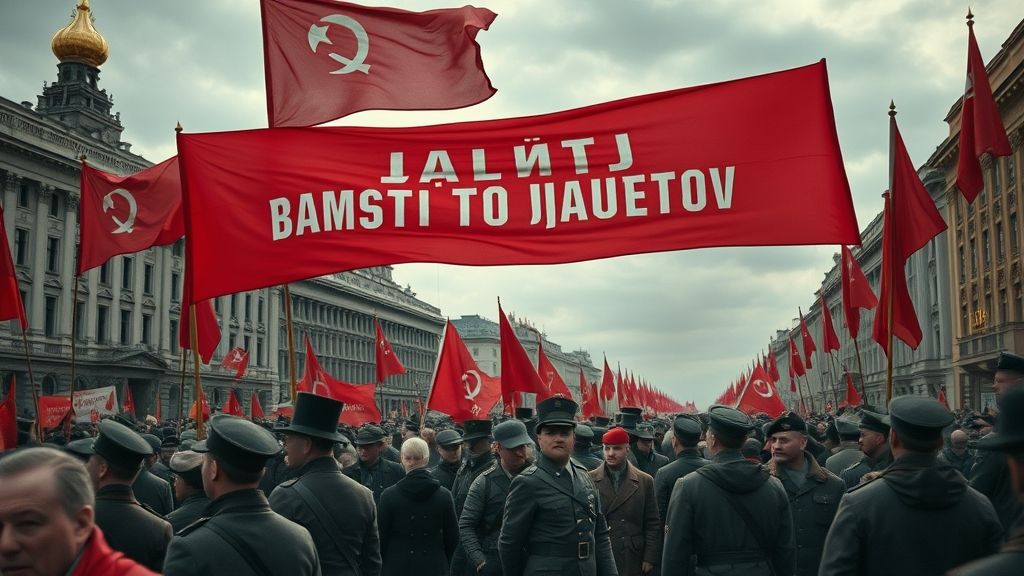
In the popular imagination, the storming of the Winter Palace becomes a cinematic tableau—fists raised high, gunfire echoing amid crumbling walls. In reality, the event was relatively bloodless and swift, marked more by confusion and the collapse of loyalist will than a prolonged battle.
The small force of defenders, disorganized and demoralized, surrendered with little resistance to the Red Guards and revolutionary soldiers. The former seat of imperial power and the temporary government became the epicenter of a new order within hours.
This capture symbolized the definitive shift from old governance to soviet rule, but behind the myth was the story of strategy, betrayal, and a city exhausted by war and despair.
Voices from the Streets: Eyewitness Accounts and Diaries
Among the smoke and shadows, the voices of everyday Petrograd residents record the revolution’s human face. Anna, a factory worker, wrote in her diary: “There is a strange hope clutched in our fists, a chance for bread, for peace — finally, a future.”
Lieutenant Ivanov recalled the confusion among officers: “We were told to protect the government, yet many of us could no longer bear to fire on our own people. The city belonged to the workers now.”
These testimonies reveal a complex tapestry of fear, exhilaration, betrayal, and solidarity that official communiqués often obscure.
Seizing the Soviet Power: The Declaration of the New Government
With the Provisional Government deposed, the Bolsheviks swiftly convened the Second All-Russian Congress of Soviets, which ratified the takeover. Lenin proclaimed the birth of a government “of workers, soldiers, and peasants” — the Sovnarkom.
What followed was a flurry of decrees: peace negotiations with Germany, redistribution of land to peasants, nationalization of banks, and workers’ control over factories. The new regime promised to radically reconstruct society from the ground up.
Yet the exercise of power proved a complex, often violent, and chaotic venture, as rival factions contested the legitimacy and direction of soviet authority.
International Shockwaves: Reactions Abroad to the Bolshevik Takeover
News of the Bolshevik seizure rapidly echoed beyond Russia’s borders, sending chills through the governments of Europe and America. Allies who had hoped Russia would continue the fight against Germany felt betrayed. The October Revolution ignited fears of communist uprisings worldwide.
Newspapers in London and Paris expressed alarm, while Germany covertly supported Lenin’s return, seeing in the Bolsheviks an opportunity to knock Russia out of the war.
For colonial subjects and anarchists, the revolution was a beacon of hope; for conservatives and capitalists, a dire threat.
The Fall of the Romanovs: The End of Imperial Russia’s Shadow
Though Nicholas II had abdicated months earlier, the October upheaval sealed the fate of the Romanov dynasty. The imperial family was placed under house arrest and, within months, executed in a grim and secretive operation.
This brutal end symbolized the collapse of centuries-old monarchy and the ruthless consequences of revolutionary change.
The fall reverberated as a tragic end to imperial dreams and warned of the ferocity reforms would demand.
Civil War Looms: The Seeds of Conflict in a Divided Nation
The Bolsheviks’ seizure did not unite Russia; rather, it split the country between Red forces and the anti-Bolshevik White armies comprised of monarchists, liberals, nationalists, and foreign supporters.
What began as a political revolution soon descended into a bloody civil war ravaging millions and shaping the violent nature of Soviet rule.
This brutal conflict tested the revolution’s ideals and hardened Lenin’s government into an unyielding state apparatus.
Lenin’s First Decrees: Radical Change or Chaos?
The early decrees issued by the Sovnarkom sought to deliver on revolutionary promises, but they unleashed turmoil as well as hope.
The Decree on Land abolished private ownership, distributing estates to peasants; the Peace Decree pulled Russia out of the war — at a staggering territorial cost. Workers gained control of factories, but production plunged.
The government sought to extinguish old hierarchies but soon faced immense challenges in governance, economic survival, and societal division.
Social and Economic Upheaval: The Promise and Price of Revolution
The October Revolution shook social structures: nobility fled or were executed, workers gained power, and peasants seized land. Yet, economic collapse and famine followed, exacerbated by war and blockades.
Cities depopulated as hunger spread, industries stalled, and inflation soared. The promise of “bread” was hard-won and often unfulfilled.
This paradox of revolution—hope interwoven with hardship—defined the early Soviet experience.
Women and the October Revolution: Agents and Beneficiaries of Change
Women played an active role in the revolution, many organizing strikes and participating in demonstrations. The Bolsheviks promised gender equality, granting women voting rights and legal protections unprecedented in Russian history.
Yet, reality was slower to change, and wartime deprivation hit women especially hard. Their participation in 1917 marked the beginning of social transformation that would evolve throughout Soviet history.
The Role of Propaganda: Shaping the Revolution’s Narrative
The Bolsheviks mastered propaganda to legitimize their power and mobilize support. Leaflets, newspapers like Pravda, posters, and speeches demonized enemies and glorified the revolution.
Art and literature were harnessed to create heroic myths around Lenin and the “October Spirit,” often distorting complex realities.
Propaganda was a weapon as important as guns in consolidating power.
Myths and Legends: The October Revolution in Soviet Memory
Under Soviet rule, the October Revolution became a sacred myth—its heroes immortalized, its inconvenient facts suppressed or sanitized.
Massive parades commemorated the date; literature exalted the event as the dawn of world socialism.
But beneath official memory lay a more complicated narrative of violence, compromise, and contested power—a narrative only fully uncovered decades later.
The Global Legacy: How the October Revolution Reshaped the 20th Century
The October Revolution sent shockwaves echoing across the globe. It inspired communist parties from China to Cuba, spawned decades of ideological conflict, and framed the Cold War dynamics.
It challenged imperial structures and was a beacon for anti-colonial struggles.
Yet it also led to totalitarian regimes, repression, and civil wars, illustrating the complex and often tragic legacies of radical social upheaval.
Conclusion
The October Revolution was not simply a sudden seizure of power; it was the culmination of deep social fractures, idealistic fervor, war-weariness, and political genius. In the cold November light over the Neva, a new, often violent chapter in human history dawned—one filled with hope, horror, innovation, and consequences that still ripple through the present.
To understand October 1917 is to confront the paradoxes of revolution itself: the dreams that ignite it, the chaos that often follows, and the indelible mark it leaves on a people and the world.
Its story is human—of struggle, sacrifice, and the unending quest for justice understood in vastly different ways. From the cobblestone streets of Petrograd to the global stage, the echoes of that fateful day continue to challenge and inspire us all.
FAQs
1. What were the main causes of the October Revolution?
The revolution stemmed from widespread dissatisfaction with the Provisional Government’s failure to end World War I, economic hardship, social inequality, and the rise of soviets representing workers, soldiers, and peasants who demanded true power.
2. Who was Vladimir Lenin and what role did he play?
Lenin was the leader of the Bolshevik Party, whose vision, charisma, and organizational skill turned the Bolsheviks into a revolutionary force that successfully seized power in October 1917.
3. How did World War I influence the revolution?
The war caused massive casualties, economic breakdown, and political instability in Russia, exacerbating public discontent and making the continuation of war by the Provisional Government deeply unpopular.
4. What happened to the Provisional Government?
Overthrown with little armed resistance, the Provisional Government was arrested, and its leaders, including Alexander Kerensky, fled or went into hiding.
5. Was the October Revolution a popular uprising?
It was supported by significant sectors—especially soldiers and workers in Petrograd—but not universally popular across Russia, which later contributed to civil war.
6. How did the international community react?
Most Western governments condemned the Bolshevik takeover, fearing the spread of communism, while Germany saw it as advantageous to exit the war; the revolution inspired both hope and fear globally.
7. What was the significance of the storming of the Winter Palace?
While symbolically powerful as the fall of the Provisional Government’s seat, it was relatively bloodless and more a collapse of resistance than a dramatic battle.
8. How did the October Revolution impact women?
It granted women voting rights, legal equality, and access to education, although full gender equality remained an ongoing struggle.