Table of Contents
- The Calm Before the Wave: Serenity in Okushiri and Aonae
- Under the Surface: Tectonic Forces Brewing Off Hokkaido
- The Moment of Impact: July 12, 1993
- The First Shocks: Earthquake Tremors Felt Across Japan
- From Shaking to Roaring: The Birth of the Tsunami
- The Tsunami’s Path: Devastation in Okushiri and Aonae
- Human Stories amidst the Flood: Survival and Loss
- Emergency Response: Japan’s Rescue Efforts Unfold
- Communication Breakdowns and Misjudgments
- Scientific Lessons: Analyzing the Underwater Mechanics
- The Role of Warning Systems: Inadequacies Revealed
- Community Resilience: How Survivors Rebuilt Their Lives
- Political and Administrative Reactions: Changes Ahead
- Economic Cost: Rebuilding Infrastructure and Livelihoods
- The Psychological Impact: Trauma and Memorials
- Global Awareness: Tsunamis on the World Stage
- Technological Advances Influenced by Okushiri–Aonae
- The Legacy of July 12, 1993: Remembrance and Education
- Comparative Analysis: Okushiri-Aonae and Other Tsunamis
- The Present Day: Safeguarding Hokkaido’s Coastlines
- Conclusion: The Wave That Changed Japan’s Approach Forever
- FAQs about the Okushiri–Aonae Tsunami
- External Resource: Wikipedia Link
- Internal Link: History Sphere
The morning of July 12, 1993, dawned unremarkably over the small island of Okushiri and the nearby coastal village of Aonae, nestled off the west coast of Japan’s northernmost main island, Hokkaido. Children played by the shore, fishermen prepared their vessels, and daily life thrummed quietly. But beneath the seemingly tranquil waters of the Sea of Japan, the restless Pacific Plate was grinding—a relentless geologic tension that would soon unleash a merciless force.
At precisely 2:36 a.m., the earth convulsed beneath Okushiri in a violent earthquake, measuring 7.8 on the moment magnitude scale. The trembling ground was just the prelude to a far greater catastrophe. Moments later, a colossal wall of water—an unimaginable tsunami—rushed ashore, obliterating homes, severing lives, and forever stamping the tale of Okushiri and Aonae into the annals of natural disasters.
The Calm Before the Wave: Serenity in Okushiri and Aonae
Okushiri Island, relatively isolated and rugged, had long been a quiet harbor for small fishing communities. Aonae, on the mainland of Hokkaido facing Okushiri, was similarly steeped in a life attuned to nature’s rhythms. The islands’ landscapes, dotted with wooden homes and small harbors, belied the vulnerabilities lying beneath their coastal tranquility.
Summer warmth had settled in, promising abundant catches and calm seas. Fishermen hauled in their nets, unaware their last full day on the water would soon be shattered.
Under the Surface: Tectonic Forces Brewing Off Hokkaido
Geologically, the northwestern coast of Hokkaido is a player in the converging scene of the Eurasian and Pacific Plates. The tectonic boundary beneath the Sea of Japan—known as the Japan Trench—is a known locus for seismic activity. However, the Okushiri tsunami was triggered not directly by plate subduction in the trench itself, but by an undersea earthquake in the accretionary prism, a chaotic region of compressive faulting beneath the sea floor.
These fault lines, often hidden from direct observation, accumulate stress silently over decades. In that calm July night, thousands of years’ worth of strain unraveled with a sudden jerk: the 7.8 magnitude earthquake.
The Moment of Impact: July 12, 1993
At precisely 2:36 a.m., the earth beneath Okushiri heaved violently, waking residents with shattered windows and swaying structures. The quake’s intense shaking reached a magnitude of IX on the Mercalli intensity scale in Okushiri itself—a level of destruction that felled wooden houses and ruptured roads.
Yet, the most harrowing moment was still to come.
The First Shocks: Earthquake Tremors Felt Across Japan
Seismic waves rippled far beyond Okushiri, felt as far south as Tokyo and northward on Hokkaido. Despite the power, few anticipated the secondary peril. Japan’s early warning systems broadcast alerts about the earthquake and the potential for tsunami waves. Still, the message was muted: the local population had little time or adequate infrastructure to prepare for what was next.
From Shaking to Roaring: The Birth of the Tsunami
Within a mere five minutes of the earthquake’s end, enormous waves began to surge. The undersea thrusting action displaced vast volumes of water, sending tsunami waves racing at speeds of up to 700 km/h across the narrow Sea of Japan basin.
Ordinarily, tsunamis arrive in oil-slick calm, invisible to the eye at sea level, until they reach shallow coastal waters and mount terrifyingly. For Okushiri Island and Aonae, the onrush was merciless and swift.
The Tsunami’s Path: Devastation in Okushiri and Aonae
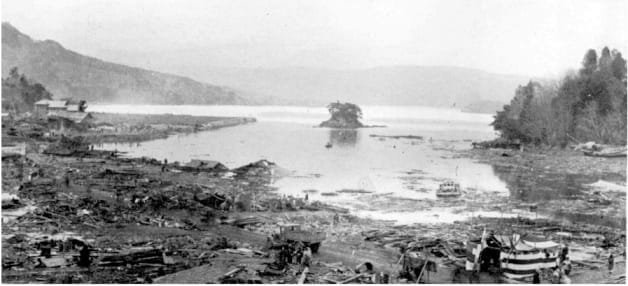
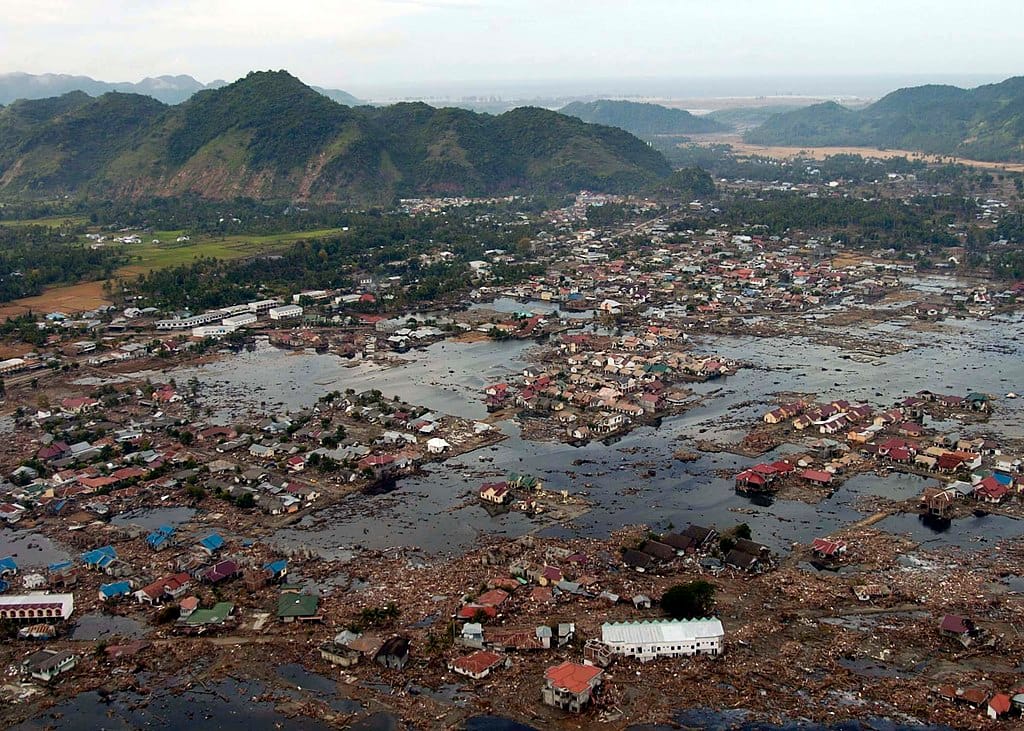
When the first wave reached Okushiri, it towered as high as 30 meters (approximately 100 feet), a tsunami of exceptional height and force. It obliterated entire neighborhoods in its first sweep, smashing homes, sweeping vehicles, and uprooting trees like mere twigs.
Aonae, also battered heavily, experienced a series of destructive waves. The repeated pounding made rescue efforts complex, as survivors scrambled amid flooding debris.
Human Stories amidst the Flood: Survival and Loss
The tsunami claimed 230 lives, many in Okushiri, where the night left little chance for escape. Amongst the drowned and missing were entire families, elderly residents caught unaware, and brave rescuers who succumbed while attempting to save their neighbors.
One survivor recalled, “It sounded like a giant beast roaring straight towards us. There was no time, just the crushing water and chaos.” Stories of miraculous escapes abound—people clinging to tree branches, finding refuge on hills or on rooftops as homes vanished beneath the waves.
Emergency Response: Japan’s Rescue Efforts Unfold
In the immediate aftermath, emergency teams, including Self-Defense Forces, police, and local firefighters, mobilized. Despite difficult conditions—disrupted communications and destroyed infrastructure—their relentless efforts saved hundreds more lives.
Temporary shelters mushroomed as survivors grappled with loss, cold, and hunger. International aid was limited, as Japan rapidly pivoted resources to the disaster zone.
Communication Breakdowns and Misjudgments
Yet, this tragedy exposed cracks in Japan’s disaster management. The tsunami warning systems were hampered by technical and procedural delays. The local communities had scant experience with tsunamis of this magnitude, and evacuation protocols were not always followed efficiently.
The Japanese government’s reflection afterward called for improved warning dissemination and public education, especially in remote coastal areas.
Scientific Lessons: Analyzing the Underwater Mechanics
Seismologists and oceanographers poured over data for months to understand the 1993 event’s nuances. Unlike many tsunamis generated by subduction zone quakes, the Okushiri tsunami stemmed from a landslide-like rupture in an accretionary prism.
This taught scientists about the diversity of tsunami triggers and frustration over the unpredictability of underwater seismic slip. Importantly, it challenged prior notions that only trench earthquakes posed significant tsunami hazard to the Sea of Japan.
The Role of Warning Systems: Inadequacies Revealed
The Japan Meteorological Agency (JMA) was tasked with issuing immediate tsunami warnings, but technological and organizational gaps became painfully evident. The short window between earthquake and wave arrival meant warning reception was too late for most people to reach safe ground.
Post-Okushiri reforms accelerated the development of high-speed seismic networks, real-time tsunami modeling, and public education campaigns that factored local geography and social response behaviors.
Community Resilience: How Survivors Rebuilt Their Lives
Despite its cruel swipe, the tsunami also showcased remarkable human endurance. The rebuilding process, supported by prefectural and national funds, included elevation of homes on stilts, relocation projects, and installation of elevated escape routes.
Okushiri and Aonae communities voluntarily organized drills, education programs, and memorial ceremonies fostering a culture of preparedness. Many survivors became advocates for disaster readiness, helping instill lessons in younger generations.
Political and Administrative Reactions: Changes Ahead
On a political level, the disaster accelerated Japan's deployment of integrated disaster risk management policies. National and regional governments prioritized infrastructure reinforcement and emergency communication upgrades.
The tragedy also influenced legislative reforms aimed at increasing local autonomy in disaster response—empowering communities to act promptly without waiting for centralized commands.
Economic Cost: Rebuilding Infrastructure and Livelihoods
Economically, the impact was severe for the small communities. Ports were damaged, fishing fleets destroyed, and tourism—vital for the island—plummeted temporarily. The rebuilding costs were estimated in billions of yen, requiring a coordinated effort between government, private sector, and residents to restore both infrastructure and confidence.
The Psychological Impact: Trauma and Memorials
The psychological scars lingered long after waters receded. Survivors faced grief, post-traumatic stress, and a deep sense of vulnerability. Local schools incorporated mental health support, and collective memorials, including monuments and annual remembrance days, emerged to honor the lost and sustain communal healing.
Global Awareness: Tsunamis on the World Stage
The Okushiri event reverberated globally, joining a growing awareness of tsunami threats far beyond the Pacific “Ring of Fire.” It alerted international scientists and disaster management communities to the reality that inland seas could unleash deadly waves, highlighting the need for broader vigilance.
Technological Advances Influenced by Okushiri–Aonae
In the wake of disaster, Japan invested heavily in early warning technologies. Sophisticated ocean-bottom seismographs, real-time sensors, and automated alerts became part of a growing network that would later serve as a model worldwide.
Moreover, simulations combining geophysical data and modern computer modeling improved predictive capabilities for tsunami height, arrival times, and effects.
The Legacy of July 12, 1993: Remembrance and Education
Today, the Okushiri tsunami is commemorated not only by memorial stones but through education in Japan’s disaster preparedness curricula. Museums and local centers offer exhibits recounting the event, ensuring new generations understand the frailty and resilience of coastal living.
Comparative Analysis: Okushiri-Aonae and Other Tsunamis
When compared to the catastrophic 2011 Tōhoku tsunami or the earlier 1946 Nankaidō tsunami, the 1993 Okushiri event stands out due to its localized intensity and the complexity of its geological causes. Its lessons contributed to an evolving global comprehension of tsunami hazards.
The Present Day: Safeguarding Hokkaido’s Coastlines
Modern Hokkaido’s coastlines around Okushiri and Aonae are now fortified with seawalls, elevated evacuation towers, and marked routes. Public drills regularly engage residents, and surveillance systems constantly monitor seismic activity.
Though no technology can erase nature’s fury, these measures embody a collective determination to face future waves better prepared.
Conclusion
The Okushiri–Aonae tsunami was not merely a natural disaster; it was a human tragedy etched in the memory of a community and a catalyst for transformative change. In the darkness of that July night, nature unveiled both its fury and humanity’s fragility. Yet, through loss emerged resilience, scientific insight, and enduring vigilance.
This wave reshaped policies, communities, and minds—not just on the shores of Hokkaido, but in the hearts of anyone who understands that the ocean’s calm can abruptly shift to something overwhelmingly powerful. The story of Okushiri and Aonae is a profound reminder: in the face of nature’s unpredictable might, our best hope lies in knowledge, preparedness, and shared resolve.
FAQs about the Okushiri–Aonae Tsunami
Q1: What caused the Okushiri–Aonae tsunami of 1993?
A: The tsunami was triggered by a 7.8 magnitude undersea earthquake in the accretionary prism off Hokkaido’s coast, which displaced large amounts of water and generated massive waves.
Q2: How many people were affected or lost their lives in the event?
A: Approximately 230 people died, primarily in Okushiri, with many more displaced or injured.
Q3: Why was the tsunami so devastating despite Japan’s advanced warning systems?
A: The tsunami arrived within minutes after the earthquake, leaving insufficient time for mass evacuation. Additionally, warning systems then were less comprehensive, especially for localized hazards.
Q4: What were the main lessons learned by scientists after this disaster?
A: The event revealed that tsunamis can be caused by unusual tectonic settings like accretionary prism faulting, leading to revisions in tsunami hazard assessments and warning protocols.
Q5: How did communities recover and prepare after the tsunami?
A: Through rebuilding homes with elevated designs, improving local evacuation plans, conducting regular drills, and fostering public education on disaster readiness.
Q6: Has the Okushiri–Aonae tsunami influenced global tsunami awareness?
A: Yes, it expanded the understanding of tsunami risks to inland seas and contributed to improvements in global early warning systems.
Q7: What memorials or remembrances exist today for the event?
A: Memorial parks, museums, and annual ceremonies honor victims and survivors, serving as both tribute and education.
Q8: Could a similar tsunami happen again in the region?
A: While rare, the geological conditions persist, so preparedness remains vital to mitigate future risks.