Table of Contents
- The Dawn of a New Chapter: Constantinople, 488 AD
- A Fractured Italy: The Ostrogoths’ Hold
- Byzantine Ambitions Under Emperor Zeno
- The Crucial Accord: Terms and Negotiations
- Diplomatic Chessboard: Key Figures Behind the Deal
- The Role of Theodoric the Great: Ostrogoth Leader and Kingmaker
- Constantinople’s Strategic Vision: Reclaiming the West
- The Geopolitical Stakes: Ostrogoths, Byzantines, and Rome
- Preparing for War: Military and Logistical Plans
- Crossing the Adriatic: The Italian Expedition Launches
- The Campaign Unfolds: Battles, Sieges, and Maneuvers
- Roman Legacy and Gothic Honor: Clashing Cultures
- Impact on Italian Populations: Citizens and Soldiers Alike
- The Fall of Odoacer: End of Italy’s Germanic Rule
- The Establishment of Theodoric’s Kingdom
- Byzantine Gains and Losses: Reality Versus Expectations
- Long-Term Consequences for East and West
- Historiographical Perspectives: Who Benefits from the Accord?
- Anecdotes from the Campaign: Voices from Both Sides
- The Cultural and Religious Dimensions of the Alliance
- Economic Implications: Trade and Tribute in a Reunified Italy
- The Accord’s Role in Shaping Medieval Europe
- Reflections on Power, Legitimacy, and Diplomacy
- How This Accord Echoes Through Time
- Conclusion: A Moment that Reshaped the Mediterranean World
The Dawn of a New Chapter: Constantinople, 488 AD
The air in Constantinople was thick with anticipation. The vivid mosaics of Hagia Sophia shimmered under the early morning sun, reflecting a city brimming with whispers of ambition and the clatter of imperial pageantry. Emperor Zeno, adorned in imperial purple, sat in the imperial palace contemplating a bold strategy that would stretch beyond the majestic walls of this great city. The Eastern Roman Empire, or Byzantium, stood at a crossroads; its eyes fixed westward to the fractured Italian peninsula, where a new power—the Ostrogoths—held sway.
In 488 AD, an accord between the Ostrogoths and Byzantium lit the fuse that would ignite the famed Italian expedition. This was not just an alliance. It was a calculated gamble, born of decades of fragmentation, warfare, and the enduring hope of restoring Roman glory in the West. The city buzzed with tension and promise; a new chapter in the complex saga of Late Antiquity was about to begin.
A Fractured Italy: The Ostrogoths’ Hold
Italy in the late fifth century was a land of contrasts and contradictions. The Western Roman Empire had collapsed in 476 AD when the Germanic chieftain Odoacer deposed the last emperor, Romulus Augustulus. Italy was no longer the heart of a unified empire but a patchwork ruled by various barbarian factions.
Into this volatile landscape came the Ostrogoths, a formidable Germanic tribe. Under their leader Theodoric the Great, the Ostrogoths had established a strong kingdom in the Balkans but eyed Italy as the prize, a land rich in history and strategic value. However, the peninsula was far from stable—Odoacer’s regime was tenuous, caught between Roman aristocracy and barbarian soldiers, while the local population grew weary of continuous conflict.
The Ostrogoth grip was firm but fraught with internal divisions and external threats, making Italy a land of simmering tension and opportunity.
Byzantine Ambitions Under Emperor Zeno
In the East, Emperor Zeno inherited an empire still reeling from decades of religious strife, territorial loss, and political intrigue. Yet he was a ruler of vision and pragmatism. Though Constantinople’s coffers were stretched thin, Zeno saw Italy not as a vanishing dream but as a potential jewel to reclaim.
For Zeno, the reconquest of the West was more than nostalgic ambition. It was a bid to revitalize imperial prestige and secure frontiers against encroaching barbarian kingdoms. But the emperor faced a dilemma: direct military intervention would be costly and risky, especially with threats along the Danube and from the Persians to the east.
Thus, an alternative emerged—a partnership with the Ostrogoths, turning former enemies into allies, a political masterstroke that would pave the way for Theodoric’s expedition.
The Crucial Accord: Terms and Negotiations
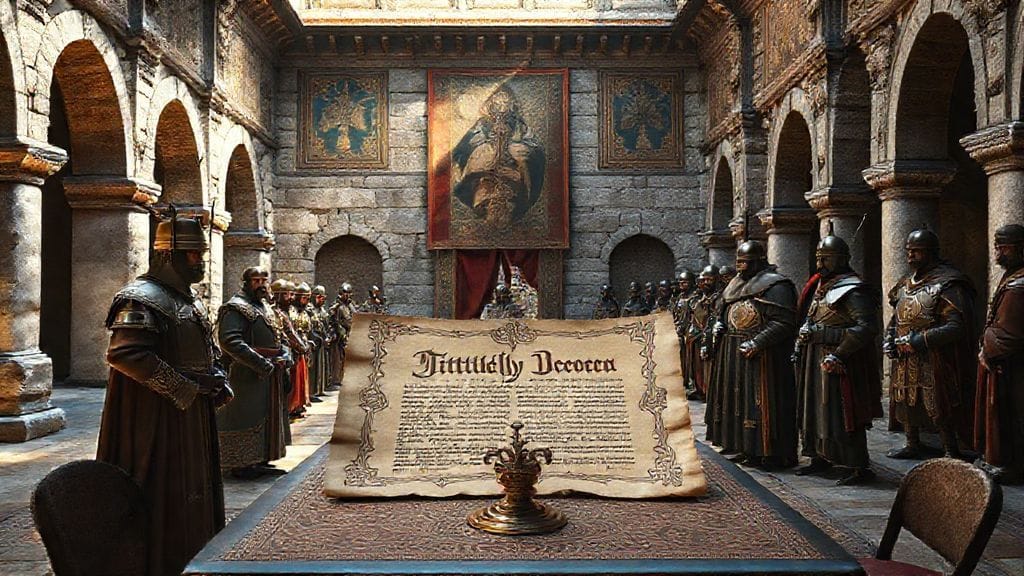
The accord of 488 was a masterclass in Byzantine diplomacy. Rather than confrontation, it sought accommodation: the Ostrogoths would launch an expedition to depose Odoacer and rule Italy, but as the emperor’s federates—thus preserving Byzantine suzerainty.
The negotiations were delicate. Theodoric wanted legitimacy; Zeno wanted influence. The resulting treaty granted Theodoric the status of magister militum per Italiam (master of soldiers in Italy), effectively recognizing him as both conqueror and imperial governor.
In exchange, Theodoric pledged loyalty to Constantinople, promised to maintain Roman laws and customs, and provide military support when needed. Behind closed doors, both sides understood this was a marriage of convenience—each seeking to harness the other’s strengths.
Diplomatic Chessboard: Key Figures Behind the Deal
Beyond the emperor and Theodoric, many personalities shaped the accord. Longinus, Zeno’s trusted diplomat, spearheaded the Byzantine negotiations, employing cunning and patience. On the Ostrogoth side, Theodoric's trusted advisors—drawn from both Gothic aristocracy and Romanized elites—balanced the tribe’s warrior spirit with political savvy.
Meanwhile, Odoacer himself was an unwitting player in this game, his authority eroding as the diplomatic and military wheels turned against him.
The Role of Theodoric the Great: Ostrogoth Leader and Kingmaker
Few historical figures capture the imagination like Theodoric. Educated in Constantinople as a hostage, he was fluent in Roman customs and politics, blending Gothic valor with imperial sophistication.
His acceptance of the accord signaled a transformation—from warlord to statesman, from tribal chief to ruler of Italy. Theodoric’s vision extended beyond conquest; he envisioned a harmonious kingdom where Romans and Goths could coexist, a new Roman order under Gothic leadership.
Constantinople’s Strategic Vision: Reclaiming the West
For Byzantium, the accord was a strategic masterstroke. It transformed a potential threat—the Ostrogoths—into an instrument for restoring imperial control, albeit indirectly.
Zeno’s government envisioned a buffer state in Italy, one that would simultaneously counterbalance other Germanic kingdoms like the Vandals and Franks and secure maritime routes across the Mediterranean.
Yet, this vision was fragile. It depended on Theodoric’s loyalty, the unpredictable loyalties of Italian aristocrats, and the realities of military conquest.
The Geopolitical Stakes: Ostrogoths, Byzantines, and Rome
This alliance echoed the tangled geopolitics of the Late Antique Mediterranean. The Ostrogoths sought land and legitimacy; the Byzantines, a foothold in the West. The Roman Senate and local magistrates hoped for stability, wary of both barbarian rulers and imperial ambitions.
Meanwhile, other powers watched nervously. The Franks, ruling parts of Gaul, and the Visigoths in Spain saw Italy as a prize to be claimed or influence to be checked.
Preparing for War: Military and Logistical Plans
Behind the ornate palaces of Constantinople and the Gothic camps beyond the Danube, war preparations unfolded.
Theodoric mobilized a mixed army of Ostrogoths, Alans, and Heruli warriors, while Byzantine forces provided logistical support. Ships were readied to ferry troops across the Adriatic Sea, supply lines were drawn, and intelligence on Odoacer’s positions was gathered meticulously.
This operation was unprecedented in scale and ambition, mixing diplomacy, military strategy, and sheer resolve.
Crossing the Adriatic: The Italian Expedition Launches
In the spring of 488, Theodoric’s forces crossed the Adriatic, landing in southern Italy at the ancient port of Brindisi.
The landing was bold, signaling the beginning of a protracted campaign. The Gothic army moved swiftly but cautiously, aware of the political sensitivities and the diverse populations they would encounter.
As banners fluttered in the Italian sun, local lords had to choose—resist the invaders or negotiate, bargaining their futures as war engulfed the peninsula.
The Campaign Unfolds: Battles, Sieges, and Maneuvers
Italy became a battlefield of shifting alliances, brutal sieges, and pivotal encounters.
Theodoric’s forces advanced northward, clashing with Odoacer’s armies in strategic locations like Verona and Ravenna. The warfare was fierce but marked by relative restraint compared to earlier barbarian invasions; Theodoric aimed to win hearts as well as territories.
The campaign mixed military prowess with diplomacy, as Gothic leaders courted Roman nobles, promising protection of property and status.
Roman Legacy and Gothic Honor: Clashing Cultures
The expedition underscored cultural tensions. Romans, proud of their heritage, viewed Ostrogoths as both saviors and usurpers.
Theodoric’s court sought to bridge these divides—with Gothic warriors adopting Roman customs and Romans learning to coexist with ‘barbarian’ rulers.
Religious differences added layers of complexity. The Ostrogoths were Arians, a Christian sect considered heretical by the Catholic majority. Yet Theodoric maintained a policy of religious tolerance, a diplomatic necessity that would define his rule.
Impact on Italian Populations: Citizens and Soldiers Alike
For common Italians, war meant uncertainty and hardship. While some villages were spared devastation, others endured sieges and requisitions.
Soldiers on both sides grappled with loyalties torn between ethnicity, religion, and political allegiance. Yet, many hoped the accord would bring stability after decades of turmoil.
The Fall of Odoacer: End of Italy’s Germanic Rule
After several years of conflict, the crucial moment arrived in 493 when Theodoric besieged Odoacer in Ravenna.
The two leaders agreed to rule jointly, but in a tragic and symbolic betrayal, Theodoric killed Odoacer during a banquet, ending the last semblance of Odoacer’s reign.
This act sealed Theodoric’s dominance and paved the way for the Gothic Kingdom of Italy.
The Establishment of Theodoric’s Kingdom
With the accord’s framework intact, Theodoric established a kingdom where Ostrogoths ruled as federates of Byzantium.
His reign brought relative peace and prosperity, reviving Roman institutions, law, and infrastructure while respecting Gothic traditions.
This kingdom became a unique fusion of Roman continuity and Germanic innovation — a vision partly birthed in the 488 accord.
Byzantine Gains and Losses: Reality Versus Expectations
While Byzantium regained nominal influence over Italy, the arrangement was a double-edged sword.
Constantinople had to accept limited direct control, relying on Theodoric’s goodwill. This decentralization foreshadowed challenges in maintaining imperial unity.
Nevertheless, the accord restored prestige to the Byzantine court, demonstrating its capacity for strategic partnerships.
Long-Term Consequences for East and West
The 488 accord set in motion the enduring coexistence of Roman and Germanic worlds.
It influenced future medieval political frameworks, blending imperial legacy with emerging European identities.
Italy’s political landscape was shaped for centuries, alternating between Byzantine, Gothic, Lombard, and later Norman dominion.
Historiographical Perspectives: Who Benefits from the Accord?
Scholars debate the accord’s legacy. Some view it as the genesis of medieval statecraft and pragmatic diplomacy; others see it as the last gasp of Roman imperialism masked by Gothic power.
Regardless, it remains a crucial moment in the tapestry of late antique and early medieval history.
Anecdotes from the Campaign: Voices from Both Sides
Historical chronicles whisper of soldiers who wept seeing the ruins of Roman villas, of senators who toasted uneasy alliances, and of Theodoric himself writing letters to the emperor expressing loyalty yet sovereignty.
These personal touches remind us history is lived, not just recorded.
The Cultural and Religious Dimensions of the Alliance
Religious tolerance under Theodoric was unusual in a polarized era. Despite doctrinal divides, the Goths and Romans maintained delicate coexistence.
This pluralism laid foundations for later medieval attitudes towards diversity and authority.
Economic Implications: Trade and Tribute in a Reunified Italy
The accord promised economic revival. Italian cities reopened trade routes once jeopardized by instability.
Byzantine connections enriched markets from the Mediterranean to the East, while Gothic rule reestablished order, albeit with new taxation systems.
The Accord’s Role in Shaping Medieval Europe
Ultimately, the Ostrogoth–Byzantine accord presaged the complexity of medieval European politics where overlapping loyalties, cultural fusion, and negotiated authority became the norm.
It was a blueprint for coexistence amid diversity and conflicting ambitions.
Reflections on Power, Legitimacy, and Diplomacy
The accord challenges modern notions of power—showing it to be a fluid dance of force, persuasion, and symbolic legitimacy.
It underlines the enduring human quest to balance ambition with pragmatism and tradition with innovation.
How This Accord Echoes Through Time
More than a political deal, the 488 agreement is a milestone in the transformation from the ancient world to the medieval.
It reminds us that history is a dialogue across centuries, where agreements forged long ago still resonate in the patterns of nations and identities.
Conclusion
The Ostrogoth–Byzantine accord of 488 AD was not simply a treaty—it was a turning point in the story of Europe. Against the backdrop of a crumbling empire, it wove together disparate peoples, cultures, and ambitions into a fragile yet momentous alliance. Through this accord, Constantinople projected its power westward, Theodoric realized his destiny as the architect of a new order, and Italy began an extraordinary metamorphosis.
This moment teaches us about the endurance and adaptability of human societies, the power of diplomacy amid conflict, and the enduring legacy of bridges built between worlds. It is a testament that history’s grand narratives are born not only in battles won but in the accords and understandings that shape destinies.
FAQs
1. What motivated the Ostrogoths and Byzantines to form the 488 accord?
The Ostrogoths sought legitimacy and territory in Italy, while the Byzantines under Emperor Zeno aimed to regain influence in the West without costly military campaigns. Their mutual interests led to a pragmatic and strategic alliance.
2. Who was Theodoric the Great and why was he important?
Theodoric was the Ostrogothic leader who negotiated the accord and led the expedition to Italy. Educated at Constantinople, he bridged Gothic and Roman worlds, becoming king of Italy and a key figure in early medieval history.
3. How did the accord affect the Roman population in Italy?
The accord led to warfare but also eventual stability. Theodoric preserved Roman laws and traditions, sought to integrate Roman elites, and maintained religious tolerance, easing cultural tensions.
4. Did the Byzantine Empire regain full control over Italy after the accord?
No, Byzantium retained nominal suzerainty; real power rested with Theodoric as federate king. The empire’s influence was indirect, marking a shift toward decentralized authority.
5. What was the significance of the fall of Odoacer?
Odoacer’s death ended the last Germanic ruler who had deposed the Western Roman Emperor. It symbolized the definitive transfer of Italian rule to the Ostrogoths under the Byzantine aegis.
6. How did religion factor into the Ostrogoth–Byzantine alliance?
The Goths were Arians, Byzantines were Chalcedonian Christians. Despite doctrinal differences, Theodoric encouraged religious tolerance, preventing sectarian conflict during his reign.
7. What long-term impacts did the accord have on medieval Europe?
It set a precedent for mixed governance, blending Roman legacy with Germanic rule, influencing the political and cultural evolution of Europe through the Middle Ages.
8. How is this accord remembered in historical scholarship?
It is often seen as a pragmatic solution in a fragmented world—an alliance that temporarily bridged East and West, tradition and change, and shaped the medieval Mediterranean landscape.

