Table of Contents
- A Turning Point in the Balkans: The Ottoman Advance Begins
- The Strategic Importance of Thrace and Adrianople
- The Rise of the Ottoman Beylik and Its Ambitions
- The Fragmented Balkans Before the Conquest
- Early Ottoman Raids and Campaigns in the 1350s
- The Calm Before the Storm: Regional Powers and Diplomacy
- The Capture of Adrianople: A Bold Move in the 1360s
- The Siege That Changed the Balance of Power
- The Fall of Adrianople: From Byzantine Stronghold to Ottoman Capital
- Thrace Under Ottoman Rule: Consolidation and Governance
- Military Innovations and Tactics in the Conquest
- The Role of Local Populations and Alliances
- The Balkan Response: Resistance, Flight, and Adaptation
- Economic and Cultural Shifts Following the Conquest
- The Ottoman Gateway to Europe Opens: Long-Term Implications
- How Adrianople Paved the Way for the Fall of Constantinople
- The Legacy of the 1360s Conquest in Ottoman Expansion
- Voices from the Era: Chronicles and Eyewitness Accounts
- Historiographical Debates and Interpretations
- Thrace and Edirne in Today’s Memory and Identity
A Turning Point in the Balkans: The Ottoman Advance Begins
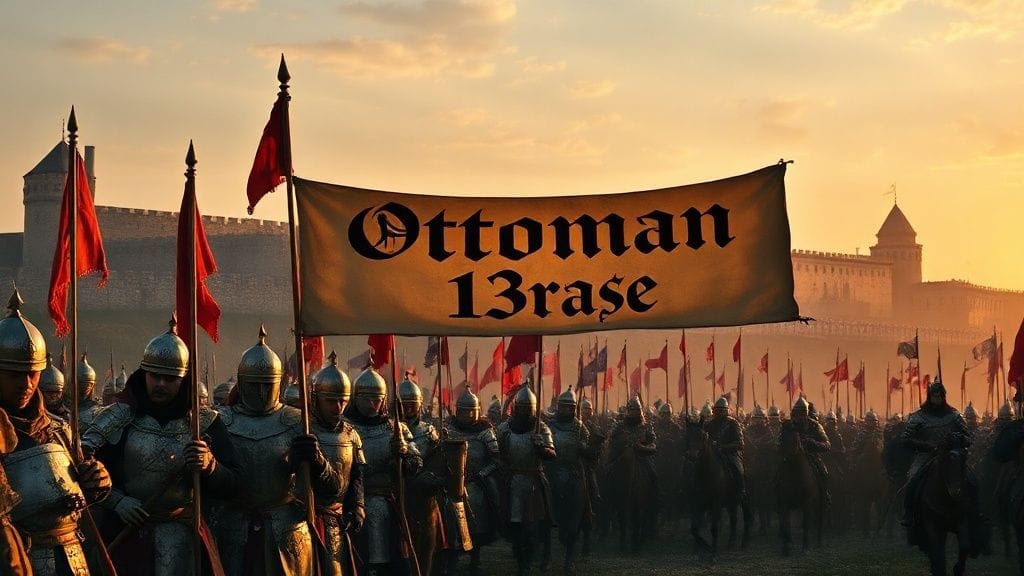
The thin light of dawn in the 1360s barely touched the misty plains of Thrace where the distant sounds of marching troops slowly filled the air. From the east, a rising power—once a small beylik on the fringes of the waning Anatolian Seljuks—was now casting a long shadow over the Balkans. The Ottoman Turks, steeled by decades of raids and disciplined campaigns, were about to carve a new chapter into the mosaic of southeastern Europe. Adrianople, known today as Edirne, was the jewel in a strategic puzzle—its fate would determine the trajectory of a continent’s history.
This was not just a battle over land. It was a decisive moment where empires, cultures, and faiths clashed, heralding a transition from medieval fragmentation to imperial dominion. In the swirling currents of political intrigue, shifting alliances, and religious fervor, the Ottoman conquest of Thrace consolidated a foothold that would soon reverberate far beyond the region.
The Strategic Importance of Thrace and Adrianople
Nestled at the crossroads between Europe and Asia, Thrace offered a prize too valuable to ignore. This region linked the Ottoman heartlands of Anatolia to the rich, fertile plains and fortified cities of the Balkans. Among them, Adrianople stood supreme—a thriving Byzantine hub long battered by internal decay and external threats.
Adrianople’s location was pivotal: controlling the passage over the Maritsa River, it served as a gateway into Central Europe. For the Ottomans, it was the perfect staging ground to expand westward. For Byzantium and the myriad Balkan states, it became a symbol of resistance, a defense line fast unraveling. The conquest of Thrace was not merely territorial— it meant control over trade routes, military pathways, and the pulse of region’s wealth.
The Rise of the Ottoman Beylik and Its Ambitions
The Ottoman beylik, under the leadership of Orhan and his son Murad I, had been quietly transforming from a frontier principality into a powerful state. Their rise was fueled by a blend of savvy diplomacy, military innovation, and opportunistic expansion. From their base in northwestern Anatolia, these leaders watched the Balkans' weakening Byzantine Empire and fractious Christian principalities with keen eyes.
Orhan’s campaigns in the 1350s set the tone: they combined swift cavalry raids with sieges, pushing Ottoman influence steadily into Thrace and beyond. By the time of Murad’s ascension, the Ottomans had become a force to reckon with—confident, well-organized, and hungry for conquest. Their vision stretched beyond mere survival; they sought empire.
The Fragmented Balkans Before the Conquest
The Balkans in the mid-14th century were a patchwork of competing powers. Byzantium was a shadow of its former greatness, struggling both internally and against external foes. The Bulgarian and Serbian states, though formidable, were divided by dynastic disputes and cultural differences. To the west, Hungarian nobles eyed their southern neighbors warily, ready to intervene but often too entangled in their own politics.
This fragmentation created ripe conditions for the Ottomans, who skillfully exploited rivalries and brokered alliances where convenient. Local rulers sometimes turned to the Turks as mercenaries or allies against their neighbors, unaware that they were opening the door to a new empire.
Early Ottoman Raids and Campaigns in the 1350s
In the early 1350s, Ottoman raids into Thrace began as probing incursions—hit-and-run cavalry attacks interrupted trade and sowed fear. These were not just military maneuvers but psychological warfare. Villages were plundered, and roads were cut, destabilizing the borderlands.
By 1354, history marked a critical moment when the Ottomans crossed the Dardanelles after an earthquake damaged the Byzantine fortress of Gallipoli, enabling them to establish a foothold in Europe. This bridgehead allowed them to launch further expeditions, culminating in the consolidation of Thrace by the next decade.
The Calm Before the Storm: Regional Powers and Diplomacy
This period was marked by uneasy truces and shifting alliances. Byzantine emperors sought help from Venice and Genoa, hesitant European powers debated intervention, and Balkan lords jockeyed for advantage. Murad I, however, was patient and methodical, building up administrative structures and military strength. While others dithered, the Ottomans tightened their grip.
Murad’s diplomatic efforts also involved recognizing and co-opting local elites, integrating them into the Ottoman system if they proved loyal. This blend of force and flexibility was instrumental in preventing unified opposition.
The Capture of Adrianople: A Bold Move in the 1360s
Adrianople’s fall was the climax of the Ottoman campaign to control Thrace. The city, founded by the Romans and long a Byzantine bastion, was heavily fortified and well provisioned. The siege, lasting months, tested the resolve of defenders and invaders alike.
Sources speak of relentless pressure from Ottoman forces: constant bombardments using primitive artillery, sapping of walls, and psychological tactics designed to wear down the inhabitants’ morale. The arrival of reinforcements and supplies from the Ottomans' Anatolian bases ensured a relentless siege effort.
The Siege That Changed the Balance of Power
In 1361, the siege proved decisive. With Byzantine aid minimal—crippled by internal strife—the city capitulated. The Ottomans, under Murad, made Adrianople their new capital, a statement announcing their permanent presence in Europe.
The atmosphere was electric and somber at once. For centuries, Adrianople had been a bulwark of Eastern Christianity and imperial power. Now it was Ottoman territory, the first major European city to fall to this new Islamic empire.
The Fall of Adrianople: From Byzantine Stronghold to Ottoman Capital
Rather than destroying the city, the Ottomans invested in its development. They repaired walls, built mosques, and resettled populations. Adrianople became Edirne, a thriving metropolis and the strategic base for further conquests into the Balkans and beyond.
Murad I’s administrative reforms included appointing a beylerbey (governor), establishing tax and legal frameworks, and integrating local communities. The Ottomans understood that an empire was built not simply on conquest but on governance.
Thrace Under Ottoman Rule: Consolidation and Governance
The consolidation of Thrace brought new policies and realities. Ottoman laws accommodated Christian communities under the millet system, allowing religious autonomy in exchange for loyalty and taxes. This pragmatic approach helped stabilize the region and encouraged commerce.
Meanwhile, Turkish settlers and soldiers were stationed across Thrace, fortifying control. The Ottomans also invested in infrastructure, improving roads and establishing caravanserais that enhanced trade networks between Asia and Europe.
Military Innovations and Tactics in the Conquest
The success of the Ottoman conquest owed much to their military innovations. Unlike the feudal armies of their adversaries, Ottomans developed a standing army system, including the famed Janissaries—elite infantry recruited through the devshirme system.
Their use of cavalry, archers, and increasingly, early artillery, allowed flexible responses on varied terrains. Siegecraft improved notably, and psychological warfare, including diplomacy combined with displays of force, disrupted enemy cohesion before battle.
The Role of Local Populations and Alliances
Not all of Thrace’s inhabitants resisted the Ottomans uniformly. Many local lords, disillusioned by Byzantine weakness or rivalries, allied with Murad I, seeing advantage in Ottoman patronage.
Christian clerics and merchants negotiated their positions carefully, often negotiating for protection and privileges. This complicated mosaic of loyalties played into Ottoman hands, as conquest was seldom a simple confrontation but a war of negotiation and integration.
The Balkan Response: Resistance, Flight, and Adaptation
The conquest of Thrace sent shockwaves through the Balkans. Serbian and Bulgarian rulers grappled with this emergent power, sometimes rallying forces in desperate counterattacks, at other times retreating into ever more isolated strongholds.
Many peasants and townsfolk fled advancing armies, creating waves of refugees that further destabilized regions. Resistance took many forms: open warfare, sabotage, and cultural persistence in the face of transformation. Yet, by the late 14th century, the Ottoman tide was relentless.
Economic and Cultural Shifts Following the Conquest
The integration of Thrace into the Ottoman realm transformed the region’s economy. Trade routes connecting Europe and Asia became more secure under Ottoman administration, stimulating commerce. Agricultural production was reorganized, often yielding prosperity but also settling Ottoman social hierarchies.
Culturally, the Ottoman conquest introduced Islamic institutions, art, and architecture. However, the coexistence with Christian communities created a complex, multi-ethnic society that defined the Balkans’ unique character in the centuries to come.
The Ottoman Gateway to Europe Opens: Long-Term Implications
The conquest of Thrace and Adrianople was more than a regional shift; it marked the opening of the Balkan gateway for Ottoman expansion into the heart of Europe. This foothold allowed future campaigns into Serbia, Bulgaria, and eventually Hungary.
For Europe, the consequences were profound: a prolonged period of Ottoman presence in Southeastern Europe, shifting balance of power, religious conflicts, and cultural exchanges that continue to resonate today.
How Adrianople Paved the Way for the Fall of Constantinople
Holding Thrace and Adrianople set the stage for the most iconic conquest in Ottoman history—the fall of Constantinople in 1453. Edirne became the springboard, military base, and administrative capital facilitating logistics and diplomacy.
The conquest in the 1360s was the first domino, signifying that the Byzantine Empire could no longer defend its European territories effectively. This would culminate nearly a century later in one of history’s watershed moments.
The Legacy of the 1360s Conquest in Ottoman Expansion
The 1360s conquest of Thrace cemented the Ottomans as a multi-continental empire yet to be fully realized. It shifted their identity from Anatolian dynasty to European power, influencing their administrative policies, military tactics, and diplomatic strategies for centuries.
This moment forever altered the political map, initiating centuries of Ottoman influence that shaped Southeastern Europe’s social, religious, and cultural fabric.
Voices from the Era: Chronicles and Eyewitness Accounts
Chroniclers such as the Byzantine historian Doukas provide vivid if sometimes partisan accounts of the siege and conquest. His descriptions evoke scenes of desperate defense and the inexorable Ottoman advance.
On the Ottoman side, chronicles like those by Ashikpaşazade emphasize Murad’s statesmanship. These narratives enrich our understanding by humanizing historical figures, presenting a tapestry of fear, hope, betrayal, and ambition.
Historiographical Debates and Interpretations
Historians have debated the nature of the conquest — was it a brutal invasion or a pragmatic and relatively peaceful incorporation? Some stress military domination, others highlight Ottoman flexibility and accommodation.
Modern scholarship also considers the conquest’s role in broader processes of empire-building and cross-cultural exchange, moving past simplistic clash-of-civilizations frameworks.
Thrace and Edirne in Today’s Memory and Identity
Today, Edirne stands as a vibrant Turkish city, its Ottoman heritage preserved in architecture and cultural memory. Thrace remains a contested historical space, where Bulgarians, Greeks, and Turks recall deeply intertwined pasts.
The conquest’s memory is both a point of pride and trauma, influencing national narratives and regional identities. Museums, festivals, and commemorations maintain this layered heritage, bridging centuries-old histories with the present.
Conclusion
The Ottoman conquest of Thrace and Adrianople in the 1360s was a momentous turning point — a collision of decaying medieval powers with a rising empire poised to reshape a continent. It was not merely a capture of cities or lands, but a profound transformation of the Balkans’ political, cultural, and economic landscape.
Through military ingenuity, diplomatic acumen, and pragmatic governance, the Ottomans forged a lasting legacy from these initial gains. Adrianople’s fall was a prelude to centuries of Ottoman rule and an enduring symbol of empire-building, resilience, and the complex interplay of conquest and coexistence.
As we reflect on that misty dawn when Ottoman standards rose over Thracian plains, we glimpse not just history’s grand sweep, but the human stories beneath—of courage, fear, ambition, and adaptation—that continue to echo in the Balkans and beyond.
FAQs
Q1: Why was Thrace such a strategic region for the Ottomans?
A1: Thrace connected Asia to Europe via vital land routes and rivers, including the Maritsa. It was a buffer zone protecting Anatolia and served as a launchpad for further European expansion.
Q2: How did the fall of Adrianople change Byzantine influence in the Balkans?
A2: The loss stripped Byzantium of its key European stronghold, effectively marking its retreat and weakening its authority over the Balkans, hastening its eventual collapse.
Q3: Who was Murad I and what role did he play in the conquest?
A3: Murad I, son of Orhan, was the Ottoman sultan during the conquest of Adrianople. He led military campaigns, initiated administrative reforms, and established Edirne as the Ottoman capital in Europe.
Q4: What was the millet system mentioned in the consolidation of Thrace?
A4: The millet system allowed religious communities, particularly Christians and Jews, to govern their own affairs under Ottoman sovereignty, promoting relative autonomy and reducing conflict.
Q5: How did local Balkan populations react to the Ottoman conquest?
A5: Reactions varied widely; some resisted fiercely, others fled, and many local elites allied with the Ottomans for political and economic reasons.
Q6: Why is the capture of Adrianople considered a prelude to the fall of Constantinople?
A6: Adrianople served as the Ottoman base for further European campaigns, enabling them to gather resources and manpower necessary for the eventual siege of Constantinople in 1453.
Q7: Were there significant cultural changes after the conquest?
A7: Yes. The introduction of Ottoman architecture, Islamic institutions, and administrative practices transformed the region, while Christian communities largely retained their traditions under Ottoman rule.
Q8: How is the Ottoman conquest of Thrace remembered today?
A8: It is remembered as a crucial moment of expansion shaping the Balkans, with mixed legacies that reflect complex histories of conflict, coexistence, and identity construction.

