Table of Contents
- The Last Breath of a Rebel: Owain Glyndŵr’s Final Years
- Wales in Turmoil: The Rise of a Nationalist Hero
- Owain Glyndŵr’s Insurrection: The Spark That Shook England
- The Golden Age of Rebellion: Early Victories and Rising Hope
- The English Crown’s Response: Fury and Retaliation
- The Changing Tide: The Decline of the Welsh Revolt
- The Shadow Realm: Glyndŵr’s Hidden Life After Defeat
- The Enigma of Owain Glyndŵr’s Death
- Caerwys or Carmarthen? The Mysteries of the Final Resting Place
- The Cultural Resonance of Glyndŵr’s Passing
- The End of an Era: Wales under English Domination Post-Rebellion
- Owain Glyndŵr in Welsh Folklore and Memory
- The Political Legacy: From Hero to Symbol of Resistance
- International Echoes: Glyndŵr’s Influence Beyond Wales
- Rediscovering Glyndŵr: Modern Historical Interpretations
- Glyndŵr’s Death in Context: Europe during the Early 15th Century
- The Human Cost of Rebellion and the Harsh Fate of Wales
- The Role of Prophecy and Legend in Glyndŵr’s Last Years
- The Search for the Tomb: Archaeology and Myth
- Conclusion: Owain Glyndŵr as a Timeless Symbol of National Identity
- FAQs about Owain Glyndŵr’s Death and Legacy
- External Resources
- Internal Link
1. The Last Breath of a Rebel: Owain Glyndŵr’s Final Years
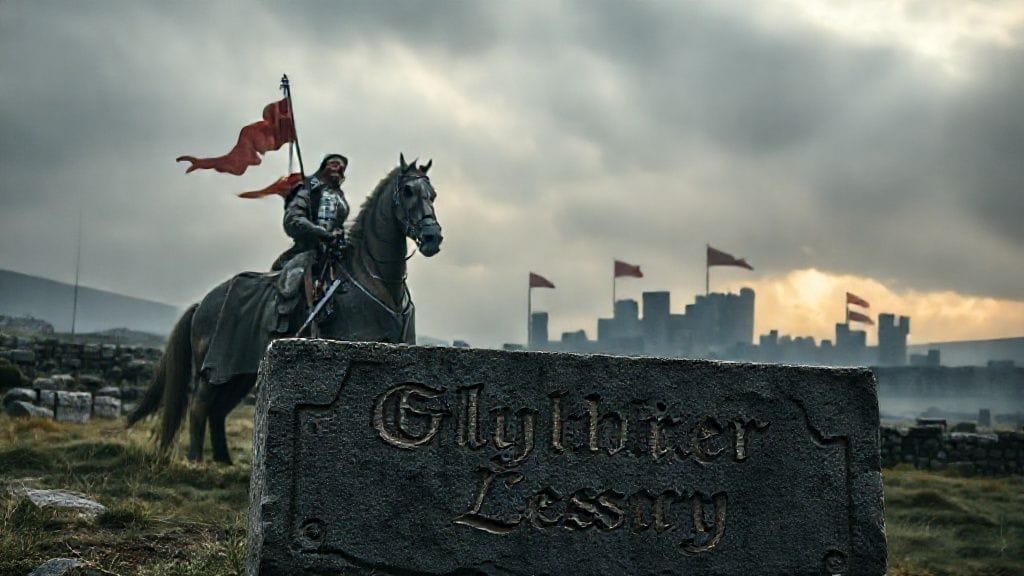
In a tranquil yet shadowed corner of medieval Wales, a solitary figure, once vibrant and fierce, faded into obscurity—Owain Glyndŵr, the last native Welsh prince, the fiery beacon of rebellion against English rule, was slipping away. The year was somewhere between 1415 and 1417, but the exact moment of his death remains a mystery wrapped in legend, shadow, and the unforgiving mists of time. No grand funeral was recorded, no monument erected; instead, the leader who had once risen with the roar of a nation simply vanished from the historical stage.
Imagine the cold wind sweeping the rugged Welsh hills—fields bathed in a thin, gray light—and somewhere there, an old man, cloaked and withdrawn, lies quietly, his mind haunted by decades of battle, loss, and the dreams of an independent Wales. This was not the death of a king crowned in glory but that of a forgotten hero whose story was left to folklore and silence. Yet, from his final breath sprang a legacy that would shape Welsh identity, politics, and culture centuries later.
2. Wales in Turmoil: The Rise of a Nationalist Hero
To understand the profound significance of Owain Glyndŵr’s death, one must first plunge deep into the turbulent backdrop of turn-of-the-century Wales. The late 14th century was a period marked by resentment and resistance against centuries of English domination. The annexation of Wales under Edward I had shattered native governance, leaving Welsh lords dispossessed and the common people burdened under an alien crown.
Owain Glyndŵr was born circa 1359, into a lineage that traced back to the ancient Princes of Wales. Educated, charismatic, and deeply rooted in the Welsh cultural tradition, Glyndŵr was no mere nobleman but a symbol waiting to be unleashed. By the 1390s, political grievances, combined with the broader turmoil of the Hundred Years’ War and English plagues, created an atmosphere ripe for revolt. It was his keen sense of justice and national pride that would ignite a rebellion that shook England itself.
3. Owain Glyndŵr’s Insurrection: The Spark That Shook England
In September 1400, Owain Glyndŵr thrust himself into history when he proclaimed himself Prince of Wales. This was not a mere title claim but a declaration of war against the English rule—an invitation to an insurgency fueled by decades of discontent. The rebellion began with skirmishes in the Welsh countryside but rapidly transformed into a coordinated insurrection involving nobles, peasants, clerics, and even disaffected English allies.
The initial successes were remarkable, as Glyndŵr’s forces captured castles and towns, declared Welsh independence, and even summoned a national parliament. His vision extended beyond military confrontation: he envisioned an autonomous Wales governed by Welsh laws and custom, with alliances forged with France and Scotland.
4. The Golden Age of Rebellion: Early Victories and Rising Hope
The years 1400 to 1404 marked the zenith of Glyndŵr’s revolt. Victories at places like Mynydd Hyddgen and the storming of Aberystwyth Castle inspired hope in a people long suppressed. The rebel leader held court in Machynlleth in 1404, where he convened what some regard as the first Welsh Parliament—a bold statement of legitimate self-rule.
His rebel government prioritized Welsh language and customs, issuing proclamations that stirred patriotic pride. International diplomacy was also pursued vigorously: treaties with Charles VI of France and connections with the Owain’s Scottish allies aimed to pressure England on multiple fronts.
5. The English Crown’s Response: Fury and Retaliation
But England would not allow this uprising to persist unchallenged. King Henry IV, and later his son Henry V, mounted severe military campaigns to crush the rebellion. Brutal scorched-earth tactics, castle sieges, and ruthless reprisals were waged against Welsh towns and villages suspected of harboring rebels.
The rebellion polarized the region; while some Welsh nobles capitulated, others held fast. Glyndŵr’s forces began to suffer from dwindling supplies, internal divisions, and the overwhelming might of the English armies. By 1409, the tide was turning inexorably against the insurgents.
6. The Changing Tide: The Decline of the Welsh Revolt
Glyndŵr’s fortunes waned as English forces tightened their grip. Key strongholds fell one after the other, and support dwindled. The Welsh rebellion, once ablaze with promise, was reduced to guerrilla warfare—a desperate struggle in the forests and hills.
The last documented military action involving Glyndŵr was in 1412, after which historical records fall almost silent. It is believed he retreated into hiding, his famed smoke rising no more over castle ramparts, replaced by silence and whispers.
7. The Shadow Realm: Glyndŵr’s Hidden Life After Defeat
What followed were years cloaked in obscurity. Scholars speculate that Glyndŵr survived in secret, perhaps sheltered by loyalists or living as a humble hermit. Some suggest he fled to France or Ireland, though most Welsh accounts place him quietly in the Welsh heartland.
Such concealment was both a survival strategy and a symbolic retreat—the ultimate price paid by a leader who could no longer openly defy the English crown. Oral traditions speak of an old man wandering the valleys, a reluctant exile in his own land.
8. The Enigma of Owain Glyndŵr’s Death
Historians remain baffled by the exact date, place, and circumstances of Glyndŵr’s death. Estimates place it between 1415 and 1417, but no definitive written record confirms this. Unlike other figures of his stature, there is no tombstone, no sepulcher marking a final resting place.
This erasure speaks volumes—intentional or accidental—of how the English crown sought to extinguish the flame of Welsh nationalism. The anonymity of his death turned Glyndŵr into a mythic figure, part hero, part ghost, forever waiting in the shadows of Welsh memory.
9. Caerwys or Carmarthen? The Mysteries of the Final Resting Place
Among the many legends, two sites vie for recognition as Owain’s grave. Caerwys, a quiet village in north Wales, is claimed by some traditions as his final refuge. Alternatively, Carmarthen, a historic town with deep connections to medieval Wales and Welsh legend, offers another possible locale.
Both places bear oral testimonies and obscure references, yet no archaeological confirmation exists. This mystery fuels the mythos surrounding Owain—he belongs less to the historical record and more to the realm of Welsh collective consciousness.
10. The Cultural Resonance of Glyndŵr’s Passing
Despite—or perhaps because of—the ambiguity of his last moments, Glyndŵr’s death resonated powerfully through Welsh culture. He became a symbol of unyielding resistance in poetry, songs, and stories. His spirit was invoked during later uprisings and continues to inspire national pride and cultural revival.
Writers like Saunders Lewis and historians from the 19th and 20th centuries rekindled interest in his life and death, framing Owain not only as a medieval rebel but as an enduring emblem of Welsh identity.
11. The End of an Era: Wales under English Domination Post-Rebellion
With Glyndŵr’s silence came the reassertion of English authority. The marcher lords and English administrators tightened control, imposing laws intended to suppress Welsh language and custom. The rebellion was stamped out decisively, leaving a bitter legacy of loss and cultural marginalization.
However, the spirit of resistance persisted beneath the surface, simmering through the centuries of occupation into the movements of later Welsh nationalism.
12. Owain Glyndŵr in Welsh Folklore and Memory
Stories about Glyndŵr’s continued presence—whether as a hidden prince or a prophetic figure—became staples of Welsh folklore. Tales of his return, a “sleeping hero,” enthralled generations, echoing the archetype of the Messiah-king who would one day restore Welsh freedom.
This myth-making transcended the man, blending history with hopeful longing, giving Glyndŵr a timeless place in Welsh collective imagination.
13. The Political Legacy: From Hero to Symbol of Resistance
Owain Glyndŵr’s death did not end his impact. His uprising inspired centuries of political thought around self-rule and national identity. In the 19th century, amid growing Welsh cultural nationalism, Glyndŵr was resurrected as a model of defiance and dignity.
Politicians, cultural figures, and activists drew upon his name to argue for autonomy and preservation of Welsh heritage.
14. International Echoes: Glyndŵr’s Influence Beyond Wales
Glyndŵr’s rebellion caught the attention of contemporary European powers, particularly France, with whom he maintained symbolic alliances against England. His revolt is often contextualized within the broader struggle of smaller nations resisting larger kingdoms in medieval Europe.
His story also inspired later nationalists worldwide, especially those seeking to challenge imperial dominations.
15. Rediscovering Glyndŵr: Modern Historical Interpretations
Contemporary historians have reappraised Glyndŵr’s death and legacy, blending archival research with archaeological findings and cultural studies. Rather than a mere footnote of medieval rebellion, Glyndŵr is seen as a complex figure who shaped modern conceptions of nationalist identity and resistance.
Recent works emphasize the need to separate myth from fact, while embracing the powerful emotional truth his story carries.
16. Glyndŵr’s Death in Context: Europe during the Early 15th Century
The period of Glyndŵr’s death coincided with momentous events across Europe—England’s Henry V was poised to renew his campaigns in France, the Council of Constance was seeking church unity after papal schisms, and the plague’s aftershocks still laced societies with fear.
Within this volatile milieu, the Welsh revolt was both a local tragedy and part of a larger tapestry of medieval crisis and change.
17. The Human Cost of Rebellion and the Harsh Fate of Wales
Behind the grand historical narrative lay profound human suffering. The rebellion led to immense loss of life, displacement, and social upheaval. Villages were burned, families torn apart, and economic devastation ensued, particularly after English punitive measures.
Owain Glyndŵr’s death symbolizes not only the end of a political era but the tragic sacrifices of an entire nation’s yearning for freedom.
18. The Role of Prophecy and Legend in Glyndŵr’s Last Years
Medieval Wales was rich in prophetic tradition. It was said that Glyndŵr’s rise and fall were foretold by bards and seers. Some believed his mysterious disappearance was preordained, part of a cosmic cycle of decline and hopeful renewal.
These prophecies added a mystical layer to his legacy, blurring history with spiritual symbolism.
19. The Search for the Tomb: Archaeology and Myth
Modern attempts to locate Glyndŵr’s burial place have produced no conclusive evidence but stirred considerable interest. Archaeologists and enthusiasts have combed churchyards, ruins, and remote landscapes, hoping to unearth physical proof of the elusive prince’s final resting place.
This fascination underscores a collective desire to reclaim Welsh history from obscurity.
20. Conclusion: Owain Glyndŵr as a Timeless Symbol of National Identity
Owain Glyndŵr’s death, shrouded in mystery, is far from an end. It marks a transition—from the tangible presence of a man who dared to dream of liberty to the intangible power of his spirit that continues to echo through Welsh hearts.
His life and death embody the resilience of a nation and the enduring human longing for self-determination. Every whisper of his name is a reminder that freedom, though delayed, is immortal.
Conclusion
The story of Owain Glyndŵr’s death defies simple closure. It is not a moment frozen by precise dates or solemn monuments but a living narrative woven into the Welsh soul. He died quietly, perhaps unknown, yet his legacy roars louder with every passing century.
To the English crown, he was a defeated rebel; to Wales, an eternal prince. His death was not a conclusion but a seed—a spark that would ignite Welsh identity and resistance again and again, proving that some heroes never truly die.
FAQs about Owain Glyndŵr’s Death and Legacy
Q1: When exactly did Owain Glyndŵr die?
A1: The exact date of Owain Glyndŵr’s death is unknown, but historians estimate it occurred between 1415 and 1417. There are no contemporary records that definitively state the time or place of his passing.
Q2: Where is Owain Glyndŵr buried?
A2: No verified location exists. Welsh traditions suggest Caerwys or Carmarthen, but the burial site remains a mystery, contributing to his mythic status.
Q3: Why was Glyndŵr’s rebellion so significant?
A3: It was the last major Welsh uprising against English rule, representing a bold assertion of national identity, language, and sovereignty—a legacy influential in later nationalist movements.
Q4: How did Glyndŵr’s death affect Wales politically?
A4: His death marked the end of organized Welsh rebellion, leading to increased English control and suppression of Welsh culture for centuries.
Q5: Did Glyndŵr have support from other countries?
A5: Yes, he secured alliances with France and maintained symbolic ties with Scotland, part of a wider strategy to pressure England during the Hundred Years’ War.
Q6: How is Glyndŵr remembered today in Wales?
A6: He is revered as a national hero and symbol of Welsh pride, celebrated in literature, folklore, and political discourse.
Q7: What role do legends play in Glyndŵr’s legacy?
A7: Legends sustain his image as a “sleeping prince” who will return to save Wales, blending history with cultural mythology.
Q8: Has there been any archaeological evidence related to Glyndŵr?
A8: Despite interest, no archaeological discoveries have definitively linked any site to Owain Glyndŵr’s final resting place.