Table of Contents
- The Final Days of a Giant: April 8, 1973
- A Life Woven into Art: Picasso’s Legacy Before His Passing
- The World of Mougins: Picasso’s Last Sanctuary
- April 8, 1973: The Day When Time Stopped
- The Private Battle: Picasso’s Health in Decline
- The Gathering Storm: Family, Friends, and Fans at the Edge
- The News Breaks: A Global Outpouring of Grief
- Mourning a Visionary: Public and Private Reactions
- The Last Masterpiece: Picasso’s Final Creations
- A Funeral Like No Other: The Farewell in Mougins
- Picasso’s Death and the Transformation of Modern Art
- Legal Battles and Family Disputes: Inheritance and Legacy
- Museums and Memorials: Preserving the Giant’s Memory
- The End of an Era: How Picasso Redefined the 20th Century
- Remembering Picasso Today: The Myth and the Man
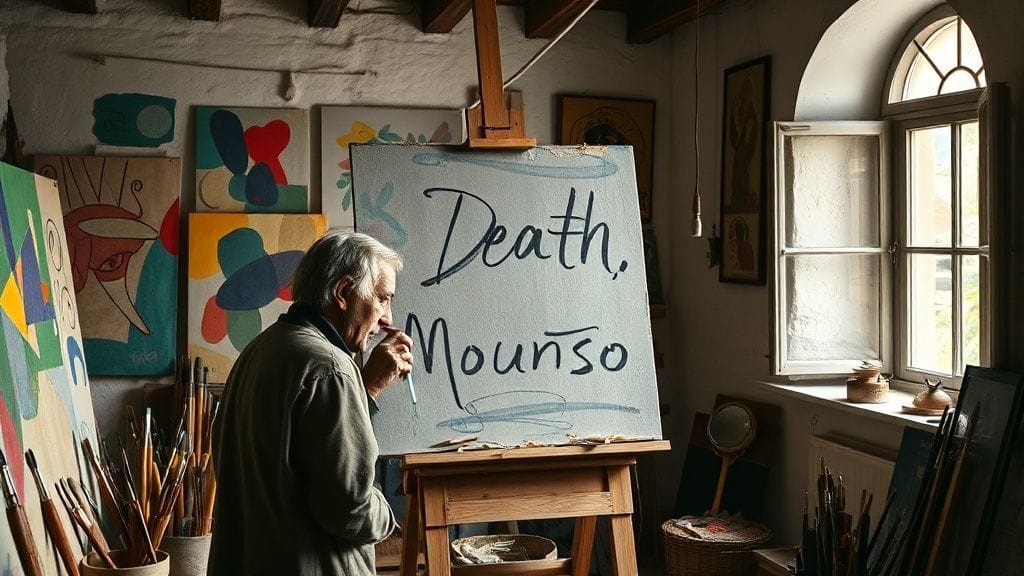
April 8, 1973, was not an ordinary day on the French Riviera. The gentle Mediterranean sun, usually so steady and life-affirming, seemed to dim behind the lush hills surrounding the small village of Mougins. In a serene house overlooking the cliffs and the endless expanse of the sea, Pablo Picasso—the titan of 20th-century art, the man who had shattered traditions and redrawed the canvas of modern creativity—breathed his last. At the age of 91, after a life both thunderous and intoxicating, Picasso passed away, leaving behind a world forever transformed by his restless genius.
The moment felt less like a simple death and more like the closing of a monumental chapter in human history—a chapter written with every brushstroke, every sculpture carved, every line of poetry etched into the collective soul. As twilight embraced Mougins that day, a silence filled the air, weighted not only with sorrow but with the undeniable sense that humanity had lost something truly irreplaceable.
Pablo Picasso’s death was the culmination of a life unlike any other—one straddling immense creativity, turbulent relationships, political engagement, and unquenchable curiosity. To understand the gravity of that final morning, we must journey backward through the labyrinth of his existence, tracing the events that shaped him as well as those he, in turn, shaped.
Born in Málaga, Spain, in 1881, Picasso exploded onto the world stage with a force that few artists before or since have matched. His revolutionary approaches—from the Blue and Rose periods to the birth of Cubism—upended the conventions inherited from centuries past. By the 1970s, he was not only a cultural icon but a symbol of modernity itself, his name synonymous with artistic rebellion and prolific invention.
Yet, paradoxically, his later years brought contrasting themes: a retreat into secrecy, a focus on monumental ceramics and sculptures, and a subtle withdrawal from the frantic art market that had claimed so much of his attention. Mougins, perched like a jewel above the Mediterranean, became his final refuge—far from Parisian galleries and the tumultuous art scene that had both exalted and exhausted him.
The morning of April 8 was quiet at first glance, but inside Picasso’s grand estate, life flickered on a razor’s edge. His health had waned over the previous months—a series of heart attacks and strokes had left the master artist fragile and frail. Unlike the explosive colorful vitality of his youth, his final days were marked by silence and reflection, a kind of stoic resignation that contrasted with the tempestuousness of his earlier reputation.
Around him gathered a close circle—some family members, a few longtime friends, and trusted aides—each awaiting the inevitable but unwilling to accept it fully. The old man’s breathing slowed, the weight of years pressing down like the heavy Mediterranean sun; then, peacefully, as if conceding after a last defiant brushstroke, Pablo Picasso slipped away. The world lost one of its greatest visionaries.
News of Picasso’s death spread like wildfire. From Paris to New York, from Tokyo to Buenos Aires, the airwaves and newspapers carried the somber announcement. World leaders, artists, and common admirers alike lamented the passing of a figure who had transformed not only art but the very way people perceived reality. French President Georges Pompidou declared: “With Picasso, we lose the most daring and extraordinary artist of our time.”
The mourning was as vast and varied as Picasso’s own talents. Streets filled with impromptu vigils, art schools held ceremonies, and museums around the world draped black ribbons. Journalists combed through decades of his life, unveiling lesser-known stories—the passion behind Guernica, the scandal of his many lovers, the political letters, the boundless quest for innovation.
Among his final works were giants of ceramics and sculptures, pieces that bore the imprint of a man still inventing in the face of death. These last creations seemed to reach toward eternity, a testament to how, even at the twilight of his existence, Picasso could reinvent himself.
His funeral in Mougins was simultaneously intimate and grand—a reflection of the man himself. The Mediterranean breezes carried mourners’ whispers as the coffin was lowered, surrounded by masterpieces that echoed the tumult and brilliance of his life.
Beyond the immediate grief lay the complex aftermath. Picasso’s vast estate, a sprawling array of paintings, sculptures, notebooks, and personal effects, became the center of fierce legal battles and family disputes. The question of his legacy turned into a battle for control—of memory, art, and influence.
Yet despite all struggles, museums and foundations blossomed worldwide, dedicated to preserving his work and spirit. The Musée Picasso in Paris and the regional centers in Málaga stand today as beacons of his extraordinary life.
When the shock faded, the world began to see Picasso’s death as not merely the loss of a man but the transition from an era. The age of traditional art that welcomed him had bowed to the torrents of change he unleashed. And although centuries might pass, his shadow will continue shaping creativity, imagination, and the courage to break free.
Conclusion
Pablo Picasso’s death was not simply the end of a life; it was the closing note of a symphony that had begun nearly a century before—a symphony that shook art to its core and transformed the very essence of seeing. In Mougins, on that fragile spring day of 1973, the human world lost a man who embodied the ceaseless search for meaning and expression.
Yet in every brushstroke, every sculpture, every fragment of color that remains, Picasso still speaks to us, reminding us that art is life’s ultimate rebellion and redemption. His passing urges us not to remember a frozen legend but to continue the quest, to look beyond what is known, and to embrace the chaos of creation.
Picasso is gone, but his spirit remains an eternal flame lighting the human imagination.
FAQs
Q1: What were the main causes of Pablo Picasso’s death?
A1: Picasso died primarily due to complications from heart attacks and strokes. At 91, his health had deteriorated over his last months, leading to a peaceful passing in his home at Mougins.
Q2: Why did Picasso settle in Mougins in his later years?
A2: Mougins offered Picasso tranquility and privacy, away from the hustle of Paris and the international art scene. Its natural beauty and peaceful atmosphere made it an ideal sanctuary for his final creative phase.
Q3: How did the art world react to Picasso’s death?
A3: The world reacted with profound grief and admiration. Museums, artists, and political figures worldwide paid tribute, declaring Picasso a titan who redefined modern art and changed cultural history.
Q4: What were some of Picasso’s last artistic works?
A4: In his final years, Picasso focused on ceramics and sculptures, creating monumental pieces that embodied his enduring innovation and refusal to cease experimenting.
Q5: Were there any controversies after Picasso’s death?
A5: Yes, Picasso’s vast inheritance sparked complex legal battles among family members and art institutions regarding the ownership and management of his estate.
Q6: How is Picasso’s legacy preserved today?
A6: Picasso’s legacy lives on through museums like the Musée Picasso in Paris and Málaga, ongoing scholarly work, exhibitions, and the universal influence of his artistic breakthroughs on contemporary art.
Q7: Did Picasso’s death mark a significant shift in the art world?
A7: Indeed, his death symbolized the end of an epoch and underscored the transformation he initiated—from classical example to modernist revolution, influencing art movements for decades.
Q8: How is Picasso remembered by the general public?
A8: Picasso is remembered as a genius, a rebel, and a cultural icon whose art challenged perceptions and continues to inspire a wide, diverse audience.