Table of Contents
- The Dawn of a New Era: Rome at the Crossroads of the 15th Century
- The Papacy on the Brink: Challenges Before Sixtus IV
- Enter Sixtus IV: The Election of a Diplomat and Visionary
- The Papal States in Disarray: Fragmentation and Factionalism
- Ambition and Authority: Sixtus IV’s Political Genius
- Building Power from the Shadows: Diplomacy and Intrigue
- Rome Reimagined: Urban Renewal as a Political Statement
- Military Campaigns and Alliances: The Sword of the Papacy
- The Pazzi Conspiracy: Turmoil and Treachery in Florence
- Consolidation of Territories: Reuniting the Papal Lands
- The Role of Nepotism: Popes, Princes, and Power Networks
- Successors of Sixtus IV: Navigating the Papal Legacy
- The Renaissance Papacy: Patronage, Art, and Propaganda
- Economic Foundations: Financing the Papal State’s Expansion
- Cultural and Religious Impact: Rome as the Heart of Christendom
- The Balance of Power in Italy: Papal States Among Principalities
- The Human Element: Lives Changed in an Era of Upheaval
- The Enduring Legacy: Sixtus IV’s Long Shadow in History
- Reflection in Stones and Scrolls: Architecture and Documents
- Contesting Authority: Challenges from Within and Beyond
- Conclusion: From Fragmentation to Unification – A Historical Turning Point
- FAQs: Understanding the Consolidation of the Papal States
- External Resource
- Internal Link
The summer sun blazed high over the terracotta roofs of Rome in the mid-1470s. The air was heavy with the scent of incense mingled with the dust of construction sites. Bells tolled from ancient basilicas while drawn-out conversations spilled from taverns and palazzi alike. In the midst of this vibrant, turbulent city, Pope Sixtus IV sat in the Apostolic Palace, surrounded by advisors and generals, plotting the fate of a fractured realm. The Papal States, a patchwork of territories strewn across the Italian peninsula, teetered dangerously between anarchy and foreign domination. Yet, from this precarious juncture, an ambitious and cunning pope envisioned a united, centralized dominion—a rebirth of papal authority that would resonate for centuries.
This was a pivotal moment: a turning point that would reshape Italy politically, culturally, and spiritually. Beneath the pomp of Renaissance art and the grandeur of Rome’s rebirth, the consolidation of the Papal States under Sixtus IV and his successors was an epic saga of power, intrigue, faith, and vision.
The Dawn of a New Era: Rome at the Crossroads of the 15th Century
The latter half of the 15th century found Italy a fractious landscape. City-states like Venice, Florence, Milan, and Naples juggled alliances and hostilities, while foreign powers—France, Spain, and the Holy Roman Empire—cast covetous eyes on the peninsula. Rome itself, once the center of a vast empire, languished under the weight of internal strife and declining papal influence. The Papal States were neither stable nor secure, their leadership often distracted by spiritual concerns with political disarray rippling just beneath the surface.
The Church, still recovering from the Great Schism and ongoing theological debates, faced the challenge of maintaining temporal control without sacrificing spiritual authority. Popes strived to assert their dominion not just in matters of faith, but as rulers balancing armies, managing territories, and engaging in diplomacy.
But beyond these external pressures, Rome bore scars of factionalism and mercenary conflicts that threatened the very idea of papal sovereignty over its lands. The stage was set for a transformative era—one that would require bold leadership, cunning strategy, and a vision of power interwoven with culture and faith.
The Papacy on the Brink: Challenges Before Sixtus IV
Before Francesco della Rovere ascended the papal throne as Sixtus IV in 1471, the Papal States had faced decades of uncertainty. His predecessor, Paul II, had struggled with diplomatic isolation and internal dissent. Corruption and nepotism were rampant, as cardinal families and local lords carved out their own fiefdoms, often disregarding papal authority.
The treasury was modest and strained, the standing armies unreliable, and the relationship with key Italian powers fragile at best. Rome itself was physically and symbolically fragmented: impoverished neighborhoods sat alongside noble palaces, the grandeur of the Vatican was yet to be realized, and the citizens viewed the papacy alternately as a spiritual beacon and a political entity rife with favoritism and conflict.
Sixtus IV inherited this fragile realm—a Roman state that needed unification both in governance and spirit.
Enter Sixtus IV: The Election of a Diplomat and Visionary
Sixtus IV's election in 1471 was initially met with cautious optimism by those within and beyond the Vatican walls. Born Francesco della Rovere in Liguria, he had cultivated a reputation as a learned Franciscan friar and skilled diplomat. His career before the papacy had been marked by a steady climb through ecclesiastical ranks, marked by a rare blend of piety and practical politics.
His pontificate, lasting until 1484, would become synonymous with the resurgence of the Papal States as a territorial and political entity. Far from a mere spiritual leader, Sixtus IV embraced the mantle of prince and sovereign, dedicating himself to the restoration of papal lands, the fortification of Rome, and the expansion of papal influence through marriage alliances, military campaigns, and cultural patronage.
The Papal States in Disarray: Fragmentation and Factionalism
The Papal States of the 1470s were a jigsaw puzzle of independent communes, rebellious barons, and opportunistic condottieri. Regions such as Umbria, Marche, and parts of Lazio wavered between loyalty to the pope and allegiance to local power centers or foreign influences.
This environment bred constant tension. Local lords, some semi-autonomous, often defied papal taxation or military conscription. Banditry and mercenary activity were rampant, undermining the papacy’s ability to project authority beyond Rome’s walls. Furthermore, internal factions within Rome, including noble families such as the Orsini and Colonna, engaged in rivalries that threatened the city’s stability and, by extension, papal security.
The papacy needed not just to coerce obedience but to instill loyalty and legitimacy in these fractured territories.
Ambition and Authority: Sixtus IV’s Political Genius
Sixtus IV demonstrated a political acumen that balanced pragmatism with ambition. Recognizing that brute force alone would not suffice, he cultivated alliances through marriage diplomacy, negotiating with powerful Italian houses and foreign courts alike. His nephews, notably Giuliano della Rovere (the future Pope Julius II), were lifted to prominent positions, fortifying a network of loyalists embedded throughout the Church and Italian nobility.
This strategy of nepotism, while criticized later, was a calculated investment in the papacy’s temporal future. Military action complemented diplomacy; Sixtus deployed mercenary armies, led by captains like Roberto Malatesta and Federico da Montefeltro, to exert control over rebellious regions.
Moreover, he reformed the administration of the Papal States—introducing more systematic tax collection, codifying laws, and strengthening the bureaucracy—a framework upon which his successors would build.
Building Power from the Shadows: Diplomacy and Intrigue
The corridors and chambers of the Vatican in this era echoed with whispered schemes and subtle negotiations. Sixtus IV’s papacy was embroiled in the complex web of Italian wars, alliances, and betrayals. To navigate these turbulent waters, the pope employed emissaries and spies, forging pacts that shifted with the political winds.
Perhaps the most emblematic episode of this intrigue was the Pazzi Conspiracy of 1478. Although aimed primarily at Florence, the plot—brewing with tacit papal support—revealed the extent to which the pope was willing to engage in covert action to weaken rival powers and reinforce papal supremacy.
These shadow operations highlighted the double-edged nature of papal politics—both protector and predator in the Italian chess game.
Rome Reimagined: Urban Renewal as a Political Statement
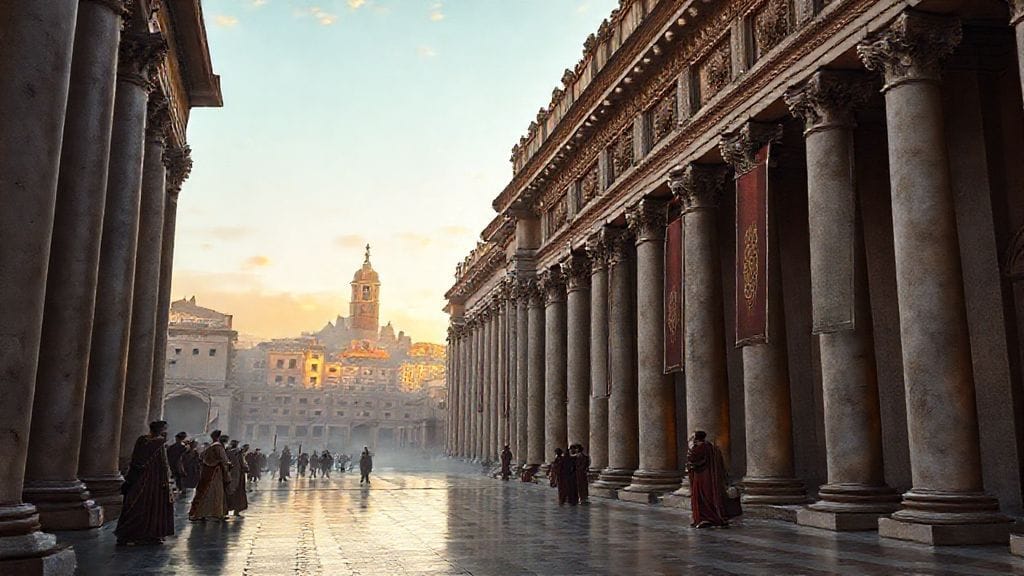
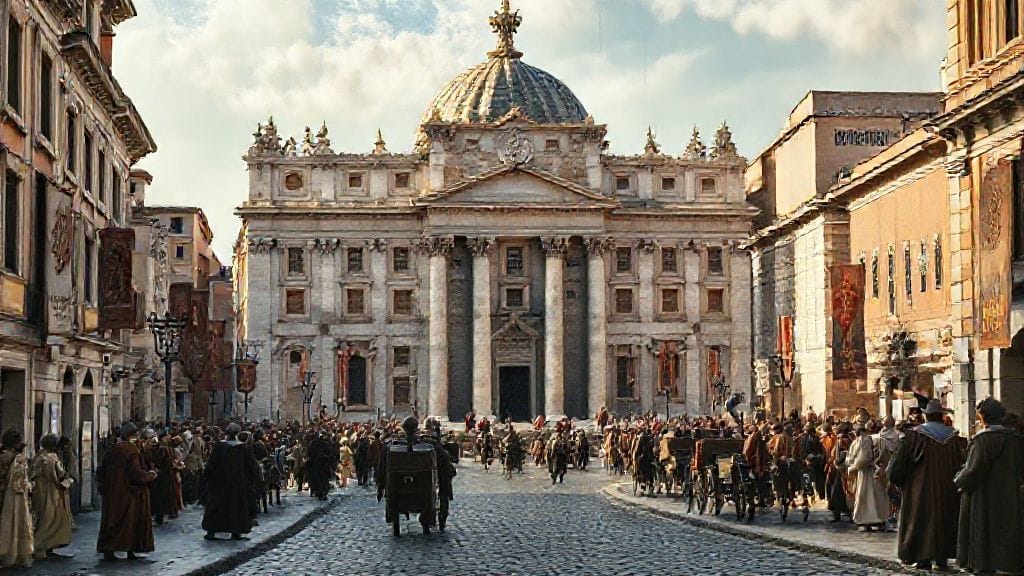
Sixtus IV understood that physical grandeur translated into political legitimacy. The city of Rome, scarred by neglect and decay, became a canvas for renewal. Under his patronage, architect and artist commissions flourished. The Sistine Chapel, named after him, rose as a monument to papal glory and a cultural milestone.
Bridges rebuilt, aqueducts restored, walls fortified: each project served both practical and symbolic ends. The city was not only the heart of Christendom but a fortress—safe, imposing, and resplendent. These works drew artisans like Pinturicchio and Botticelli, tying the papacy’s political ambitions to the Renaissance cultural efflorescence.
The transformation of Rome was a public relations coup, demonstrating that the papacy could both protect and inspire its subjects.
Military Campaigns and Alliances: The Sword of the Papacy
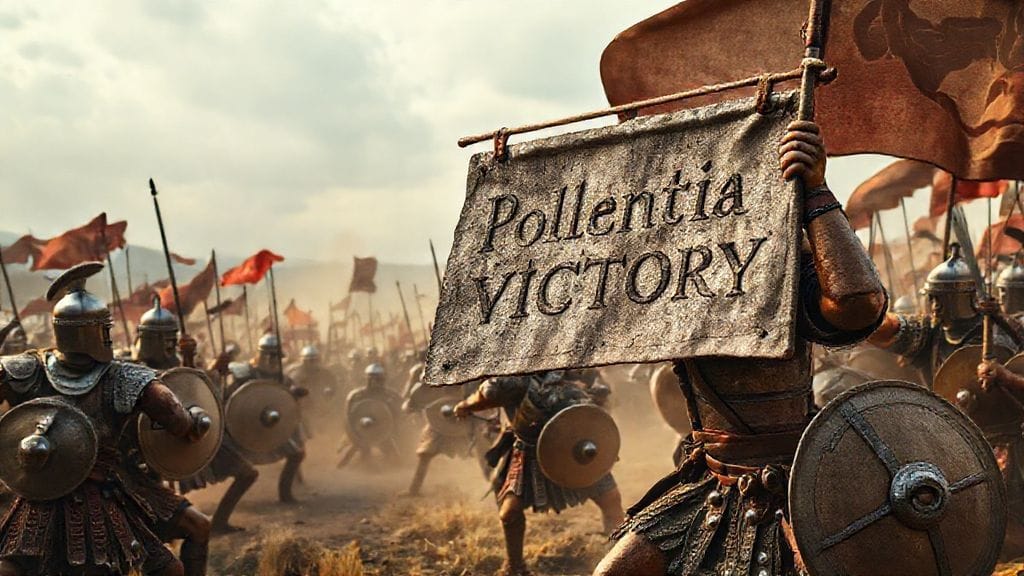
The twenty years following Sixtus IV’s election witnessed repeated military engagements aimed at consolidating papal control. Unlike a feudal ruler with personal armies, the papacy relied on condottieri: mercenary leaders commanding flexible and often fickle forces.
Strategic campaigns focused on subduing unruly cities and defending borders against rival powers, such as Naples and the Duchy of Milan. Sixtus IV entered alliances with the Kingdom of Aragon and Venice, balancing the needs of church and state with the shifting alliances characteristic of Renaissance Italy.
This era saw the papal army grow in discipline and reputation, protecting pilgrims and merchants while projecting the pope’s will across the peninsula.
The Pazzi Conspiracy: Turmoil and Treachery in Florence
One of the darkest and most dramatic episodes tied to Sixtus IV’s reign was the Pazzi conspiracy—a brutal attempt in 1478 to assassinate the Medici brothers, Lorenzo and Giuliano, in Florence’s cathedral during Easter Mass. The plot, believed to have partial backing from Sixtus IV and Pope-sponsored mercenaries, aimed to wrest Florentine politics from Medici control, thereby extending papal influence.
Though the assassination attempt failed spectacularly—Lorenzo survived, while Giuliano was killed—the fallout plunged Florence into chaos and forced the papacy into precarious diplomatic isolation. Yet, despite this setback, Sixtus IV persevered in his efforts to expand papal territories elsewhere.
The conspiracy exemplified the ruthless blend of faith and realpolitik defining the papal states’ consolidation.
Consolidation of Territories: Reuniting the Papal Lands
Through military, diplomatic, and administrative means, Sixtus IV expanded and solidified the papal territories. Key towns and regions that had slipped into autonomy or foreign control were gradually pulled back into the fold: Benevento, Forlì, Camerino, and parts of Romagna were secured.
This territorial consolidation was not merely a matter of map-making but of integrating diverse populations and legal traditions into a coherent political entity. The governance reforms introduced during this period laid the groundwork for increased centralization.
The result was a papal state no longer fragmented but emerging as a unified realm with an identifiable ruler, administration, and army.
The Role of Nepotism: Popes, Princes, and Power Networks
Sixtus IV is often remembered for institutionalizing nepotism within the Church. His appointment of relatives to cardinalates and secular fiefs—most famously his nephew Rodrigo Borgia, future Pope Alexander VI—shaped the papal power structure for decades.
Though nepotism has a pejorative ring today, in the Renaissance it was a pragmatic strategy. Familial loyalty offered a stable base from which to project papal power amidst volatile political rivalries. The della Rovere family’s rise illustrates how networks of kin transformed the papacy into a dynastic enterprise.
This consolidation via blood ties was both a strength and a source of controversy, influencing governance, ecclesiastic policy, and even international relations.
Successors of Sixtus IV: Navigating the Papal Legacy
Sixtus IV’s death in 1484 did not mark the end of the consolidation project. His immediate successors—Innocent VIII, Alexander VI, and Julius II—each inherited a stronger, more territorially coherent papal state.
Innocent VIII continued military campaigns and faced new challenges, including growing opposition from burgeoning Italian powers. Alexander VI’s controversial reign, while marred by corruption, saw further extension of papal lands through strategic marriages and ruthless diplomacy.
Julius II, a warrior pope, propelled the state into Renaissance greatness—militarily and culturally—cementing the unification begun under Sixtus IV and pushing the Papal States onto the European stage.
The Renaissance Papacy: Patronage, Art, and Propaganda
The consolidation of the Papal States coincided with the flowering of the Renaissance. Sixtus IV and his successors harnessed the arts as instruments of power: commissioning cathedrals, frescoes, and public works that proclaimed papal prestige.
This patronage was more than aesthetic; it was propaganda that conveyed messages of divine authority and temporal power. Artists such as Michelangelo, Raphael, and Bramante thrived under papal commissions that transformed Rome into an open-air gallery of Renaissance humanism and religious devotion.
Through culture, the papacy communicated its centrality in the Christian world and its role as a modernizing state.
Economic Foundations: Financing the Papal State’s Expansion
Military and architectural ambitions required a robust financial apparatus. The papal treasury drew revenues from tithes, taxes, land rents, and increasing leverage over ecclesiastical incomes throughout Christendom.
Sixtus IV improved fiscal administration, increasing efficiency and curbing corruption—though the burden on peasants and towns sometimes fueled resentment. Moreover, the burgeoning network of banking families, like the Medici, supplied crucial credit lines.
These financial foundations enabled sustained campaigns of consolidation and cultural investment, linking economic policy inextricably with political and spiritual aims.
Cultural and Religious Impact: Rome as the Heart of Christendom
Consolidating the Papal States was as much a spiritual enterprise as a temporal one. By restoring order and projecting power, the papacy reaffirmed its role as guardian of the Catholic faith.
Rome’s enhanced prestige attracted pilgrims and scholars, turning the city into a hub of theological debate, ecclesiastical reform, and artistic creativity. From this nucleus, the Church shaped religious doctrine, upheld orthodoxy, and confronted emerging challenges such as early humanism.
The physical and political unification of the papal lands thus mirrored a broader cultural and religious rejuvenation—a Renaissance reawakening of the Church’s global role.
The Balance of Power in Italy: Papal States Among Principalities
The consolidation of the Papal States reconfigured the delicate multipolar balance of Renaissance Italy. No longer a passive spiritual enclave, the papacy became a formidable political player, competing and cooperating with Venice’s maritime republic, Milan’s military dukes, Florence’s oligarchy, and the Kingdom of Naples.
This balance, often volatile, influenced Italian diplomacy for decades, setting the stage for the Italian Wars of the early 16th century. The papal state’s survival thus depended on skillful negotiation, strategic marriages, and military readiness.
By the end of the 1480s, the papal role was definitively secular and sovereign, a key actor in the Italian and European theater.
The Human Element: Lives Changed in an Era of Upheaval
Behind every treaty, siege, and fresco was a multitude of lives reshaped by the papal consolidation. Farmers felt the tightening grip of taxation; soldiers marched under foreign banners; artisans found new patrons; priests walked sharper lines between faith and politics.
For the people of Rome and the Papal States, the 1470s and 1480s were a time of uncertainty and opportunity. Stabilization under Sixtus IV reduced violence but increased demands for loyalty. The urban rebirth brought commerce and culture yet underscored social inequalities.
These human stories—of aspiration, fear, devotion, and ambition—imbue the grand historical narrative with vivid resonance.
The Enduring Legacy: Sixtus IV’s Long Shadow in History
The pope’s efforts forged a papal state that endured for centuries, serving as a template for future rulers of the Church. The mingling of sacred and secular power institutionalized by Sixtus IV influenced the Renaissance, the Catholic Reformation, and even the political fabric of modern Italy.
Though his papacy bore flaws—nepotism, political machinations, and war—the results shaped Rome’s destiny. His successors leveraged his groundwork to build the Renaissance golden age of the Church.
Sixtus IV’s reign remains a testament to the complex dance of faith, power, and culture that defines history.
Reflection in Stones and Scrolls: Architecture and Documents
The physical and documentary legacy of this consolidation is palpable. The Sistine Chapel’s vaulted ceiling and the fortified walls encircling papal cities stand as silent witnesses to ambition. Archives brim with correspondences illuminating the delicate negotiations and ruthless strategies deployed.
These records allow historians to reconstruct not just policies but the emotional texture of the era—hope, fear, fervor—etched into every stone and parchment.
Contesting Authority: Challenges from Within and Beyond
Despite successes, the papal consolidation faced unending resistance. Noble families, outside powers, and factional rivals challenged the pope’s reach. The volatility of mercenaries and shifting alliances meant that gains were fragile and often temporary.
The ever-present threat from France and the Holy Roman Empire underscored the geopolitical vulnerability of the papal state—a paradox of immense religious prestige amid constant political peril.
Understanding these challenges reveals the true scale of Sixtus IV’s accomplishment: power carved out of chaos and maintained by relentless effort.
Conclusion
The consolidation of the Papal States under Sixtus IV and his successors was more than a political unification; it was a profound transformation that stitched together faith, culture, and sovereignty. Emerging from the shadows of fragmentation and weakness, Rome asserted itself as the radiant heart of Christendom and a Renaissance powerhouse.
Sixtus IV’s reign embodies the paradoxes of power: the tension between sacred mission and temporal ambition, the interplay of family loyalty and public duty, the delicate balance of diplomacy and force. His vision reshaped the papacy into a territorial and spiritual authority whose ripples extended far beyond the Italian peninsula.
As the bell towers chimed over a rebuilt Rome, the papal states were no longer just relics of an ancient empire. They had become a modern polity—dynamic, complex, and enduring. For history, this era is a vivid tableau of human aspiration and political genius, forever echoing through the annals of time.
FAQs
1. Why were the Papal States fragmented before Sixtus IV?
The Papal States had suffered from weak central authority, rivalry among noble families, mercenary violence, and influence from foreign powers, leading to autonomous regions resistant to papal control.
2. How did Sixtus IV strengthen papal authority?
He combined military campaigns, diplomacy, administrative reforms, nepotism, and cultural patronage to centralize governance, secure territories, and enhance Rome’s prestige.
3. What was the significance of the Pazzi Conspiracy?
The Pazzi Conspiracy was a failed assassination plot targeting the Medici rulers of Florence, reflecting the fraught and often violent political rivalries involving the papacy during this period.
4. How did nepotism impact the Papal States?
Nepotism helped build a loyal power network critical for consolidating authority but also drew criticism for fostering corruption and dynastic ambitions within the Church.
5. In what ways did art and architecture support Sixtus IV’s political agenda?
By commissioning grand projects like the Sistine Chapel, Sixtus IV demonstrated papal magnificence and divine sanction, bolstering political legitimacy through cultural splendor.
6. How did the Papal States fit into the balance of power in Renaissance Italy?
They became a central player influencing alliances and conflicts among kingdoms, duchies, and republics, leveraging their spiritual authority for temporal advantages.
7. What were the long-term effects of Sixtus IV’s policies?
His reforms and territorial consolidation laid foundations for the Renaissance Papacy’s power, influencing Church politics and Italian affairs for generations.
8. How did ordinary people experience the consolidation of the Papal States?
While increased stability reduced some violence, greater taxation and military demands affected livelihoods, while cultural investments offered new opportunities for artisans and merchants.